Ackerman Steering Apparatus | ProDynami – 1276
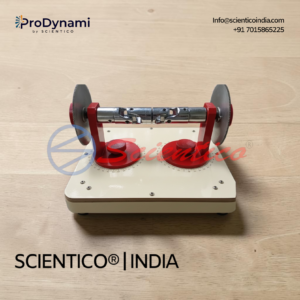
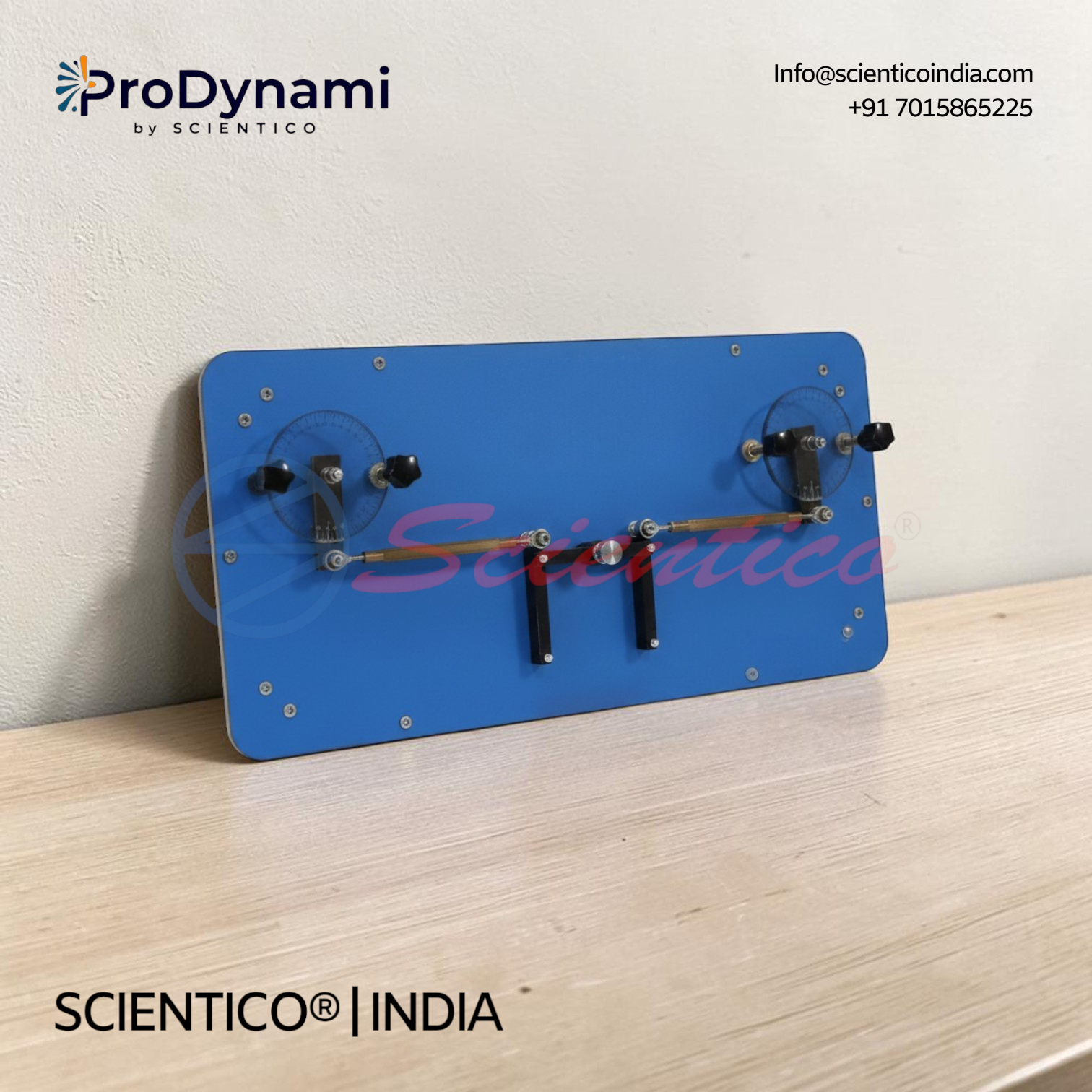
The Ackerman Steering Apparatus ProDynami – 1276 explains the Ackerman steering mechanism using a kinematic model of levers, track rods, and track rod arms. This Ackerman Steering Apparatus determines steering trapezoid lead angle and studies the effects of incorrectly adjusted track rods. It features individually adjustable track rod length, a 450mm king pin spacing, and a ±50° steering lock angle. The apparatus is available for wall mounting or as a bench top model.
The Ackerman Steering Apparatus ProDynami – 1276 explains the special features of the Ackerman steering mechanism through a kinematic model. This Ackerman Steering Apparatus determines the lead angle of a steering trapezoid and the disadvantages of incorrectly adjusted track rods. It consists of two levers, an intermediate steering rod, two track rods, and two track rod arms.
Product Overview
The objective of this kinematic model is to explain the special features of the Ackerman steering mechanism. The lead angle of a steering trapezoid is determined as are the disadvantages of incorrectly adjusted track rods. The units consists of two levers, an intermediate steering rod, two track rods, and two track rod arms. The indicators attached to these rotate with the arms and indicate the steering angle on scales.
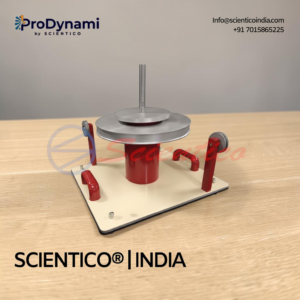
It is possible to adjust the pointers independent of the levers. By turning an adjustment nut it is possible to change the length of the track rods. The complete arrangement is mounted on a base plate. The Ackerman Steering Apparatus can be supplied either for wall mounting or as a bench top model.
Ackerman Steering Apparatus ProDynami – 1276, Technical Specifications
| Specification | Detail |
|---|---|
| Mounting Options | Benchtop or wall mounted experiment on the Ackerman steering mechanism |
| Track Rod Adjustment | Split track rod length can be individually adjusted |
| Steering Rod Material | Aluminium |
Technical Data
| Parameter | Value |
|---|---|
| King pin spacing | 450mm |
| Steering lock angle | ±50° |
| Graduations | 1° |
Key Features
- Mounting Options: benchtop or wall mounted
- King Pin Spacing: 450mm
- Steering Lock Angle: ±50°
- Graduations: 1°
- Steering Rod Material: aluminium
- Track Rod Adjustment: split track rod length individually adjustable via adjustment nut
- Indicators: rotate with the track rod arms, indicate steering angle on scales
- Pointer Adjustment: pointers adjustable independent of the levers
- Mechanism Study: demonstrates Ackerman steering mechanism features on this Ackerman Steering Apparatus
Experiments
- Steering error as a function of the steering angle with varying steering geometry
Construction and Design
The Ackerman Steering Apparatus ProDynami – 1276 consists of two levers, an intermediate steering rod, two track rods, and two track rod arms, all mounted on a base plate. The steering rod is made of aluminium. Indicators attached to the track rod arms rotate with the arms and indicate the steering angle on scales, with graduations of 1°. Pointers can be adjusted independent of the levers. Turning an adjustment nut changes the length of the track rods, with split track rod length individually adjustable. The king pin spacing is 450mm, and the steering lock angle is ±50°. The apparatus can be supplied either for wall mounting or as a bench top model.
Scope of Delivery
- 1 Experimental unit
- 1 Instruction manual
Q: What is the Ackerman Steering Apparatus ProDynami – 1276 used for?
A: It is used to explain the special features of the Ackerman steering mechanism, including the lead angle of a steering trapezoid and the effects of incorrectly adjusted track rods.
Q: What is the king pin spacing and steering lock angle?
A: The king pin spacing is 450mm, and the steering lock angle is ±50°.
Q: Can the track rod length be adjusted?
A: Yes, the split track rod length can be individually adjusted by turning an adjustment nut.
Q: How is the steering angle indicated?
A: Indicators attached to the track rod arms rotate with the arms and indicate the steering angle on scales, with graduations of 1°.
Q: How is the apparatus mounted?
A: The apparatus can be supplied either for wall mounting or as a bench top model.
Need Assistance? We're Here to Help!
Connect with our team for product specifications, pricing, and customized solutions for your institution or project.