
Automation and Control Lab Equipment
Automation and control is where an engineering department is judged most directly against industry.
Automation and Control Lab Equipment
Frequently Asked Questions
How can an institution request a quotation?
Send the product or experiment requirement, quantity, destination and any tender requirements to Scientico. The quotation is prepared against the confirmed scope.
What information should be included in a laboratory equipment enquiry?
Include the required model or syllabus, quantity, electrical supply, required accessories, destination and preferred delivery terms. This allows the equipment scope to be checked correctly.
Which documents can be discussed before ordering?
Ask for the documentation required for the selected model and destination. Availability of manuals, calibration records, declarations, packing information and export documents is confirmed in the quotation.
Showing 1–12 of 25 results
-
Automation and Control Technology
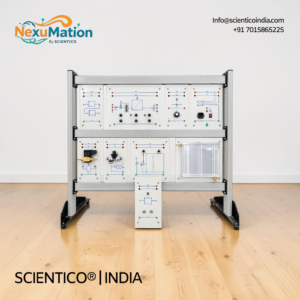
Flow Control Training System (Modular Type) | NexuMation 63
Read more -
Automation and Control Technology
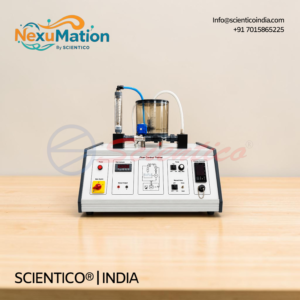
Level Control Training System (Modular Type) | NexuMation 60
Read more -
Automation and Control Technology
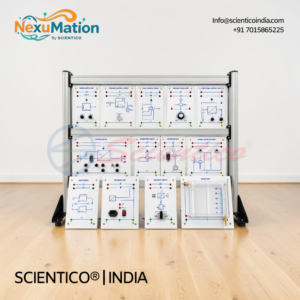
Light Control Training System (Modular Type) | NexuMation 58
Read more






How to Specify Automation and Control Technology for a Lab or Tender
Specify PLC, instrumentation, process-control, sensors, actuators, HMI and industrial automation training. Start with the product or experiment name. Use a catalogue model only to identify the configuration being offered after the buyer's functional requirement is clear.
Questions to settle before requesting prices
- Which controller platform or open functional requirement is acceptable?
- How many digital and analogue I/O points are required?
- Which applications, sensors and actuators must be included?
- What software, programming cable and licence assumptions apply?
How to compare distributor or supplier offers
Separate the controller, I/O, application modules, software and exercises into distinct compliance rows so a familiar brand does not conceal a reduced scope.
Keep the buyer's original line numbers. Record the offered product, model, included scope, deviation and document reference in separate columns.
Information Scientico needs
Send the product names or syllabus, quantities, destination, required utilities, requested documents and submission deadline. If a reference brand or model appears, attach the underlying specification so equivalence can be checked.
Specifying a Automation and Control Technology lab?
These set out the equipment list, the specification and the documentation an evaluator asks for.
Related equipment ranges
Departments equipping this lab usually specify these alongside it.
Distributors and tender bidders
We manufacture at our own works in Ambala and supply through distributors in most markets.
All Automation and Control Technology Products (25)
Browse by the product or apparatus name used in a syllabus, BOQ or tender. Each page keeps its catalogue model as a secondary technical reference and provides the available specification and quotation route.
- 3 DOF Helicopter Simulator
- Arduino Training Panel
- Ball & Beam Control Trainer
- Flow Control Trainer
- Flow Control Training System (Modular Type)
- Flow Control Training System
- Level Control Trainer
- Level Control Training System (Modular Type)
- Level Control Training System
- Light Control Training System (Modular Type)
- Magnetic Levitation Control Trainer
- pH Value Control Trainer
- PLC Trainer with Applications (Fatek Based)
- PLC Trainer with Applications (Siemens Based)
- Pressure Control Trainer
- Pressure Control Training System
- Process Control Trainer (4 in 1)
- Programmable Logic Control Trainer (Fatek Based)
- Programmable Logic Control Trainer (Fatek Based)
- Programmable Logic Control Trainer (Siemens Based)
- Programmable Logic Control Trainer (Siemens Based)
- Study of Control System Trainer
- Temperature Control Trainer
- Temperature Control Training System (Modular Type)
- Temperature Control Training System
About Automation and Control Technology
Automation and control is where an engineering department is judged most directly against industry. A student who has only written ladder logic in a simulator has learned an idea. A student who has wired a sensor into an input card, watched a scan cycle behave differently from what the flowchart promised, forced an output and then found a broken interlock has learned the job. The equipment in this category exists to make that second experience possible inside a teaching timetable, with untrained hands on the panel.
The range covers automation, instrumentation and process control teaching equipment for electrical, electronics, instrumentation and mechatronics programmes. Everything is built at our own works in Ambala, Haryana, where we have manufactured and exported laboratory equipment since 1993 to institutions in more than sixty countries. We are ISO 9001:2015 certified, and CE conformity documentation is available on applicable models.
Equipment classes in this category
ClassWhat it teachesTypical laboratory
PLC trainers and application panelsProgramming, addressing, scan cycle, timers and counters, interlocking, fault finding on live I/OElectrical, mechatronics, instrumentation
Process control trainers: level, flow, temperature, pressureLoop behaviour, proportional, integral and derivative action, tuning, set point tracking, disturbance responseInstrumentation, chemical, electrical
Transducer and sensor trainersCharacteristics, linearity, hysteresis, calibration of common sensing elementsInstrumentation, electronics
Converter trainersCurrent to pressure, pressure to current, voltage to frequency and similar signal conversion in a control chainInstrumentation
SCADA and HMI teaching setupsTag configuration, mimic building, alarms, trending, operator interface designInstrumentation, mechatronics, computer aided control
Pneumatic and hydraulic control trainersCircuit building, valve selection, actuator control, electro-pneumatic and electro-hydraulic sequencingMechanical, mechatronics, production
What a trainer must do that a bare controller cannot
A department can buy an industrial controller and a laptop for less than a trainer costs. It rarely works as teaching equipment, and the reason is worth stating plainly.
The signal path has to be visible. On a plant panel the wiring is hidden because hiding it is correct. On a trainer the field device, the terminal, the input card, the logic and the output must be traceable by eye and by meter. A student who cannot follow the path cannot diagnose anything on it.
Faults have to be insertable. Troubleshooting is a skill that only develops against a fault that someone else created. Switched fault insertion, or a panel that can be reconfigured between sessions, turns one apparatus into a repeatable diagnostic exercise. Without it, students only ever see equipment that works.
The programming environment has to match the syllabus. If the course examines ladder logic and function block, the platform must support both, and the department must be able to install and license the software on the machines it actually owns.
The panel has to survive students. Shrouded terminals, protected supplies, clear labelling and mechanical protection of the process section are what keep an apparatus useful into its fifth academic year.
What to specify
SpecifyWhy it matters at evaluation
Controller platform and software preferenceDepartments often have an existing licence or a staff skill base. Say so early, or accept whatever the lowest bidder supplies.
Number and type of I/ODigital in, digital out, analogue in, analogue out and relay or transistor output type decide which experiments are possible at all.
On-board applicationsTraffic light, lift, conveyor, bottle filling, stepper or motor control. State how many, and whether they must be simultaneously wired or selectable.
Simulator inputsToggle switches, push buttons and lamp indication let a class run logic exercises without occupying the process rig.
PC interfaceCommunication port and cable, and whether programming and monitoring must be possible at the same time.
Student wiring safetyShrouded 4 mm terminals, protected low voltage supply, isolation of the mains section, emergency stop on any rig with a pump or moving actuator.
Process section detail, where applicableTank arrangement, pump, control valve, transmitter type and how the measured variable is displayed and logged.
Departments building a full list from scratch will get further faster by working through our guide to writing lab equipment specifications for tender before circulating a draft, and by checking the intake-based structure in the lab budget planning guide and the AICTE lab requirements guide.
An honest note on controller brands in tender
Trainer platforms in this category are almost always built around a mainstream industrial controller. That is a feature, not a compromise, because the point of the lab is exposure to industry practice. It also creates a procurement trap.
If a specification names one controller brand and model, the tender narrows to whoever holds that supply line on that day, and technical evaluation becomes a formality. If the specification instead states capability, minimum I/O counts and types, supported programming languages, communication and software conditions, several manufacturers can bid, the committee has something real to compare, and the department still gets an industry controller. Write the requirement so the capability is mandatory and the badge is not. The same discipline applies across a portal listing, as set out in the GeM procurement guide and the tender documents checklist.
For distributors, resellers and tender bidders
Automation is a category where a distributor either wins on technical credibility or loses on paper. Five things decide it.
Specification detail that survives technical evaluation. Committees in this category read closely, because at least one member usually has plant experience. Vague datasheets get scored down. We supply I/O breakdowns, panel layouts, application lists, software conditions and safety features in writing, so a bid answers the specification line by line rather than in marketing language.
Manufacturer authorisation. Most government and institutional tenders in this category require a manufacturer authorisation form issued against the specific tender reference. We issue MAFs to appointed channel partners. If the term is new to your team, start with what MAF stands for, then the practical MAF issuance and tender process.
Documentation. Factory calibration certificates, ISO 9001:2015 certification and CE conformity documentation on applicable models, user and programming manuals, packing lists and export paperwork. Note honestly that our calibration certificates are factory certificates. We are not an ISO/IEC 17025 or NABL accredited laboratory, and a bid should never claim otherwise. Exporters can review the export documentation guide and buyers new to the market the India sourcing guide.
Spares across the product life. Automation trainers age through consumables and field parts: sensors, valves, pumps, relays, contactors, indicator lamps, patch leads. A partner who can quote and ship those five years after commissioning keeps the account. See spares and after-sales support for distributors.
Installation responsibility. Decide before bidding who commissions the rig, who trains the faculty and who answers the first support call. Distributors evaluating us as a supply line should apply the same tests we would expect, set out in manufacturer due diligence, and territory enquiries are handled through the distributor and dealership page.
Industry alignment and lab documentation
Accreditation panels and industry advisory boards ask the same question about an automation lab: can a graduate walk onto a working plant and be useful. That question gets answered by what is on the bench, how much of it works on inspection day, and whether experiment records show students actually programming and fault-finding rather than watching a demonstration.
Three practical consequences follow. Buy fewer, better rigs rather than a wide thin spread. Keep every apparatus in service with a written maintenance and calibration routine, using the calibration and maintenance schedule guide. Keep the paperwork current against the NBA lab documentation guide, and phase deliveries sensibly with the new lab setup timeline. Certification records sit on our quality certifications page and technical literature on downloads.
Before you release the requirement
Two checks save the most time later. First, walk the syllabus experiment list against the equipment list and mark any experiment that no single apparatus on the list can perform, because that gap is where a lab quietly fails an inspection. Second, decide the bench and utility position before the order, not after delivery. Process rigs need a drain, a stable water supply and a socket within reach, and pneumatic rigs need a compressor with the noise and duty cycle a working laboratory can live with. Rearranging a room after commissioning costs more disruption than the rig cost to buy.
Everything in this category is quoted against a written requirement rather than listed at a price, because the useful configuration depends on your controller platform, I/O count, applications and process section. Send us the syllabus experiment list, the intake per batch, the bench space available and any existing software or controller the department already runs. We will come back with a configuration proposal, the specification text you can circulate for tender, and the documentation set a technical committee will ask for. Distributors should include the territory and the tender reference in the same message. Send your requirement to our team.
Need help matching the requirement?
Tell us the product or experiment, quantity and destination so the configuration and commercial scope can be reviewed.
Automation and Control Guides & Resources
Setup guides, experiment procedures and buying advice from Scientico's engineering team.