
Refrigeration and Air Conditioning Lab Equipment
Refrigeration and air conditioning is one of the few subjects in a mechanical syllabus where the board work and the hardware line up exactly.
Refrigeration and Air Conditioning Lab Equipment
Frequently Asked Questions
How can an institution request a quotation?
Send the product or experiment requirement, quantity, destination and any tender requirements to Scientico. The quotation is prepared against the confirmed scope.
What information should be included in a laboratory equipment enquiry?
Include the required model or syllabus, quantity, electrical supply, required accessories, destination and preferred delivery terms. This allows the equipment scope to be checked correctly.
Which documents can be discussed before ordering?
Ask for the documentation required for the selected model and destination. Availability of manuals, calibration records, declarations, packing information and export documents is confirmed in the quotation.
Showing 1–12 of 31 results
-
Refrigeration and Air Conditioning
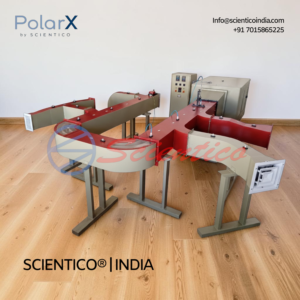
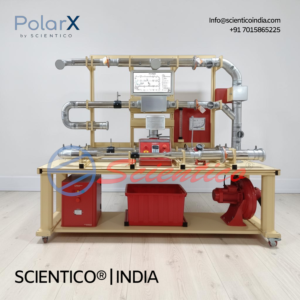
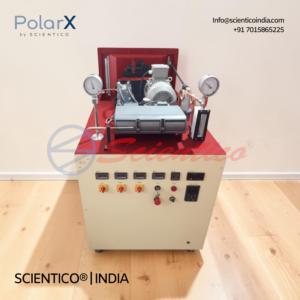
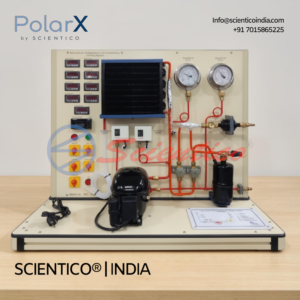
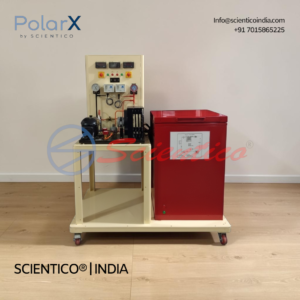
Base unit for Refrigeration & Air Conditioning Training System | PolarX – 584
Read more -
Refrigeration and Air Conditioning
Changes of State in Refrigeration Circuit | PolarX – 512
Read more -
Refrigeration and Air Conditioning
Domestic Water Heating with Flat Collector | PolarX – 600
Read more







How to Specify Refrigeration and Air Conditioning for a Lab or Tender
Create teaching coverage for refrigeration cycles, components, psychrometrics, cooling performance, heat pumps and air-conditioning systems. Start with the product or experiment name. Use a catalogue model only to identify the configuration being offered after the buyer's functional requirement is clear.
Questions to settle before requesting prices
- Which cycle or system must students investigate?
- Which refrigerant and electrical supply are acceptable?
- Which state points and performance values must be measured?
- Are component faults, controls or psychrometric processes part of the course?
How to compare distributor or supplier offers
Compare the actual cycle, instrumented state points, control functions and calculations supported by the quoted trainer.
Keep the buyer's original line numbers. Record the offered product, model, included scope, deviation and document reference in separate columns.
Information Scientico needs
Send the product names or syllabus, quantities, destination, required utilities, requested documents and submission deadline. If a reference brand or model appears, attach the underlying specification so equivalence can be checked.
Specifying a Refrigeration and Air Conditioning lab?
These set out the equipment list, the specification and the documentation an evaluator asks for.
Related equipment ranges
Departments equipping this lab usually specify these alongside it.
Distributors and tender bidders
We manufacture at our own works in Ambala and supply through distributors in most markets.
All Refrigeration and Air Conditioning Products (31)
Browse by the product or apparatus name used in a syllabus, BOQ or tender. Each page keeps its catalogue model as a secondary technical reference and provides the available specification and quotation route.
- Absorption Refrigeration Trainer
- Air Conditioning Lab Unit
- Air Conditioning Test Rig (Duct Type)
- Air Duct Apparatus
- Air Duct Training System
- Automotive Air Conditioning Trainer
- Base unit for Refrigeration & Air Conditioning Training System
- Building Management System Trainer
- Changes of State in Refrigeration Circuit
- Commercial Refrigeration Training Unit
- Domestic Refrigeration Training Unit
- Domestic Water Heating with Flat Collector
- Heat Transfer from a Pin Fin
- Hermetic Compressor Fault Simulator Trainer
- Maintenance Kit
- Mechanical Heat Pump
- Model of a Refrigeration System with Refrigeration and Freezing Stage
- Recirculating Air Conditioner Trainer
- Refrigerant Recovery and Charging Learning Systems
- Refrigeration Components for Advanced Experiments
- Refrigeration Components for Basic Experiments
- Refrigeration Compressor Fault Simulator
- Refrigeration System (Refrigeration & Freezing Chamber)
- Refrigeration System with Open Compressor
- Refrigeration System with Two-Stage Compression
- Refrigerator Model
- Reverse Cycle Refrigeration & AC Training Unit
- Simple Compression Refrigeration
- Split AC System Trainer
- Universal Pumping Unit
- Vortex Tube Refrigerator
About Refrigeration and Air Conditioning
Refrigeration and air conditioning is one of the few subjects in a mechanical syllabus where the board work and the hardware line up exactly. A student who has drawn a pressure enthalpy diagram can walk to a test rig, read four temperatures and two pressures, plot the same cycle from measured data and see where the textbook and the machine disagree. That gap is the lesson, and it appears only if the equipment is instrumented well enough to expose it.
This range is teaching and demonstration equipment for refrigeration and air conditioning laboratories in degree engineering, polytechnic diploma and ITI trade programmes. It is built to be run by students rather than by a technician alone. Control points are grouped and labelled, instruments are permanently mounted, and the refrigerant circuit is closed and protected so successive batches cannot disturb it.
Lab groups and what each one teaches
A working RAC lab is assembled from six or seven distinct groups. Departments that buy only a vapour compression rig teach one chapter well and the rest on the blackboard.
Apparatus groupWhat it demonstratesWhat the student reads and calculates
Vapour compression refrigeration test rigThe complete reversed Rankine cycle with compressor, condenser, expansion device and evaporatorSuction and discharge pressure and temperature, evaporator and condenser temperatures, power input, cooling load. Yields refrigeration effect, work of compression, actual and theoretical COP, plotted on the pressure enthalpy chart
Vapour absorption refrigeration unitHeat driven refrigeration using a generator, absorber, condenser and evaporator in place of a compressorHeat input to the generator, temperatures around the circuit, cooling produced. Yields heat operated COP and a comparison against the compression cycle for the same duty
Air conditioning test unit with recirculating ductPsychrometric processes: sensible cooling, cooling with dehumidification, sensible heating, humidification, mixing of air streamsDry and wet bulb temperature at each duct station, air velocity, heater and humidifier input. Yields sensible and latent load, apparatus dew point, bypass factor and the process line on the psychrometric chart
Heat pump unit, air source or water sourceThe same cycle used for heating instead of cooling, and the effect of source temperature on performanceSource and sink temperatures, flow rates, compressor input. Yields heat delivered, heating COP and how it differs from cooling COP on the same machine
Cooling tower unitEvaporative cooling, the limit set by ambient wet bulb, and the effect of air and water flow ratioWater inlet and outlet temperature, ambient wet bulb, air flow, makeup water. Yields range, approach, effectiveness and a water balance
Ice plant and cold storage trainersBrine cooling, latent heat removal, pull down of a loaded chamber, thermostat and defrost behaviourBrine temperature against time, freezing time, chamber pull down curve, compressor cycling, energy consumed per unit of product cooled
Component cut section modelsInternal construction of reciprocating, rotary and hermetic compressors, expansion valves, capillary tubes, condensers, evaporators, receivers and filter driersNo measurement. Identification, function, direction of flow and failure modes, which is what a trade examiner asks in a viva
What the student is actually meant to measure
Three quantities carry most of the syllabus. Coefficient of performance is the ratio of useful refrigeration to work input, and the teaching value lies in the gap between the theoretical COP taken from the chart and the actual COP taken from the wattmeter. Refrigeration effect per kilogram of refrigerant follows from the enthalpy difference across the evaporator, and shows why superheat and subcooling matter. Psychrometric work on the air conditioning unit teaches a student to split a total load into sensible and latent parts, which is the skill an HVAC employer pays for.
None of that works without enough read points. A rig with two gauges and one thermometer can be switched on, but no student can close an energy balance on it. Ask how many independent measurement points a unit provides, and where they sit in the circuit, before comparing offers. Where a clause calls for a method, cite the applicable test method rather than a standard number that does not govern the apparatus, and keep standards referencing consistent across the tender.
What a technical evaluator checks
CheckpointWhat it means in practiceHow to write it into the specification
Instrumentation and number of read pointsWhether the student can close a heat balance, or only observeState the minimum count and location of temperature, pressure, flow and electrical measurement points, not just that the unit is instrumented
Visibility of the cycleWhether the circuit is laid out on a panel in cycle order, with sight glass, expansion device and driers visibleRequire an open panel layout with flow direction marked and components accessible for identification
Safety on a pressurised circuitPressure limiting devices, guarding of the compressor drive, electrical protection, a circuit no student can open by handRequire high and low pressure protection, earthing, isolation and a sealed charge port as part of the supply
Repeat running by successive batchesWhether the unit returns to a stable starting condition after several runs in one dayAsk for stabilisation behaviour and duty limits in writing, plus a maintenance schedule with the machine
Documentation and calibrationWhat paper arrives with the crate and whether it satisfies an audit laterName the test certificate, factory calibration certificates, operating manual and experiment sheets as deliverables
Installation and commissioningWho levels the unit, connects services, evacuates and starts it, and who trains the staffName the responsible party in the scope of supply. Leaving it unstated is how disputes start
Departments get better bids when the wording is theirs and not a copied brochure. The specification writing guide covers phrasing a clause so it stays measurable without being single sourced, and the mechanical engineering lab list shows where RAC sits beside thermal, fluid mechanics and heat transfer benches.
Polytechnic and ITI trade labs run on throughput
RAC is a major ITI trade and a core polytechnic subject, and the buying logic there differs from a research department. The lab is not proving a hypothesis. It is putting a large number of students through a fixed set of practicals in a fixed number of weeks, term after term, on the same machines.
That changes what matters. Rapid restart between batches beats exotic capability. Cut section models earn their place because twenty students can crowd around one and every one leaves able to name the parts. Consumables such as driers, sight glasses and gauges must stay orderable years later. A trainer that runs four sessions a day for a decade is worth more to a trade institute than one that produces a prettier data set once a semester.
Timeline and budget planning follow the same logic. See the new lab setup timeline for sequencing civil work, power and delivery, the budget planning guide by intake for sizing the list to student numbers, and the AICTE lab requirements guide along with the NBA documentation guide for what an accreditation visit expects to find in the register.
Refrigerant, services and site readiness
Refrigerant type is a specification input, not an assumption. The refrigerant used in a supplied unit, and any handling, recovery, record keeping or licensing requirement attached to it, is determined by the regulations applying at the installation site and by the institution's own rules. Confirm both before the specification is frozen, because they affect the charge, the components and sometimes who may commission the machine. We supply against the confirmed requirement and give no handling procedure here.
At facilities level, plan for a stable supply of the correct phase and rating, earthing, drainage for condensate and cooling tower makeup, ventilation and clear working space around each unit. A calibration and maintenance schedule kept from day one is the cheapest way to keep a RAC lab examinable.
For distributors, resellers and tender bidders
RAC equipment is a strong line for a lab supply business because demand recurs. Trade institutes replace and expand, and every new polytechnic block needs the same seven or eight items. What a reseller needs from the factory behind it is specific.
What you needWhy it decides the bid
Specification detail that survives technical evaluationRAC bids are rejected on read points, protection devices and panel layout more often than on price. You need clause level detail before submission, not a glossy page
Manufacturer authorisationMost government and institutional tenders will not open your commercial bid without a valid authorisation from the maker
Documentation setTest certificate, factory calibration certificates, manuals, experiment sheets, conformity documents and export papers where applicable
Spares across the product lifeCompressors, expansion devices, gauges, sight glasses, driers and heaters, available years after the sale
Installation responsibilityAgreed in writing before bidding, so the scope you quote and the scope we support are identical
On authorisation, start with what a MAF is and then the practical MAF issue process for lab equipment tenders. For the surrounding paperwork, use the tender documents checklist and the GeM procurement guide. Overseas buyers should read the importer guide to sourcing from India with the export documentation guide, and run manufacturer due diligence on us and on anyone else quoting you. Long term support terms are set out under spares and after sales support, and territory enquiries go through the distributor and dealership programme.
Who builds this equipment
Scientico has manufactured and exported laboratory and teaching equipment since 1993 from our own works at Ambala, Haryana, India, and supplies more than sixty countries. We are ISO 9001:2015 certified, and CE conformity documentation is available on applicable models. Instruments are supplied with factory calibration certificates. We are not ISO/IEC 17025 or NABL accredited and we do not describe our certificates as such, which is worth confirming with any supplier who claims otherwise. Certificate copies sit under quality certifications and literature under downloads.
Every unit here is quoted against your requirement rather than sold from a price list. Refrigerant, supply voltage, instrumentation depth, panel language and the practicals to be covered all change what gets built, so a number quoted before those are settled is a guess. Units are assembled and run at our works before despatch, and the test record travels with the machine.
Getting a specification and a quotation
Send the syllabus practicals the lab has to cover, the student batch size per session, your electrical supply details and the confirmed refrigerant requirement for your site. You will get back a written specification for each item and a quotation against that list, in wording you can put into a tender document without further editing. Distributors and resellers should add the territory and the tenders in view, so that authorisation, documentation and support terms are agreed before bidding rather than argued during it. Contact us with your list.
Need help matching the requirement?
Tell us the product or experiment, quantity and destination so the configuration and commercial scope can be reviewed.
Refrigeration and Air Conditioning Guides & Resources
Setup guides, experiment procedures and buying advice from Scientico's engineering team.