
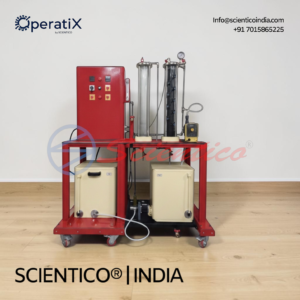
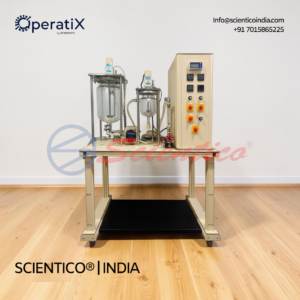
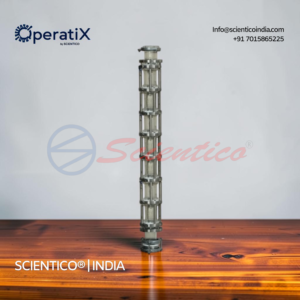
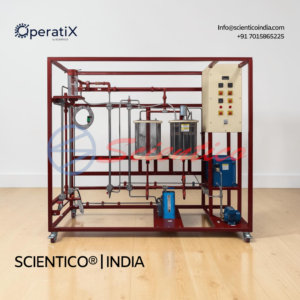
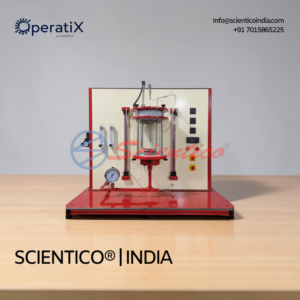
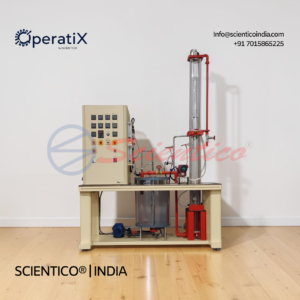
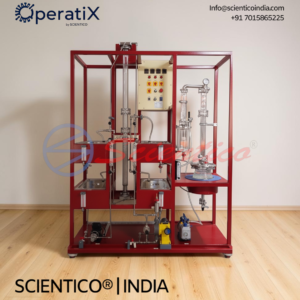
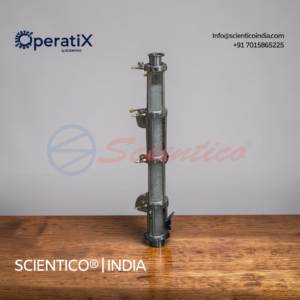
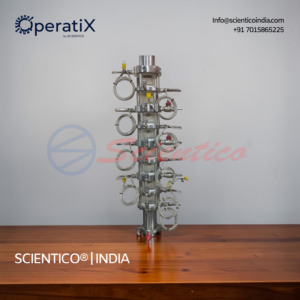
 Batch Distillation Column Apparatus | OperatiX – 04Batch rectification experiments.Open product →
Unit Operations Lab Equipment
Unit operations is the part of a chemical engineering syllabus that does not survive being taught only from a textbook.
✓ ISO 9001:2015✓ documentation reviewed per model✓ Since 1993✓ 30+ Countries✓ Quote in 24h
Unit Operations Lab Equipment
Frequently Asked Questions
How can an institution request a quotation?
Send the product or experiment requirement, quantity, destination and any tender requirements to Scientico. The quotation is prepared against the confirmed scope.
What information should be included in a laboratory equipment enquiry?
Include the required model or syllabus, quantity, electrical supply, required accessories, destination and preferred delivery terms. This allows the equipment scope to be checked correctly.
Which documents can be discussed before ordering?
Ask for the documentation required for the selected model and destination. Availability of manuals, calibration records, declarations, packing information and export documents is confirmed in the quotation.
Showing 1–12 of 15 results
How to Specify Unit Operations for a Lab or Tender
Equip chemical-engineering practicals in distillation, absorption, extraction, drying, filtration, mixing, mass transfer and other unit operations. Start with the product or experiment name. Use a catalogue model only to identify the configuration being offered after the buyer's functional requirement is clear.
Questions to settle before requesting prices
- Which operation, experiment and material system are required?
- What process capacity and measurement points are specified?
- Which feed, collection, heating, cooling or vacuum services are available?
- Which consumables and reusable accessories are included?
How to compare distributor or supplier offers
Ask for a process-flow description and an included-scope list; the same operation name may describe bench, pilot or demonstration-scale equipment.
Keep the buyer's original line numbers. Record the offered product, model, included scope, deviation and document reference in separate columns.
Information Scientico needs
Send the product names or syllabus, quantities, destination, required utilities, requested documents and submission deadline. If a reference brand or model appears, attach the underlying specification so equivalence can be checked.
Specifying a Unit Operations lab?
These set out the equipment list, the specification and the documentation an evaluator asks for.
Related equipment ranges
Departments equipping this lab usually specify these alongside it.
Distributors and tender bidders
We manufacture at our own works in Ambala and supply through distributors in most markets.
Distillation buying path
Choose the column by the separation task your students must run
Batch, continuous and multifunction columns answer different curriculum questions. The selection guide compares the three families line by line using the published product records, then converts your syllabus into a comparable RFQ.
- Name the separation experiments and mixtures.
- List the measurements students must record.
- Confirm utilities and space at the receiving laboratory.
- Request the exact model and supplied scope in writing.
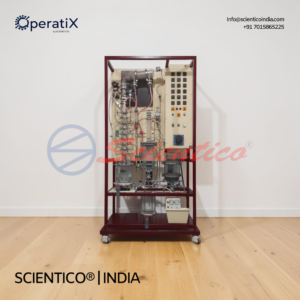
Batch Distillation Column Apparatus | OperatiX – 04Batch rectification experiments.Open product →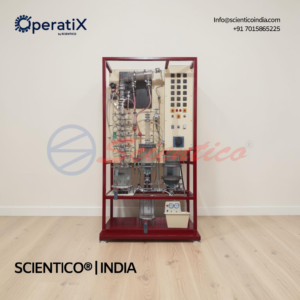 Continuous Distillation Column Apparatus | OperatiX – 06Continuous steady-state rectification.Open product →
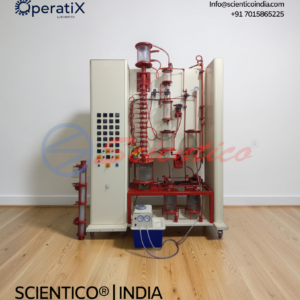 Multifunction Distillation Column | OperatiX – 05Interchangeable-columns teaching family.Open product →
All Unit Operations Products (15)
Browse by the product or apparatus name used in a syllabus, BOQ or tender. Each page keeps its catalogue model as a secondary technical reference and provides the available specification and quotation route.
- Adsorption Apparatus
- Batch Cooling Crystallization Apparatus
- Batch Distillation Column Apparatus
- Bubble Cap Tray Column
- Continuous Cooling Crystallization Apparatus
- Continuous Distillation Column Apparatus
- Fluidization and Fluid Bed Heat Exchanger
- Gas Absorption/Desorption Column Apparatus
- Liquid/Liquid Extraction Apparatus
- Multifunction Distillation Column
- Packed Column
- Sieve Tray Column
- Solid-Liquid Extraction
- Structured Packing Column
- Valve Tray Column
Related categories: Automation and Control Technology · Automobile Engineering Lab Equipment · Chemical Reaction Technology · Electronics and Electrical · Fluid Mechanics · Forces and Friction · Industrial Food Technology · Instrumentation Lab Equipment · Process Engineering Technology · Refrigeration and Air Conditioning · Renewable Energy · Solid Handling
About Unit Operations
Unit operations is the part of a chemical engineering syllabus that does not survive being taught only from a textbook. Distillation, absorption, extraction, drying and heat exchange behave in ways that make sense once a student has watched a column reach steady state and written down the readings themselves. The apparatus in this range is built for exactly that: bench and floor scale rigs that make each operation visible and instrumented, so a full batch of students can take a complete set of readings inside one laboratory period.
Scientico has manufactured and exported teaching equipment from its own works in Ambala, Haryana since 1993, supplying institutions in more than 60 countries. The company is ISO 9001:2015 certified, and CE conformity documentation is available on applicable models. Items here are quoted against your requirement rather than sold from a price list, because column arrangement, service connections and instrumentation almost always have to be matched to the room they will stand in.
Operations, apparatus and what a student measures
Most syllabuses cover the same family of operations. The table below maps each one to the apparatus that demonstrates it, the quantity the student is expected to extract, and the point that most often gets left out of a specification and causes trouble later.
OperationApparatusWhat students measureWhat to check when specifying
Simple and batch distillationBatch still with condenser and graduated receiverDistillate and residue behaviour over time, heat input, condenser dutyIs the boiling and condensing visible, are there sampling points, how is condenser cooling supplied
Fractional distillationPacked or plate column with reflux arrangementTemperature profile up the column, reflux ratio, stages achievedPacked against plate internals, number of temperature tapping points, whether internals can be changed
Combined or multifunction distillationOne column frame supporting more than one mode of operationComparison of modes on the same feedHow long a changeover takes between two lab batches, and who does it
Gas absorptionPacked absorption column with gas and liquid meteringPressure drop across the packing, flooding behaviour, transfer coefficientsAccess to the packed section, a transparent length, independent metering on both phases
AdsorptionFixed bed column with sampling along the bedBreakthrough curve, bed capacityNumber and position of bed sampling ports, regeneration arrangement
Liquid-liquid extractionMixer settler assembly or extraction columnStage efficiency, distribution of solute between phasesWhether the interface is visible and controllable, number of stages exposed
EvaporationSingle effect, climbing film or agitated film evaporatorEvaporation rate, overall heat transfer coefficient, steam economyHeating method the room can actually supply, condensate measurement, sight glass
DryingTray dryer, fluidised bed dryer, rotary dryer, spray dryerDrying rate curve, critical moisture content, inlet and outlet air conditionAir flow and temperature instrumentation, weighing arrangement, sample access without stopping the run
FiltrationPlate and frame press, leaf filter, vacuum filtration assemblyFiltrate volume against time, cake and medium resistanceHow quickly it dismantles for cake removal between student groups, pressure measurement either side
Sedimentation and settlingBatch settling column, continuous thickenerInterface height against time, settling curve, thickener areaColumn graduation and lighting, sampling ports at height, raking or stirring arrangement
Heat exchangeDouble pipe, shell and tube, plate, coil in tankLog mean temperature difference, overall coefficient, co-current against counter-currentCan flow direction be reversed by the student, temperature points at both ends of both streams
Fluid handling supporting the abovePumps, rotameters, control and isolation valves on each rigFlow rates feeding every calculation aboveMetering range that suits student operation, not the widest range available
If you are building a list rather than replacing a single item, work from the chemical engineering lab equipment list for B.Tech departments and mark which operations your syllabus actually examines. That list also shows where unit operations overlaps with fluid mechanics, heat transfer and mass transfer benches, so the same rig is not bought twice under two heads.
A teaching rig is not a small production unit
This is the distinction a department should specify against, and it is where most disappointing purchases begin.
A production unit is designed to hide the operation. It is lagged, closed, controlled automatically, and judged on throughput and consistency. A teaching rig is designed to expose the operation. It is judged on whether a second year student can see what is happening, reach the points where readings are taken, change one variable at a time, and finish an experiment with enough numbers to plot something meaningful.
In practice that means transparent sections where the physics is worth watching, tapping points spaced so a profile can be plotted rather than guessed, manual control the student operates rather than automatic control that operates itself, and an arrangement that reaches usable conditions within a laboratory period instead of running for hours before it settles. It also means the rig has to tolerate being started and stopped repeatedly by people who have never run it before.
A specification written around throughput will get you a small plant that teaches very little. A specification written around visibility, measurement points and time to steady state will get you something students learn from. When you write yours, the guide to writing lab equipment specifications covers how to phrase this so it is technically evaluable rather than vague.
Instrumentation and data logging
Decide early whether the department wants students reading instruments or reading a screen. Both are defensible and they lead to different builds.
Direct reading instrumentation, with dial or digital indicators at the point of measurement, keeps the student in contact with the apparatus. Logged instrumentation, with sensors wired to a data acquisition unit and a PC, produces cleaner curves, saves the period spent copying numbers, and gives a record that can be attached to a lab file. Many departments now ask for both: local indication for the reading, plus a logging option on the rigs where transient behaviour matters, such as drying, adsorption breakthrough and batch settling.
Whichever you choose, ask for the instrumentation schedule as part of the quotation, and ask what calibration is supplied. Scientico issues factory calibration certificates with instrumented equipment. The works is not ISO/IEC 17025 or NABL accredited, so if your internal quality system requires accredited calibration, plan for that to be arranged locally and build it into your recalibration cycle using the calibration and maintenance schedule guide. Departments preparing documentation for an accreditation visit will find the record keeping expectations set out in the NBA lab documentation guide, and intake based laboratory sizing in the AICTE lab requirements guide.
Services, bench space and utilities
Unit operations rigs fail on services more often than on engineering. Confirm what the room actually has before the order is placed, not after the crates arrive.
ServiceWhy it mattersConfirm before dispatch
Electrical supplyHeaters, pumps, blowers and instrumentation all draw from the benchPhase, voltage and the number of independent points at each position
Water supply and drainCondensers, cooling circuits and washing down between batchesTap and drain location relative to where the rig will stand
Cooling waterCondenser and heat exchanger duty depends on itWhether supply is mains, recirculated from a tank, or chilled
Heating sourceEvaporation and distillation need a heat input the room can sustainElectrical heating against a steam supply, and boiler availability if steam
Compressed air or vacuumFiltration, spray drying and some control functionsWhether a line exists or a dedicated compressor or pump is needed
VentilationVapour from distillation, absorption and dryingExtraction position, and clearance above tall columns
Floor and accessColumn rigs are tall and are worked on from more than one sideCeiling height, door and stair width on the delivery route, working clearance all round
EffluentSpent liquids from every batch have to go somewhereCollection and disposal route agreed with the institution
Sequencing all of this against a semester start is covered in the new laboratory setup timeline, and phasing purchases across years is covered in the lab budget planning guide by intake.
Safe student operation
These rigs carry hot surfaces, pressurised sections, rotating parts and volatile liquids, and they are operated by people who are learning. Specify accordingly: guarded drives and belts, an accessible emergency stop on every powered rig, over temperature protection on heated vessels independent of the working controller, low level protection on immersion heaters, insulation or guarding on hot lines within reach, valves labelled in the direction a student reads them, and a robust frame that tolerates being leaned on.
Ask for the operation and maintenance manual to be supplied with the equipment, not sent later, and check that it lists the routine safety checks a lab technician should carry out before each session. Where a rig has glass sections, ask what protection is fitted and how a replacement is obtained. Test methods and any laboratory procedure remain the department's responsibility under the applicable test method for the experiment being run.
For distributors, resellers and tender bidders
Unit operations is a category where the bid is usually won or lost in the technical evaluation, not on price. The tender committee is comparing column construction, instrumentation, measurement points and service requirements across three or four offers, and the offer with the vaguer specification loses even when it is cheaper.
What a channel partner needs from a manufacturer in this category is specific.
Specification detail that survives evaluation. Item wise technical sheets naming materials of construction, column arrangement, instrumentation and utility requirements, written so an evaluator can tick each line against the tender schedule. Drawings and service requirement sheets are available on request during bid preparation, and general documentation sits in the downloads section.
Manufacturer authorisation. Most government and institutional tenders in this category require a manufacturer authorisation form naming the bidder and the tender reference. Scientico issues MAFs for its appointed partners. If you are new to the instrument, start with what MAF stands for and why it is asked for, then work through how to obtain a manufacturer authorisation form for a lab equipment tender. Send the tender reference, closing date and the exact bidder name as registered, because a mismatch in the name is the most common reason a technically sound bid is rejected.
Compliance documentation. ISO 9001:2015 certification and, on applicable models, CE conformity documentation are listed under quality certifications. Factory calibration certificates accompany instrumented equipment. State plainly in your bid that calibration is factory issued and that the works is not ISO/IEC 17025 or NABL accredited, because an overstated claim discovered during evaluation costs more than the clarification would have. The document set most institutional buyers ask for is listed in the tender documents checklist for government colleges, and portal specific requirements in the GeM procurement guide.
Spares over the working life. These rigs stay in service for many years and consume the same predictable items: seals and gaskets, filter cloths, glass sections, heaters, pump spares, sensors and packing material. Agree the spares list at the time of order and hold the fast moving items locally. The commercial case for doing so is set out in the spare parts and after sales support guide for distributors.
Installation responsibility. Say in writing who unloads, who positions, who connects services and who commissions, and confirm before dispatch that the institution has the electrical, water and ventilation provisions the rig needs. Column rigs also need a delivery route survey. Unclear installation scope is the single most common source of dispute in this category.
Partners evaluating suppliers should work through the manufacturer due diligence checklist. Overseas buyers and importers will find the paperwork trail in the export documentation guide and the importer guide to sourcing from India. Territory enquiries are handled through the distributor and dealership programme.
Specifying your unit operations laboratory
Send the room, not just the item names. A floor plan with dimensions, the electrical supply available at each position, whether cooling water and a drain are within reach, ceiling height for column rigs, and the class size that has to pass through each experiment tell us more than a list of apparatus does. Where a rig can be built in more than one arrangement, we will set out what each arrangement gives the student and what it asks of the room.
Say also how the laboratory will be judged. A department writing a fresh syllabus, a department preparing for an accreditation visit, and a department replacing worn apparatus in a working lab all need different things from the same operation, and the specification should make clear which case it is.
Quotations are prepared against your requirement, with drawings, service requirements, instrumentation schedule and factory calibration coverage listed item by item. If you are working to a submission date, say so in the first message so drawings and documentation can be sequenced to meet it.
To discuss a unit operations laboratory, share your requirement and room details with the Scientico technical sales team.
Need help matching the requirement?
Tell us the product or experiment, quantity and destination so the configuration and commercial scope can be reviewed.
Unit Operations Guides & Resources
Setup guides, experiment procedures and buying advice from Scientico's engineering team.