
If you run a B.Pharm or D.Pharm program in India, the person signing the purchase order is usually the principal, the HOD of Pharmaceutics, or a purchase officer working off a PCI inspection checklist. What you actually need to buy is a defined kit of instruments across Pharmaceutics, Pharmacology, Pharmacognosy, Pharmaceutical Chemistry and Pharmaceutical Analysis. Budget expectation for a fresh D.Pharm setup runs roughly INR 18-35 lakh for the full instrument list, and a B.Pharm lab layer on top adds another INR 25-60 lakh depending on how many HPLC/UV-Vis units you specify. This guide walks you through choosing pharmacy lab equipment that will clear a PCI visit the first time, without paying twice.
I have specified pharmacy lab equipment PCI teams have signed off on for new colleges and for renewal inspections. The mistakes are almost always the same: buying the cheapest tablet punching machine that seizes in three months, or a dissolution apparatus without USP-compliant paddle geometry. Below is what I actually check before I recommend a supplier.
Equipment mentioned in this guide
Review the product information, specifications and model before requesting a quotation.
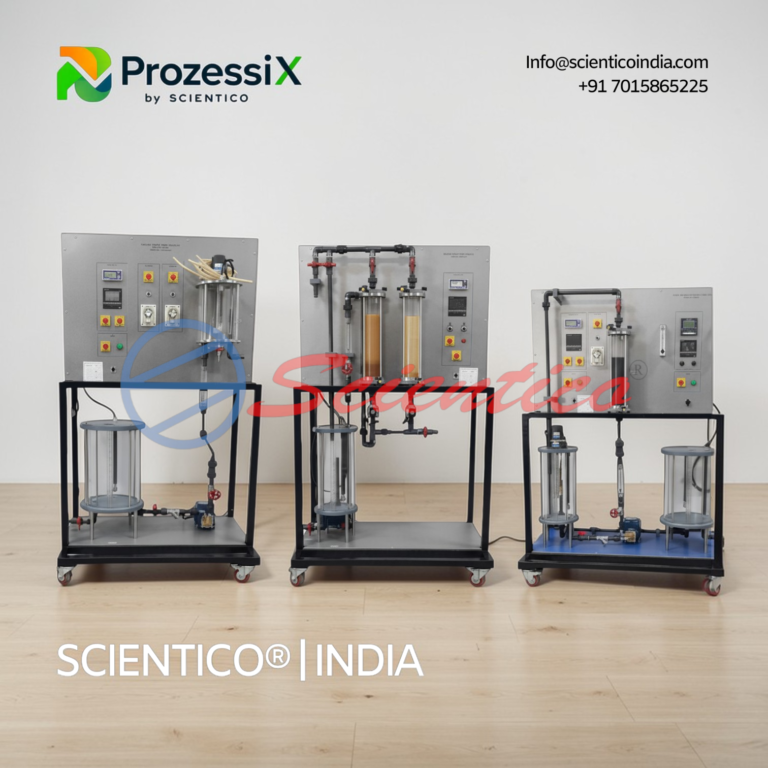
Analytical Process Control Trainer | ProzessiX PX-04
The Prozessix PX-04 is an analytical process control trainer for instrumentation and process engineering laboratories, giving students hands-on PID loop tuning across flow, level, temperature and pressure processes on a single bench.
View product details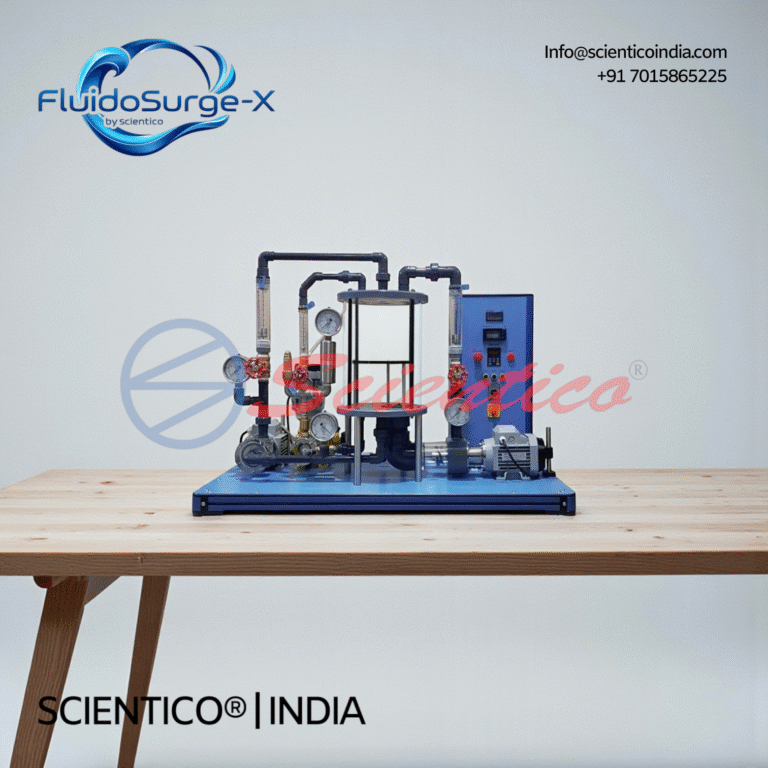
Multi Pump Test Rig Apparatus | FluidoSurge-X 294
The FluidoSurge X-294 is a multi pump test rig (series and parallel centrifugal pump test rig) that lets students run single, series and parallel pump configurations on one apparatus and compare the resulting head–discharge–efficiency characteristics.
View product details
Universal Hardness Tester
The Universal Hardness Tester manufactured by Scientico India combines Brinell, Vickers, and Rockwell hardness testing methods in a single machine. The machine uses interchangeable indenters and a built-in optical measuring system for Brinell/Vickers measurements, with direct-reading digital display for Rockwell hardness.
View product detailsWhat to look for in a pharmacy lab equipment purchase
Six things decide whether a unit survives four batches of students and a PCI inspection.
- Compliance to pharmacopoeial geometry. Dissolution test apparatus, disintegration testers, tablet hardness testers and friability testers need to match IP/USP/BP dimensions. Paddle height 25 mm above the vessel base, basket mesh size, drum rotation at 25 rpm for friability. If a datasheet does not state these, walk away.
- Materials. SS 316 for any wetted part that touches dissolution medium or acids. Borosilicate 3.3 glass for reaction vessels. Powder-coated MS frames are fine for support, not for sample-contact parts.
- Motor duty cycle. Teaching labs run equipment for 3-5 hours at a stretch during practicals. Ask for continuous-duty motors, not S2 short-duty. A tablet coating pan that overheats after 40 minutes is useless for a batch of 30 students.
- Certification stack. ISO 9001:2015 on the manufacturer, CE where the export market needs it, and a calibration certificate traceable to NABL for anything that measures (balances, pH meters, UV spectrophotometers). No calibration cert = PCI query.
- Warranty and spares. 12 months minimum on electricals, lifetime availability of consumables (dissolution paddles, friability drums, USP baskets). Ask in writing.
- Delivery window. A serious Indian manufacturer will commit 3-5 weeks ex-works for a standard D.Pharm kit. Six months means they are trading, not manufacturing.
My call: prioritise pharmacopoeial geometry and calibration paperwork over cosmetic finish. Inspectors read datasheets, not brochures.
Pharmacy lab equipment PCI inspection B.Pharm D.Pharm accreditation
The PCI inspection team works off a norms document that lists minimum equipment per lab. For D.Pharm the sensitive items are the dissolution test apparatus (usually 2-station is enough for diploma), tablet dissolution, disintegration test apparatus (double basket), Monsanto and Pfizer hardness testers, Roche friabilator, tablet punching machine (single station is accepted, rotary is preferred for B.Pharm), and a bulk density apparatus. For B.Pharm you add ampoule sealing machine, ampoule washing machine, capsule filling machine, ointment filling, collapsible tube crimping, and instrumentation-side you need a UV-Vis double beam spectrophotometer, a Colorimeter, digital pH meter, digital balance readable to 0.1 mg, and a Brookfield-type viscometer.
Pharmacology needs actophotometer, analgesiometer (Eddy’s hot plate and tail-flick), rota-rod, convulsiometer, plethysmograph, telethermometer, cook’s pole climbing. Pharmacognosy needs a Camera Lucida per two students, stage micrometer, projection microscope. Pharmaceutical Chemistry needs melting point apparatus (digital), refractometer (Abbe’s), polarimeter, conductivity meter, potentiometer.
Two things trip colleges up. First, quantity per lab: PCI expects a student-to-instrument ratio (usually 1:2 or 1:3 for basic instruments, 1:10 for expensive analytical). Under-buying is the number one cause of provisional approval. Second, calibration certificates: every measuring instrument must have a dated calibration certificate on the day of inspection, not in the drawer somewhere.
Specification checklist
Use this as your BOQ column headers when you send an RFQ.
| Parameter | What to specify | Why it matters |
|---|---|---|
| Pharmacopoeial reference | IP 2018 / USP / BP | PCI wants IP compliance stated on datasheet |
| Number of stations | 2 or 6 (dissolution), 2 or 4 (disintegration) | Drives batch size for practicals |
| Vessel material | Borosilicate 3.3 or SS 316 | Chemical resistance, non-leaching |
| Temperature control | 37 +/- 0.5 deg C with digital PID | USP requirement for dissolution |
| RPM range | 25-200 rpm with digital display | Accuracy for method validation |
| Balance readability | 0.1 mg for analytical, 1 mg for general | Weighing for assay accuracy |
| UV-Vis range | 190-1100 nm, bandwidth 2 nm or less | Standard pharmacopoeial assays |
| Voltage | 230V single phase or 415V three phase | Match the sanctioned lab load |
| Certifications | ISO 9001:2015, CE, NABL calibration | Tender + inspection paperwork |
| Warranty | 12 months, spares 5+ years | PCI reinspection cycle |
Standards and compliance
The paperwork that matters to a purchase committee: manufacturer ISO 9001:2015 certificate (attach in tender), CE marking where applicable, and NABL-traceable calibration certificates for all measuring instruments. For pharmacopoeial compliance you are referencing the current Indian Pharmacopoeia. For colleges also going for NBA or NAAC accreditation, the same equipment list satisfies the lab infrastructure clauses if calibration is maintained annually.
One more note. Do not accept a supplier who cannot produce a factory address you can visit. Trading houses reboxing Chinese instruments will fail a PCI query the moment inspectors ask for country-of-origin on the invoice.
Common mistakes buyers make
- Ignoring the sanctioned electrical load. A UV spectrophotometer with a xenon lamp draws differently from a deuterium lamp. Ampoule sealing machines with glass-forming burners need LPG plus air compressor. Check the lab’s sanctioned kVA before the PO, not after installation.
- Skipping the calibration certificate. Every buyer assumes it comes with the machine. It does not always. Ask for it as a line item in the quote.
- Wrong Incoterm on imports. If you are a college importing anything, ask for CIF ICD Delhi or CIF Nhava Sheva with all-risk insurance. FOB looks cheaper and burns you on customs clearance and last-mile.
- Under-provisioning for student ratio. Buying one hardness tester because it is in the norms list is fine on paper. On inspection day, PCI counts the ratio against annual intake. Under-buy and you get a query.
- Buying the tablet compression machine last. Single-station tablet punching machines are on 8-12 week lead times because of the die-and-punch tooling. Order them first, not last.
The gotcha I see most often is number three: the CIF vs FOB mistake for imported components. For teaching labs I always push for delivered-duty terms even if the sticker is 8-12 percent higher.
Price framework
Prices vary with capacity, station count, level of automation, and pharmacopoeial compliance level. As a broad frame for teaching-grade Indian-manufactured units:
- Disintegration test apparatus (2 basket, digital): typically INR 25,000-55,000 depending on IP vs USP geometry.
- Dissolution test apparatus (6 station): typically INR 1.8-4.5 lakh. USP compliance with auto-sampling pushes it higher.
- Tablet hardness tester (Monsanto vs digital Pfizer): INR 4,000-45,000. Digital load cell units cost more but survive student use longer.
- UV-Vis double beam spectrophotometer: INR 1.5-6 lakh. Bandwidth (5, 2, 1 nm) and detector type drive the price.
- Tablet punching machine single station: INR 45,000-1.4 lakh. Rotary 8-station starts around INR 3.5 lakh.
- Ampoule sealing machine: INR 55,000-1.6 lakh depending on flame control and rotation.
Quantity discounts are real when you order a full lab kit rather than piece-meal. For volume orders on pharmacy lab equipment expect 8-15 percent off list if you consolidate the BOQ. If a supplier quotes suspiciously low, ask what changed in the material spec.
Delivery, installation and warranty
Realistic lead times from an Indian manufacturer: 3-5 weeks ex-works Ambala for the standard D.Pharm kit, 5-8 weeks for B.Pharm additions with UV-Vis and instrumentation. Export orders on CIF Incoterm ship in 6-9 weeks depending on port and container consolidation. Scientico India ships to 30+ countries and has run this cadence since 1993.
Installation at the college is usually one to two engineer-days for a full lab. Insist on demo runs with actual tablets and actual dissolution medium during commissioning, not dry runs. Warranty should be 12 months on electricals from the date of installation, not date of dispatch. Get that in writing.
How to request a quote from Scientico
Send a BOQ with subject-wise splits (Pharmaceutics, Pharmacology, Pharmacognosy, Chemistry, Analysis), sanctioned intake, and lab dimensions. Attach any tender document if this is a government college purchase. WhatsApp or email works, and a CIF quote for exports goes out within 24 hours. Domestic quotes come back with GSTIN, HSN and ex-works Ambala pricing. Contact Scientico for a pharmacy lab BOQ quote and ask for the pharmacopoeial compliance sheet alongside the price.
For related buying decisions, see the engineering college lab equipment guide and the polytechnic lab equipment guide. If you also handle mechanical labs, the universal hardness tester buyer’s guide and the hydraulic bench buyer’s guide cover the same procurement logic. On the analytical side the analytical process control trainer is a useful cross-reference for instrumentation labs, and the multi-pump test rig shows the depth of build we bring to fluid apparatus if your college runs both pharmacy and engineering streams.
Frequently Asked Questions
What does a full D.Pharm pharmacy lab equipment kit cost in India?
For a fresh D.Pharm setup meeting PCI norms, expect INR 18-35 lakh for the complete instrument list from an Indian manufacturer. The variation comes down to how many dissolution stations you specify (2 vs 6), whether you take Monsanto or digital Pfizer hardness testers, and whether the tablet punching machine is single-station or rotary. Bundling the BOQ into one order usually gets you 8-15 percent off list. Add another INR 25-60 lakh if you are stacking a B.Pharm layer on top with UV-Vis and analytical instrumentation.
Which pharmacy lab equipment is best for a new B.Pharm college aiming at PCI approval?
Start with dissolution test apparatus, disintegration tester, hardness tester, friabilator, tablet punching machine and ampoule sealing on the Pharmaceutics side. Add UV-Vis double beam, digital pH meter, 0.1 mg analytical balance and a Brookfield-type viscometer for Analysis. Pharmacology needs actophotometer, analgesiometer, rota-rod and convulsiometer. Buy from a manufacturer with ISO 9001:2015 and NABL-traceable calibration on measuring instruments, because that paperwork is what PCI inspectors actually check.
How long does delivery take for pharmacy lab equipment from Scientico India?
Standard D.Pharm kits ship in 3-5 weeks ex-works Ambala. B.Pharm packages with UV-Vis and instrumentation take 5-8 weeks. Export orders on CIF Incoterm typically deliver in 6-9 weeks depending on port and container consolidation. Tablet compression machines with custom die-punch tooling are the longest lead time item, so order those first.
Does Scientico India provide calibration certificates with pharmacy lab equipment?
Yes, calibration certificates are provided for all measuring instruments including balances, pH meters, UV spectrophotometers and dissolution baths. Ask for NABL-traceable certificates as a line item in the quote so there is no confusion later. Certificates are dated at dispatch, and colleges typically re-calibrate annually to keep the PCI file current. Without a dated calibration certificate on inspection day, expect a query.
What is the difference between IP, USP and BP compliance on pharmacy lab equipment?
IP is the Indian Pharmacopoeia, USP is the United States Pharmacopeia, BP is the British Pharmacopoeia. For PCI-approved Indian colleges you specifically need IP compliance stated on the datasheet, and most quality units also meet USP and BP because the geometry is nearly identical. Where they differ is in vessel dimensions, paddle heights and basket mesh size on dissolution testers. If you export training kits or run a college with foreign affiliations, ask for USP-compliant units.
Can Scientico supply pharmacy lab equipment for tender submissions?
Yes, we manufacture and export pharmacy lab equipment to 30+ countries and can supply full tender documentation: ISO 9001:2015 certificate, CE where applicable, factory address proof, GSTIN, HSN codes and calibration certificates. For government college tenders we can quote ex-works Ambala with GST, and for international tenders we quote CIF port-of-entry with all-risk insurance. Send the BOQ and tender document by email or WhatsApp and expect a formal quote within 24 hours.
One honest ask
We don't gate anything on this site. You just read the whole thing free. If it was useful, leave your email and two things happen: we send you this page as a plain-text block you can paste into a tender file or an internal email, and we notify you the next time we publish a buyer tool like this one. Nothing else. No drip sequence, no sales calls booked without asking.