
Industrial Food Technology Lab Equipment
Food technology teaching equipment sits between a process engineering lab and a working food plant.
Industrial Food Technology Lab Equipment
Frequently Asked Questions
How can an institution request a quotation?
Send the product or experiment requirement, quantity, destination and any tender requirements to Scientico. The quotation is prepared against the confirmed scope.
What information should be included in a laboratory equipment enquiry?
Include the required model or syllabus, quantity, electrical supply, required accessories, destination and preferred delivery terms. This allows the equipment scope to be checked correctly.
Which documents can be discussed before ordering?
Ask for the documentation required for the selected model and destination. Availability of manuals, calibration records, declarations, packing information and export documents is confirmed in the quotation.
Showing all 4 results
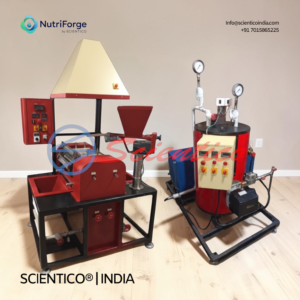
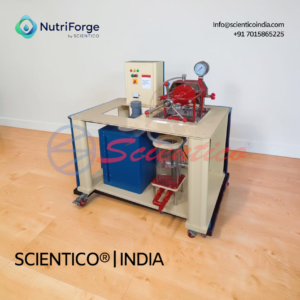
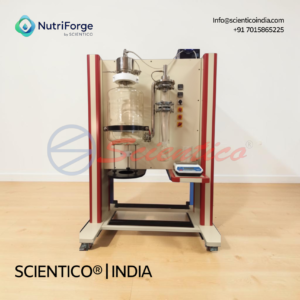
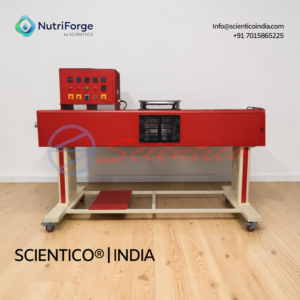
How to Specify Industrial Food Technology for a Lab or Tender
Select equipment against the course experiment, measurable outcome and operating conditions required by the institution. Start with the product or experiment name. Use a catalogue model only to identify the configuration being offered after the buyer's functional requirement is clear.
Questions to settle before requesting prices
- Which experiment or practical outcome is required?
- What range, capacity and measurement method must be provided?
- Which accessories, utilities and documents form the supplied scope?
- What quantity, destination and tender format apply?
How to compare distributor or supplier offers
Compare the measurable specification, included accessories, experiment coverage and written exclusions before comparing commercial offers.
Keep the buyer's original line numbers. Record the offered product, model, included scope, deviation and document reference in separate columns.
Information Scientico needs
Send the product names or syllabus, quantities, destination, required utilities, requested documents and submission deadline. If a reference brand or model appears, attach the underlying specification so equivalence can be checked.
Specifying a Industrial Food Technology lab?
These set out the equipment list, the specification and the documentation an evaluator asks for.
Related equipment ranges
Departments equipping this lab usually specify these alongside it.
Distributors and tender bidders
We manufacture at our own works in Ambala and supply through distributors in most markets.
All Industrial Food Technology Products (4)
Browse by the product or apparatus name used in a syllabus, BOQ or tender. Each page keeps its catalogue model as a secondary technical reference and provides the available specification and quotation route.
About Industrial Food Technology
Food technology teaching equipment sits between a process engineering lab and a working food plant. The unit operations are the same ones a chemical engineer studies, but the product is edible, so the material of construction, the cleanability of every wetted part and the way a unit is stripped down after a run stop being details and become the specification. Departments running food science, food processing, agricultural engineering, dairy technology and hospitality programmes all buy from this category, and each of them weights the same list differently.
Scientico has manufactured and exported laboratory and process teaching equipment since 1993 from its own works in Ambala, Haryana, and supplies institutions in more than 60 countries. Everything in this category is quoted to a written specification rather than sold off a price list, because feed material, contact material, heating source and available services change from one department to the next.
The unit operations a food technology lab has to demonstrate
A food processing lab is bought operation by operation, not machine by machine. Write the operations your syllabus covers first, then attach apparatus to each one.
OperationApparatus in the rangeWhat the student actually measures
Size reduction and pulpingHammer mill, plate and burr mills, pulper with interchangeable sieve baskets, grater and slicer unitsParticle size distribution against screen, throughput at a set feed rate, energy drawn per unit mass
Mixing, blending and homogenisingPlanetary mixer, ribbon blender, dough kneader, high shear homogeniser, colloid millUniformity by staged sampling, droplet or particle size before and after, motor load through the cycle
Thermal processing and pasteurisationSteam jacketed kettle, plate heat exchanger unit, batch steriliser, controlled water bathTemperature against time at fixed probe points, heat transfer coefficient, come-up and cool-down behaviour
Drying and dehydrationTray dryer, fluidised bed dryer, spray dryer, vacuum dryer, freeze dryerDrying curves, constant and falling rate periods, residual moisture against elapsed time
Evaporation and concentrationSingle effect evaporator, climbing film unit, vacuum panConcentration ratio, boiling point elevation, steam economy, vacuum effect on product temperature
Filtration, separation and extractionFilter press, basket and tubular centrifuges, cream separator, screw press and oil expellerYield and recovery, cake resistance, separation efficiency, residual oil or solids in the reject stream
Packaging and handlingBand and impulse sealers, vacuum and gas flush sealer, bottle and pouch filler, capping and labelling benchSeal integrity by the applicable test method, fill accuracy across a run, behaviour of different packaging films
Two practical notes. First, decide early whether a given operation is taught at bench scale or pilot scale, because that single decision drives footprint, services and price far more than brand or finish. Second, a spray dryer, a freeze dryer and an evaporator each carry a services load that a tray dryer does not, so they belong in the layout drawing before they belong in the purchase list.
The quality and analysis bench that has to sit beside the units
Processing equipment without a measurement bench produces demonstrations, not experiments. The analysis side is usually under-budgeted, and it is the part external reviewers ask about.
PropertyTypical instrument
Moisture and total solidsMoisture balance, hot air oven, vacuum oven, desiccators
Soluble solids, acidity and pHHand and digital refractometers, pH meter with buffers, titration assembly
Viscosity, texture and consistencyRotational viscometer, texture analyser, penetrometer, consistometer
Colour and appearanceColorimeter, colour comparator, illuminated inspection bench
Sample preparation and culture workLaminar flow bench, incubator, autoclave, colony counter, water bath, hot air steriliser
Weighing and volumeAnalytical balance, precision balance, calibrated glassware
Report results against the applicable test method for the property measured. The institution confirms which methods its syllabus and its own regulatory obligations call for, and writes those into the practical manual. Scientico supplies factory calibration certificates with instruments where calibration applies. Scientico is not ISO/IEC 17025 or NABL accredited, so where a third-party accredited certificate is needed the department arranges it through an accredited laboratory. A working calibration and maintenance schedule for the bench instruments is worth more at review time than any single certificate.
Hygiene and materials: the line that separates a food unit from a process unit
This is the part departments most often leave out, and it is the part that decides what arrives. A general process unit and a food technology unit can look identical in a photograph. The difference is in the wetted path.
Put these points in the specification in plain words:
All food contact surfaces in stainless steel of a stated grade, with the grade written into the specification rather than left as "SS".
Internal welds ground and polished, internal corners radiused, no crevice or dead leg where product can sit.
The unit drains fully and does not hold liquid in the contact path when idle.
Gaskets, seals and any flexible tubing of a declared food-grade material, with the material named in the offer.
Dismantling for cleaning without special tools, and a stated wash-down method for the parts that cannot be removed.
No painted or plated surface anywhere in the contact path, and splash-zone parts finished so they can be wiped down.
Frame, guards and motor selected for a wet room, with the enclosure protection rating stated for anything in the splash zone.
A specification written that way gives a technical evaluation committee something concrete to score. A specification that says "food grade construction" gives it nothing. If your team is drafting the document now, the method in our guide to writing equipment specifications applies directly to this category, and the reference note on IS and ASTM standards in lab testing covers how to cite a method without accidentally writing a single supplier into the tender.
Services and layout for a food processing lab
ServiceWhat to plan for
PowerSeparate single and three phase points per unit rather than a shared strip. Driers, kettles and evaporators hold load for long periods, so size the circuit for continuous running.
WaterPotable supply taken to the units themselves, a softened line where scale would foul a heat exchanger, and a hose point with a spray gun for wash-down.
Steam or hot waterWhere a jacketed kettle, steriliser or evaporator is specified, fix the boiler or electric steam generator location, the steam line route and the condensate return before the layout is frozen.
DrainageTrapped floor gullies, a graded floor that runs to them, and no unit standing in a spot where wash-down water pools under the frame.
VentilationExtraction over driers, kettles and evaporators with matched make-up air. A drying bay puts a real humidity load into the room and will fog a general purpose lab.
FinishesWashable non-slip floor, coved wall junctions, wipeable benches. Wood tops and porous floors do not belong in the processing bay.
Storage and flowRaw material store, sample refrigeration, and chemicals kept away from food materials. Where the room allows, run raw material in at one end and packed product out at the other, with wash-up on its own side.
Departments building this room from scratch usually run it alongside the wider programme, so the sequence in our new lab setup timeline and the intake-based approach in the lab budget planning guide are useful when the civil work and the equipment order have to land in the same session. Where the food lab shares staff or space with process engineering, the chemical engineering equipment list shows which units genuinely serve both. Documentation for NBA accreditation and the AICTE lab requirement notes should be assembled while the lab is being commissioned rather than reconstructed a year later.
For distributors, resellers and tender bidders
Food technology is a good category to carry, because it is bought by three separate faculties and it repeats. It is also a category where a thin offer loses on technical evaluation before price is opened. What a bidder needs from the manufacturer behind the bid:
What the bid needsWhat we provide
Specification detail that survives technical evaluationLine-by-line technical sheets naming contact material grade, gasket material, heating arrangement, drive rating and control scheme, so each tender clause can be answered directly instead of with a brochure
Authorisation to bid on our behalfManufacturer authorisation issued against a named tender, with the manufacturer details a purchase committee checks
Company and product documentationISO 9001:2015 certification, CE conformity documentation on applicable models, factory calibration certificates, manuals and dimensioned drawings
Spares across the product lifeWear parts identified at quotation stage, screens, gaskets, seals, heating elements and belts held as a named list rather than sourced case by case
Installation and commissioning responsibilityScope split agreed in writing before order, covering who provides services, who positions the unit and who runs the acceptance demonstration
If you are evaluating whether to add this category, start with the distributor and dealership opportunity page, then run us through the checks in our own manufacturer due diligence guide. For bid paperwork, the manufacturer authorisation form process explains how we issue an MAF and what we need from you, and the shorter note on what MAF stands for in a tender is useful to send to a buyer who has queried the term. Public procurement bidders should read the GeM procurement guide and the tender document checklist before the submission window closes.
Long term, the relationship is judged on spare parts and after-sales support, not on the first order. Importers outside India should also review the export documentation guide and the importer guide to sourcing from India, and can download our quality certifications from the downloads section.
Sending an enquiry that comes back as a usable quotation
Tell us the operations you teach, the batch size a student group needs to handle, the heating source available in the room, and whether the unit is bench scale or pilot scale. Say which contact material grade your department wants written into the offer. If the purchase runs through a tender, send the draft technical schedule and we will mark where a clause is unintentionally restrictive, where it is too loose to evaluate, and where an accessory has been left out that the practical will need on day one. Utilities matter here more than in most categories, so state the power supply, the steam or hot water source and the drainage available in the room. A unit specified around services you do not have becomes a display piece.
Quotations in this category are prepared against the written requirement. Send your list, your drawing or your draft specification and our engineers will respond with a technical offer, drawings and the documentation set your committee will ask for. Contact us to start the specification.
Need help matching the requirement?
Tell us the product or experiment, quantity and destination so the configuration and commercial scope can be reviewed.
Industrial Food Guides & Resources
Setup guides, experiment procedures and buying advice from Scientico's engineering team.