
Terminology, experiment and buying guide
Friction Board Apparatus vs Inclined Plane Friction Apparatus
Understand which friction experiment a buyer actually needs, compare measurement arrangements, and connect the requirement to a published Scientico product.
“Friction board” is a search term, not a complete specification
Schools, engineering colleges and tender schedules may use friction board apparatus, inclined plane friction apparatus, coefficient of friction apparatus or friction experiment kit for related demonstrations. Those names do not always describe the same supplied items or measurement method.
The buyer should state whether students must find static friction, kinetic friction, the angle of repose, the relationship between normal reaction and limiting friction, or the effect of surface pairs. That decision determines the appropriate apparatus and accessories.
Scientico apparatus connected to this search
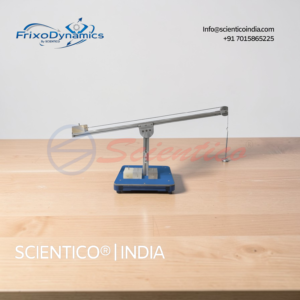
Confirm the current configuration, surfaces, weights, measuring elements and documentation in the quotation. The term “friction board” should not be used to imply an accessory that is not listed.
How common product names map to experiments
A friction board often describes a horizontal or adjustable surface used with a block and pulling force. An inclined plane arrangement determines the condition at which a body begins to slide and can relate the critical angle to the coefficient of static friction. A belt-friction apparatus addresses tension relationships around a drum and is a different mechanics experiment.
| Name seen in a search or BOQ | Likely teaching intent | Clarification to request |
|---|---|---|
| Friction board apparatus | Sliding friction between selected surfaces | Horizontal or inclinable board, pulling method, block set and added loads |
| Inclined plane friction apparatus | Impending motion, angle of repose and static friction | Angle range and reading method, plane surface, specimen block and loading |
| Coefficient of friction apparatus | General result rather than one fixed construction | Required equation, measurements and surface combinations |
| Belt friction apparatus | Relationship between belt tensions, wrap angle and friction | Drum arrangement, load measurement and intended law or equation |
Friction board versus inclined-plane apparatus
Driving force
A horizontal board generally needs a measured pull. An inclined plane uses the component of weight along the plane as the angle increases.
Primary observation
The board arrangement may record the force required to start or maintain motion. The inclined plane records the critical angle or associated loading condition.
Surface study
Both can compare surface pairs when the supplied blocks and contact materials are defined.
Procurement risk
The phrase “friction apparatus” can hide missing blocks, weights, force measurement, angle indication or alternative surfaces.
If a curriculum requires both horizontal pulling and inclined-plane work, ask whether one configurable unit supports both methods or whether two apparatus are required. Record the answer as an inclusion or deviation.
Build the observation plan before writing the specification
- Name the body and surface pair. State which material combinations students must compare.
- Define static or kinetic friction. Starting motion and maintaining motion are different observations.
- State the measured quantities. These may include applied load, normal load, angle and the onset of sliding.
- Require repeated trials. Surface condition and operator technique can produce scatter.
- Define the result. Specify the expected graph, coefficient calculation or comparison.
Controls that improve repeatability
- Clean and inspect contact surfaces between test series.
- Use the same block orientation for repeated readings.
- Raise an inclined plane steadily without shock.
- Read the angle at the agreed motion criterion.
- Record units and added loads explicitly.
- Do not mix results from different surface conditions without labelling them.
Buyer checklist for a friction experiment kit
Use the checklist while comparing offers. A lower price is not comparable when the apparatus supports fewer experiments or omits measuring components.
Copy-ready RFQ wording
Provide an apparatus for demonstrating friction on an inclined plane and determining the coefficient of static friction from controlled observations. The bidder shall describe the plane and angle indication, specimen blocks or surface pairs, supplied weights and accessories, observation method, calculations supported, operating instructions and acceptance demonstration. Every inclusion, exclusion and optional item shall be stated against the proposed model.
If the schedule specifically calls for a friction board, add the intended horizontal-force experiment. If it calls for belt friction, issue a separate line because the teaching principle and construction differ.
Questions about friction apparatus
Can “friction board” and “inclined plane” be treated as exact synonyms?
No. They may overlap in supplier catalogues, but the physical arrangement and measurements can differ. Define the experiment before accepting an equivalent name.
What creates the biggest comparison error?
Comparing offers by title while ignoring the blocks, contact surfaces, loads and measurement method included with each apparatus.
Does the apparatus require electrical power?
Do not infer utilities from the product name. Ask the supplier to state all required utilities and whether any sensor or digital measurement option changes them.
How should an institution accept the apparatus?
Check the supplied components, movement and adjustment, readable measurements, surface condition and one repeatable trial against the agreed laboratory sheet.
Match the product to the required friction experiment
Send the experiment wording, quantity, programme and destination so the proposed model and supplied scope can be reviewed before pricing is compared.
Request apparatus detailsRead the wider forces and friction guide