
There is no single HS code for laboratory equipment. Customs classifies each item by what it is and what it does, and the same teaching rig can end up under different codes in different tariffs. For educational apparatus the heading to know is 9023, which covers instruments, apparatus and models designed for demonstration in education or exhibitions and unsuitable for other uses. Testing machines, flow and pressure instruments, analysis instruments and test benches sit in neighbouring headings. The code you declare decides the duty rate, so agree it with your clearing agent before the order is placed, not at the port.
Equipment mentioned in this guide
Review the product information, specifications and model before requesting a quotation.
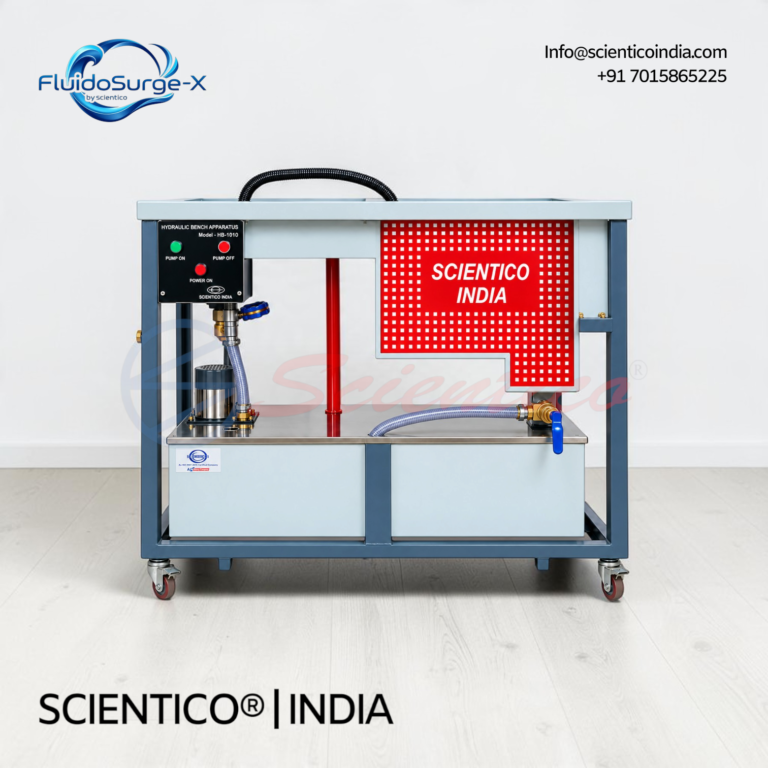
Hydraulic Bench Apparatus | FluidoSurgeX 101
The SCIENTICO FluidoSurgeX 101 Hydraulic Bench Apparatus is a basic supply and measurement unit used in fluid mechanics laboratories. It enables the circulation, measurement, and collection of water for a wide range of experimental modules.The system operates on a closed-loop water circuit consisting of a storage tank, centrifugal pump, and an elevated measuring tank. Volumetric flow rates are determined using stepped measuring tanks and a calibrated measuring beaker, supported by manual stopwatch timing.An integrated work surface with a built-in flume allows experiments involving weirs while ensuring safe placement of accessories and controlled collection of return water.
View product details
Pipe Friction Apparatus | FluidoSurge-X 168
The Pipe Friction Apparatus FluidoSurge-X 168 is designed for experimental determination of friction losses in pipe flow. It enables study of both laminar and turbulent flow regimes under controlled conditions. The apparatus allows measurement of head loss and determination of critical Reynolds number. It is suitable for fluid mechanics laboratory instruction and experimental analysis.
View product details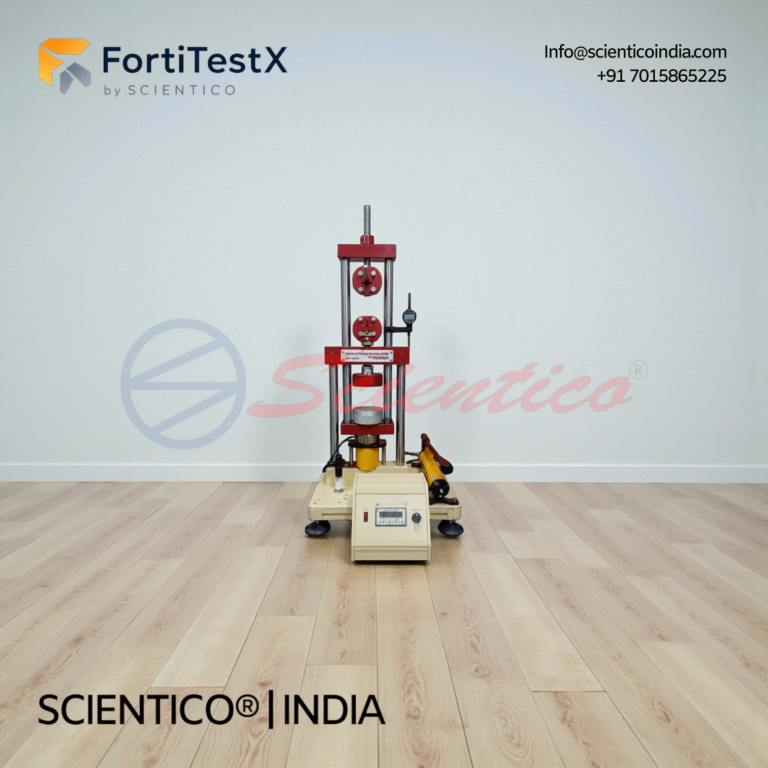
Universal Testing Machine 30kN | FortiTestX – 16
Universal Testing Machine 30kN FortiTestX 16 is a benchtop strength of materials lab equipment unit designed for tensile, compressive, bending, and elongation testing of metallic and non-metallic specimens using a hand-operated hydraulic system requiring no external power supply. This Universal Testing Machine 30kN generates test forces up to 30 kN through a hydraulic system, displaying load on a large dynamometer gauge with trailing pointer and measuring elongation via a dial gauge with 0.01 mm graduation. The FortiTestX 16 accepts a comprehensive range of standard and optional accessories for shear, cupping, spring, and Brinell hardness testing, making it a complete universal testing machine 30kN strength of materials lab equipment unit for undergraduate engineering and materials science programmes.
View product detailsWhy the code matters for your budget
A customs code does three jobs. It sets the duty rate in your national tariff, it decides which taxes are charged on top, and it tells customs which permits or exemptions may apply. A wrong code can mean a delayed container, a reclassification and extra duty, depending on the country.
Here is the effect with illustrative figures. The rates below belong to no particular country; replace them with the rates in your own tariff. To keep it independent of any currency, take a consignment with a CIF value of 100 and a 16 percent value added tax charged on the CIF value plus duty.
| Case | Duty rate | Duty | VAT base | VAT 16% | Total tax | Landed cost |
|---|---|---|---|---|---|---|
| A | 0% | 0 | 100 | 16.0 | 16.0 | 116.0 |
| B | 10% | 10 | 110 | 17.6 | 27.6 | 127.6 |
| C | 25% | 25 | 125 | 20.0 | 45.0 | 145.0 |
Case B costs 11.6 more than case A for every 100 of CIF value, which is 11.6 percent. Case C costs 29 more, which is 29 percent. On a consignment worth 20,000 in your currency, that is 2,320 and 5,800. All figures were computed with Python. Many customs systems add freight and insurance to the goods price to reach the dutiable value, which is why a CIF quotation matters; check how your authority values imports.
The HS in two minutes
The Harmonized System (HS) is the international goods nomenclature kept by the World Customs Organization. The first six digits are shared. Each country or customs union adds its own digits, so the full tariff line in your country may have eight, ten or more digits, and the duty rate is attached to that national line. Classification follows the General Rules of Interpretation. Rule 1 says goods are classified by the terms of the headings and any Section or Chapter Notes, and the rules are applied in order. In practice you read the heading text first, then the notes, then the national subdivision.
The headings most lab and TVET equipment is tested against
The wording below is the HS heading text as published by the United Nations Statistics Division. The right column lists equipment families that are commonly considered for that heading. These are starting points for a conversation with your customs broker, not rulings. Classification is decided on the actual goods, their construction and their use.
| Heading | Heading text | Equipment families to consider |
|---|---|---|
| 9023 | Instruments, apparatus and models, designed for demonstrational purposes (in education or exhibitions), unsuitable for other uses | Apparatus built only to demonstrate a principle to students, such as teaching rigs and cut-away or working models |
| 9024 | Machines and appliances for testing the hardness, strength, compressibility, elasticity or other mechanical properties of materials (e.g. metals, wood, textiles, paper, plastics) | Universal testing machines, hardness testers, impact and torsion testers |
| 9026 | Instruments and apparatus for measuring or checking the flow, level, pressure of liquids or gases (e.g. flow meters, heat meters), not those of headings 9014, 9015, 9028 or 9032 | Flow meters, pressure gauges and level instruments that work as measuring instruments |
| 9027 | Instruments and apparatus for physical or chemical analysis (e.g. polarimeters, spectrometers), for measuring or checking viscosity, porosity, and for measuring quantities of heat, sound or light | Viscometers, calorimeters, analysis instruments |
| 9031 | Measuring or checking instruments, appliances and machines, not elsewhere specified in the chapter; profile projectors. Subheading 903120 is test benches | Balancing machines and test benches for machinery |
Electrical training boards, PLC trainers, motors and glassware belong to other chapters, and their classification depends on construction and purpose. Ask your broker for the local rule or an advance ruling where your customs authority offers one.
The 9023 test: “unsuitable for other uses”
Heading 9023 has a strict condition built into its wording: the apparatus must be designed for demonstration and unsuitable for other uses. A rig whose only purpose is to let students observe a principle may meet it. A working instrument that a laboratory or a factory could use for real measurement may not, even if it is sold to a college. Classification practice differs between countries, and some customs authorities look at function first, for example treating an item as a flow instrument. Do not assume either outcome.
What helps in practice is evidence. Send your agent the manufacturer’s datasheet, clear photographs, a plain statement of what the apparatus is designed to do, and your institution’s end-use letter. For a hydraulic bench, for instance, the file should show that it supplies water and measures flow by volume and time for student experiments. For a universal testing machine used in a teaching lab, the datasheet shows a real testing machine, so 9024 is a heading your broker is likely to weigh. Each of our product pages offers a datasheet download for this purpose.
How to classify an item, step by step
- Collect the facts. Datasheet, photographs, model name, what it does, what it is made of, how it is powered.
- Decide the essential function. Demonstrate, test, measure, analyse, or generate something.
- Read the heading texts above and the Section and Chapter Notes in your tariff.
- Find the national line under the six-digit heading and read its duty rate and any conditions.
- Ask how your customs has treated similar imports. Your clearing agent will know, and some authorities publish rulings.
- Use the same code on every document: proforma invoice, commercial invoice, packing list, and customs declaration. Mismatches trigger queries.
- Keep the file. If customs questions the code later, the datasheet and end-use letter are your evidence.
Duty exemptions for schools and universities
Some countries let educational and scientific institutions import certain equipment at reduced or zero duty. One international framework behind this is the UNESCO Agreement on the Importation of Educational, Scientific and Cultural Materials (the Florence Agreement of 1950) and its Nairobi Protocol, concluded on 26 November 1976 and in force since 2 January 1982. Annex D of the Protocol covers scientific instruments and apparatus, together with matching spare parts and components. One condition in the text is that instruments of equivalent scientific value are not made in the importing country. The United States Department of Commerce describes the same Annex D scope as instruments meant exclusively for educational or pure scientific research use by qualified nonprofit institutions.
Whether your country is a party, how it applies the scheme, and which institutions are approved are matters of national law. Do not assume an exemption applies. Ask your revenue or customs authority in writing, and ask the funder if the purchase is donor-financed, because many grants and loans come with their own tax rules. Our guide on importing lab equipment duty-free for universities in Africa and Asia covers the practical side of applying.
The documents your clearing agent will ask for
- Proforma and commercial invoice showing the HS code you agreed, the value and the delivery terms
- Packing list with weights and dimensions per package
- Bill of lading (sea) or airway bill (air)
- Certificate of origin, where you want to claim a preferential rate
- Datasheets and photographs for each model, plus an end-use or exemption letter if you claim relief
- Any import permit or conformity certificate your country requires for the goods, which you must confirm locally
- Insurance certificate for goods sold on CIF terms
Our guides on export documentation from India and how to read a CIF quotation explain the shipping side.
Common mistakes that cause delays
- Taking the code from a search result. The same product name can fall under different codes. Classify the actual item.
- Using a different code on different documents. The invoice, packing list and declaration must agree.
- Claiming an exemption without the paperwork. Get the exemption letter first.
- Describing the goods vaguely. “Lab equipment” on an invoice invites inspection. Name each model and its purpose.
- Ignoring the tax stack. VAT and other levies are often charged on the value after duty, as the example above shows.
- Leaving classification to the last week. Settle it before the order is confirmed, because it changes your landed cost.
What to ask your supplier
- A datasheet for every model, with a clear description of what it does
- A quotation on CIF terms to your port, so you can estimate dutiable value
- The HS code you want shown, agreed in advance with your clearing agent, written the same way on every document
- Package weights and dimensions, for freight and for the packing list
To budget a lab or workshop, send us your equipment list and destination through the contact page, and we will reply with a quotation and the datasheet for each model. Prices are given on quotation. You can also browse datasheets in the downloads section.
Equipment this applies to
- Hydraulic Bench Apparatus (FluidoSurgeX 101)
- Pipe Friction Apparatus (FluidoSurge-X 168)
- Universal Testing Machine 30 kN (FortiTestX 16)
Related guides
- How to import lab equipment from India
- Delivery lead times: what to plan before the semester starts
- Laboratory equipment RFQ checklist
- TVET lab equipment supplier
Frequently asked questions
Is there one HS code for all laboratory equipment?
No. The code depends on what each item is and does. Teaching apparatus, testing machines, flow instruments, analysis instruments and test benches are tested against different headings, and national tariffs add their own digits.
Which HS code applies to educational lab apparatus?
Heading 9023 covers instruments, apparatus and models designed for demonstration in education or exhibitions and unsuitable for other uses. Only items that meet both conditions qualify. Working instruments that could be used for real measurement are usually tested against other headings, and practice differs between countries.
Can a school or university import lab equipment duty-free?
Only if your national law or an approved exemption scheme allows it. The Florence Agreement and its Nairobi Protocol are one international framework, with conditions such as no equivalent local production, and a focus on qualified non-profit institutions. Check with your customs authority in writing.
Who is responsible for the HS code on the invoice?
The supplier can suggest a code, but the customs declaration is made by the importer or the clearing agent, who is accountable for it in most systems. Agree the code before the order.
What happens if the code is wrong?
Customs may query the declaration, hold the goods, reclassify them and charge extra duty or penalties, depending on the country. A datasheet and an end-use letter in the file make a query easier to settle.
What should I ask a supplier to send with a quotation?
A datasheet for each model, a CIF quotation to your port, package weights and dimensions, and consistent model names and codes on the proforma invoice.
Sources and notes
Checked on 17 November 2026. Heading wording: United Nations Statistics Division, Harmonized System tables for headings 9023, 9024, 9026, 9027 and 9031. General Rules of Interpretation: International Monetary Fund legal paper on tariff classification. Nairobi Protocol Annex D: University of Oslo treaties library and the United States Department of Commerce Florence Agreement pages. Tariff rates, exemptions and permits change; confirm every figure with your own customs authority before you order.
One honest ask
This article and public product information are available to browse without an account. To open a product datasheet, complete the contact form shown with its download link. If this article was useful, leave your email and two things happen: we send you this page as a plain-text block you can paste into a tender file or an internal email, and we notify you the next time we publish a buyer tool like this one. Nothing else. No drip sequence, no sales calls booked without asking.