
Gear Train Model | ProDynami 1248
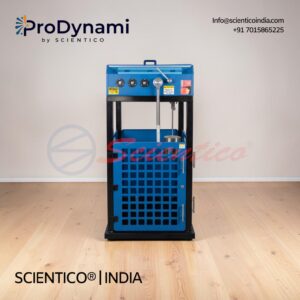
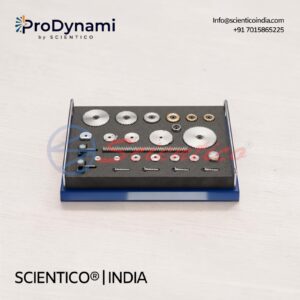
Gear Train Model ProDynami 1248 demonstrates the mechanism of compound gears, letting students calculate gear ratio, velocity ratio and torque ratio changes caused by intermediate gears. This Gear Train Model uses steel gears with 40, 60, 80, and 100 teeth, a modulus of 2mm, and a P-ring 5x650mm drive belt on an anodised aluminium base frame. Bearings slide along T-slots for flexible set-ups, and plastic belt pulleys are available in 300mm, 320mm, and 400mm diameters. The whole equipment weighs 3-4 kg and operates using manual power.
The Gear Train Model ProDynami 1248 is designed to demonstrate the mechanism of compound gears. Through this Gear Train Model, students can inspect and calculate changes in gear ratio, velocity ratio and torque ratio caused by intermediate gears in compound gearing.
Product Overview
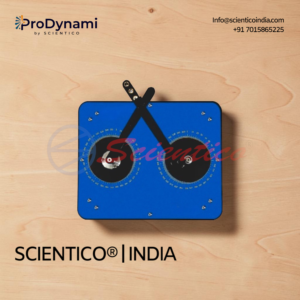
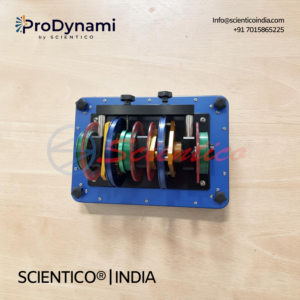
The Gear Train Model ProDynami 1248 uses gears of different pitch circle diameter and number of teeth, meshed together and seated on the base at the same level. Pins lock the gears in place, and the gears are adjustable. Students can perform different experiments by changing the position of the gears, achieving different velocity ratios and torque ratios. This Gear Train Model is used to demonstrate belt drives, wheel and disk drives, and gear trains. Basic terminology and relationships such as transmission ratio, direction of rotation reversal, reference circle and modulus, and the function of intermediate gears can be clearly demonstrated. A solid frame made of anodised aluminium section forms the base for the unit. Bearings for the pulleys and gears are attached to T-slots in the profile using clamping screws. These are easy to release and can be slid horizontally, making a wide range of different set-ups possible. All experiments are carried out using manual power. The size of the unit ensures the experiment is clearly visible even for larger groups of students.
Gear Train Model ProDynami 1248 — Technical Specifications
| Parameter | Value |
|---|---|
| Experiment Type | Demonstration experiment on how gear trains work |
| Gear Material | Steel |
| Base Frame Material | Aluminum section, anodized |
| Steel Gears, No. of Teeth | 40, 60, 80, 100 |
| Modulus | 2mm |
| Drive Belt | P-ring 5x650mm |
| Whole Equipment Weight | 3-4 kg |
| Compound Gears Arrangement | Included |
| Plastic Belt Pulleys, Diameter | D=300mm, D=320mm, D=400mm |
Technical Data
Steel Gears
| Parameter | Value |
|---|---|
| No. of Teeth | 40, 60, 80, 100 |
| Modulus | 2mm |
Drive Belt
| Parameter | Value |
|---|---|
| Type | P-ring 5x650mm |
Whole Equipment
| Parameter | Value |
|---|---|
| Weight | 3-4 kg |
Compound Gears Arrangement
| Parameter | Value |
|---|---|
| Plastic Belt Pulleys Diameter | D=300mm, D=320mm, D=400mm |
Key Features
- Mechanism Type: Gear Train Model demonstrating compound gear mechanisms
- Gear Meshing: Gears of different pitch circle diameter and number of teeth meshed together
- Base Mounting: Gears seated on base at same level, locked with pins
- Adjustability: Gears adjustable to achieve different velocity ratio and torque ratio
- Demonstration Scope: Belt drives, wheel and disk drives, and gear trains
- Base Frame: Solid frame made of anodised aluminium section
- Bearing Mounting: Attached to T-slots in profile using clamping screws
- Setup Flexibility: Bearings slide horizontally for a wide range of set-ups
- Power Source: All experiments carried out using manual power
- Visibility: Unit size ensures clear visibility for larger student groups
- Gear Teeth Count: 40, 60, 80, 100
- Gear Modulus: 2mm
- Drive Belt: P-ring 5x650mm
- Equipment Weight: 3-4 kg
- Plastic Belt Pulley Diameters: D=300mm, D=320mm, D=400mm
Experiments
- Function and differences between belt drives, wheel and disc drives and gear trains
- Explanation and demonstration of transmission
- Explanation and demonstration of reference circle
- Explanation and demonstration of modulus
- Explanation and demonstration of function of intermediate gears
- Explanation and demonstration of compound gear functionalities
Construction and Design
The Gear Train Model ProDynami 1248 uses gears of different pitch circle diameter and number of teeth, meshed together and seated on the base at the same level. Pins lock the gears in place, and the gears are adjustable. Students can change the position of the gears to achieve different velocity ratios and torque ratios. A solid frame made of anodised aluminium section forms the base for the unit. Bearings for the pulleys and gears are attached to T-slots in the profile using clamping screws. These are easy to release and can be slid horizontally, allowing a wide range of different set-ups. All experiments are carried out using manual power. The steel gears have 40, 60, 80, and 100 teeth, with a modulus of 2mm. The drive belt is a P-ring measuring 5x650mm. The whole equipment weighs 3-4 kg. Plastic belt pulleys are available in diameters of 300mm, 320mm, and 400mm. This construction allows the Gear Train Model to clearly demonstrate compound gear functionalities, transmission ratio, reference circle, modulus, and the function of intermediate gears.
Scope of Delivery
- 1 experimental unit
- 1 instruction manual
- Compound Gears Arrangement
Q: What is the Gear Train Model ProDynami 1248 used for?
A: It demonstrates the mechanism of compound gears, allowing students to inspect and calculate changes in gear ratio, velocity ratio and torque ratio due to intermediate gears in compound gearing.
Q: What terminology and relationships can be demonstrated using this model?
A: Transmission ratio, direction of rotation reversal, reference circle, modulus, and the function of intermediate gears.
Q: How many teeth do the steel gears have?
A: The steel gears have 40, 60, 80, and 100 teeth, with a modulus of 2mm.
Q: What is the weight of the whole equipment?
A: 3-4 kg.
Q: What does the scope of delivery include?
A: 1 experimental unit, 1 instruction manual, and the compound gears arrangement.
Need Assistance? We're Here to Help!
Connect with our team for product specifications, pricing, and customized solutions for your institution or project.