
A BTech Renewable Energy Engineering programme lives or dies on its lab. Theory papers on solar, wind, biomass and hydrogen only stick when a student has physically wired an MPPT, tilted a PV array through noon, or watched a Kaplan runner change speed under a load bank. That is why the renewable energy trainer line-up is the single biggest spend decision an HOD makes in the first two years of a new programme. Pick it wrong and you spend the next NBA cycle explaining gaps to the visiting team. Pick it right and the same trainers survive three syllabus revisions.
I have been specifying renewable energy trainer benches for BTech Renewable Energy labs for a long time. Below is what I actually tell principals when they call, not the brochure version.
Equipment mentioned in this guide
Review the product information, specifications and model before requesting a quotation.
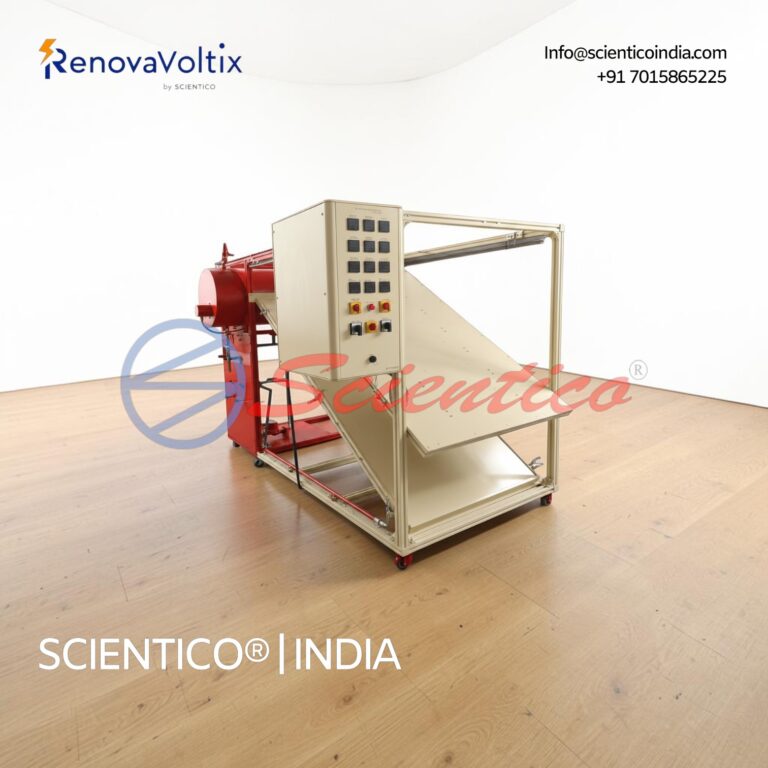
Solar Thermal Trainer | RVX-010
The Solar Thermal Trainer RVX-010 is a laboratory-based solar thermal training platform that demonstrates solar thermal heating of domestic water using both thermosiphon and forced pumping system configurations. It transforms solar energy into usable thermal energy using a high-power artificial solar simulator, enabling a full range of controlled indoor experiments. Product Overview The Solar Thermal Trainer RVX-010 consists of four core elements: a thermal solar collector, a storage tank, an artificial light source solar simulator, and a pumping system. The solar collector is mounted on an aluminium frame with copper tubes through which water flows, designed for maximum absorption efficiency. The accumulator tank is made from anti-corrosive material with an integrated heating element and safety device for over-temperature protection. The solar simulator uses lamps emitting radiation similar to sunlight, measured by a radiation sensor. Three lighting configurations are available: all lamps on, half the lamps on in a zig-zag pattern, or one lamp on. A pump provides forced convection of heat transfer fluid through the accumulator tank. The system supports both thermosiphon and forced pumping operation. Safety valves for overpressure protection are included. Sensors and meters record temperature, flow, and radiation. The unit is mounted on a metallic structure with wheels for mobility and features HDF panel construction with LED digital display instrumentation.
View product details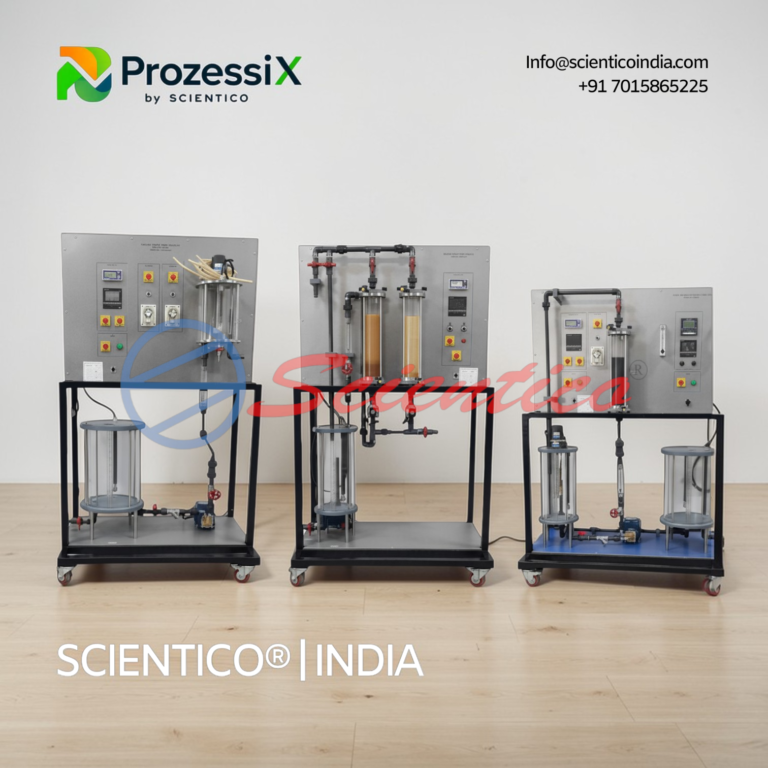
Analytical Process Control Trainer | ProzessiX PX-04
The Prozessix PX-04 is an analytical process control trainer for instrumentation and process engineering laboratories, giving students hands-on PID loop tuning across flow, level, temperature and pressure processes on a single bench.
View product detailsBTech Renewable Energy Engineering syllabus, where the renewable energy trainer fits
Most Indian and African BTech Renewable Energy Engineering curricula (AICTE model, NUC BMAS in Nigeria, TCU in Tanzania, CUE in Kenya, MOHE variants in the Gulf) split practicals across four buckets: solar PV and solar thermal, wind energy conversion, biomass and biogas, and hybrid storage with power electronics. A properly-spec’d renewable energy trainer set has to cover the first three semesters of lab work without duplication. In practice that means one solar thermal bench, one PV characterisation bench with MPPT, one small wind turbine trainer with variable resistive load, and one biogas or fuel-cell demonstrator.
The paper that hurts most colleges is the “Solar Energy Systems Lab” in semester 4 or 5. It expects 30 to 45 practical hours per student per semester. A single PV panel bolted to the roof does not satisfy that. You need a bench where students log I-V curves under changing insolation, swap loads, and calculate fill factor. That is exactly the job of a proper renewable energy trainer.
Specifications that matter for BTech Renewable Energy Engineering
- Solar thermal loop: flat-plate or evacuated-tube collector with calibrated inlet/outlet RTDs, a variable-speed pump, flow meter with better than 2 percent accuracy, and a data-logging panel. If the trainer cannot output efficiency vs. mass flow, walk away.
- PV characterisation: minimum 50 Wp panel, variable resistive load bank in decade steps, digital I-V plotter or PC interface, pyranometer input, and thermocouple on the cell back. Anything less and you cannot run the fill-factor experiment credibly.
- Wind trainer: variable-speed blower or fan bank, a real three-blade rotor (not a toy), tachometer, torque sensor if you can afford it, and a rectifier + resistive load stage. The point is to plot Cp vs. tip-speed ratio.
- Standards on paper: insist on ISO 9001:2015 manufacture and CE conformity on electricals. NBA panels ask for both.
- Safety: RCCB, MCB, emergency stop on every AC bench. This is non-negotiable for a student-facing renewable energy trainer.
- Documentation: lab manual with 8 to 12 experiments, calibration certificate for every sensor, and a wiring diagram. If the vendor cannot ship these on day one, your NAAC file is already weak.
Common mistakes BTech Renewable Energy Engineering colleges make when buying a renewable energy trainer
Mistake 1: Buying a demo, not a trainer. A sealed acrylic box with a fan and a lamp looks pretty at a demo day. It cannot run a 3-hour graded practical. Ask if students can change loads themselves without a technician.
Mistake 2: Skimping on the pyranometer. Colleges spend a lot on the panel and then use a cheap lux meter as a stand-in. Your solar efficiency numbers are then meaningless and the external examiner will notice.
Mistake 3: One trainer for a batch of 30. Standard batch strength in a BTech Renewable Energy lab is 15 to 18 per session. One PV bench for 30 means each student touches it for six minutes. NBA graders count that against you under CO-PO attainment. Budget for two or three benches of the same model, not one of each.
Mistake 4: Forgetting the roof. A solar thermal renewable energy trainer needs real sun for at least half the experiments. If your lab is on the ground floor with no roof access, you need an artificial insolation source or a rooftop extension kit. Sort this before you cut the PO.
Mistake 5: No spares clause. Panels crack. Pumps seize. Load banks burn a resistor. Get the spares kit priced into the original quote, not a year later at import parity.
How the Scientico renewable energy trainer fits BTech Renewable Energy Engineering
For the solar thermal paper I usually specify the Solar Thermal Trainer RVX-010. It runs the standard efficiency-vs-flow, stagnation temperature, and collector time-constant experiments out of the box, and the lab manual maps cleanly to AICTE model curriculum outcomes. Paired with a PV characterisation bench from the same RVX renewable energy family, you cover semester 4 and most of semester 5 with one purchase order. For colleges also running a “Process Instrumentation” elective in the RE department, the Analytical Process Control Trainer ProZessix PX-04 is a sensible add-on because it shares the same data-logging convention.
Compliance: NBA / NAAC / INC / PCI / AICTE requirements
NBA Tier-I inspection for a BTech Renewable Energy Engineering programme checks three things about a renewable energy trainer: does it map to a listed course outcome, is it calibrated, and can the college produce usage records. AICTE’s LOA conditions require documented lab investment against approved intake. NAAC scores you on utilisation, not just purchase.
A trainer built to ISO 9001:2015 with CE electricals, an ISO 17025-traceable calibration certificate (see NABL calibration guide), and a printed lab manual satisfies all three inspections in one shot. Colleges that also run diploma or ITI streams should read the polytechnic lab guide and ITI vocational lab guide because DGT and state polytechnic boards want the same evidence in a slightly different format.
For deeper background on the wider renewable energy trainer market, model choices and what to avoid, the renewable energy trainer buyer’s guide is worth an hour of a purchase committee’s time. Engineering colleges building out a full lab suite should also skim the engineering college lab equipment overview and the thermodynamics lab guide since renewable energy shares half its instrumentation stack with a good thermo lab.
Ordering & delivery for BTech Renewable Energy Engineering labs
Scientico manufactures in Ambala and has been shipping to 30+ countries since 1993. Standard commercial terms for a BTech Renewable Energy Engineering order:
- Incoterms: Ex-works Ambala is default; FOB Mundra or CIF destination port on request. For African universities I usually recommend CIF plus door delivery because inland clearance eats weeks otherwise.
- Lead time: expect several weeks of production for a full renewable energy trainer set, plus sea transit. Air-freight is possible for the electronics-only benches but pump loops and collector frames ship better by sea.
- Semester timing: if your BTech Renewable Energy Engineering practicals start in July, place the PO by March. For a January intake, September. Missing that window means you either teach theory-only for a semester or pay for air freight.
- Payment: LC at sight is standard for institutional buyers overseas; Indian colleges usually go 30 percent advance, balance on dispatch.
- Installation: most benches are commissioned by the college technician using the printed manual. A remote video hand-over is included; on-site commissioning is quoted separately when the college wants it.
If your renewable energy trainer requirement is firm and you have a PO number or an AICTE-approved intake to work against, send the spec sheet through the contact form or WhatsApp the head office. I would rather spend 20 minutes on a call sizing your batch strength correctly than watch a college over-order one bench and under-order another. That single conversation is usually what separates a lab that clears NBA on the first visit from one that does not.
Frequently Asked Questions
How many renewable energy trainer benches does a BTech Renewable Energy Engineering lab actually need?
For a sanctioned intake of 60 students, plan on two solar thermal benches, two PV characterisation benches, one wind trainer and one biogas or fuel-cell demonstrator. That keeps batch sizes at 15 per bench per 3-hour slot, which is what NBA graders expect to see under CO-PO attainment.
Can one renewable energy trainer cover both solar PV and solar thermal for BTech students?
I do not recommend it. Combined benches compromise on both sides: the pyranometer is usually undersized for real thermal work, and the flow loop gets in the way of I-V curve tracing. Buy them separately. You will thank yourself in the third semester.
What warranty and calibration should I insist on for a renewable energy trainer used in a BTech lab?
Minimum 12 months on the full bench, 24 months on the panel and collector, and an ISO 17025-traceable calibration certificate for every sensor at handover. Ask for a spares kit price in the same PO so you are not renegotiating a year later.
Is a Scientico renewable energy trainer acceptable for NBA and AICTE inspection for BTech Renewable Energy Engineering?
Yes, provided you keep the ISO 9001:2015 certificate, CE conformity paperwork, calibration certificates and the printed lab manual in the department file. NBA panels look for the paper trail as much as the hardware.
How long from PO to a working renewable energy trainer bench in a BTech lab?
Realistic timeline is several weeks of production in Ambala plus sea transit for overseas orders. Place the PO at least a full semester ahead of when you want students to run the first practical. Air freight is available for the electronic benches only.
One honest ask
We don't gate anything on this site. You just read the whole thing free. If it was useful, leave your email and two things happen: we send you this page as a plain-text block you can paste into a tender file or an internal email, and we notify you the next time we publish a buyer tool like this one. Nothing else. No drip sequence, no sales calls booked without asking.