
If you are procuring lab equipment for an engineering college, polytechnic, ITI, TVET institute or a research lab, the Incoterm you accept on the pro forma invoice decides more of your final landed cost than the sticker price does. This guide walks through CIF vs FOB vs Ex-Works for lab equipment import, which one I actually recommend for each buyer profile, and how to structure the PO so you do not get stung at the port. It is written for procurement officers, lab-in-charges and HODs sourcing from our engineering training equipment range or comparable trainers from abroad.
Short version: for most first-time Indian and African buyers, CIF is the safest default. Ex-Works looks cheaper on paper and almost never is. FOB sits in the middle and only pays off if you already have a freight forwarder you trust. The rest of this page shows the working.
Equipment mentioned in this guide
Review the product information, specifications and model before requesting a quotation.

Multi Pump Test Rig Apparatus | FluidoSurge-X 294
The FluidoSurge X-294 is a multi pump test rig (series and parallel centrifugal pump test rig) that lets students run single, series and parallel pump configurations on one apparatus and compare the resulting head–discharge–efficiency characteristics.
View product details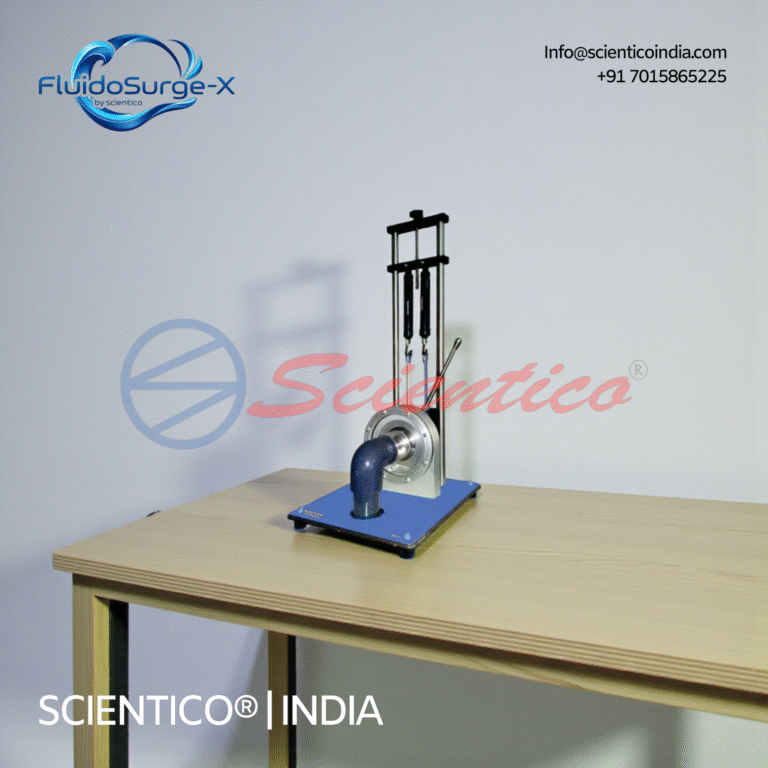
Kaplan Turbine Apparatus | FluidoSurgeX 208
The Kaplan Turbine Apparatus FluidoSurgeX 208 is a laboratory-scale training system designed to study the operating characteristics of a Kaplan reaction turbine. Manufactured by SCIENTICO, the apparatus demonstrates energy conversion from hydraulic power to mechanical power. It is suitable for instructional experiments in fluid mechanics and hydraulic machinery laboratories. The system operates using a controlled water supply from a hydraulic bench.
View product details
Universal Hardness Tester
The Universal Hardness Tester manufactured by Scientico India combines Brinell, Vickers, and Rockwell hardness testing methods in a single machine. The machine uses interchangeable indenters and a built-in optical measuring system for Brinell/Vickers measurements, with direct-reading digital display for Rockwell hardness.
View product detailsWhat you need before you start
Before you ask a supplier to quote CIF, FOB or Ex-Works on your lab equipment import, get these five things in order. Skipping any one of them is how a project slips a full quarter.
- Consignee details finalised. The institute name on the PO must match the IEC (Importer Exporter Code) holder, GSTIN and the bank remittance name. Any mismatch and customs will hold the shipment.
- Floor plan and utilities confirmed. A hydraulic bench needs a drain and a 15A single-phase point. A universal testing machine needs 3-phase 415V, a level RCC plinth and typically 3.5 to 4 m of headroom. Confirm before shipping, not after.
- Budget with a landed-cost buffer. Add roughly 18 to 28% on top of Ex-Works price for freight, insurance, customs duty, IGST, CHA fees and inland transport. If your budget only covers the sticker price, do not go Ex-Works.
- Standards reference in hand. Know whether your NBA/AICTE/NUC/TCU accreditation body wants ISO 9001:2015 quality certification, CE conformity, or specific test standards like ASTM E10 or IS 1500. This shapes the technical specification you send out.
- A freight forwarder pre-empanelled if you plan to go FOB or Ex-Works. Do not start hunting for one after the goods are ready at the origin port.
Step-by-step: lab equipment import
This is the sequence I run for every lab equipment import, whether it is a single hardness tester or a full fluid mechanics setup. Follow it in order.
- Finalise the technical specification. Lock the model, accessories, standards compliance (ISO 9001:2015, CE, ASTM/IS test standards) and any calibration certificates you need. Vague specs create vague quotes, and vague quotes hide costs.
- Request quotes on all three Incoterms. Ask the supplier for Ex-Works Ambala (or origin), FOB Nhava Sheva / Mundra / origin port, and CIF your nearest seaport in the same email. You will see exactly what the ocean freight and insurance line items look like.
- Compare landed cost, not headline price. Add customs duty (typically 7.5 to 10% BCD for lab and scientific instruments under HS 9023 or the relevant heading), IGST 18%, port and CHA charges, and inland trucking. The cheapest headline number rarely wins once you add these.
- Confirm the HS code with your CHA before the PO. Educational scientific instruments often qualify for concessional duty under Notification 51/96 (for recognised institutes with DSIR/registered status). Miss this at PO stage and you pay full duty.
- Issue the PO with clear Incoterm 2020 references. Write “CIF Nhava Sheva, Incoterms 2020” not just “CIF”. Specify the seaport, not an inland city. Specify insurance value at 110% of invoice, all-risk.
- Open the LC or arrange advance in the correct sequence. For a first-time supplier I prefer 30% advance, 70% against scanned BL copy. Full advance is the fastest way to lose leverage if quality slips.
- Get pre-shipment inspection photos and factory acceptance video. Ask for a 5 to 10 minute video of the equipment running at the factory before it is crated. This is standard for reputable manufacturers and non-negotiable for a first order.
- Track the shipment and file bill of entry on time. Sea transit from India to East or West Africa typically adds 3 to 6 weeks; India to India inland movement is days. Late bill of entry filing triggers demurrage that eats your savings fast.
- Inspect on arrival, do not sign the delivery challan blind. Open at least the outer crate at the container yard. Any visible damage goes on the survey report before you take delivery, otherwise the insurance claim is dead.
- Commissioning, training and acceptance. Only release final payment or retention against a signed installation and training completion certificate, with calibration reports attached.
Common mistakes / pitfalls
The five mistakes I see repeat across procurement teams:
- Accepting Ex-Works because it is the lowest number on the quote. You now own the goods the moment they leave the factory floor, including origin trucking, export clearance, ocean freight, insurance and destination handling. First-time importers routinely underbudget this by 20 to 25%.
- Treating CIF as door-delivery. CIF ends at the destination port. You still pay port charges, customs duty, IGST, CHA fees and inland trucking. Only DDP is truly door-delivered, and few overseas suppliers will quote real DDP for India.
- Skipping marine insurance because CIF “includes” it. The CIF insurance clause is minimum cover (ICC C), which does not cover most real-world damage. Upgrade to ICC A all-risk on your own or insist the supplier does.
- Wrong HS code on the invoice. A hydraulic bench, a universal testing machine and a solar trainer sit under different headings. Wrong HS = wrong duty = weeks of correspondence with customs.
- No spare parts kit in the first shipment. Pressure gauges, seals, load cells and heating elements are the parts that fail first. Ordering them later as an air shipment costs more than the parts.
Standards & compliance
Any lab equipment import destined for an accredited engineering college, polytechnic or research lab should reference specific standards on the PO. Do not accept “internationally compliant” as a phrase, pin it to a document number.
- ISO 9001:2015 quality management, supplier’s manufacturing system.
- CE marking, European conformity for electrical safety and machinery directive.
- ASTM E10, ASTM E18 and ASTM E92 for hardness testers.
- IS 1500 for Indian standard hardness testing.
- ISO 17025 for the calibration certificate that accompanies the machine.
The Scientico angle
Scientico has been manufacturing lab and training equipment out of Ambala since 1993, is ISO 9001:2015 certified with CE conformity on applicable products, and ships to 30+ countries. What that means practically for your lab equipment import: we are set up to quote FOB Nhava Sheva or Mundra for African and Middle East buyers, and CIF to most major seaports on request. For Indian institutions, ex-factory Ambala plus insured inland transport is usually the fastest and cheapest route.
A typical first order from a polytechnic or engineering college mixes a fluid mechanics workhorse like the Multi Pump Test Rig FluidoSurgeX or a Kaplan Turbine apparatus with a strength-of-materials machine like the Universal Hardness Tester. Bundling these on one shipment cuts your per-unit freight and CHA cost significantly compared to three separate imports.
Related reading
- Complete fluid mechanics lab setup buyer’s guide
- Hydraulic bench buyer’s guide (India)
- Universal hardness tester buyer’s guide
- Brinell vs Vickers vs Rockwell hardness testers
- Lab equipment for engineering colleges and for polytechnics and TVET
Ready to import? Send your spec sheet and destination port to our team via contact us and I will get you FOB, CIF and Ex-Works quotes side by side within two working days, plus an honest opinion on which Incoterm fits your project best.
Frequently Asked Questions
Which Incoterm is cheapest for importing lab equipment into India?
On the headline number, Ex-Works is cheapest. On landed cost, CIF is usually cheapest for first-time buyers because the supplier gets better ocean freight rates than a one-off importer and you avoid origin-country handling surprises. FOB only wins when you already have an empanelled freight forwarder with good ocean rates.
Does CIF include customs duty and GST in India?
No. CIF covers cost, insurance and freight up to the destination seaport only. You still pay Basic Customs Duty (typically 7.5 to 10% on most lab and scientific equipment headings), IGST at 18%, port handling, CHA fees and inland transport. Budget roughly 25 to 30% on top of the CIF value.
Can educational institutes claim duty concession on lab equipment import?
Yes. Under Notification 51/96-Customs, recognised research and educational institutions registered with DSIR can import scientific and technical instruments at concessional duty. You must apply for the certificate before the bill of entry is filed, not after.
How long does sea shipment of lab equipment from India take?
India to India inland movement is 3 to 7 days by road. India to East Africa (Mombasa, Dar es Salaam) is typically 3 to 4 weeks door to port. India to West Africa (Lagos, Tema) is 4 to 6 weeks. Add 1 to 2 weeks for customs clearance and inland transit at destination.
What insurance should I take on a CIF lab equipment shipment?
CIF only obligates the seller to minimum cover (Institute Cargo Clauses C), which excludes most real-world damage risks. Upgrade to ICC A all-risk cover at 110% of invoice value, or arrange a separate marine policy on your side. The premium is small and it is the only thing that saves you if a crate is dropped at the port.
One honest ask
We don't gate anything on this site. You just read the whole thing free. If it was useful, leave your email and two things happen: we send you this page as a plain-text block you can paste into a tender file or an internal email, and we notify you the next time we publish a buyer tool like this one. Nothing else. No drip sequence, no sales calls booked without asking.