
Most HODs ask me the same thing when they call about an automation lab: “Do I buy a PLC trainer or a PID process control trainer? Or both?” Short version, so you can stop reading if you’re busy: buy the PID process control trainer if your syllabus centres on tuning loops, transfer functions, and instrumentation; buy the PLC trainer if the outcome is ladder logic, discrete sequencing, and factory-floor employability. They solve different problems and one is not an upgrade of the other.
Caveat before we go further: the “right” answer depends on the affiliating body (AICTE, AKTU, GTU, VTU, MSBTE, HSBTE, DGT) and what your external examiner actually sets on lab day. Read your syllabus, then read this.
Equipment mentioned in this guide
Review the product information, specifications and model before requesting a quotation.
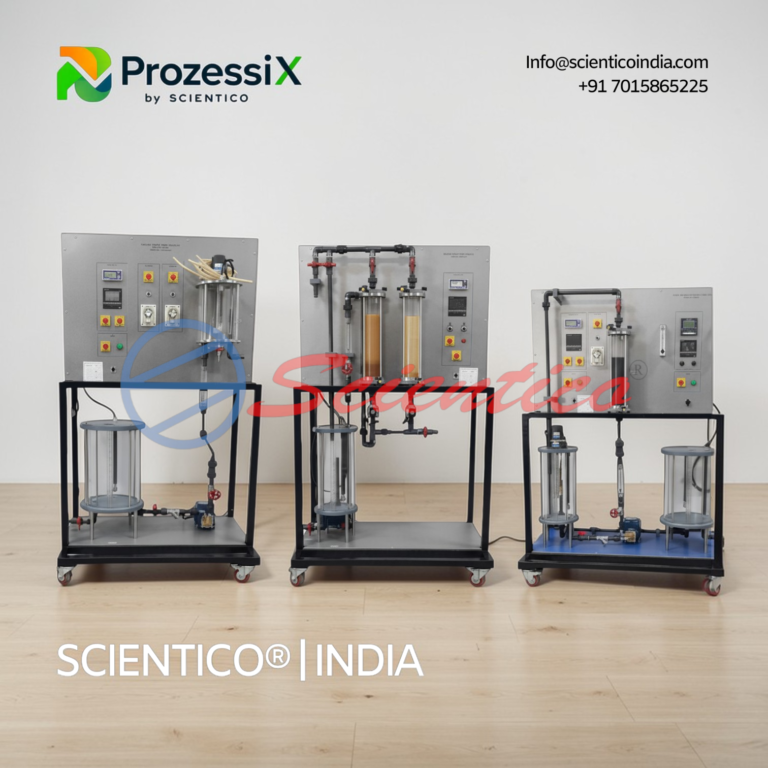
Analytical Process Control Trainer | ProzessiX PX-04
The Prozessix PX-04 is an analytical process control trainer for instrumentation and process engineering laboratories, giving students hands-on PID loop tuning across flow, level, temperature and pressure processes on a single bench.
View product details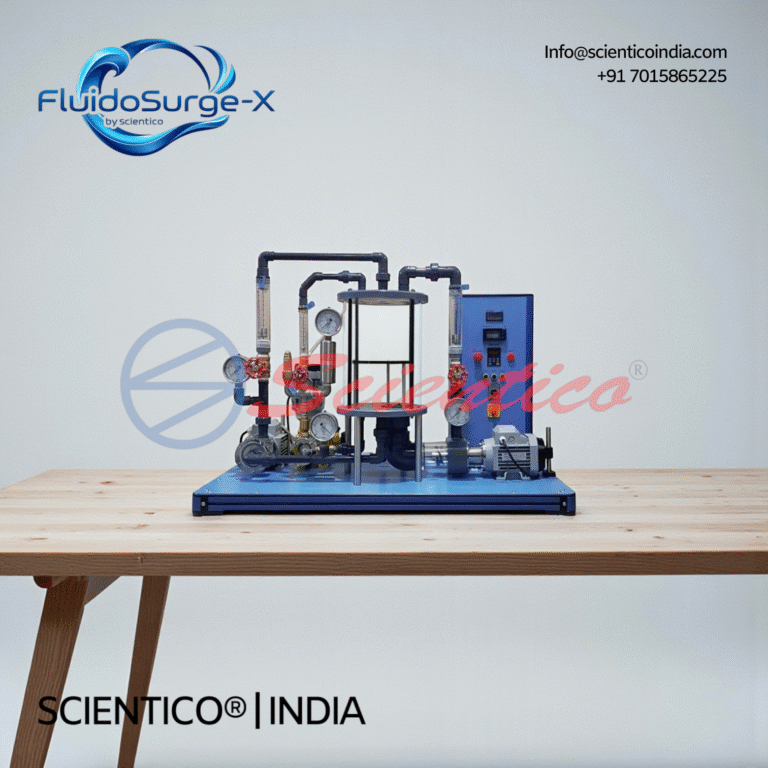
Multi Pump Test Rig Apparatus | FluidoSurge-X 294
The FluidoSurge X-294 is a multi pump test rig (series and parallel centrifugal pump test rig) that lets students run single, series and parallel pump configurations on one apparatus and compare the resulting head–discharge–efficiency characteristics.
View product details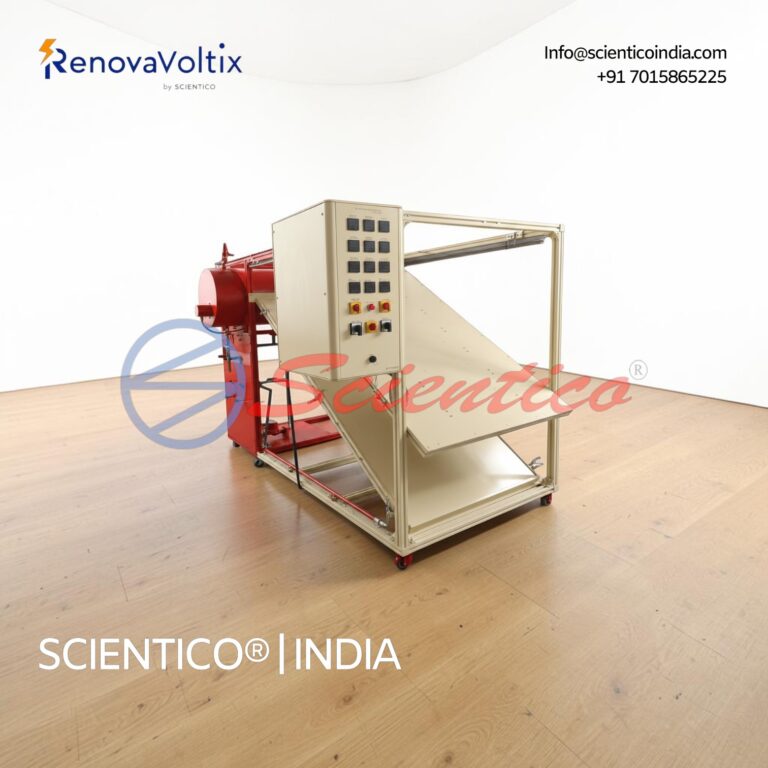
Solar Thermal Trainer | RVX-010
The Solar Thermal Trainer RVX-010 is a laboratory-based solar thermal training platform that demonstrates solar thermal heating of domestic water using both thermosiphon and forced pumping system configurations. It transforms solar energy into usable thermal energy using a high-power artificial solar simulator, enabling a full range of controlled indoor experiments. Product Overview The Solar Thermal Trainer RVX-010 consists of four core elements: a thermal solar collector, a storage tank, an artificial light source solar simulator, and a pumping system. The solar collector is mounted on an aluminium frame with copper tubes through which water flows, designed for maximum absorption efficiency. The accumulator tank is made from anti-corrosive material with an integrated heating element and safety device for over-temperature protection. The solar simulator uses lamps emitting radiation similar to sunlight, measured by a radiation sensor. Three lighting configurations are available: all lamps on, half the lamps on in a zig-zag pattern, or one lamp on. A pump provides forced convection of heat transfer fluid through the accumulator tank. The system supports both thermosiphon and forced pumping operation. Safety valves for overpressure protection are included. Sensors and meters record temperature, flow, and radiation. The unit is mounted on a metallic structure with wheels for mobility and features HDF panel construction with LED digital display instrumentation.
View product detailsThe short answer
If you run a diploma or ITI programme under DGT or a state board (HSBTE, MSBTE, PSBTE, SBTET), start with a PLC trainer. Placement panels ask ladder-logic questions, and the hardware pays for itself in employability. If you run a BTech Instrumentation, Chemical, or Mechatronics programme under AICTE with GTU/VTU/AKTU alignment, the analytical process control trainer ProZessix PX-04 is the smarter first buy because it teaches P, PI, and PID behaviour on a real level or flow loop. Research labs and NBA-accredited programmes should typically own both, and they usually do.
Head-to-head at a glance
| Parameter | PLC Trainer | PID Process Control Trainer |
|---|---|---|
| Working principle | Programmable relay logic scanning I/O in ms | Closed-loop feedback tuning a process variable |
| Primary output taught | Ladder / structured text, sequencing | Loop tuning, Ziegler-Nichols, step response |
| Process variables | Discrete (mostly) + some analog | Level, flow, pressure, temperature (continuous) |
| Typical loop time | 1-20 ms scan | Seconds to minutes (thermal loops slower) |
| Accuracy that matters | I/O reliability, response time | Sensor accuracy (typically 0.5-1% FS), valve resolution |
| Applicable standards | IEC 61131-3 (programming), documentation reviewed per model panel | ISO 9001:2015 build, sensor traceability to ISO 17025 sources |
| Best for | Diploma, ITI, mechatronics placement | BTech Instrumentation, Chemical, research |
| Cost tier | Low to mid (panel + trainer modules) | Mid to high (tank, pump, valve, sensor stack) |
| Footprint | Bench-top, 1 m wide typically | Full rig, 1.5-2 m, plumbed |
Working principle: how each one operates
PLC trainer. A PLC is a ruggedised industrial computer with a deterministic scan cycle: read inputs, solve logic, write outputs, repeat. On a training panel you get digital inputs (push buttons, limit switches, proximity sensors), digital outputs (relays, contactors, indicator lamps), and usually a small analog section (0-10 V or 4-20 mA). Students write ladder logic in the vendor’s IDE (Rockwell, Siemens, Delta, Mitsubishi, whatever the panel ships with) and the PLC executes it. The learning is about sequence and interlocks. Nothing is being controlled in a closed loop in the classical sense; the PLC is deciding “when A and not B, energise C”.
PID process control trainer. This one is a real hydraulic or thermal process, usually a level loop in two tanks or a flow loop with a rotameter and control valve. A sensor reads the process variable, the controller computes error = setpoint minus PV, and outputs a control signal u(t) = Kp·e + Ki·∫e dt + Kd·de/dt. Students see the physics: what P alone does (offset), what adding I does (kills offset, adds lag), what D does (fights overshoot, amplifies noise). They tune with Ziegler-Nichols or Cohen-Coon and watch the step response settle. This is instrumentation engineering, not programming.
PLC vs PID process control trainer, which for which department
- Diploma Mechanical / Electrical (MSBTE, HSBTE, PSBTE, BTEUP), PLC first. The syllabus is discrete, and the placement drive at diploma level is filled with panel-wiring and machine-tending roles. A PID rig here often ends up under a dust cover.
- ITI Electrician / Instrument Mechanic (DGT, NCVT), PLC only, and keep it simple. Delta or Mitsubishi FX-series panels are the pragmatic pick.
- BTech Instrumentation & Control (AICTE, AKTU, GTU), PID trainer first, PLC second. Your students will fail viva questions on tuning if they’ve never touched a real loop.
- BTech Chemical Engineering, PID, no debate. Process dynamics is the entire point.
- BTech Mechatronics / Robotics, Both, but PLC gets more lab hours. Add servo/stepper interfacing on the PLC side.
- MTech / research labs (NBA Tier-1, NAAC A+), Both, plus a SCADA layer on the PLC and a data-logging OPC link on the PID rig. External examiners at this level expect it.
- Polytechnic TVET, See our note on lab equipment for polytechnics for how to phase the buy across two academic years.
Common mistakes when choosing
1. Buying the PLC brand your last vendor pushed, not what local industry uses. If the MSMEs around your campus run Siemens S7-1200, don’t buy a Rockwell trainer because it was on the tender L1. Placement conversion matters more than a 12% price gap. Call two local automation integrators before you finalise. I’ve seen this mistake cost a Nashik polytechnic three intake cycles of goodwill.
2. Treating the PID rig as “just a tank with a pump”. The sensor and control valve decide whether the rig teaches anything. A cheap rotameter and a solenoid on/off valve will give you a bang-bang response and students will never see clean PID behaviour. Spec a proper proportional control valve and a transmitter with 4-20 mA output. If the quote looks suspiciously cheap, this is where the corner got cut.
3. Assuming one trainer covers “automation”. Automation is a stack. PLC handles sequencing, PID handles continuous loops, SCADA handles supervision, and instrumentation handles measurement. A single trainer covers one layer. If your NBA SAR promises “automation lab”, one PLC panel will not read well to the visiting team.
4. Ignoring spares and firmware. Ask the vendor in writing what happens when the CPU module dies in year 4. PLC firmware moves; the IDE you install today may not talk to a used module you buy in 2030. Get a spare CPU and one spare analog card in the original PO.
Scientico’s recommendation
For most BTech and diploma labs stepping into process control for the first time, I’d start with the Analytical Process Control Trainer ProZessix PX-04. It’s built for the exact tuning experiments your syllabus lists: step response, open-loop identification, P vs PI vs PID comparison, disturbance rejection. Pair it later with a PLC trainer once the first-year classes settle in. If your programme is mechatronics-heavy, look at the wider automation and control technology category for panel options.
Related rigs that often share the same lab budget line: the multi-pump test rig FluidoSurgeX-294 for the fluids side, and the solar thermal trainer RVX-010 if renewable energy is on your syllabus. For the wider fluids stack, see the complete fluid mechanics lab setup guide. Instrumentation buyers should also read the thermodynamics lab equipment guide before finalising the process-side sensor spec.
Cost and delivery framework
I won’t quote fake prices. What I can tell you is the pattern: a PLC trainer sits in the low-to-mid cost tier because the hardware is essentially a panel, I/O modules, and simulator switches. A PID process control trainer is mid-to-high because you’re paying for a tank, pump, control valve, transmitter, and controller, plus the plumbing and frame. Budget accordingly.
Incoterms: for Indian institutions we typically quote Ex-Works Ambala or FOR-destination. International buyers get FOB Mundra/Nhava Sheva or CIF to your nearest port. Scientico has shipped to 30+ countries since 1993 under ISO 9001:2015 and CE, so the export paperwork is routine on our side.
Lead time: expect several weeks of production once the PO and advance clear, and sea transit adds more depending on destination. Air freight is available on the PLC trainer (smaller cube); the PID rig usually goes by sea because of the tank footprint. Build a buffer into your academic calendar; commissioning after arrival typically needs one working day for the PLC and two for the PID rig with a Scientico engineer on video call.
If you’re weighing this against a bigger fluids buy in the same PO cycle, cross-check the hydraulic bench buyer’s guide and the multi-pump test rig guide so you don’t double-buy pumps you already have.
Ready to move? Send your syllabus and intake numbers to us via contact us and I’ll come back with a spec sheet, a realistic lead time for your term, and a PO-ready quote in 48 hours.
Frequently Asked Questions
Is a PLC trainer the same as a PID process control trainer?
No. A PLC trainer teaches discrete logic and sequencing using ladder programming on a scan-based industrial controller. A PID process control trainer teaches continuous closed-loop control of a real process variable like level, flow, or temperature. Different physics, different syllabus outcomes, different price tiers.
If I can only afford one, which should I buy first?
For diploma and ITI programmes under DGT, HSBTE, MSBTE, or PSBTE, buy the PLC trainer first because placement panels ask ladder logic. For BTech Instrumentation, Chemical, or Mechatronics under AICTE, AKTU, GTU, or VTU, buy the PID process control trainer first because tuning and process dynamics are core to the syllabus.
Can one PID trainer cover level, flow, pressure, and temperature?
Some rigs offer modular process elements, but in practice each loop has its own dynamics and time constants. A dedicated level or flow rig like the ProZessix PX-04 teaches cleaner tuning behaviour than a jack-of-all-trades unit. If your syllabus demands all four, budget for either a multi-loop rig or two focused ones.
What PLC brand should we buy for our trainer?
Match your local industry. Call two automation integrators near your campus and ask what they deploy. Common picks in India are Delta and Mitsubishi FX at the diploma level, and Siemens S7-1200 or Rockwell Micro850 for BTech. Placement conversion matters more than saving 10 to 15 percent on a less-common brand.
Does Scientico ship these trainers internationally?
Yes. Scientico has been manufacturing lab equipment in Ambala since 1993 and ships to 30+ countries under ISO 9001:2015 and CE. International buyers typically get FOB Mundra or Nhava Sheva, or CIF to their nearest port. Send your syllabus through the contact form for a quote and realistic lead time.
One honest ask
We don't gate anything on this site. You just read the whole thing free. If it was useful, leave your email and two things happen: we send you this page as a plain-text block you can paste into a tender file or an internal email, and we notify you the next time we publish a buyer tool like this one. Nothing else. No drip sequence, no sales calls booked without asking.