
Engineering Lab Equipment Maintenance Schedule, Monthly, Quarterly, and Annual Checklist for Lab Managers
Poor maintenance is the most common reason engineering labs fail accreditation inspections, not procurement budget or space. When a NBA or ABET inspector arrives and finds a non-functional apparatus, a calibration certificate that expired two years ago, or a maintenance log book that has never been signed, no amount of infrastructure investment recovers the situation. This guide gives lab managers a concrete maintenance schedule they can implement on day one, plus the documentation structure that accreditation inspectors actually look for.
Equipment mentioned in this guide
Review the product information, specifications and model before requesting a quotation.
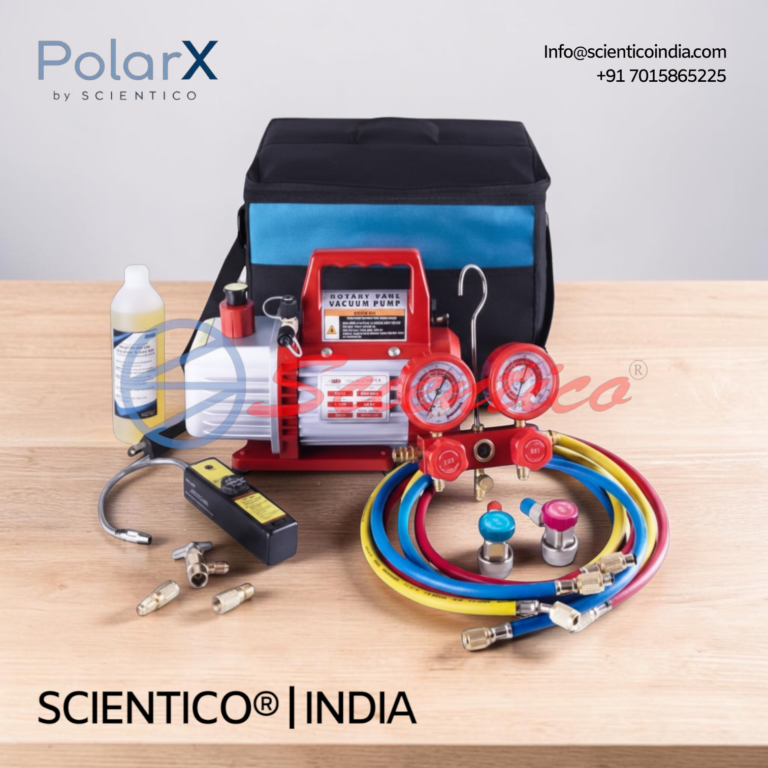
Maintenance Kit | PolarX – 596
The Maintenance Kit PolarX - 596 is a complete refrigeration maintenance set for filling, evacuating, leak detection, and troubleshooting refrigeration systems using refrigerant R134A. This maintenance kit includes a filling station with vacuum pump and filling balance, a battery-operated leak detector, a digital multimeter, manometers for intake, high pressure, and cylinder pressure, a vacuum meter, and a full set of hand tools. All components are common to refrigeration practice, providing direct hands-on exposure to real-world maintenance procedures.
View product detailsWhy Maintenance Documentation Matters for Accreditation
NBA’s Criteria 4 (Laboratory and Computing Facilities) requires that equipment is functional, calibrated, and maintained. The same principle appears in ABET’s General Criterion 6 and in NAAC’s Physical Facilities criteria. What inspectors look for is not a perfect lab, it is evidence of a systematic maintenance process. A lab with three non-functional apparatus but a complete maintenance register showing reported faults, service calls, and pending replacement orders scores significantly better than a lab with no documentation at all. Maintenance documentation is the difference between an observation and a deficiency on your accreditation report.
Daily Checks (5 Minutes Per Session)
Before each laboratory session, the supervising faculty or lab technician should confirm:
- All apparatus is powered on and displays nominal readings (zero offset within specification)
- No visible damage to apparatus, fittings, or connecting pipes/hoses
- Hydraulic bench, reservoir is filled to the correct level, no leaks visible at fittings
- All valves and cocks are in their correct pre-experiment position (documented on each apparatus)
- Emergency stop or circuit breaker for powered apparatus is accessible and functional
- Student instruction manual is present at the station
Record daily check completion in the lab register (date, session time, technician signature, any anomaly noted). This takes under 5 minutes per session and generates the baseline documentation for accreditation.
Weekly Maintenance Tasks
| Apparatus | Weekly Task |
|---|---|
| Hydraulic Bench | Check water quality in reservoir (flush and refill if algae visible); inspect pump seal for drips; clean measuring channel |
| Centrifugal Pump Test Rig | Check coupling alignment; inspect mechanical seal; verify pressure gauge zero |
| Reynolds Number Apparatus | Flush dye reservoir; check dye needle for blockage |
| All manometers and pressure gauges | Verify zero reading with all valves closed; bleed trapped air from manometer tubes |
| Heat exchangers (shell-tube, double-pipe) | Check for leaks at all fittings; verify flow meter zero; check heater element indicator light |
| Universal Testing Machine | Check oil level in hydraulic reservoir; inspect jaw faces for wear; verify load cell zero |
| Pelton / Kaplan / Francis Turbines | Check bearing temperature after run; inspect nozzle or guide vanes for deposits; verify tachometer reading |
Monthly Maintenance Tasks
Monthly maintenance requires the lab technician to spend 2–3 hours per lab. Key tasks:
- Lubrication, grease all specified lubrication points per manufacturer manual. For most mechanical apparatus (balancing machines, cam-follower, governors), this includes shaft bearings and any sliding carriages
- Electrical connections, inspect terminal connections on all powered apparatus for looseness or corrosion. Particular attention to heater element connections on heat transfer apparatus
- Calibration verification, perform a single-point calibration check on weighing scales, flow meters, and temperature sensors against a known reference. Record in calibration logbook
- Hydraulic systems, change hydraulic oil on UTM and other hydraulic apparatus per manufacturer specification (typically every 3–6 months for lab use)
- Gaskets and seals, inspect O-rings and gaskets on all flanged connections. Replace any showing deformation or cracking
- Student damage review, inspect all student-accessible components for damage from misuse. Record any required repairs in the maintenance register
Quarterly Maintenance and Calibration
Every quarter (every 3 months), a more thorough check is required:
| Category | Quarterly Task |
|---|---|
| Calibration instruments (load cells, pressure transducers, flow meters) | Full multi-point calibration against traceable reference standard. Update calibration records with date, reference standard used, and calibration technician name |
| Electrical safety | Earth continuity and insulation resistance test on all mains-powered apparatus. Record results in electrical safety log |
| Pump systems | Measure pump performance at three flow points and compare against original commissioning curve. Flag deviations greater than 5% |
| Bearing and drive systems | Replace bearings on high-cycle apparatus (balancing machine, vibration test rig) per manufacturer recommendation |
| Documentation update | Update apparatus inventory list with condition status: Operational / Needs Minor Repair / Non-functional Pending Repair / Condemned |
Annual Maintenance, Full Inspection and Recertification
Annual maintenance is the most important for accreditation purposes. It should produce a complete document set that you can present to an NBA, ABET, or NAAC inspector without additional preparation:
- Annual calibration certificates, arrange calibration of all measurement instruments (pressure gauges, flow meters, load cells, thermometers, tachometers) with a NABL-accredited calibration laboratory. Each certificate should show the calibration date, reference standard used, and certificate validity date. This is a hard requirement for NBA accreditation.
- Equipment condition audit, a formal written audit of every apparatus in the lab, noting operational status, age, last service date, and whether replacement is required within the next 12 months. Present this to the head of department with a procurement recommendation if any apparatus needs replacing.
- Safety inspection, formal safety inspection of all apparatus by a qualified engineer, covering mechanical guarding, electrical safety, pressure vessel compliance (for boilers, steam apparatus), and emergency stop functionality. Record in safety register.
- Student manual review, review experiment manuals for accuracy. Check that manuals reflect the current apparatus configuration (manuals often diverge from apparatus as apparatus is serviced and modified).
- Spare parts inventory, review and replenish spare parts stock. Critical spares (pump seals, manometer fluid, calibration weights, fuses) should be held in-house. For international procurement, order from manufacturer with 12 months lead time allowance.
Documentation Structure for Accreditation
Every engineering lab should maintain four physical or digital registers, kept in the lab or in the department office:
- Lab Equipment Register, inventory of all apparatus with: manufacturer, model, serial number, purchase date, purchase cost, current condition status, and location within the lab
- Calibration Register, for each measuring instrument: calibration date, calibration laboratory name and NABL accreditation number, next due date, and any out-of-tolerance readings found
- Maintenance Log, date-stamped log of all maintenance activities performed, broken equipment reported, service calls made, and repairs completed
- Breakdown Register, record of every equipment failure: date reported, fault description, action taken, date restored to service
During an NBA inspection, the assessor will typically ask to see the last 12 months of maintenance logs and calibration certificates. Having these organised and immediately presentable is more important than having zero breakdowns, inspectors understand that equipment fails. What they assess is whether the institution has a functioning maintenance system. Scientico India’s documentation includes a maintenance schedule and recommended spare parts list with every apparatus supply.
Spare Parts to Hold for Common Apparatus
| Apparatus | Recommended Spare Parts to Hold |
|---|---|
| Hydraulic Bench | Pump mechanical seal kit; reservoir drain plug O-ring; Venturi/Orifice accessory connecting hoses (1 set) |
| Centrifugal Pump Test Rig | Mechanical seal; impeller wear ring; pressure gauge (0–2 bar) |
| Heat Exchangers | Heater element; thermocouple (Type K, standard length); flow meter float |
| Universal Testing Machine | Hydraulic oil (5 litres); jaw faces (1 set); load cell cable |
| Pressure Gauges and Manometers | 2 units of the most common range; manometer fluid (500 ml); bleed valves |
| All powered apparatus | MCB/fuse for each rated load; power cable and plug to local standard |
Getting Spare Parts from Scientico India
Scientico India supplies spare parts and consumables for all apparatus we manufacture, with a guaranteed 5-year spare parts availability commitment from the date of supply. For international customers, we ship spare parts by DHL or FedEx international courier with full customs documentation. Email [email protected] with your apparatus serial number and required part description. See our FAQ page for spare parts lead times and shipping options, or visit our engineering lab equipment catalogue to view our full range.
See Also
Get Specifications & Pricing
Scientico India manufactures laboratory apparatus under an ISO 9001:2015 quality system. Conformity documentation is confirmed for each quoted model. Contact us for full specifications, pricing, and documentation.
WhatsApp: +91 701-586-5225 | [email protected] | FAQ, Shipping, Payment & Warranty
Scientico India manufactures model-specific, ISO 9001:2015 laboratory equipment, exported to 30+ countries since 1993. Request a model-specific CIF proforma invoice after technical review.
View Engineering Lab Equipment →Request a QuoteOne honest ask
We don't gate anything on this site. You just read the whole thing free. If it was useful, leave your email and two things happen: we send you this page as a plain-text block you can paste into a tender file or an internal email, and we notify you the next time we publish a buyer tool like this one. Nothing else. No drip sequence, no sales calls booked without asking.