
If you run a BTech Chemical Engineering department in India, the process control trainer is not an optional piece of kit. It is the single bench that lets students actually see a PID loop settle, an interacting tank overshoot, and a flow control valve hunt around setpoint. Everything they read in Coughanowr or Stephanopoulos stays theoretical until they touch one. I have specced these rigs for AICTE-approved colleges and NBA-accreditation cycles for years, and the buying decisions that go wrong are almost always the same four or five. This page walks through what a process engineering technology trainer needs to do for a BTech chemical lab, what to spec, and where colleges keep tripping up.
The short version: for a four-year BTech Chemical programme, you need a trainer that covers first-order, second-order, and interacting/non-interacting tank dynamics, plus a working PID loop on at least flow and level (temperature is a bonus). Anything less and your third-year Process Dynamics and Control practical will not map to the syllabus. Anything much more and you are paying for research-grade features an undergrad will never touch.
Equipment mentioned in this guide
Review the product information, specifications and model before requesting a quotation.
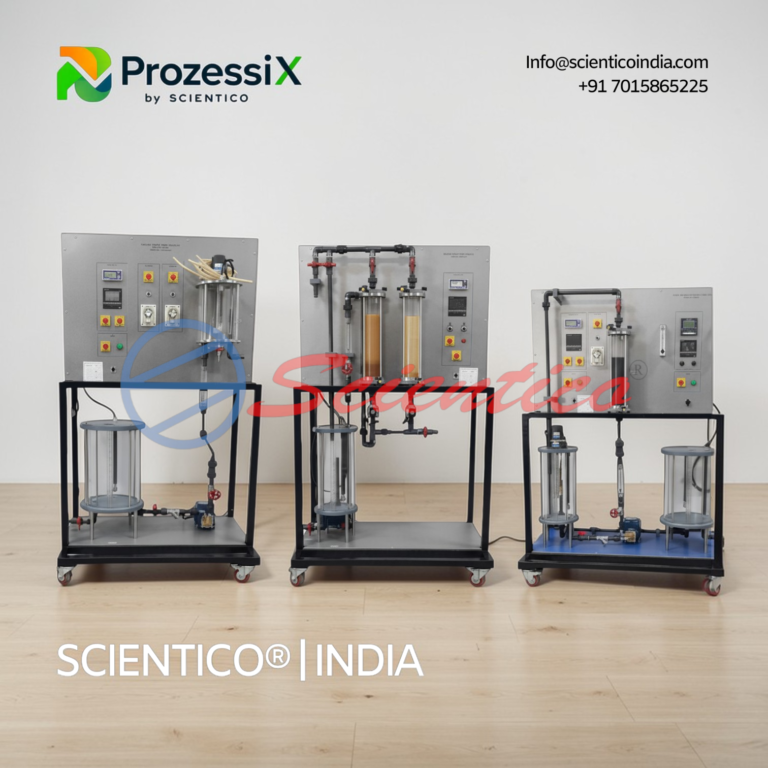
Analytical Process Control Trainer | ProzessiX PX-04
The Prozessix PX-04 is an analytical process control trainer for instrumentation and process engineering laboratories, giving students hands-on PID loop tuning across flow, level, temperature and pressure processes on a single bench.
View product details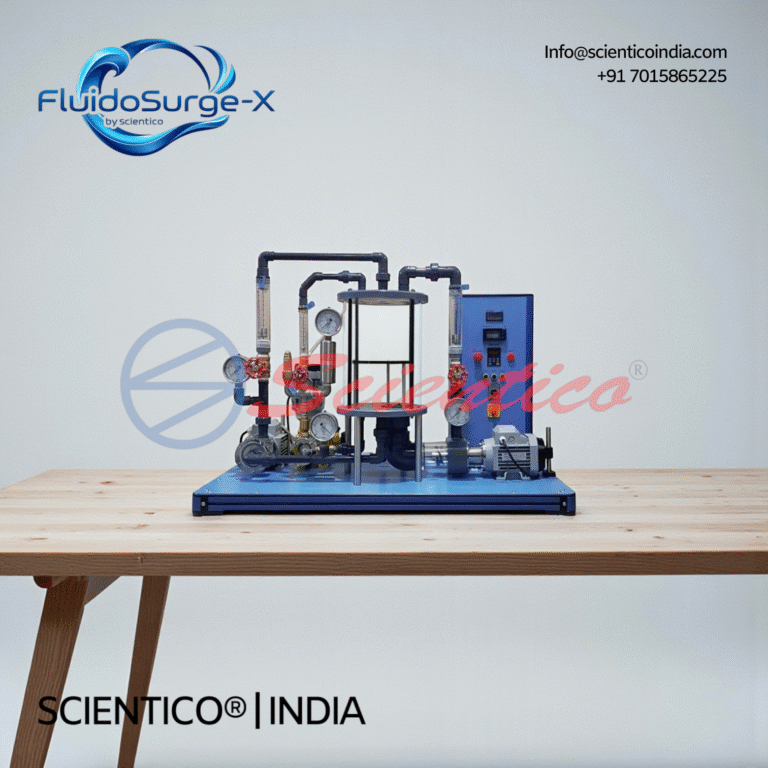
Multi Pump Test Rig Apparatus | FluidoSurge-X 294
The FluidoSurge X-294 is a multi pump test rig (series and parallel centrifugal pump test rig) that lets students run single, series and parallel pump configurations on one apparatus and compare the resulting head–discharge–efficiency characteristics.
View product details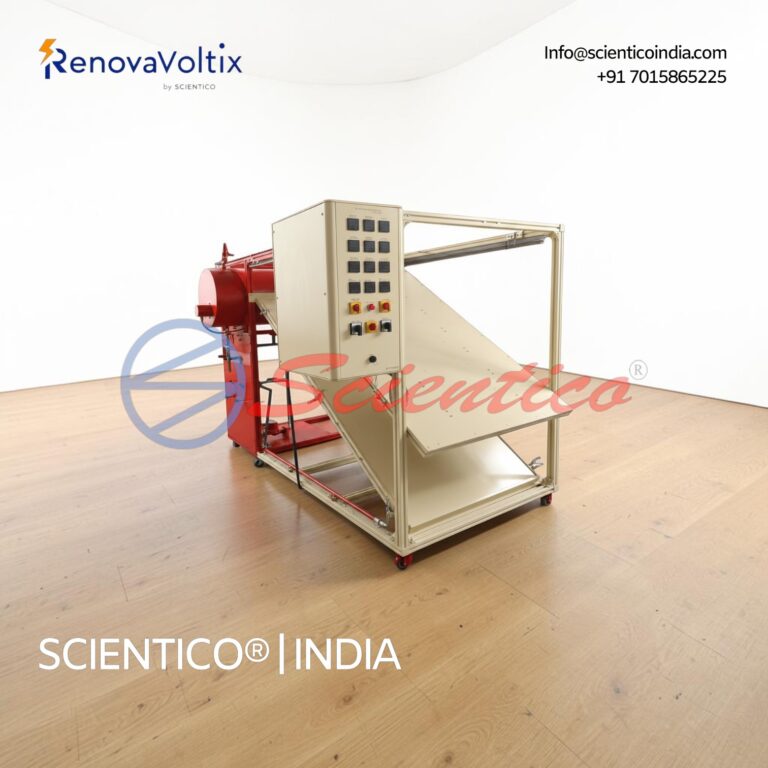
Solar Thermal Trainer | RVX-010
The Solar Thermal Trainer RVX-010 is a laboratory-based solar thermal training platform that demonstrates solar thermal heating of domestic water using both thermosiphon and forced pumping system configurations. It transforms solar energy into usable thermal energy using a high-power artificial solar simulator, enabling a full range of controlled indoor experiments. Product Overview The Solar Thermal Trainer RVX-010 consists of four core elements: a thermal solar collector, a storage tank, an artificial light source solar simulator, and a pumping system. The solar collector is mounted on an aluminium frame with copper tubes through which water flows, designed for maximum absorption efficiency. The accumulator tank is made from anti-corrosive material with an integrated heating element and safety device for over-temperature protection. The solar simulator uses lamps emitting radiation similar to sunlight, measured by a radiation sensor. Three lighting configurations are available: all lamps on, half the lamps on in a zig-zag pattern, or one lamp on. A pump provides forced convection of heat transfer fluid through the accumulator tank. The system supports both thermosiphon and forced pumping operation. Safety valves for overpressure protection are included. Sensors and meters record temperature, flow, and radiation. The unit is mounted on a metallic structure with wheels for mobility and features HDF panel construction with LED digital display instrumentation.
View product details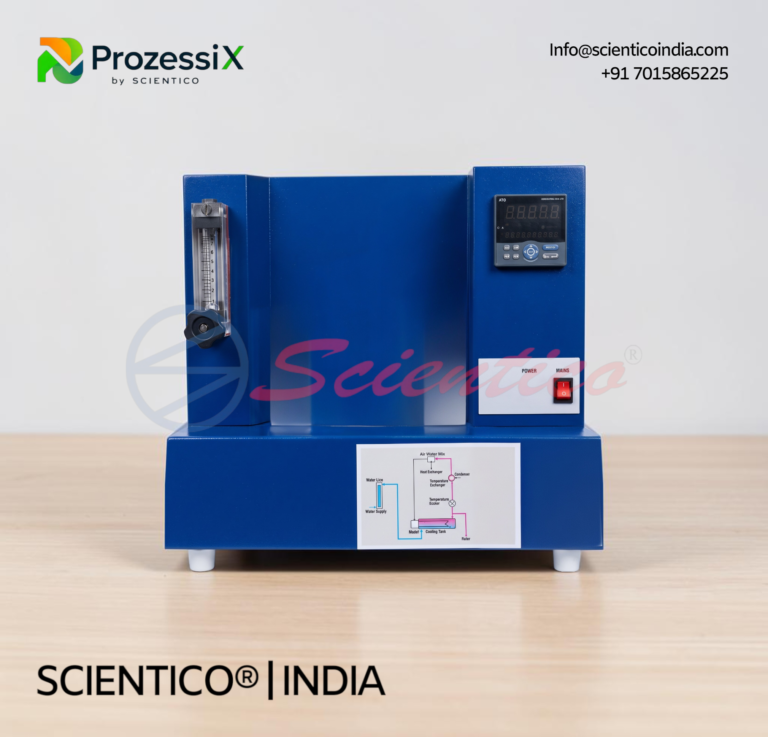
Temperature Control Trainer | Prozessi PX 14
The Temperature Control Trainer, Prozessi PX 14, is designed for understanding basic temperature control principles through a complete process setup. This Temperature Control Trainer allows students to study open loop and closed loop control, tuning methods, and SCADA based monitoring.
View product details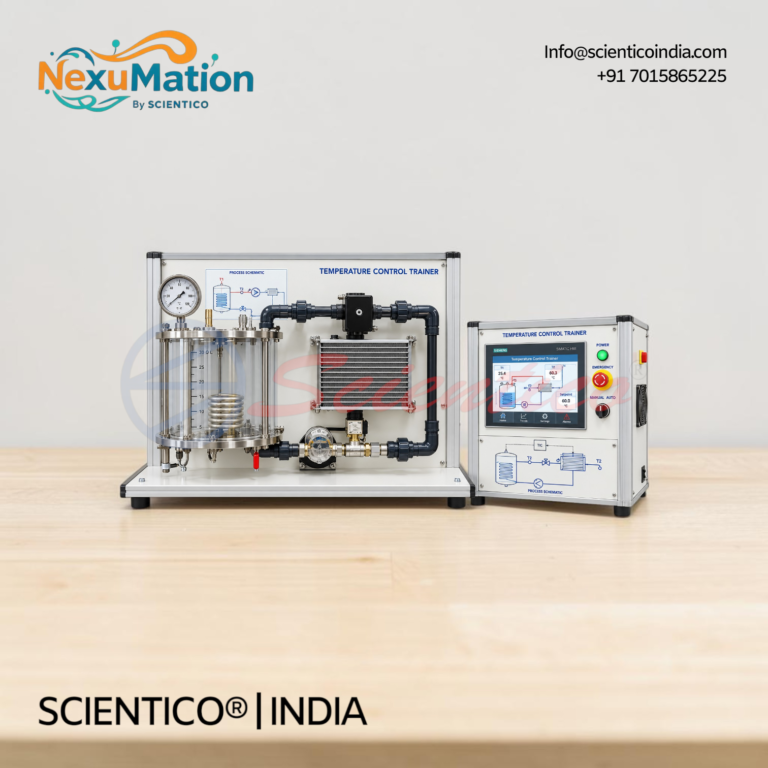
Temperature Control Trainer | NexuMation 68
The Temperature Control Trainer NexuMation 68 contains an educational board with a vessel and a set of sensors and actuators for temperature and flow. This temperature control trainer includes a control module with interface circuits and ON/OFF, proportional, integral and derivative (PID) control circuits.
View product detailsBTech Chemical Engineering syllabus, where the process control trainer fits
Across AICTE model curriculum and most autonomous BTech Chemical programmes (AKTU, VTU, Anna, JNTU, MAKAUT), the Process Dynamics and Control lab lands in semester 5 or 6, usually 2 credits, typically 30 to 36 contact hours across the semester. The listed experiments almost always include: step response of a first-order system, response of interacting and non-interacting tanks in series, dynamics of a U-tube manometer or thermometer, tuning of a PID controller by Ziegler-Nichols and Cohen-Coon, and control valve characteristics. That is roughly eight to ten experiments a batch of 15 to 20 students has to complete in a semester.
A single well-specced process control trainer, or two, will carry that entire practical. What I usually see failing is colleges buying a “PID trainer” that only demonstrates a controller on a simulated loop, then a separate “tank dynamics” apparatus that has no controller. Students never see the two connected. Buy one rig that does both, or accept that you are teaching control theory in two disconnected pieces.
Specifications that matter for BTech Chemical Engineering
- Loops covered: flow, level, temperature, and pressure ideally on one platform. At minimum flow plus level. If you only get one, pick level: it is the most visual and the interacting-tank experiment lives here.
- Controller: real industrial PID controller (Yokogawa, Honeywell, or equivalent Indian equivalent like Masibus), not a software emulation. Students should be able to change P, I, D by hand and watch the trend on the controller face, not just on a laptop.
- Data logging: USB or Ethernet output to a PC with software that exports CSV. Trend capture matters for lab reports. Proprietary-only software that will not export is a trap.
- Sensors and final control element: pneumatic control valve (needs a small compressor, budget for that), rotameter for manual flow measurement, and either DP transmitter or capacitance level sensor. Ranges: flow 0 to 300 LPH is typical for teaching, level 0 to 500 mm, temperature ambient to 80 C.
- Standards and paperwork: ISO 9001:2015 manufactured, CE conformity where applicable, calibration certificate against traceable standards. See ISO 9001:2015 for lab equipment and CE marking for lab equipment for what to actually ask for in the tender.
- Utilities: 230V single phase, water inlet and drain, and compressed air (typically 4 to 6 bar) if the valve is pneumatic. Confirm your lab has all three before purchase order.
Common mistakes BTech Chemical Engineering colleges make when buying a process control trainer
These are the ones I see repeat every accreditation cycle:
- Buying by lowest quote without checking the controller brand. A generic microcontroller-based “PID” with a two-line LCD is not the same as an industrial single-loop controller. Students who will work in refineries and pharma plants need to see the second one. The price gap is real, maybe 30 to 40 percent, and worth it.
- Skipping the compressor line item. The trainer quote often excludes the air compressor for the pneumatic valve. You order the rig, it lands, and the valve will not stroke. Budget the compressor at the same time. Or spec an I/P converter with an electric actuator if your lab genuinely cannot host compressed air.
- Ignoring interacting-tank geometry. Some cheaper trainers give you two tanks side by side with a valve but the tank cross-section is so small the time constant is under 10 seconds. Students cannot read the response properly. Ask for tank diameter and calculate the time constant before you sign the PO.
- No spare parts kit. Solenoid valves, level sensors, and pump seals fail. A trainer without a one-year spares kit becomes a paperweight in year two. Insist on it in the tender.
- Buying process control in isolation from the rest of the lab. If your unit ops bench, hydraulic bench, and thermodynamics rigs are all from different vendors with different software and different sensor conventions, students spend the first 20 minutes of every practical relearning the interface. Standardise where you can.
How the Scientico process control trainer fits BTech Chemical Engineering
The Analytical Process Control Trainer ProZessix PX-04 covers the multi-loop scope a BTech Chemical syllabus expects, on one bench, with an industrial single-loop controller and USB data logging. It sits in the teaching-grade range on price rather than research-grade, which is the right slot for an undergrad practical. If your programme also runs Fluid Mechanics and Heat Transfer labs, look at the FluidoSurgeX multi-pump test rig and the RVX solar thermal trainer for the same interface family so students are not relearning conventions every week.
Compliance: NBA / NAAC / INC / PCI / AICTE requirements
NBA Tier 1 and Tier 2 inspections for BTech Chemical want three things on paper: the equipment maps to a named experiment in the approved syllabus, the equipment has a calibration certificate, and the equipment carries a manufacturer traceability document. A process control trainer specced against ISO 9001:2015 with CE conformity clears all three. AICTE norms want equipment cost per student to hit a floor value (varies by year), and a fully-loaded process control trainer with data acquisition is often the single item that pulls the Chemical lab into compliance on its own.
NAAC criterion 4.1 asks for adequacy of laboratory infrastructure, which in practice means the assessor wants to see the trainer running with a batch of students, not sitting under a dust cover. If you are a polytechnic running a Diploma Chemical alongside BTech, see the polytechnic lab equipment hub for how the same rig serves both. Engineering colleges should also check the engineering college equipment guide.
Ordering & delivery for BTech Chemical Engineering labs
Scientico manufactures in Ambala, has shipped to 30+ countries since 1993, and works on ISO 9001:2015 quality management. For a domestic Indian order the realistic timeline is several weeks of production plus in-country transit, so if you want the trainer commissioned before the semester 5 practicals begin in late July or early January, place the PO at least eight to ten weeks ahead. Export orders add sea transit of a few more weeks depending on port, plus customs clearance at destination.
Incoterms: for Indian institutional buyers, typically ex-works Ambala plus arranged inland transport, or FOR-destination if you want it landed. For overseas buyers, FOB Mundra or CIF destination port are the two common options. Installation and one-batch training for faculty is usually included for domestic orders, quoted separately for exports. Always confirm the calibration certificate and spares kit are on the pro-forma before you sign.
Ready to spec your process control trainer?
Send your syllabus PDF and batch size and I will come back with a specced quote, utility checklist, and delivery timeline for your BTech Chemical Engineering lab. WhatsApp is fastest, or use the contact form for tender documentation.
Frequently Asked Questions
What is the minimum process control trainer specification for a BTech Chemical Engineering lab?
At minimum: a real industrial single-loop PID controller, two loops (flow plus level), interacting-tank arrangement with tank diameters large enough for a 30-60 second time constant, USB data logging with CSV export, and a pneumatic or electric control valve. That set covers 8 to 10 of the syllabus experiments in one rig.
Do we need a separate air compressor for the process control trainer?
Yes, if the trainer uses a pneumatic control valve, which most teaching rigs do. Budget a 4 to 6 bar small compressor at the same time as the PO. If your lab genuinely cannot host compressed air, spec an electric actuator or motorised valve variant instead, but expect the response to look slightly different from what industrial students will see later.
How many students can one process control trainer handle per semester?
One trainer comfortably serves a batch of 15 to 20 students working in groups of 3 to 4 across the semester’s 30 to 36 practical hours. If your intake is 60+ per year you will want two units, or one trainer plus a supporting dynamics apparatus, so the practical schedule does not bottleneck.
Will a process control trainer help pass NBA and NAAC inspection?
Yes, provided it maps to a named experiment in your approved syllabus, comes with a traceable calibration certificate, and carries an ISO 9001:2015 or equivalent manufacturer document. NBA and NAAC assessors want to see it running with students during the visit, not stored away, so keep it commissioned and in the timetable.
How far ahead should we order to have the trainer ready for semester start?
Place the purchase order at least eight to ten weeks before the semester 5 practical begins. That covers several weeks of manufacturing in Ambala plus inland transport and commissioning. Export orders need additional sea transit and customs clearance, so plan 12 to 16 weeks for overseas colleges.
One honest ask
We don't gate anything on this site. You just read the whole thing free. If it was useful, leave your email and two things happen: we send you this page as a plain-text block you can paste into a tender file or an internal email, and we notify you the next time we publish a buyer tool like this one. Nothing else. No drip sequence, no sales calls booked without asking.