Three Stage Epicyclic Gear | ProDynami – 1358
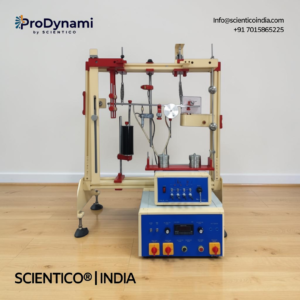
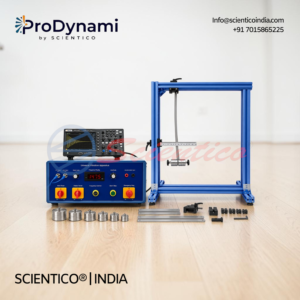
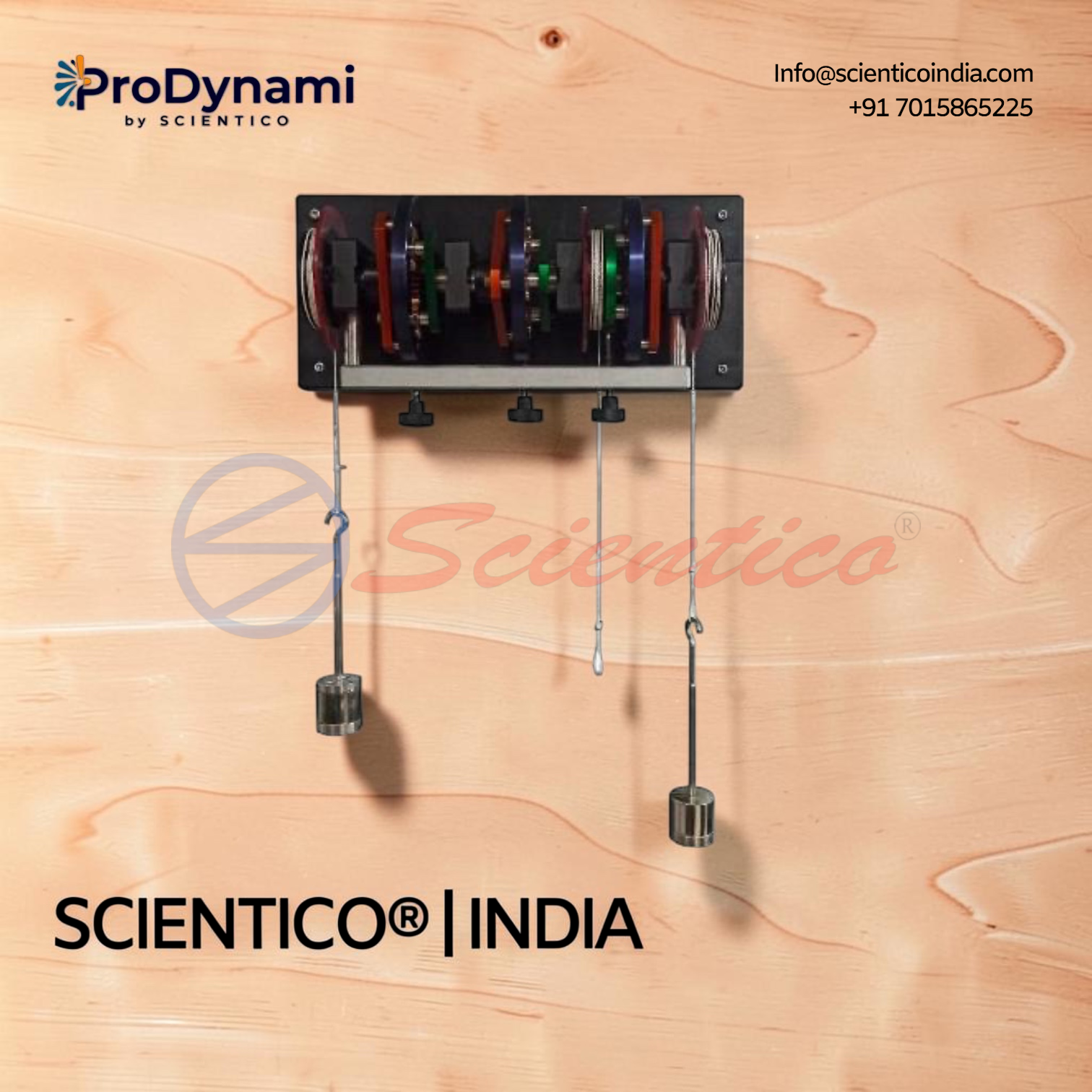
The Three Stage Epicyclic Gear, ProDynami 1358, is a wall mounted unit consisting of three coupled epicyclic gear sets for the study of planetary gear systems. It enables experiments on gear ratios, torque conversion, mechanical advantage, and efficiency across three forward speeds and one reverse speed. The Three Stage Epicyclic Gear features stainless steel shafts, aluminum gears and discs, and an anodized aluminum frame. It is supplied with weights, thread, and an instruction manual.
The Three Stage Epicyclic Gear ProDynami – 1358 consists of three coupled epicyclic gear sets, allowing students to carry out experiments on different gear ratios and torque conversions. This Three Stage Epicyclic Gear unit demonstrates the key functions of epicyclic gears, including coupling input and output shafts, torque generation, and rotation direction inversion. It is wall mounted with two graduated discs for checking velocity and torque ratios.
Product Overview
The most important elements of an automatic transmission are one or several planetary gears (or epicyclic gears), clutch packs, band brakes, and pilot valves. Epicyclic gears perform several functions: coupling between input and output shafts, generating high torque at the output shaft at low velocities, reducing torque at the output shaft at high velocities, and rotation direction inversion between the input and output shafts.
The Epicyclic Gear Unit (3 elements) consists of three coupled epicyclic gear sets. It allows students to carry out experiments of different gear ratios as well as torque conversions.
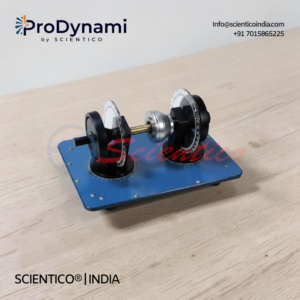
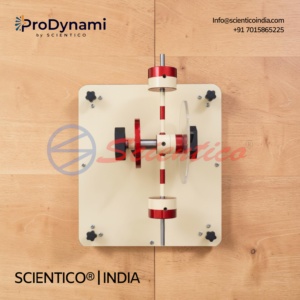
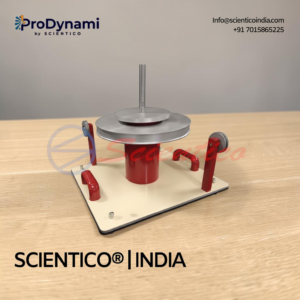
The epicyclic gears unit are the same and consist of the following elements: sun gears, satellite gears set, and ring. The unit has two graduated discs located at the input and output shafts, which allow checking of the velocity and torque ratios according to the application of the different brakes. The power arrives to the epicyclic gears through the sun gears on this Three Stage Epicyclic Gear unit.
Three Stage Epicyclic Gear, ProDynami 1358 — Technical Specifications
| Parameter | Specification |
|---|---|
| Mounting | Wall mounted unit |
| Gear Sets | Three coupled epicyclic gear sets |
| Gear Set Components | Sun gears, satellite gears set, common support of the satellites, external ring |
| Graduated Discs | Two, located at input and output shafts |
| Braking Simulation | Different mechanical pins simulating pilot valves used to brake planetary components |
| Weights Provided | Two sets, for practical exercises |
| Shaft Material | Stainless steel |
| Discs and Gears Material | Aluminum |
| Frame | Anodized aluminum frame |
| Panels | Painted steel |
| Pinions | Aluminum, mounted on ball bearings |
| Speeds | Three forward speeds and one reverse speed |
| Documentation | Supplied with instruction manual |
Technical Data
Weights
| Item | Value |
|---|---|
| Hangers | 2x 0.5N |
| Weight Set 1 | 2x 0.5N |
| Weight Set 2 | 2x 1N |
| Weight Set 3 | 2x 2N |
| Weight Set 4 | 6x 5N |
Subject Area
| Parameter | Value |
|---|---|
| Category | Theory of Machines |
Key Features
- Configuration: Three coupled epicyclic gear sets in one Three Stage Epicyclic Gear unit
- Mounting: Wall mounted design
- Measurement: Two graduated discs at input and output shafts
- Braking Simulation: Mechanical pins simulating pilot valves
- Shaft Material: Stainless steel
- Gear and Disc Material: Aluminum
- Frame: Anodized aluminum with painted steel panels
- Bearings: Aluminum pinions mounted on ball bearings to reduce friction losses
- Speed Range: Three forward speeds and one reverse speed
Experiments
- Demonstration of the function of an epicyclic gear system
- Determination and verification of velocity and torque ratios between input and output shafts
- Study of the mechanical advantage and efficiency of a planetary system
- Determination of the angular displacement at the input and output and comparison with calculated ratios
- Determination of the minimum force at the input to move a weight at the output
Gears Selection
- First gear
- Second gear
- Third gear
- Reverse gear
- Neutral
Power Transmission
- Checking the relation between the input motor torque and the output motor torque
Construction and Design
The Three Stage Epicyclic Gear, ProDynami 1358, is built as a wall mounted unit consisting of three coupled epicyclic gear sets. Each set is formed by sun gears, a satellite gears set, a common support of the satellites, and an external ring. Two graduated discs are located at the input and output shafts. Different mechanical pins simulate the pilot valves used to brake the different planetary components. The shafts of the unit are made of stainless steel. The discs and gears are made of aluminum to facilitate the experiments. The frame is anodized aluminum, and the panels are made of painted steel. The pinions are made of aluminum and are mounted on ball bearings to reduce losses due to friction, making the practical exercises easy to perform. The unit provides three forward speeds and one reverse speed.
Scope of Delivery
- 1 Experimental unit
- 2 Sets of weights
- 1 Thread
- 1 Instruction manual
Q1: What is the Three Stage Epicyclic Gear used to study?
A: It is used to study the function of epicyclic gear systems, including gear ratios, torque conversion, mechanical advantage, and efficiency of planetary systems.
Q2: How many gear sets does the unit have?
A: The unit consists of three coupled epicyclic gear sets, each formed by sun gears, a satellite gears set, and an external ring.
Q3: What speeds does the unit provide?
A: The unit provides three forward speeds and one reverse speed, along with a neutral position.
Q4: What materials are used in construction?
A: The shafts are made of stainless steel, the discs and gears are made of aluminum, the frame is anodized aluminum, and the panels are made of painted steel.
Q5: What is included in the scope of delivery?
A: The scope of delivery includes one experimental unit, two sets of weights, one thread, and one instruction manual.
Need Assistance? We're Here to Help!
Connect with our team for product specifications, pricing, and customized solutions for your institution or project.