
Solids handling experiments become meaningful when the equipment matches the sample, the transformation or mixing task and the measurements students must make. Buying a unit from its name alone can leave a laboratory with the wrong sample assumptions, missing collection accessories or no defensible way to compare results.
Equipment mentioned in this guide
Review the product information, specifications and model before requesting a quotation.
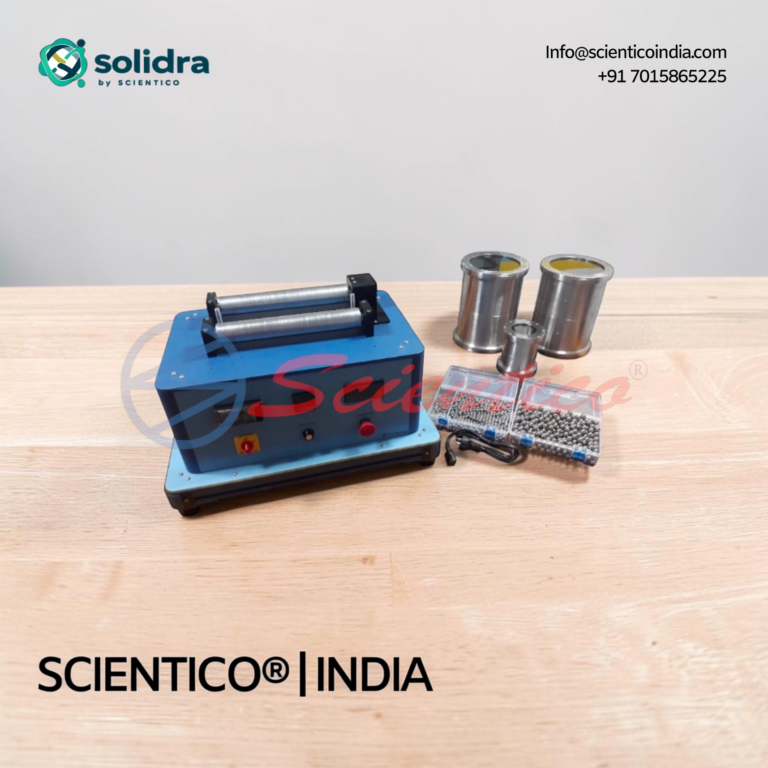
Ball Mill | Solidra – 02
The Ball Mill Solidra - 02 is a form of mill with grinding bodies, featuring drums that open at the front for loading material and milling balls. This Ball Mill uses drums mounted on a drive roller and a loose roller with adjustable spacing between the axles. It demonstrates cascade and cataract motion states, observable through transparent drum fronts.
View product details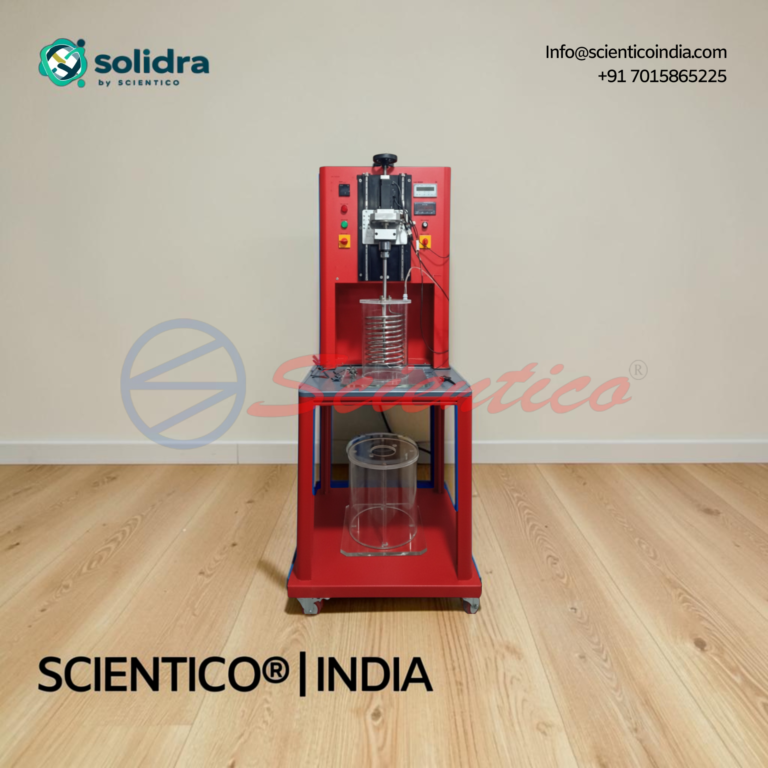
Liquid/Solid Mixing Unit | Solidra – 03
The Liquid/Solid Mixing Unit Solidra - 03 is a unit operation designed to cause erratic movements in a fluid using mechanical devices. This Liquid/Solid Mixing Unit is an independent experimental stand used to illustrate mixing processes during agitation. It uses a regulated electric motor with adjustable speed to drive agitators in a tank fitted with a pipe coil heat exchanger.
View product details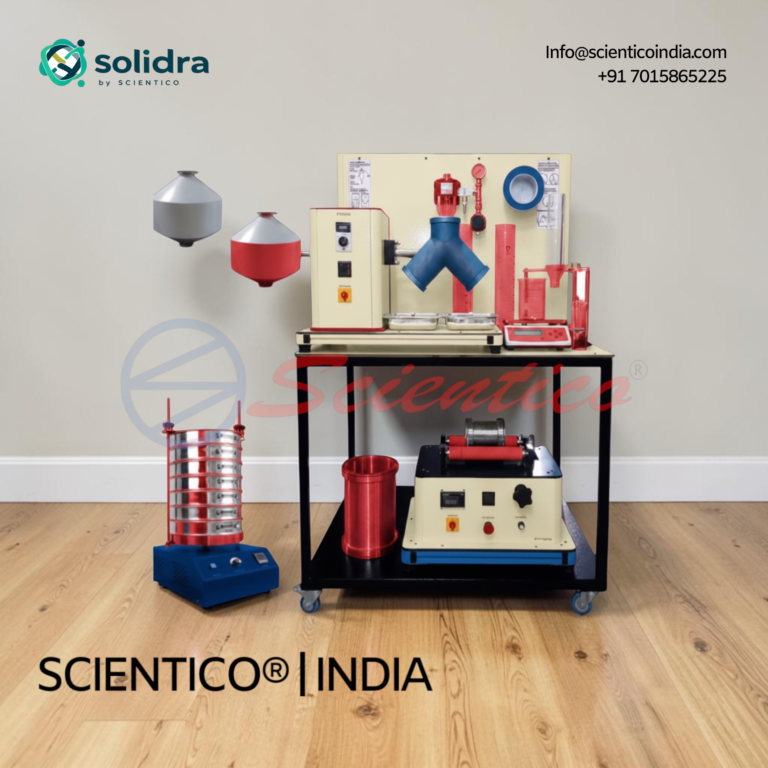
Solids Handling Study Unit | Solidra-01
The Solids Handling Study Unit Solidra-01 is a teaching unit that lets students study the basics of solids manipulation unit operations in depth. This Solid Handling Study Unit introduces students to solids behavior across size reduction, mixing, transport, discharge, and weighing. It consists of a bench mounted with a ball mill, shaker and sieves, V-blender, cyclone, rotary cylinder, and balance.
View product detailsChoose the process before the catalogue model
Size reduction, solids-flow study and liquid-solid mixing are separate teaching problems. For each one, define the starting material, the safe operating conditions, the observable output and the method used to collect or compare samples. That sequence produces a clearer technical offer and reduces disputes during acceptance.
Six points to settle before requesting quotations
- Experiment and material: name the required operation and describe the teaching sample or permitted substitute.
- Input and output handling: identify feeding, collection, containment and cleaning arrangements expected from the unit.
- Variables and observations: list speed, time, load, mixing condition, size distribution or other records required by the practical.
- Safety: request guards, interlocks, dust or spill controls and operating restrictions relevant to the proposed configuration.
- Utilities and room conditions: confirm electrical supply, ventilation, water or drainage needs before commercial comparison.
- Evidence for acceptance: record included accessories, sample assumptions, manuals, experiment procedure and measurable acceptance checks.
Products in this Scientico equipment family
The links below open the current product records. Use the product page and downloadable datasheet to confirm the offered configuration; do not infer a specification from this guide.
Ball Mill | Solidra – 02
The Ball Mill Solidra - 02 studies solids comminution using two steel-jacketed drums with transparent fronts. This Ball Mill demonstrates cascade and cataract motion at varying rotation speeds,…
Liquid/Solid Mixing Unit | Solidra – 03
The Liquid/Solid Mixing Unit Solidra - 03 studies agitation and mixing processes using interchangeable blade, propeller, and turbine stirrers. This Liquid/Solid Mixing Unit features transparent tanks with and…
Review product record and datasheetSolids Handling Study Unit | Solidra-01
The Solids Handling Study Unit Solidra-01 teaches students the fundamentals of solids manipulation through hands-on unit operations. This Solid Handling Study Unit includes a ball mill, vibratory shaker…
Review product record and datasheetBuild a quotation that can be approved
Send the required operation, sample assumptions, experiment outcome, quantity, destination and site utilities. Ask every bidder to identify the offered model, included collection or mixing accessories and exclusions.
What a comparable supplier response should show
A useful response names the proposed product and model, answers each technical line, identifies included accessories and documents, records deviations, lists site utilities and states what is excluded. This lets an institution or distributor compare scope before price and gives the acceptance team a written reference for delivery.