
Select a thermal conductivity apparatus by the material, specimen form, teaching method and readings required. Equipment used to illustrate conduction is not automatically interchangeable with a system intended to characterize an unknown material. A useful enquiry describes the experiment first and asks the supplier to confirm an exact model, compatible specimens, measurements, accessories and utilities.
Equipment mentioned in this guide
Review the product information, specifications and model before requesting a quotation.
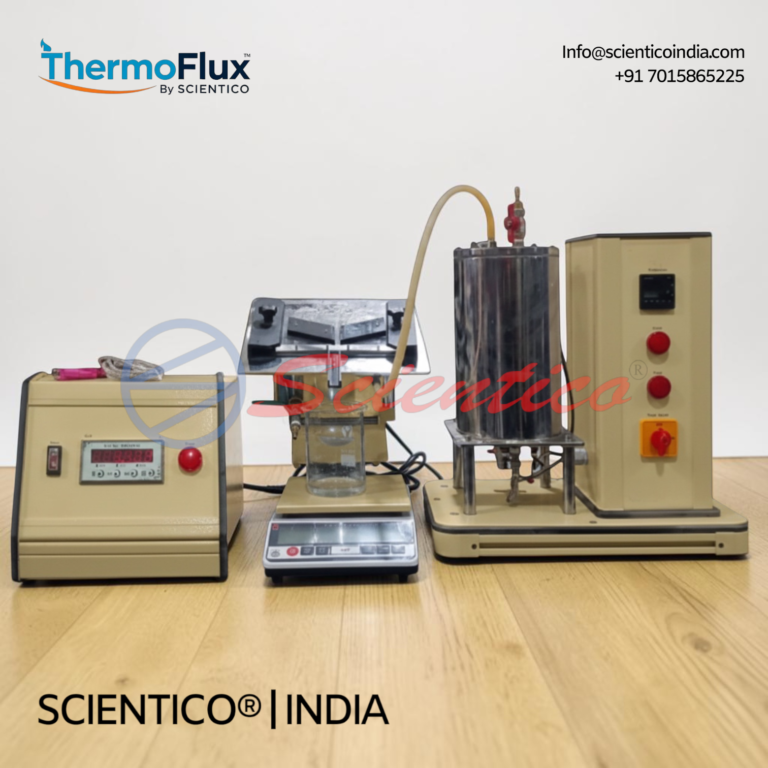
Thermal Conductivity Apparatus | ThermoFlux-25
The Thermal Conductivity Apparatus ThermoFlux-25 is a laboratory instrument for measuring heat flow across a consistent 100°C temperature differential through five common building and insulation materials. This thermal conductivity apparatus uses a steam chamber as the hot reservoir and a block of ice as the cold sink, with the rate of ice melt into water serving as the quantifiable measure of heat transfer through each test sample. Students determine thermal conductivity values for Bakelite, wood, aluminium, Sheetrock, and Masonite using identical sample geometry across all tests.
View product detailsDefine the job before choosing the apparatus
Start with the question students must answer. Are they comparing specimen behaviour, studying a temperature gradient, examining thermal resistance or calculating conductivity using a prescribed method? Record the observations and calculation required by the syllabus, then identify the physical arrangement needed to obtain them.
For material characterization beyond an undergraduate demonstration, specify the intended method and required measurement evidence. Do not infer accuracy, uncertainty, temperature range or suitability for a sample from the words “digital” or “laboratory apparatus.” These require model-specific information.
Check the specimen and measurement method together
Sample form, preparation, dimensions and contact conditions affect which arrangement can be used. A setup for a flat specimen cannot be assumed suitable for a loose powder, fluid or a specimen of different dimensions. Ask the supplier to identify the supported sample arrangement and any preparation or holding items needed.
A research review of thermal conductivity measurement techniques explains why method choice depends on the specimen and technique limitations. For purchasing, the practical consequence is to define the sample and method before comparing instruments; the paper is not evidence of any Scientico model's performance.
Review the published model without generalizing its scope
The current Thermal Conductivity Apparatus | ThermoFlux-25 record describes a particular specimen-based arrangement. Review that exact listing and its datasheet, then ask the supplier to confirm the currently offered configuration. Do not treat the model as proof that every conduction arrangement or sample type is available.
The thermodynamics equipment category is the discovery route for other published teaching apparatus. Where a curriculum covers several heat-transfer experiments, compare the learning outcome of each apparatus rather than combining them under one generic tender line.
Use a comparison schedule that exposes differences
| Requirement | What to ask | Evidence to retain |
|---|---|---|
| Experiment and specimen | What sample form and teaching method does this model support? | Model description, specimen arrangement and method notes |
| Measurements | Which quantities are measured directly and which are calculated? | Instrument list, ranges and reading method |
| Sample holding and contact | How is the specimen positioned and prepared? | Drawing, photograph or manual detail for the offered setup |
| Utilities | What site supply or services does this configuration need? | Confirmed utility schedule and buyer responsibilities |
| Data workflow | What manual or computer recording is included? | Interface, software and licence scope where offered |
| Documentation | Which requested documents are actually included? | Written quotation and document schedule |
Keep calculated examples separate from equipment claims
A conductivity equation is useful only when its assumptions fit the apparatus and experiment. The area, thickness, measured temperatures, heat-flow method and treatment of losses must be consistent with the prescribed arrangement. Follow the current manual and teaching method instead of copying a calculation from an unrelated rig.
Ask how readings are taken and how the experiment deals with contact and heat losses. A displayed numerical value is not by itself a statement of measurement uncertainty. If the project needs a defined measurement capability, request the relevant evidence for the exact configuration and have the institution assess whether it meets the intended use.
Compare the complete teaching station
Confirm specimen holders, samples, measurement items, heating or cooling arrangements, connection parts and operating instructions. Separate consumables and replacement parts from capital equipment. Where a computer interface is requested, ask which hardware, software, licences and computer-side items form part of the offer.
Agree space, services, installation and acceptance responsibilities before ordering. Have qualified personnel review operating conditions and any required protection arrangements against the selected model's instructions. Avoid copying utility values or safety directions from another product.
Compare thermal conductivity apparatus offers by the measurement method
When requesting a Thermal Conductivity Apparatus from a manufacturer or supplier, ask for a diagram of the heat path and a list of the quantities students will record. Two systems can share the same catalogue name while requiring different specimens, utilities and calculations. A lower total does not establish that both offers provide the same experiment.
Check the steam-and-ice arrangement against your practical
The published Thermal Conductivity Apparatus | ThermoFlux-25 uses a steam chamber, a material sample and an ice cold sink, with collected meltwater used in the heat-transfer measurement. Its listing identifies supplied material examples. If you require another material or sample size, ask for written confirmation of compatibility rather than assuming that an interchangeable sample holder accepts every specimen.
| Point to compare | Question for the proposed model | What the buyer should retain |
|---|---|---|
| Sample package | Which material samples, dimensions and holders are included? Can the requested user sample be fitted? | Itemised sample schedule and a drawing or photograph of the arrangement. |
| Heat-flow measurement | What is measured directly, what is calculated, and how are collection time and background effects treated in the supplied method? | Observation sheet and calculation method for that apparatus. |
| Services and accessories | Who supplies steam generation, cooling provisions, measuring items and connection parts where required? | A utility and accessory schedule with inclusions and exclusions. |
| Repeat teaching sessions | What preparation, cleaning, consumables and replacement samples are needed between groups? | Operating instructions and a separate recurring-items list. |
Separate demonstration requirements from material testing requirements
State whether the purchase is for an undergraduate comparison practical or a specified material-testing method. If acceptance depends on a standard, a measurement range or an uncertainty requirement, name it in the RFQ and request evidence for the offered configuration. The presence of a temperature display, a model code or a general company certificate does not establish that capability. Keep the actual method and its limits attached to the technical evaluation.
A concise requirement to send with your BOQ
We require a thermal conductivity teaching station for [materials and specimen form]. Please identify the proposed model, measurement method, supplied samples and holders, readings obtained, utilities, accessories, operating instructions and an agreed demonstration. State compatibility with our attached practical and mark every exclusion. Quantity: [number]. Delivery destination: [country and city].
Use the laboratory equipment RFQ checklist to organise the request. For a practical covering several heat-transfer arrangements, compare the thermodynamics equipment range by experiment before deciding which stations to include. Send the thermal conductivity requirement with the sample information and the catalogue reference where applicable.
Prepare a useful quotation request
Send the experiment list, specimen description, required method, quantity or station count, expected data workflow, available site services, destination and deadline. Attach the syllabus or specification and identify any requested documents or acceptance demonstration.
Use the model-matching checklist to collect the missing inputs and tender compliance matrix to compare responses. Request a Thermal Conductivity Apparatus quotation with the verified model reference where relevant. The written response should state confirmed scope and unresolved requirements, rather than assume universal documents or a delivery commitment.