
I supply Thermodynamics Lab Equipment to Kenya direct from our Ambala factory, and I have been shipping engineering training rigs into East Africa long enough to know exactly what a Kenyan mechanical engineering department needs to pass an EBK accreditation visit. If you are a procurement officer at a public university, a national polytechnic, or a mid-tier private engineering school, you are the buyer I write BOQs for every week. Start with the parent hub lab equipment supplier Kenya, then come back here for the thermo-specific detail. Full range sits under thermodynamics lab equipment.
Scientico has been manufacturing since 1993, exports to 30+ countries, holds ISO 9001, and CE-marks the trainers that need it. That is the short version of why my Thermodynamics Lab Equipment for Kenya quotes land.
Equipment mentioned in this guide
Review the product information, specifications and model before requesting a quotation.
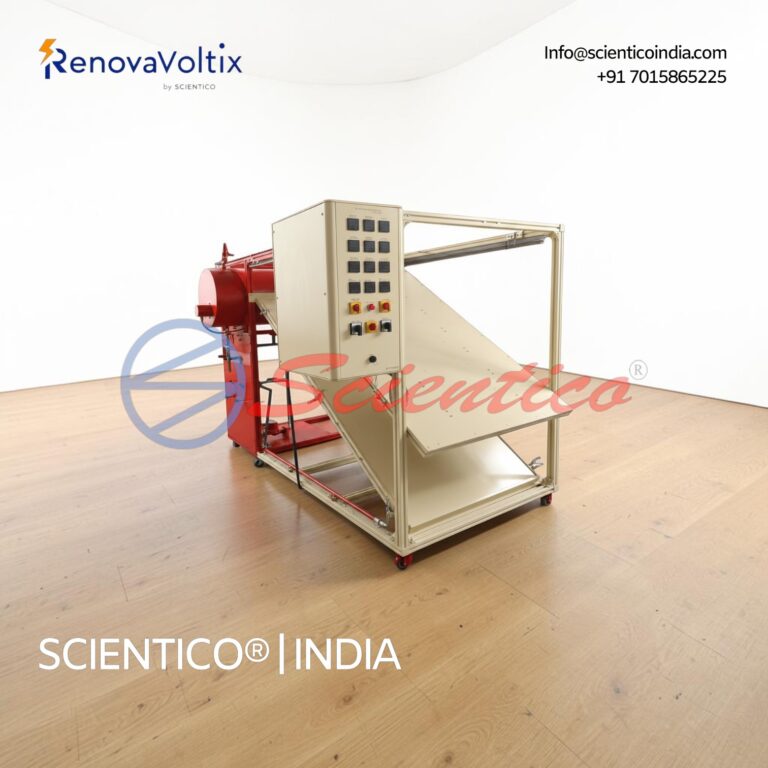
Solar Thermal Trainer | RVX-010
The Solar Thermal Trainer RVX-010 is a laboratory-based solar thermal training platform that demonstrates solar thermal heating of domestic water using both thermosiphon and forced pumping system configurations. It transforms solar energy into usable thermal energy using a high-power artificial solar simulator, enabling a full range of controlled indoor experiments. Product Overview The Solar Thermal Trainer RVX-010 consists of four core elements: a thermal solar collector, a storage tank, an artificial light source solar simulator, and a pumping system. The solar collector is mounted on an aluminium frame with copper tubes through which water flows, designed for maximum absorption efficiency. The accumulator tank is made from anti-corrosive material with an integrated heating element and safety device for over-temperature protection. The solar simulator uses lamps emitting radiation similar to sunlight, measured by a radiation sensor. Three lighting configurations are available: all lamps on, half the lamps on in a zig-zag pattern, or one lamp on. A pump provides forced convection of heat transfer fluid through the accumulator tank. The system supports both thermosiphon and forced pumping operation. Safety valves for overpressure protection are included. Sensors and meters record temperature, flow, and radiation. The unit is mounted on a metallic structure with wheels for mobility and features HDF panel construction with LED digital display instrumentation.
View product details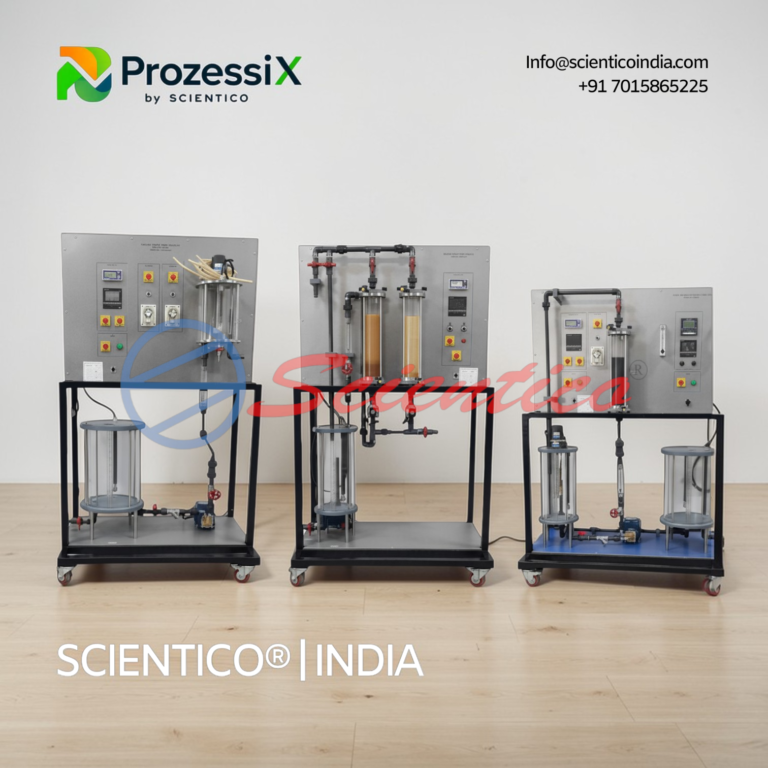
Analytical Process Control Trainer | ProzessiX PX-04
The Prozessix PX-04 is an analytical process control trainer for instrumentation and process engineering laboratories, giving students hands-on PID loop tuning across flow, level, temperature and pressure processes on a single bench.
View product details
Universal Hardness Tester
The Universal Hardness Tester manufactured by Scientico India combines Brinell, Vickers, and Rockwell hardness testing methods in a single machine. The machine uses interchangeable indenters and a built-in optical measuring system for Brinell/Vickers measurements, with direct-reading digital display for Rockwell hardness.
View product detailsWhy Kenya colleges buy Thermodynamics Lab Equipment from India
Three reasons, in the order Kenyan buyers actually rank them.
Price. An Indian-manufactured thermo bench lands in Mombasa at roughly one-third to one-half the CIF price of the German or UK equivalent. On a full 12-experiment thermodynamics lab for an EBK-accredited mechanical programme, that gap is real money that a university council can redirect to fluid mechanics or strength of materials in the same tender.
Paperwork that clears CUE, TVETA and EBK visits. Every rig I ship carries ISO 9001 QA, CE marking where the directive applies, a factory calibration certificate, an English O&M manual, and a lab-experiments manual. That documentation is what the Commission for University Education inspector opens first when auditing a mechanical engineering programme, and it is what the Engineers Board of Kenya panel looks for during programme accreditation.
Manufacturer-direct. You are not buying through three tiers of European distribution. You email me, I quote, my factory builds, we ship. Spares and repeat orders come from the same line.
Compare against my Nigeria supplier page if you are benchmarking regional pricing.
Scientico’s Thermodynamics Lab Equipment range for Kenya
The Thermodynamics Lab Equipment we ship into Kenya splits into four practical groups: heat transfer, applied thermodynamics, refrigeration and air-conditioning, and renewable/solar thermal. That covers what a Kenyan mechanical engineering syllabus asks for at diploma, degree and postgraduate level.
The ThermoFlux family covers the classic heat-engine cycles, IC engine test rigs, boiler and steam demonstrators, refrigeration tutors and heat exchanger benches. For programmes that also run a renewable elective, look at the Solar Thermal Trainer RVX-010. Process control departments that want a thermo-adjacent asset usually add the Analytical Process Control Trainer ProZessix PX-04.
Refrigeration is a separate but related buy for HVAC electives, pull it from refrigeration and air-conditioning. If your BOQ crosses into renewables, renewable energy trainers sits alongside.
For a Kenyan public-university tender that has to fit a fixed capex envelope, I usually recommend a 10 to 14 experiment core spread across those groups rather than 20 boutique rigs. It uses lab floor space better and it is what an EBK accreditation panel wants to see running.
Thermodynamics Lab Equipment, specifications Kenya buyers ask for
- Power supply: 415V, 3-phase, 50Hz for heavier rigs; 240V, 1-phase, 50Hz for benchtop units. Matches Kenya Power’s supply, no step-down transformer needed.
- Instrumentation: digital temperature indicators (K-type or PT-100), calibrated pressure gauges, rotameter or turbine flow meters, digital energy meter for electrical input.
- Structure: powder-coated MS frame, SS 304 wetted parts on any water/steam contact, castor-mounted for a Kenyan lab that gets rearranged every semester.
- Manuals: English operation manual, experiment manual with sample calculations, wiring diagram, P&ID. No French or German-only paperwork, which is a real problem with some European kit.
- Documentation: ISO 9001 QA, CE certificate where applicable, factory calibration, packing list, commercial invoice, COO for AfCFTA/EAC where relevant.
- Warranty: typically 12 months against manufacturing defect, spares available ex-Ambala for 10+ years on the ThermoFlux line.
Import process into Kenya
Every containerised thermo lab I have shipped into Kenya has landed at Mombasa. That is the only realistic route. Timings below are estimates, actual varies by carrier schedule and KRA clearance queue.
| Stage | Where | Estimate |
|---|---|---|
| PVoC inspection | Ambala factory, by Intertek / SGS / Bureau Veritas | 1 to 2 weeks pre-shipment |
| Sea freight Nhava Sheva to Mombasa | Port of Mombasa (Kilindini) | 18 to 25 days |
| Port clearance and KEBS release | Mombasa | 5 to 10 days |
| SGR rail to ICD Nairobi | Inland Container Depot Nairobi | 2 to 4 days |
| Road onward | Eldoret / Kisumu / Nakuru | 1 to 3 days from Nairobi |
KEBS PVoC is mandatory. Do not accept a supplier who tells you they will “arrange it at Mombasa”, that is where consignments sit for weeks. My factory books Intertek or SGS at origin, and the CoC travels with the docs. Northern Corridor buyers in Uganda, Rwanda, South Sudan and eastern DRC use the same Mombasa entry and I quote CIF Mombasa or DAP inland as needed.
Standards and documentation for Kenya tenders
Kenyan public procurement runs under PPADA 2015 and gets published on PPIP and individual institution portals. What separates a technically responsive bid from a rejected one is the documentation pack, not the price. For a thermodynamics lab tender at a public university or national polytechnic, expect the BOQ to demand:
- ISO 9001:2015 QMS certificate of the manufacturer, see ISO 9001:2015 for lab equipment.
- CE marking where the LVD, EMC or Machinery Directive applies, see CE marking for lab equipment.
- Calibration traceability, ideally ISO/IEC 17025 for critical instrumentation, see ISO 17025 / NABL calibration.
- KEBS PVoC CoC from Intertek, SGS or Bureau Veritas.
- Manufacturer’s authorisation letter to the local Nairobi agent, if you are bidding through one.
Programmes accredited by the Engineers Board of Kenya will also want the experiment list mapped to their curriculum, which I include as an annexure in every quote. Institutions like the University of Nairobi, JKUAT, Kenyatta University, TUK, Dedan Kimathi and Moi University represent the buyer profile this page is written for, plus the national polytechnics and TVET colleges under TVETA, and donor-funded lots under EASTRIP, AfDB, KfW and JICA.
Related Thermodynamics Lab Equipment content
Read the full thermodynamics lab equipment buyer’s guide for spec-level detail and pricing bands. If your tender bundles renewables, cross-reference the renewable energy trainer buyer’s guide. Mechanical programmes usually procure fluid mechanics and strength of materials in the same lot, so the multi pump test rig guide, the hydraulic bench guide, the universal testing machine guide and the universal hardness tester guide are all worth reading before you finalise the BOQ.
Get a CIF Mombasa model-specific quotation after technical review
Send me your BOQ or your EBK experiment list on WhatsApp or email and I will come back within one working day with an itemised CIF Mombasa quote, lead time, HS codes and the PVoC route. If you want CIF Kilindini plus DAP ICD Nairobi split-out, say so and I will price both. Contact Scientico to open a quote on Thermodynamics Lab Equipment for Kenya, whether you are buying one bench or a full mechanical lab.
One honest ask
We don't gate anything on this site. You just read the whole thing free. If it was useful, leave your email and two things happen: we send you this page as a plain-text block you can paste into a tender file or an internal email, and we notify you the next time we publish a buyer tool like this one. Nothing else. No drip sequence, no sales calls booked without asking.