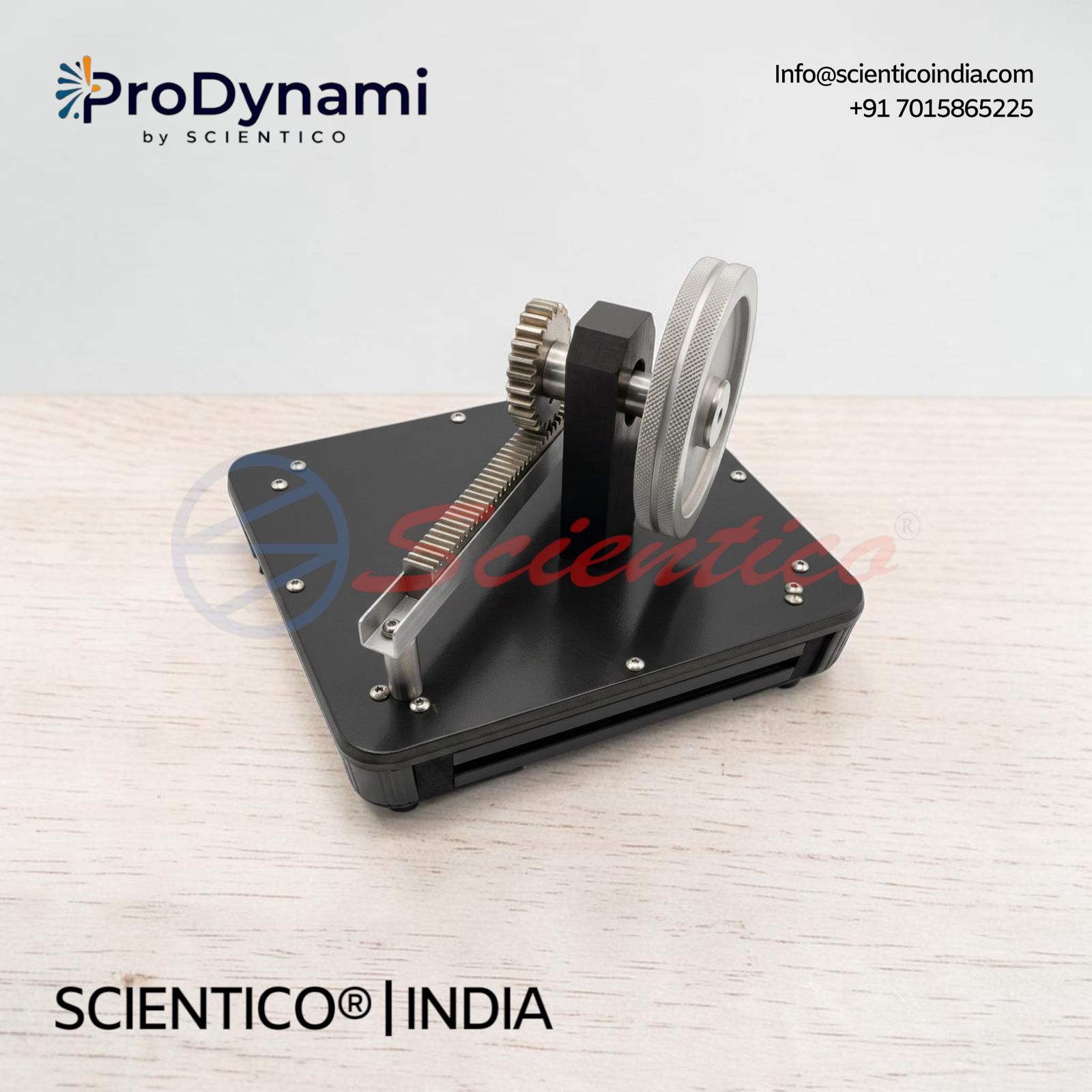
Rack and Pinion | ProDynami – 1338
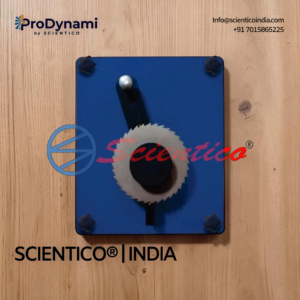
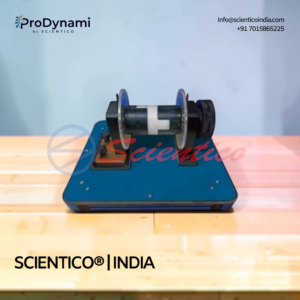
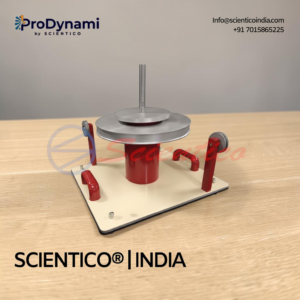
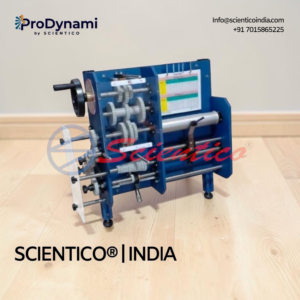
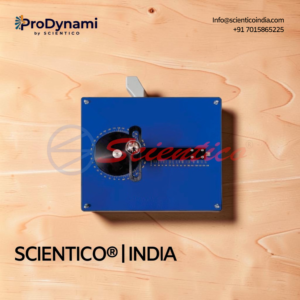
The Rack and Pinion ProDynami – 1338 demonstrates how a pinion gear converts rotational motion into linear motion via a rack. This Rack and Pinion apparatus features a 26-tooth, 50mm diameter pinion gear at a 2mm module. It illustrates the mechanism commonly used in vehicle steering systems, offering reduced backlash and improved steering feedback compared to alternatives. The apparatus is supplied as a complete experimental unit with instruction manual.
The Rack and Pinion ProDynami – 1338 is a type of linear actuator comprising a pair of gears which convert rotational motion into linear motion. This Rack and Pinion apparatus uses a circular gear, the pinion, to engage teeth on a linear gear bar, the rack, translating rotational motion into linear motion. The rack and pinion arrangement is commonly found in the steering mechanism of cars or other wheeled steered vehicles.
Product Overview
A rack and pinion is a type of linear actuator that comprises a pair of gears which convert rotational motion into linear motion. A circular gear called “the pinion” engages teeth on a linear “gear” bar called “the rack”; rotational motion applied to the pinion causes the rack to move, thereby translating the rotational motion of the pinion into the linear motion of the rack. The rack and pinion arrangement is commonly found in the steering mechanism of cars or other wheeled steered vehicles.
This Rack and Pinion arrangement provides a lesser mechanical advantage than other mechanisms such as recirculating ball, but much less backlash and greater feedback or steering “feel.” The use of a variable rack (still using a normal pinion) was invented by Arthur Ernest Bishop so as to improve vehicle response and steering “feel” especially at high speeds.
Rack and Pinion ProDynami – 1338, Technical Specifications
| Specification | Detail |
|---|---|
| Mechanism Type | Linear actuator, converts rotational motion into linear motion |
| Pinion Gear | Number of teeth: 26 |
| Pinion Diameter | 50mm |
| Module | 2mm |
Technical Data
| Parameter | Value |
|---|---|
| Number of teeth on pinion gear | 26 |
| Diameter of pinion gear | 50mm |
| Module | 2mm |
Key Features
- Pinion Gear: 26 teeth, 50mm diameter
- Module: 2mm
- Motion Conversion: rotational motion of the pinion translated into linear motion of the rack
- Mechanical Advantage: lesser than recirculating ball mechanisms, but with much less backlash
- Steering Feedback: greater feedback and steering “feel” compared to alternative mechanisms
- Automotive Relevance: commonly found in the steering mechanism of cars and other wheeled steered vehicles
- Variable Rack Concept: referenced historical improvement by Arthur Ernest Bishop for high-speed vehicle response, illustrating the design principles behind this Rack and Pinion apparatus
Construction and Design
The Rack and Pinion ProDynami – 1338 consists of a pinion gear with 26 teeth and a diameter of 50mm, at a module of 2mm. The pinion, a circular gear, engages teeth on a linear rack bar. Rotational motion applied to the pinion causes the rack to move, translating rotational motion into linear motion. This arrangement is commonly used in the steering mechanism of cars or other wheeled steered vehicles, providing less mechanical advantage than recirculating ball mechanisms but reduced backlash and improved steering feedback.
Scope of Delivery
- 1 Experimental unit
- 1 Instruction manual
Q: What is the Rack and Pinion ProDynami – 1338 used for?
A: It is used to demonstrate how a rack and pinion mechanism converts rotational motion into linear motion, as commonly used in vehicle steering systems.
Q: What is the pinion gear specification?
A: The pinion gear has 26 teeth, a diameter of 50mm, and a module of 2mm.
Q: How does a rack and pinion differ from recirculating ball mechanisms?
A: A rack and pinion provides less mechanical advantage than recirculating ball mechanisms but offers much less backlash and greater feedback or steering feel.
Q: Where is the rack and pinion mechanism commonly used?
A: It is commonly found in the steering mechanism of cars or other wheeled steered vehicles.
Q: Who is credited with improving the rack and pinion design for high-speed use?
A: Arthur Ernest Bishop invented the use of a variable rack, still using a normal pinion, to improve vehicle response and steering feel especially at high speeds.
Need Assistance? We're Here to Help!
Connect with our team for product specifications, pricing, and customized solutions for your institution or project.