Oldham Coupling | ProDynami – 1342
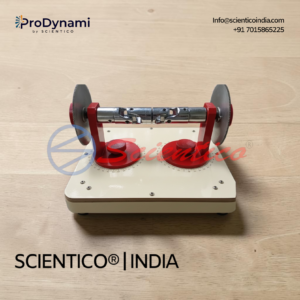
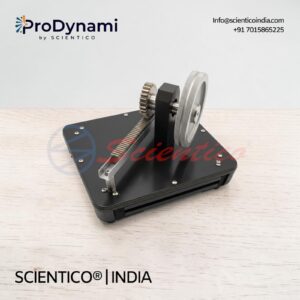
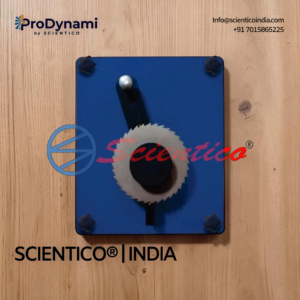
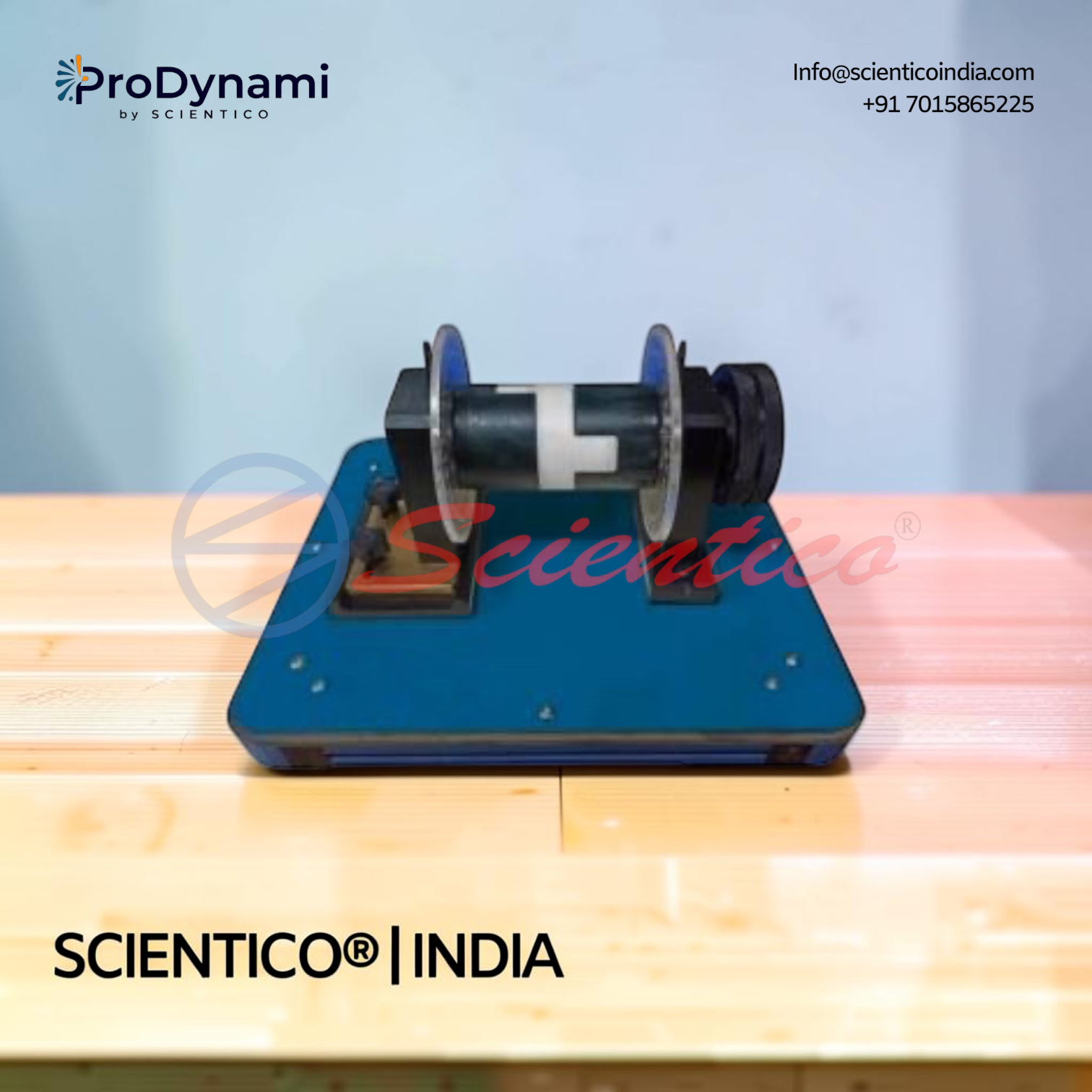
The Oldham Coupling ProDynami – 1342 connects two shafts using three discs joined by perpendicular tongue and groove arrangements. This Oldham Coupling maintains constant velocity between input and output shafts while permitting misalignment or end movement. It offers a compact design compared to two universal joints, suited for low speed shafts with parallel axes. The apparatus supports experiments on velocity ratio and central disc displacement.
The Oldham Coupling ProDynami – 1342 is a device used to connect two shafts together at their ends for the purpose of transmitting power. This Oldham Coupling has three discs: one coupled to the input, one coupled to the output, and a middle disc joined to the first two by tongue and groove. It permits some degree of misalignment or end movement while maintaining constant velocity transmission.
Product Overview
A coupling is a device used to connect two shafts together at their ends for the purpose of transmitting power. The primary purpose of couplings is to join two pieces of rotating equipment while permitting some degree of misalignment or end movement or both. By careful selection, installation, and maintenance of couplings, substantial savings can be made in reduced maintenance costs and downtime. An Oldham Coupling has three discs: one coupled to the input, one coupled to the output, and a middle disc that is joined to the first two by tongue and groove.
The tongue and groove on one side is perpendicular to the tongue and groove on the other. The middle disc rotates around its center at the same speed as the input and output shafts. Its center traces a circular orbit twice per rotation around the midpoint between input and output shafts. An advantage to this type of coupling as compared to two universal joints is its compact size. This Oldham Coupling is a constant velocity coupling which may be used where low speed shafts are found with parallel axes.
Oldham Coupling ProDynami – 1342, Technical Specifications
| Specification | Detail |
|---|---|
| Mechanism Type | Coupling device connecting two shafts for power transmission |
| Disc Configuration | Three discs: input disc, output disc, and middle disc joined by tongue and groove |
| Tongue and Groove Orientation | Perpendicular between the two sides of the middle disc |
| Application | Constant velocity coupling for low speed shafts with parallel axes |
Key Features
- Disc Configuration: three discs, input, output, and middle, joined by tongue and groove
- Tongue and Groove Orientation: perpendicular arrangement between the two sides
- Constant Velocity: middle disc rotates at the same speed as input and output shafts
- Orbital Motion: middle disc center traces a circular orbit twice per rotation around the midpoint between shafts
- Compact Design: more compact than an equivalent arrangement using two universal joints
- Misalignment Tolerance: permits some degree of misalignment or end movement
- Application Range: suited for low speed shafts with parallel axes, demonstrated on this Oldham Coupling
Experiments
- To determine the velocity ratio across the coupling with various displacements and also to plot central disc displacement against rotational position
Construction and Design
The Oldham Coupling ProDynami – 1342 consists of three discs: one coupled to the input shaft, one coupled to the output shaft, and a middle disc joined to the first two by tongue and groove. The tongue and groove on one side of the middle disc is perpendicular to the tongue and groove on the other side. The middle disc rotates around its center at the same speed as the input and output shafts, with its center tracing a circular orbit twice per rotation around the midpoint between the input and output shafts. This design gives the coupling a more compact size compared to an equivalent arrangement using two universal joints.
Scope of Delivery
- 1 Experimental unit
- 1 Instruction manual
Q: What is the Oldham Coupling ProDynami – 1342 used for?
A: It is used to connect two shafts together for transmitting power while permitting some degree of misalignment or end movement, and to study velocity ratio and central disc displacement.
Q: How many discs does an Oldham coupling have?
A: An Oldham coupling has three discs: one coupled to the input, one coupled to the output, and a middle disc joined to the first two by tongue and groove.
Q: How does the middle disc move during operation?
A: The middle disc rotates around its center at the same speed as the input and output shafts, with its center tracing a circular orbit twice per rotation around the midpoint between the shafts.
Q: What advantage does an Oldham coupling have over two universal joints?
A: An Oldham coupling offers a more compact size compared to an equivalent arrangement using two universal joints.
Q: Where is an Oldham coupling typically used?
A: It is a constant velocity coupling used where low speed shafts are found with parallel axes.
Need Assistance? We're Here to Help!
Connect with our team for product specifications, pricing, and customized solutions for your institution or project.