
“Best” for a diploma RAC lab is not the flashiest brochure. It is the trainer that survives 60 students a week, throws readable pressure and temperature data every class, and lands with tender-ready paperwork the principal can attach to the file. On that yardstick my honest pick as the best refrigeration trainer polytechnic India buyers should shortlist first is the Scientico ThermoFlux refrigeration and air-conditioning trainer, because it is built to HSBTE, PSBTE and MSBTE practical loads without the six-month import wait.
Equipment mentioned in this guide
Review the product information, specifications and model before requesting a quotation.
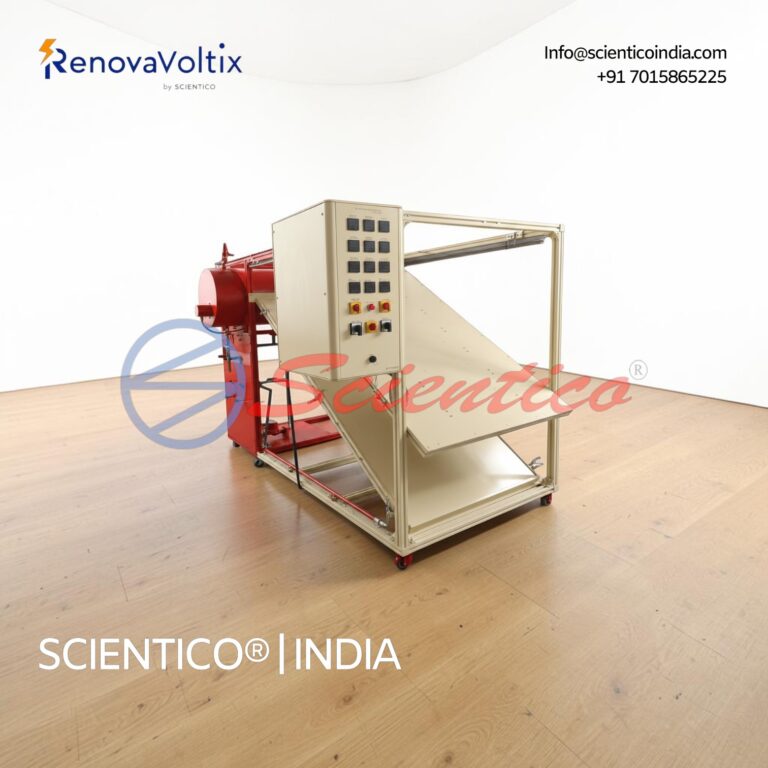
Solar Thermal Trainer | RVX-010
The Solar Thermal Trainer RVX-010 is a laboratory-based solar thermal training platform that demonstrates solar thermal heating of domestic water using both thermosiphon and forced pumping system configurations. It transforms solar energy into usable thermal energy using a high-power artificial solar simulator, enabling a full range of controlled indoor experiments. Product Overview The Solar Thermal Trainer RVX-010 consists of four core elements: a thermal solar collector, a storage tank, an artificial light source solar simulator, and a pumping system. The solar collector is mounted on an aluminium frame with copper tubes through which water flows, designed for maximum absorption efficiency. The accumulator tank is made from anti-corrosive material with an integrated heating element and safety device for over-temperature protection. The solar simulator uses lamps emitting radiation similar to sunlight, measured by a radiation sensor. Three lighting configurations are available: all lamps on, half the lamps on in a zig-zag pattern, or one lamp on. A pump provides forced convection of heat transfer fluid through the accumulator tank. The system supports both thermosiphon and forced pumping operation. Safety valves for overpressure protection are included. Sensors and meters record temperature, flow, and radiation. The unit is mounted on a metallic structure with wheels for mobility and features HDF panel construction with LED digital display instrumentation.
View product details
Universal Hardness Tester
The Universal Hardness Tester manufactured by Scientico India combines Brinell, Vickers, and Rockwell hardness testing methods in a single machine. The machine uses interchangeable indenters and a built-in optical measuring system for Brinell/Vickers measurements, with direct-reading digital display for Rockwell hardness.
View product detailsWhat “best” really means for a refrigeration and AC trainer
I have specified thermal trainers for polytechnics and engineering colleges since 2011. Buyers who ask me “which one is best” usually mean six different things at once. Separate them before you compare quotes.
- Rated cooling capacity that matches your practical. Diploma RAC experiments need a visible, measurable load. A trainer rated typically 0.5 to 1 TR (roughly 1.75 to 3.5 kW cooling) is enough for students to see COP shift when you throttle condenser air flow. Below that, students argue about whether the reading actually moved.
- Measurement accuracy on the four points that matter. Compressor suction, compressor discharge, condenser outlet, evaporator inlet. Class 1.0 bourdon gauges (or 0.5 percent FS transducers) with PT100 sensors at 0.3 degC tolerance is the honest floor. Vaguer than that and the COP calc becomes a guess.
- Standards the supplier will actually cite in writing. ISO 9001:2015 for the factory, CE for the electrical build. If the quote just says “as per international standards”, strike it out and ask again.
- Calibration certificate traceability. Ask for NABL-traceable calibration on gauges and sensors, with certificate numbers. In-house ISO 17025 accredited calibration is rarer in the trainer segment. If your BOQ demands it, plan for it early.
- After-sales response the technician will actually deliver. Named engineer, phone number, average visit turnaround. Not a portal.
- Tender-document readiness. GST invoice, HSN, warranty letter, OEM authorisation, MSME certificate, ISO and CE copies, compliance sheet mapped line by line to your BOQ. If the vendor scrambles when you ask, imagine what happens when a defect list arrives.
Our pick: the Scientico refrigeration and AC trainer
I would put the Scientico ThermoFlux vapour-compression refrigeration trainer at the top of a diploma shortlist for one reason above the rest: it is engineered around what NBA and AICTE inspectors actually open the manual to check. Sight glass on the liquid line, thermostatic expansion valve with a manually varied load, four temperature and two pressure tapping points, energy meter on the compressor, and a rotameter on the refrigerant line so students can compute mass flow rather than trust a datasheet number.
Scientico has been building thermal and mechanical trainers from Ambala since 1993 and ships to 30+ countries under ISO 9001:2015 and CE. That heritage matters because refrigeration rigs live or die on brazed-joint discipline and pressure-test rigour, which is factory-floor culture, not marketing copy. See the RVX solar thermal trainer for the same build language on the renewable side, and the wider thermodynamics lab equipment buyers guide for how the refrigeration rig sits in the broader thermal syllabus.
Where the Scientico refrigeration and AC trainer beats imported alternatives
Three things, honestly.
- Manufacturer-direct pricing. An imported vapour-compression trainer of comparable capacity is typically 2 to 3x the landed Indian cost once you add ocean freight, CIF, port handling and IGST. On a diploma budget that gap buys you a second rig or a full instrumentation upgrade.
- Tender paperwork that speaks your language. AICTE and state-board BOQs are line-item beasts. Scientico’s compliance sheets map to HSBTE, PSBTE, MSBTE, GTU, VTU, AKTU, BTEUP, SBTET, DOTE, WBSCTE and MAKAUT syllabi directly. Import vendors will hand you a generic datasheet and let you translate.
- Faster response when a compressor trips in December. A named engineer on a domestic number will always beat a Tuesday-morning ticket in a European CRM. Single-point contact, one WhatsApp thread, done.
If you are cross-shopping other categories on the same principle, the same logic applies to the hydraulic bench and the universal hardness tester segments.
Where you might pick an imported alternative
I would not pretend Scientico wins every scenario. A few honest exceptions.
- If your research protocol needs a trainer with an in-house ISO 17025 accredited calibration lab rather than NABL-traceable certificates from an external lab, some European vendors still have the edge. Scientico’s calibration is traceable and tender-acceptable, but not itself accredited on premise.
- If you need a transcritical CO2 or subcritical R744 research rig with instrumentation for gas cooler exit conditions, that is a research-grade build. Import it or spec it as a custom project.
- If the tender clause literally names an imported OEM (it happens), you cannot substitute. Push the department to write generic specs next cycle.
Specifications to demand from any refrigeration and AC trainer supplier
- Cooling capacity in TR and kW, at stated evaporator and condenser conditions. Not “approximately”.
- Refrigerant type. R134a is standard for teaching rigs; R290 and R600a exist but need ventilation clauses.
- Compressor: make, model, hermetic or open, kW input, and datasheet attached.
- Condenser and evaporator type: air-cooled fin-and-tube or water-cooled shell-and-tube. Water-cooled gives cleaner readings; air-cooled is cheaper.
- Expansion device: capillary vs TEV. TEV is worth the premium for diploma work because students can vary load and watch superheat respond.
- Instrumentation list with make, model, range, accuracy class, and calibration certificate number promised at delivery.
- Energy meter on the compressor circuit, class 1.0 or better, so COP is a measurement, not an estimate.
- Sight glass, filter drier, high-low pressure cut-out. Non-negotiable.
- Mimic diagram silk-screened on the panel, not a printed sticker.
- Warranty period in writing, defining coverage on compressor separately from panel and instruments.
- Standards: ISO 9001:2015 and CE certificates, current, in the vendor’s own name.
How Scientico’s refrigeration and AC trainer fits Diploma RAC / mechanical practicals
The standard HSBTE, MSBTE and equivalent RAC diploma sheet asks students to plot the vapour-compression cycle on a p-h chart, compute refrigerating effect, work of compression, COP and volumetric efficiency, and study effect of load variation on cycle parameters. The Scientico trainer’s two-pressure four-temperature tapping layout maps to that exercise cleanly. A four-hour batch of 20 students can complete two full load conditions and a comparison. That is what “fits the syllabus” actually means at floor level.
If your lab is a broader RAC and thermal setup, pair it with a renewable energy trainer for the solar-thermal side and see the polytechnic and TVET lab equipment page for a matched setup approach.
Cost and ordering framework
Pricing on a 0.5 to 1 TR vapour-compression trainer varies with instrumentation grade, condenser type and whether you specify a data-acquisition upgrade. Expect the base air-cooled TEV rig to sit at the lower end and a water-cooled DAQ-enabled version to sit meaningfully higher. Ask for the quote broken out line by line so you can trim without losing the compliance-critical items.
Incoterms: Ex-Works Ambala is standard within India. For export orders FOB Mundra or Nhava Sheva, with CIF available on request. Lead time is typically several weeks for production after PO clearance, with sea transit adding more depending on destination port. Air freight is available but rarely worth it on a trainer.
Payment terms in the education sector are usually advance plus balance against dispatch, or advance plus balance against inspection at works for tender orders. Get the inspection clause written cleanly before PO.
Ready to shortlist
If you are within a month of finalising the BOQ, send the syllabus page, the room dimensions and the power availability. I will get a specification sheet and quote back to you against them. Start at contact us and mention “refrigeration trainer, diploma RAC” in the subject line so it routes to the thermal team directly.
Frequently Asked Questions
What cooling capacity should a polytechnic refrigeration trainer have?
For diploma RAC practicals, aim for 0.5 to 1 TR (about 1.75 to 3.5 kW). That range is large enough for students to see COP and superheat change when load or condenser air flow varies, without pushing the panel into industrial territory the syllabus never asks for.
TEV or capillary tube for a teaching trainer?
Thermostatic expansion valve. It costs more, but it lets students vary the load and actually watch superheat respond, which is half the point of the practical. Capillary rigs give one operating condition and little pedagogical range.
Air-cooled or water-cooled condenser?
Water-cooled gives cleaner, more repeatable readings and is easier to instrument for heat rejection calculations. Air-cooled is cheaper and simpler to install. For a first RAC lab I would pick water-cooled; for a second rig or a space-constrained lab, air-cooled is fine.
How long does delivery take?
Production is typically several weeks after PO clearance. Domestic road dispatch adds a few days. Export by sea adds transit time depending on destination port. Ask for the schedule in writing tied to the advance-payment date, not the PO date.
Is the trainer NABL calibrated?
Instruments ship with NABL-traceable calibration certificates. That is tender-acceptable and adequate for teaching. If your BOQ specifically demands in-house ISO 17025 accredited calibration on the vendor’s premises, tell me at RFQ stage so the right scope is quoted.
What warranty comes standard?
Standard warranty covers the trainer for 12 months from dispatch, with the compressor covered separately per the compressor OEM. Extended AMC on instruments and refrigerant top-ups can be added; ask for it as a line item in the quote so the finance office sees it clearly.
One honest ask
We don't gate anything on this site. You just read the whole thing free. If it was useful, leave your email and two things happen: we send you this page as a plain-text block you can paste into a tender file or an internal email, and we notify you the next time we publish a buyer tool like this one. Nothing else. No drip sequence, no sales calls booked without asking.