
This is a working spec reference I hand to procurement teams and faculty when they sit down to draft the hydraulic bench line in a tender. It gives you typical ranges, what each parameter actually means on the shop floor, and the standards a compliant sheet must cite. If you are still choosing between models rather than writing the RFP, start with the hydraulic bench buyer’s guide for India and the wider fluid mechanics lab equipment category, then come back here to lock the hydraulic bench specifications India language.
I have been on both sides of this table for about fifteen years. Sourcing benches for polytechnics under DGT and state technical boards. Writing counter-specs for manufacturers replying to AICTE-linked tenders. The mistakes repeat, and so do the fixes.
Equipment mentioned in this guide
Review the product information, specifications and model before requesting a quotation.
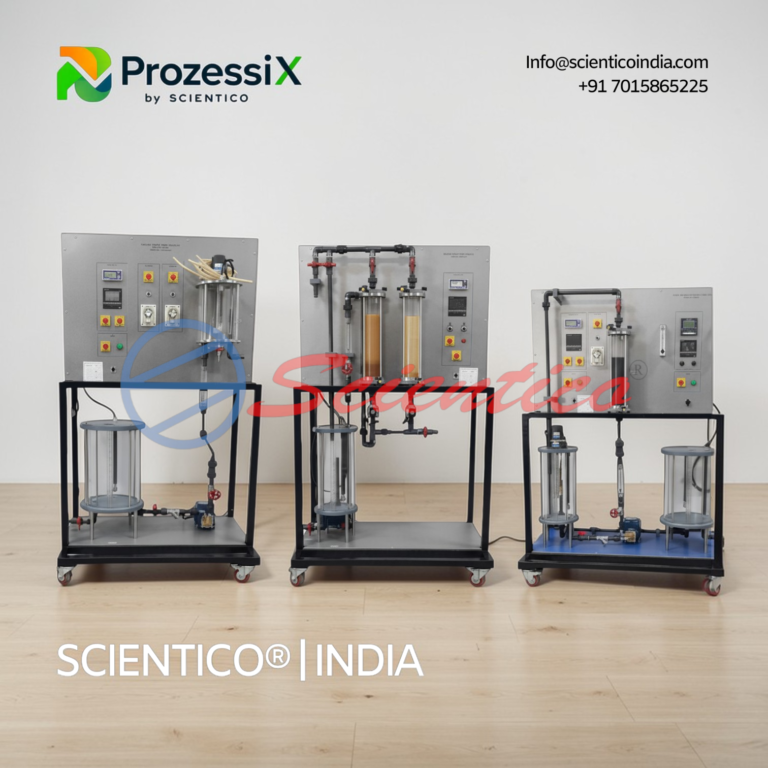
Analytical Process Control Trainer | ProzessiX PX-04
The Prozessix PX-04 is an analytical process control trainer for instrumentation and process engineering laboratories, giving students hands-on PID loop tuning across flow, level, temperature and pressure processes on a single bench.
View product details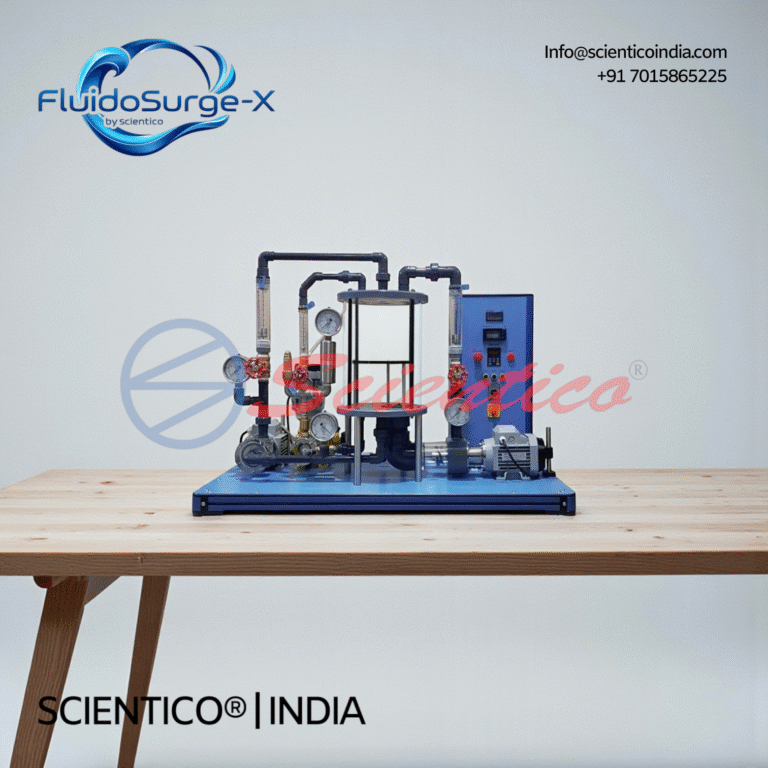
Multi Pump Test Rig Apparatus | FluidoSurge-X 294
The FluidoSurge X-294 is a multi pump test rig (series and parallel centrifugal pump test rig) that lets students run single, series and parallel pump configurations on one apparatus and compare the resulting head–discharge–efficiency characteristics.
View product details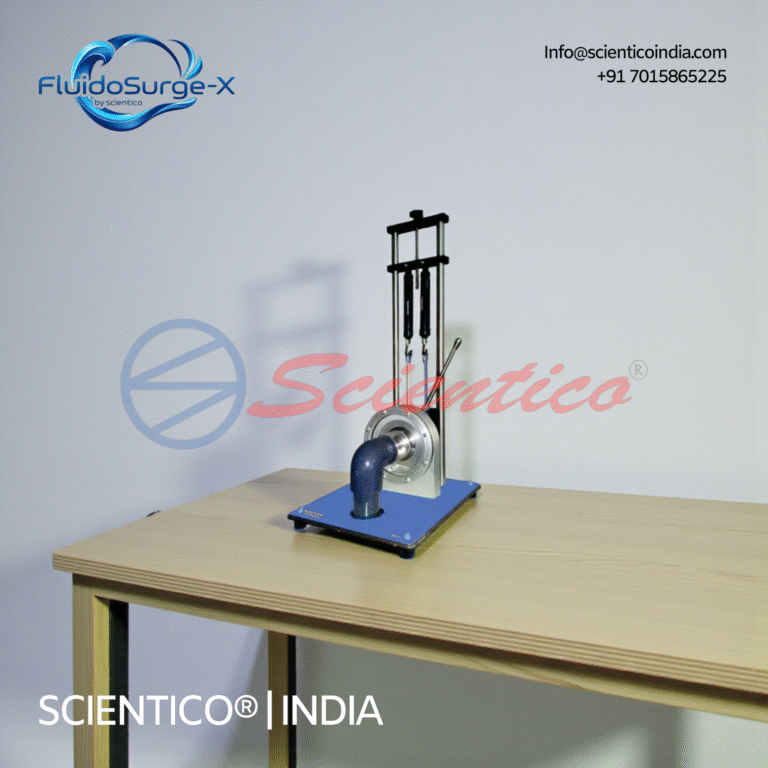
Kaplan Turbine Apparatus | FluidoSurgeX 208
The Kaplan Turbine Apparatus FluidoSurgeX 208 is a laboratory-scale training system designed to study the operating characteristics of a Kaplan reaction turbine. Manufactured by SCIENTICO, the apparatus demonstrates energy conversion from hydraulic power to mechanical power. It is suitable for instructional experiments in fluid mechanics and hydraulic machinery laboratories. The system operates using a controlled water supply from a hydraulic bench.
View product details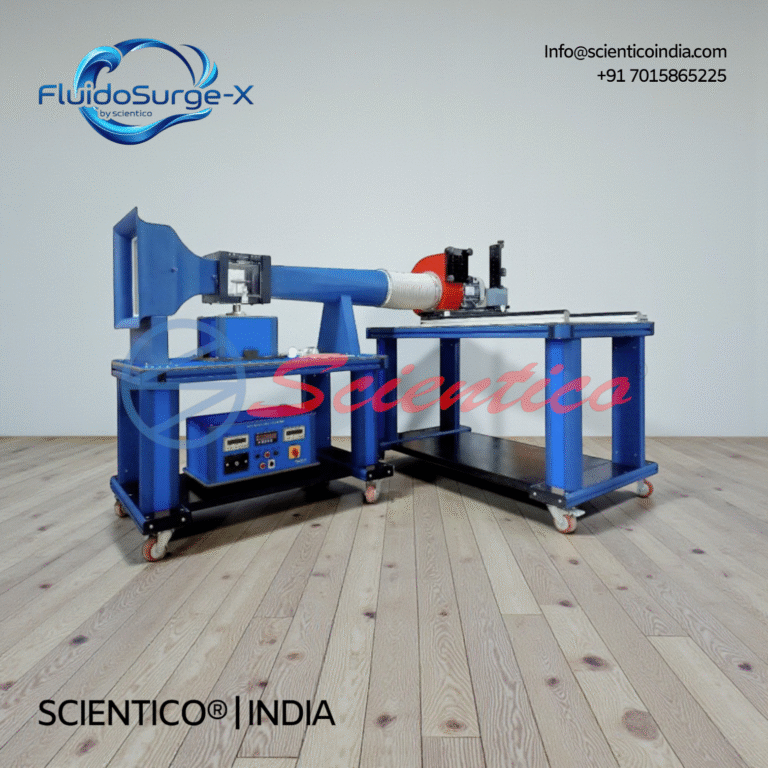
Mini Wind Tunnel | FluidoSurgeX 219
The Mini Wind Tunnel FluidoSurgeX 219 is a laboratory-scale subsonic wind tunnel designed for aerodynamics and fluid mechanics experiments. Manufactured by SCIENTICO, it enables controlled study of airflow behavior around stationary test models. The system supports accurate measurement of lift, drag, velocity, and angle of attack. Optional digital data acquisition enhances experimental analysis.
View product details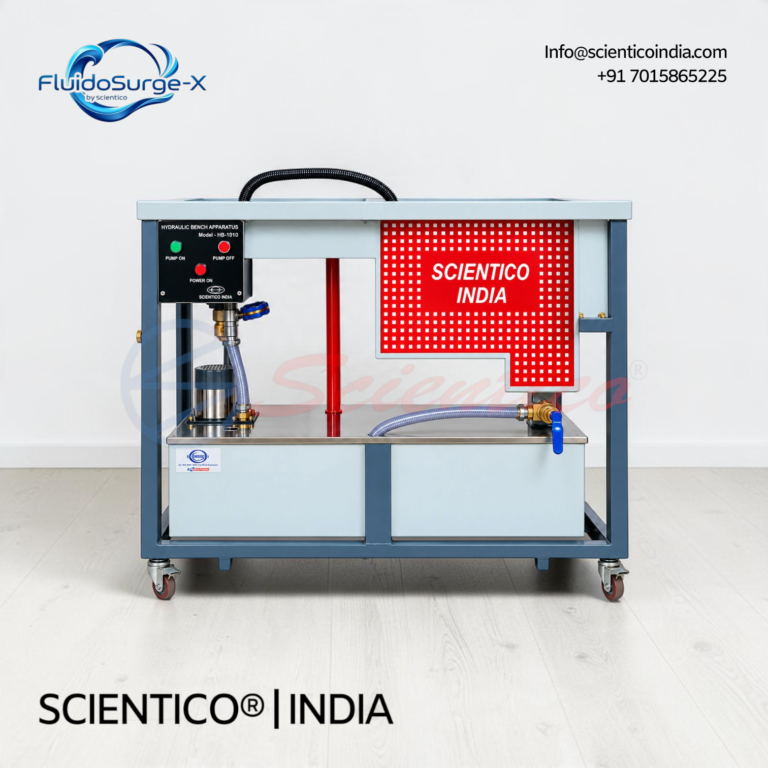
Hydraulic Bench Apparatus | FluidoSurgeX 101
The SCIENTICO FluidoSurgeX 101 Hydraulic Bench Apparatus is a basic supply and measurement unit used in fluid mechanics laboratories. It enables the circulation, measurement, and collection of water for a wide range of experimental modules.The system operates on a closed-loop water circuit consisting of a storage tank, centrifugal pump, and an elevated measuring tank. Volumetric flow rates are determined using stepped measuring tanks and a calibrated measuring beaker, supported by manual stopwatch timing.An integrated work surface with a built-in flume allows experiments involving weirs while ensuring safe placement of accessories and controlled collection of return water.
View product details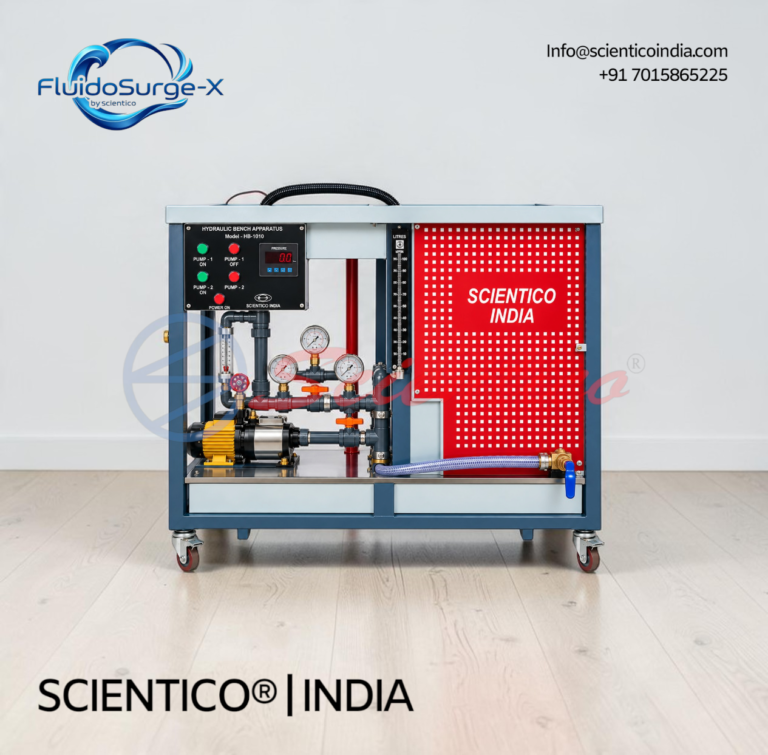
Hydraulic Bench with Series and Parallel Pumps | FluidoSurgeX 104
The Hydraulic Bench with Series and Parallel Pumps FluidoSurgeX 104 by SCIENTICO is designed for detailed study of centrifugal pump performance in fluid mechanics laboratories.The system enables operation of two centrifugal pumps in single, series, or parallel configurations within a closed water circuit.It supports volumetric flow measurement, pressure monitoring, and weir experiments on an integrated work surface.The apparatus is intended for structured academic instruction and practical laboratory experimentation.
View product detailsCore specifications for a hydraulic bench
Treat the ranges below as the band a serious teaching-grade bench falls into. Anything wildly outside these numbers is either overkill for a diploma lab or a red flag worth questioning.
| Parameter | Typical range | Notes for the RFP |
|---|---|---|
| Sump tank capacity | Typically 140 to 250 litres | Below 120 L the pump short-cycles on weir experiments. Above 300 L and you are moving furniture, not a bench. |
| Measuring tank capacity | Typically 40 to 60 L, dual range (a low-flow well of about 5 L inside a larger tank) | Dual range is non-negotiable for me. Timing 40 L on a low-head Bernoulli run wastes the whole period. |
| Pump discharge (max) | Typically 40 to 80 LPM at 20 to 25 m head | State head and discharge together. A LPM number without head is meaningless. |
| Pump motor | 0.5 to 1.0 HP, single phase 220 V or three phase 415 V, 50 Hz | Specify the phase available in the lab. I have seen 3-phase benches sit in a boys’ hostel lab for a year because nobody checked. |
| Flow measurement accuracy | Typically within about 2 percent of reading for the volumetric method | Never accept “high accuracy” as a phrase. Ask for a numeric percent of reading or percent of full scale. |
| Manometer | Differential U-tube, mercury or coloured water, 300 to 500 mm range | Mercury is being pushed out of teaching labs in several states. Ask for a mercury-free option in the same RFP line. |
| Frame and tank material | SS 304 tanks, MS powder-coated frame or SS frame | MS painted tanks rust inside two monsoons in coastal labs. Do not accept them. |
| Piping and fittings | GI or SS with brass or PVC quick-release couplings | Couplings matter more than you think. This is where an accessory-heavy bench earns its keep. |
| Bench dimensions | Roughly 1100 to 1300 mm L x 700 to 800 mm W x 900 to 1100 mm H | Check the doorway. I have seen benches lifted over first-floor balconies because a corridor was 850 mm wide. |
| Safety | MCB, ELCB or RCCB, overload relay, dry-run protection | Dry-run protection is often skipped by cheap suppliers. Insist on it. |
| Standards compliance | ISO 9001:2015 QMS, CE mark on the electricals | Ask for the certificate copies as an annexure to the quotation. |
| Calibration certificate | Traceable to a NABL-accredited lab under ISO/IEC 17025 | See the red-flags section. This is the single line most suppliers try to fudge. |
| Warranty | 12 months on the bench, 6 months on the pump seal | Extended AMC pricing should be quoted upfront, not after PO. |
hydraulic bench specifications India, decoding the spec sheet
Sump capacity governs how many downstream accessories the bench can feed without the pump losing prime. A 200 L sump comfortably runs a Bernoulli apparatus, an orifice tank, and a small pipe friction rig back-to-back in one lab session. Drop to 100 L and you spend half the practical refilling. Look at the complete fluid mechanics lab setup guide before you finalise sump size, because it depends on which accessories share the bench.
Discharge and head together define what experiments the bench can actually run. A centrifugal pump characteristic curve is a hyperbola: at zero head you get maximum LPM, at zero flow you get maximum head, and the useful operating point sits somewhere in the middle. A 60 LPM at 22 m bench will handle everything from a Venturi and Pitot apparatus to a small notches and weirs apparatus. If your syllabus includes turbine or reaction-machine work, you probably want a separate turbine test rig rather than expecting the bench to feed it.
Flow accuracy is where marketing copy gets loose. “High accuracy digital flow measurement” tells you nothing. The volumetric method (timing a known volume) on a properly levelled measuring tank gives about 2 percent of reading if the operator times cleanly. A rotameter on the same bench is closer to 3 to 5 percent of full scale, which is a very different error at low flow. Make the RFP say which method the accuracy figure applies to.
Manometer choice is a curriculum question, not just a hardware one. Mercury U-tubes read cleaner at high differential heads and remain the standard illustration in most fluid mechanics textbooks. But several state pollution boards now push labs to phase mercury out, so I usually spec a coloured-water inclined manometer as a parallel option in the same tender line. Faculty then choose per experiment.
Materials decide whether the bench is still usable in year seven. SS 304 tanks with silicone-sealed joints outlast painted MS by a wide margin, especially anywhere the humidity crosses 70 percent for months at a stretch. The frame can be MS with a proper epoxy powder coat if budget is tight, but the wet parts should be stainless.
Standards the spec sheet should reference
- ISO 9001:2015 for the manufacturer’s quality management system
- CE marking on all electrical assemblies
- ISO/IEC 17025 (NABL) calibration traceability for the flow measurement and pressure instruments
- IS 15540 style guidance for hydraulic test rig safety practices
- IEC 60193 as the reference framework whenever the bench is used to drive model turbines
Teaching-grade vs research-grade vs industrial-grade specs
Teaching-grade is what most polytechnics and engineering colleges under AICTE, HSBTE, MSBTE, GTU, VTU, AKTU, BTEUP, or DOTE actually need. The ranges in the table above cover this tier. Repeatability is fine for demonstrating principles, and the whole rig fits a syllabus practical of 90 to 120 minutes.
Research-grade benches push flow accuracy to under 1 percent, add electromagnetic or Coriolis flow metering, and log data over serial or Ethernet. You pay two to three times the teaching-grade price for that, and I would only spec it if the lab is running M.Tech thesis work or funded projects.
Industrial-grade rigs are a different animal, usually built into a specific process pilot plant like a process control trainer (ProZessix PX-04). They are not what a fluid mechanics undergraduate lab needs, and quoting for one in a teaching tender wastes budget you could spend on a second bench or a pipe friction apparatus.
Common spec-sheet red flags
- “Calibration certificate provided” with no traceability clause. Ask specifically for NABL-traceable calibration under ISO/IEC 17025. An in-house sticker is not a calibration certificate.
- Accuracy quoted without a reference method. “2 percent accuracy” is meaningless if the sheet does not say percent of reading vs percent of full scale, and which instrument it applies to.
- No standard cited for materials. “SS tank” can mean SS 202 (cheap, corrodes) or SS 304 (proper). Spell out the grade.
- Wrong voltage or phase for your site. A 3-phase 415 V bench in a lab with only single-phase supply is dead weight. State the site condition on the tender itself.
- No warranty on the pump seal separately. Mechanical seals are the first thing to fail on a hard-run teaching bench. If the warranty lumps everything at 12 months without calling the seal out, expect an argument in month four.
Scientico’s hydraulic bench, what our spec sheet includes
Our reference bench is built in Ambala under an ISO 9001:2015 QMS, CE-marked on the electricals, and calibrated with NABL-traceable instruments. It is designed to feed the fluid mechanics accessories in our HydraNexis and FluidoSurge lines, including the multi-pump test rig (FluidoSurgeX 294), Kaplan turbine apparatus (FluidoSurgeX 208), and mini wind tunnel (FluidoSurgeX 219). Since 1993 we have shipped to 30+ countries, and we can supply the compliance annexures your tender committee needs the same day you ask.
For pricing bands to sit next to these specs, use the hydraulic bench price India reference. For the wider procurement plan, the engineering college lab equipment overview and the polytechnic and TVET reference both flag the tender clauses I see rejected most often.
Ready to draft the tender
Send me your syllabus and site conditions, and I will mark up your draft RFP line-by-line before you publish it. Reach us on the contact page or attach your tender document directly.
Frequently Asked Questions
What sump tank size should a hydraulic bench spec sheet ask for in an Indian teaching lab?
Typically 140 to 250 litres. Below 120 L the pump short-cycles when a weir or notch experiment runs at higher flow, and above 300 L the bench becomes hard to move between labs. For a fluid mechanics lab feeding a Bernoulli apparatus and a pipe friction rig off the same bench, 200 L is a sensible target.
How should flow measurement accuracy be worded in a hydraulic bench RFP?
State the method and a numeric figure. For example, volumetric method within about 2 percent of reading, or rotameter within 3 to 5 percent of full scale. Reject any sheet that says only high accuracy or digital accuracy without a percent and a reference method.
Is a NABL calibration certificate mandatory for a hydraulic bench in India?
For teaching labs it is not legally mandatory, but for any lab audited under AICTE, NBA, NAAC, or state technical board inspections, ISO/IEC 17025 traceable calibration on the flow and pressure instruments is what inspectors expect to see. Ask for it in the RFP so the supplier prices it in from day one.
Should the spec sheet insist on SS 304 or is SS 202 acceptable?
For the wet parts (sump tank, measuring tank, weir plates), SS 304 is what I spec. SS 202 pits within a year or two in humid coastal or monsoon-heavy locations. The frame can be MS with epoxy powder coat if budget is tight, but write the grade into the RFP so the supplier cannot substitute.
Does the same hydraulic bench spec sheet cover turbine and pump experiments?
Partly. A well-specified bench feeds accessories like Venturi, Pitot, orifice, and pipe friction rigs cleanly. For reaction turbines or multi-pump testing you usually need a dedicated turbine test rig or a multi-pump rig with its own reservoir. Do not overload a single bench spec to try to cover everything, split the tender line.
One honest ask
We don't gate anything on this site. You just read the whole thing free. If it was useful, leave your email and two things happen: we send you this page as a plain-text block you can paste into a tender file or an internal email, and we notify you the next time we publish a buyer tool like this one. Nothing else. No drip sequence, no sales calls booked without asking.