Fuel Cell Energy Training System | RVX 123A
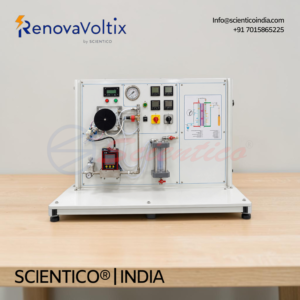
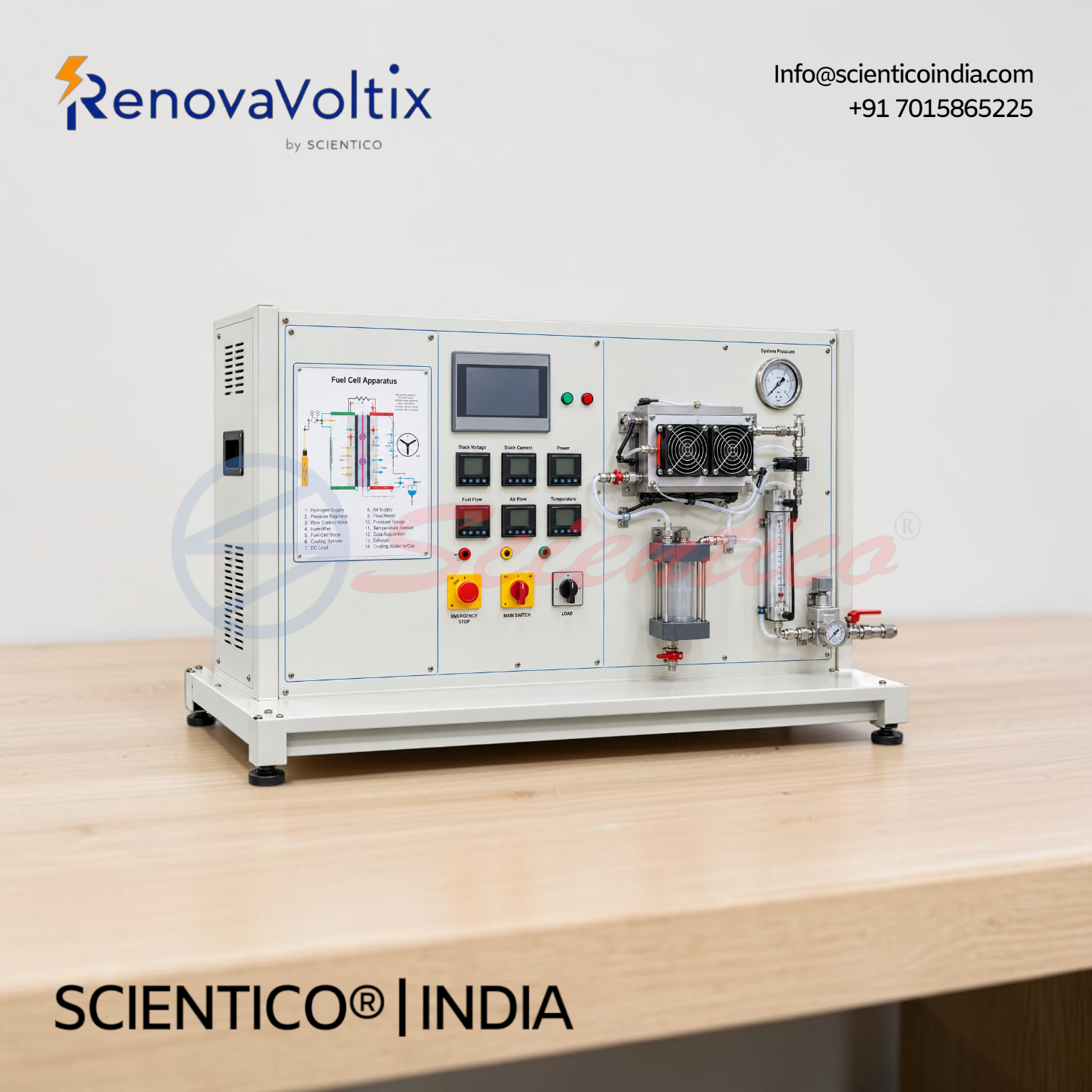
The Fuel Cell Energy Training System RVX 123A investigates polymer-membrane fuel cells for direct chemical-to-electrical energy conversion. This fuel cell energy training system delivers 200W nominal output with touch LCD control, integrated cooling circuit thermal analysis, water separator, and included LABVIEW DAQ software. Comprehensive instrumentation measures hydrogen flow, pressure, temperature, voltage, and current for complete energy balance analysis.
The Fuel Cell Energy Training System RVX 123A is an educational apparatus for investigating polymer-membrane fuel cells with direct chemical-to-electrical energy conversion. This fuel cell energy training system operates in combined heat and power generation with 200W nominal output, hydrogen from pressure vessel, and oxygen from ambient air, controlled via integrated electronic load.
Product Overview
The RVX 123A fuel cell energy training system features a 200W nominal output polymer-membrane fuel cell with voltage range 13.75 to 23.75V and current 13.3 to 16.6A. Hydrogen supply uses standard pressurized vessel with high-pressure reducing valve and solenoid valve. Oxygen draws directly from ambient air. Integrated 250W electronic resistive load controlled via touch LCD allows precise operating point adjustment. Thermal energy from cell cooling dissipates through cooling circuit and integrates into instrumentation analysis. Water separator collects accruing water with configurable purge valve in dead-end mode. Moisture regulation occurs automatically via operating temperature and air flow without external humidification. All measured values transmit to PC via included DAQ system and LABVIEW software.
Fuel Cell Energy Training System RVX 123A — Technical Specifications
| Parameter | Value |
|---|---|
| Nominal Output | 200W |
| Maximum Output | 243W |
| Voltage Range | 13.75 to 23.75V |
| Current Range | 13.3 to 16.6A |
| Operating Temperature | 5°C to 35°C ambient, 0°C to 70°C stack |
| Hydrogen Inlet Pressure | 0.45 to 0.55 bar |
| Hydrogen Consumption | 2.3 to 2.8 mL/min |
| Electronic Load | 250W resistive, touch LCD controlled |
| Measuring Range (Hydrogen Flow) | 1 to 5 L/min |
| Measuring Range (Pressure) | 450 to 550 mbar |
| Measuring Range (Temperature) | 5°C to 65°C |
| Voltage Meter | 0 to 12V (up to 20V open circuit) |
| Current Meter | 0.1 to 12A |
| Humidity | 0 to 95% ambient |
| Storage Temperature | -5°C to 50°C ambient, 0°C to 70°C stack |
Technical Data
Fuel Cell Stack:
- Nominal output: 200W
- Maximum output: 243W
- Voltage: 13.75 to 23.75V
- Current: 13.3 to 16.6A
- Operating temperature: 5°C to 35°C ambient, 0°C to 70°C stack
- Hydrogen inlet pressure: 0.45 to 0.55 bar
- Hydrogen consumption: 2.3 to 2.8 mL/min
- Humidity: 0 to 95% ambient, 0°C to 70°C stack
Control and Safety:
- Touch LCD for operation control with PC interface option
- Solenoid valve for hydrogen supply
- Pressure regulator for H2 cylinder
- Water separator for accruing water collection
- Configurable purge valve for dead-end mode operation
- Suitable tubes and hoses for high safety factor with H2
Electronic Load:
- Type: Resistive, 250W maximum
- Control: Touch LCD electronic control
Measuring Ranges:
- Flow rate (hydrogen): 1 to 5 L/min
- Pressure (hydrogen): 450 to 550 mbar
- Temperature: 5°C to 65°C
- Voltage Meter: 0 to 12V (up to 20V open circuit)
- Current Meter: 0.1 to 12A
Key Features
- High Power Output: Fuel cell energy training system delivers 200W nominal and up to 243W maximum output
- Dual Control Interface: Touch LCD operation with optional PC interface via included DAQ software
- Electronic Load Management: 250W resistive load controlled precisely for characteristic curve analysis
- Thermal Energy Analysis: Cooling circuit captures and measures thermal energy for complete energy balance
- Water Management: Integrated water separator with configurable purge valve for dead-end mode operation
- High-Purity Hydrogen: Standard pressurized vessel with pressure regulator and solenoid valve control
- Automatic Moisture Regulation: Moisture controlled via temperature and air flow without external humidification
- Comprehensive Instrumentation: Sensors measure hydrogen flow, system pressure, temperature, voltage, and current
Experiments
- Efficiency of fuel cells
- Measurement of characteristic curves
- Analyzing fuel cell efficiency and factors affecting characteristic curves
- Power and efficiency ratio analysis
- System analysis with different electrical loads
- Response to load variations
- Structure of fuel cells
- Investigation of polymer-membrane fuel cell performance
Construction and Design
The Fuel Cell Energy Training System RVX 123A integrates a polymer-membrane fuel cell stack with 200W nominal output. Air-cooled system includes integrated cooling circuit for thermal energy dissipation and measurement. Metal hydride cylinder provides hydrogen H2 storage with high-pressure reducing valve, solenoid valve for supply control, and pressure regulator for safe operation. Water separator collects accruing water during operation with fully configurable purge valve for dead-end mode. Touch LCD interface controls 250W electronic resistive load for precise operating point adjustment. All system components connect via suitable tubes and hoses with high safety factor rated for hydrogen. Auxiliary mains power supplies pump, fan, and electronic control systems.
Software
DAQ software in National Instruments LABVIEW environment included. Measures and calculates apparatus results. Transmits measured values directly to PC. Runs on any Windows environment.
Optional Accessories
- Variable load Rheostat: Range 1.5 to 17 Ω, 8A maximum current
- Hydrogen Generator: Produces pure hydrogen via water electrolysis, solid polymer cell with pure distilled water
Scope of Delivery
- 1 Experimental unit
- 1 Instruction manual
Q: What is the output capacity of the Fuel Cell Energy Training System RVX 123A?
A: The RVX 123A delivers 200W nominal output with maximum output up to 243W, operating at voltage range 13.75 to 23.75V and current 13.3 to 16.6A.
Q: How does the Fuel Cell Energy Training System RVX 123A handle thermal energy?
A: Thermal energy from cell operation dissipates through an integrated cooling circuit and is measured via integrated instrumentation for complete energy balance analysis.
Q: What control interface does the Fuel Cell Energy Training System RVX 123A provide?
A: The RVX 123A features a touch LCD for operation control with optional PC interface capability. Included DAQ software and LABVIEW transmit all measured values directly to PC.
Q: How is water managed during Fuel Cell Energy Training System RVX 123A operation?
A: An integrated water separator collects accruing water. In dead-end mode, water is disposed via a fully configurable purge valve for hydrogen.
Q: Can the Fuel Cell Energy Training System RVX 123A operate with alternative loads?
A: Yes. Optional variable load rheostat accessory provides range 1.5 to 17 Ω at 8A maximum for customized load analysis beyond the standard 250W electronic resistive load.
Need Assistance? We're Here to Help!
Connect with our team for product specifications, pricing, and customized solutions for your institution or project.