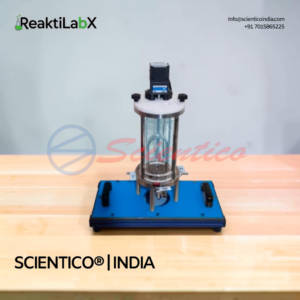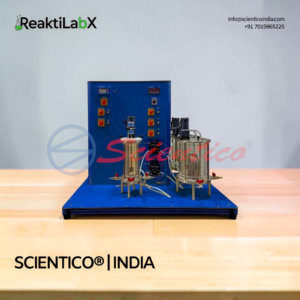

Corrosion Study Unit | ReaktiLabX – 04
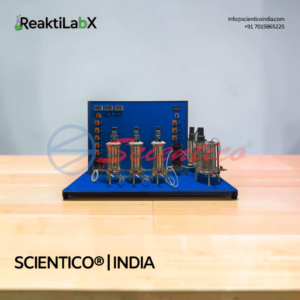
The Corrosion Study Unit ReaktiLabX – 04 investigates corrosion behavior and protection measures using 8 glass electrolyte vessels. This Corrosion Study Unit tests stainless steel, steel, copper, brass, and aluminum specimens under varying pH, salt concentration, and voltage conditions. It features an adjustable power pack, diaphragm pump, and manual pH measurement for comprehensive corrosion analysis. External voltage, sacrificial anodes, and protective layers are all studied for corrosion protection.
The Corrosion Study Unit ReaktiLabX – 04 enables the simultaneous investigation of a number of variables that affect corrosion processes. This Corrosion Study Unit uses eight glass jars to compare various materials in a variety of settings, with samples submerged in the necessary electrolyte solution. It supports studies of sacrificial anodes, local components, and external voltage effects on corrosion.
Product Overview
The economic and technical costs of corrosion damage to metallic components are significant. This means that the topic of corrosion and corrosion protection is crucial to technical education. The equipment enables the simultaneous investigation of a number of variables that affect corrosion processes. This can be accomplished with eight glass jars. They enable the comparison of various materials in a variety of settings. We fill the jars with the necessary electrolyte solution.
Each vessel’s lid can hold up to six samples, which are then submerged in the solution. In order to study the concept of sacrificial anodes and local components, specimens might be connected to an electrical conductor. A connection to an external voltage is possible with an adjustable power supply on this Corrosion Study Unit.
This reverses the flow of precious and common metals in the local elements. The more basic metals corrode at a slower rate as a result. Whenever necessary, a pump introduces ambient air into the electrolyte solution. Each vessel’s gas flow rate can be customized using flow control valves. Additionally, additional gases from the lab may be injected into the electrolyte solution. The impact of the electrolyte solution on corrosion processes can be researched and compared using a pH meter.
Corrosion Study Unit ReaktiLabX – 04 — Technical Specifications
| Specification | Detail |
|---|---|
| Study Scope | Investigation of corrosion and corrosion protection measures |
| Electrolyte Vessels | 8, with covers and 6 specimen holders each |
| Power Pack | Adjustable, for application of external voltage |
| Air Supply | Via pump |
| Gas Supply | Reversing valve for air or external gas supply |
| Gas Flow Adjustment | Per vessel, using flow control valves |
| pH Recording | Recording of pH value of electrolyte solutions using manual unit |
| External Gas Pressure Range | 0.2~1bar |
Technical Data
Electrolyte Vessels
| Parameter | Value |
|---|---|
| Capacity | 1000mL |
| Material | Glass |
Power Pack
| Parameter | Value |
|---|---|
| Voltage | 0~30VDC |
| Current | 0~5A |
Diaphragm Pump
| Parameter | Value |
|---|---|
| Flow | approx. 250L/h |
Specimens
| Parameter | Value |
|---|---|
| Materials | Stainless steel, steel, copper, brass, aluminum, x5 each |
Measuring Ranges
| Parameter | Value |
|---|---|
| pH value | 0~14 |
| Resolution | 0.01 |
Key Features
- Electrolyte Vessels: 8, glass, 1000mL capacity, with covers and 6 specimen holders each
- Power Pack: adjustable, 0~30VDC, 0~5A, for external voltage application
- Air Supply: diaphragm pump, approx. 250L/h
- Gas Supply Control: reversing valve for air or external gas, flow control valves per vessel
- External Gas Pressure: 0.2~1bar range
- pH Measurement: range 0~14, resolution 0.01
- Specimen Materials: stainless steel, steel, copper, brass, and aluminum, x5 each
- Corrosion Protection Study: external voltage, sacrificial anodes, and protective layers all studied on this Corrosion Study Unit
Experiments
- Corrosion behavior of different metallic materials (rust / passivation)
- Formation of local elements
- Influence of pH value of the electrolyte solution
- Influence of salt concentration in the electrolyte solution
- Oxygen corrosion
- Corrosion protection: external voltage, sacrificial anodes, protective layers
Construction and Design
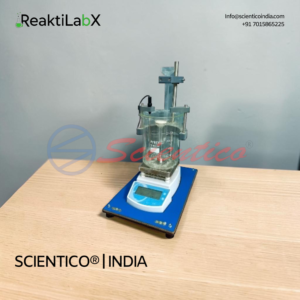
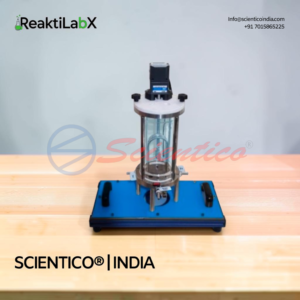
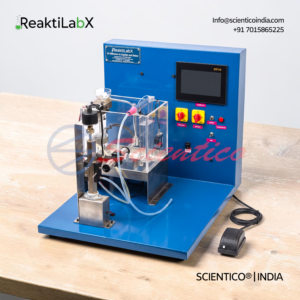
The Corrosion Study Unit ReaktiLabX – 04 consists of 8 electrolyte vessels, made of glass with a capacity of 1000mL each, fitted with covers and 6 specimen holders per vessel. Specimens include stainless steel, steel, copper, brass, and aluminum, 5 of each material. An adjustable power pack, rated 0 to 30VDC and 0 to 5A, applies external voltage to specimens connected via electrical conductor for sacrificial anode and local component studies. A diaphragm pump, flow rated approximately 250L/h, introduces ambient air into the electrolyte solution as needed, with a reversing valve allowing air or external gas supply at a pressure range of 0.2 to 1bar. Each vessel’s gas flow rate is customized using flow control valves. A manual unit records the pH value of electrolyte solutions, with a measuring range of 0 to 14 and a resolution of 0.01.
Scope of Delivery
- 1 experimental setup
- 1 set of samples
- 1 instruction manual
Q: What is the Corrosion Study Unit ReaktiLabX – 04 used for?
A: It is used to investigate corrosion and corrosion protection measures, including rust and passivation behavior, local element formation, and the effects of pH and salt concentration.
Q: How many electrolyte vessels does the unit have?
A: The unit has 8 electrolyte vessels, each with a 1000mL capacity and 6 specimen holders.
Q: What specimen materials are included?
A: Specimens include stainless steel, steel, copper, brass, and aluminum, with 5 of each material.
Q: How is corrosion protection studied on this unit?
A: Corrosion protection is studied through external voltage application, sacrificial anodes, and protective layers, using the adjustable power pack.
Q: What is the pH measurement range and resolution?
A: The pH measuring range is 0 to 14, with a resolution of 0.01.
Need Assistance? We're Here to Help!
Connect with our team for product specifications, pricing, and customized solutions for your institution or project.