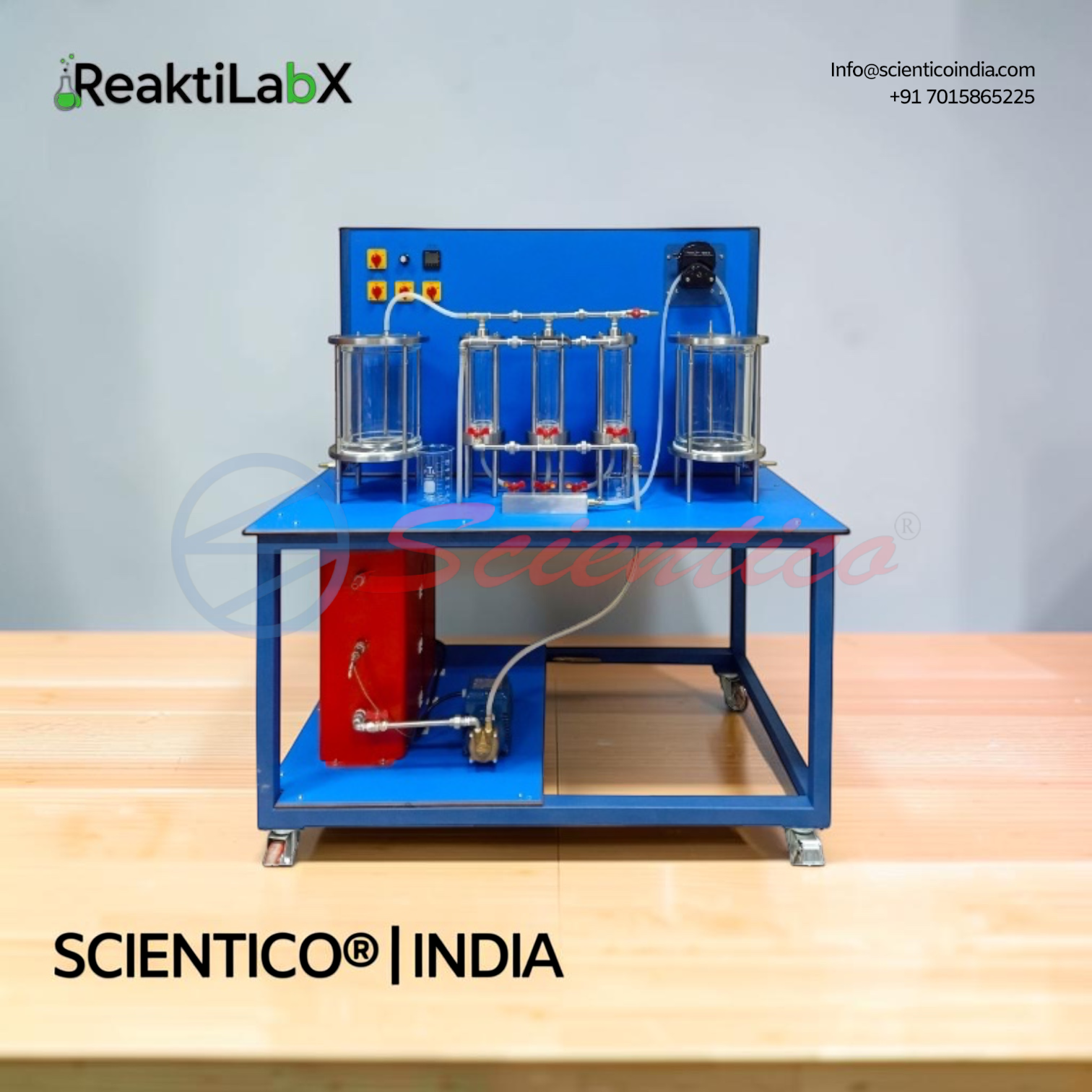
Fixed Bed Catalysis | ReaktiLabX – 05
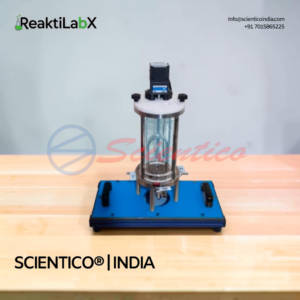
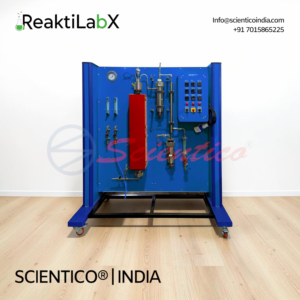
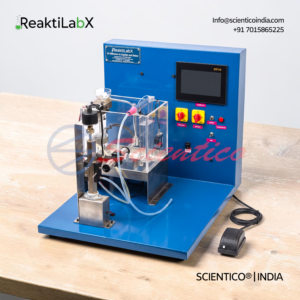
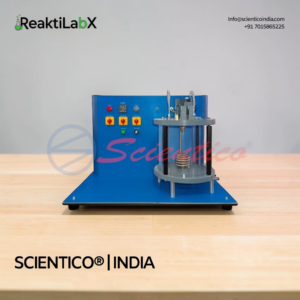
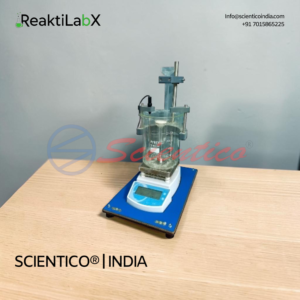
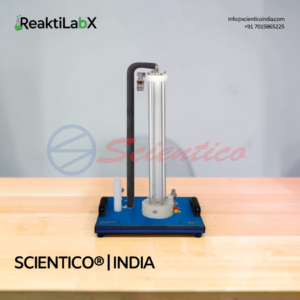
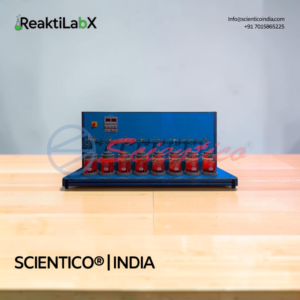
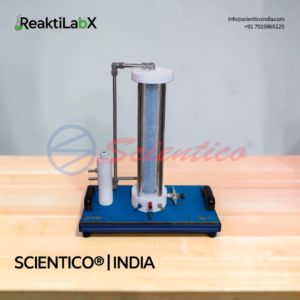
The Fixed Bed Catalysis Apparatus ReaktiLabX – 05 studies the breakdown of saccharose into glucose and fructose using fixed bed catalysis. This Fixed Bed Catalysis Apparatus features three reactors for comparing chemical and biological catalysts under controlled temperature conditions. A peristaltic pump, regulated heating circuit, and optional photometer support quantity balance and yield determination. Optional DAQ software enables measurement and calculation of results.
The Fixed Bed Catalysis Apparatus ReaktiLabX – 05 enables chemical reactions to be accelerated by catalysts, studying the breakdown reaction of dissolved saccharose into glucose and fructose. This Fixed Bed Catalysis Apparatus moves the reactant from a tank into the reactor’s bottom via peristaltic pump, passing it through a permanent catalyst bed. It allows comparison of different catalysts using three reactors.
Product Overview
Chemical reactions can be enabled or accelerated by catalysts. The breakdown reaction of dissolved saccharose in glucose and fructose is the intended use of the Fixed Bed Catalysis Apparatus ReaktiLabX – 05.
The reactant (saccharose solution) is moved from a tank into the reactor’s bottom by a peristaltic pump. In the reactor, the catalyst appears as a permanent bed. The fixed bed is passed through by the saccharose solution. Saccharose breaks down into glucose and fructose during the process. The catalyst quickens the process, resulting in a higher yield of the finished product (a glucose/fructose mixture). In a tank, the product is collected.
It is possible to compare different catalysts using three reactors on this Fixed Bed Catalysis Apparatus. Exchanger resin is employed as the chemical catalyst. The biological catalyst invertase comes highly recommended. A controlled heating water circuit also makes it possible to examine how temperature affects the reaction.
A photometer that has been specially designed for the unit is provided to measure the amount of glucose present in the product. The photometer data are uploaded to a PC where software evaluates them (optional).
Fixed Bed Catalysis Apparatus ReaktiLabX – 05 — Technical Specifications
| Specification | Detail |
|---|---|
| Study Scope | Investigation of catalytic reactions |
| Reactors | 3, for comparison of various fixed bed catalysis |
| Reactant Delivery | Peristaltic pump with adjustable speed to transport the reactant into the reactors |
| Analysis | Drawing up a quantity balance, determining yield |
| Heating System | Regulated heating circuit with water tank, heater, and pump to regulate the reactor temperatures |
| Containers | 1 scaled container for reactant and product respectively |
| Product Analysis | Photometer for analysis of the product (optional) |
Technical Data
Reactors
| Parameter | Value |
|---|---|
| Diameter | approx. 10mm |
| Height | approx. 120mm |
Peristaltic Pump
| Parameter | Value |
|---|---|
| Max. flow rate | approx. 50mL/min |
Heating Circuit Pump
| Parameter | Value |
|---|---|
| Max. flow rate | 10L/min |
| Max. head | 30m |
| Power consumption | 120W |
Heating Circuit
| Parameter | Value |
|---|---|
| Tank | approx. 15L |
| Heater | approx. max. 1kW |
Tanks for Reactant and Product
| Parameter | Value |
|---|---|
| Capacity | approx. 2000mL |
Recommended Accessories
| Parameter | Value |
|---|---|
| Photometer | Optional |
Key Features
- Reactors: 3, diameter approx. 10mm, height approx. 120mm, for catalyst comparison
- Peristaltic Pump: adjustable speed, max. flow rate approx. 50mL/min
- Heating Circuit: tank approx. 15L, heater approx. max. 1kW, pump rated 10L/min max. flow, 30m max. head, 120W power consumption
- Reactant and Product Tanks: capacity approx. 2000mL, scaled for measurement
- Catalyst Types: exchanger resin (chemical) and invertase (biological, highly recommended)
- Temperature Study: controlled heating water circuit examines temperature effects on reaction
- Product Analysis: optional photometer measures glucose content, with data upload to PC for software evaluation
- Yield Determination: quantity balance and yield calculation central to studies on this Fixed Bed Catalysis Apparatus
- Software: optional DAQ software for measurement and calculation
Experiments
- Fundamentals of chemical catalysis
- Fundamentals of enzymatic catalysis
- Use of a photometric analyzer
Construction and Design
The Fixed Bed Catalysis Apparatus ReaktiLabX – 05 uses three reactors, each approximately 10mm in diameter and 120mm in height, allowing comparison of various fixed bed catalysts. A peristaltic pump, with adjustable speed and a maximum flow rate of approximately 50mL/min, transports the reactant (saccharose solution) from a tank into the reactor’s bottom. The catalyst forms a permanent fixed bed within the reactor, through which the saccharose solution passes and breaks down into glucose and fructose. A regulated heating circuit, with a tank of approximately 15L, a heater of approximately max. 1kW, and a pump rated 10L/min max. flow, 30m max. head, and 120W power consumption, regulates reactor temperatures. Scaled containers, approximately 2000mL capacity, hold the reactant and product respectively. An optional photometer measures glucose content in the product, with data uploadable to a PC for software evaluation.
Software
Software ReaktiLabX – 05 (optional). DAQ software specially designed in National Instrument™, LABVIEW™ environment to measure and calculate the results of the apparatus. The software is optional; a set of electronic sensors is included when the software is used. The software can be run with any Windows™ environment.
Scope of Delivery
- 1 experimental setup
- 1 instruction manual
Q: What is the Fixed Bed Catalysis Apparatus ReaktiLabX – 05 used for?
A: It is used to study the breakdown reaction of dissolved saccharose into glucose and fructose using fixed bed catalysis, comparing chemical and biological catalysts.
Q: How many reactors does the apparatus have?
A: The apparatus has 3 reactors, each approximately 10mm in diameter and 120mm in height, allowing comparison of various fixed bed catalysts.
Q: What catalysts are used with this apparatus?
A: Exchanger resin is used as the chemical catalyst, while invertase is recommended as the biological catalyst.
Q: How is glucose content measured in the product?
A: An optional photometer, specially designed for the unit, measures the amount of glucose present in the product, with data uploadable to a PC for software evaluation.
Q: How does temperature affect the reaction, and how is it controlled?
A: A regulated heating water circuit allows temperature effects on the reaction to be examined, with a heater rated approximately max. 1kW and a tank of approximately 15L.
Need Assistance? We're Here to Help!
Connect with our team for product specifications, pricing, and customized solutions for your institution or project.