
Choosing a reactor trainer is not a matter of picking the longest specification. The correct system is the one that lets students operate the reactor model named in the course, change the required variables and collect enough measurements to complete the intended kinetics and performance calculations.
Equipment mentioned in this guide
Review the product information, specifications and model before requesting a quotation.
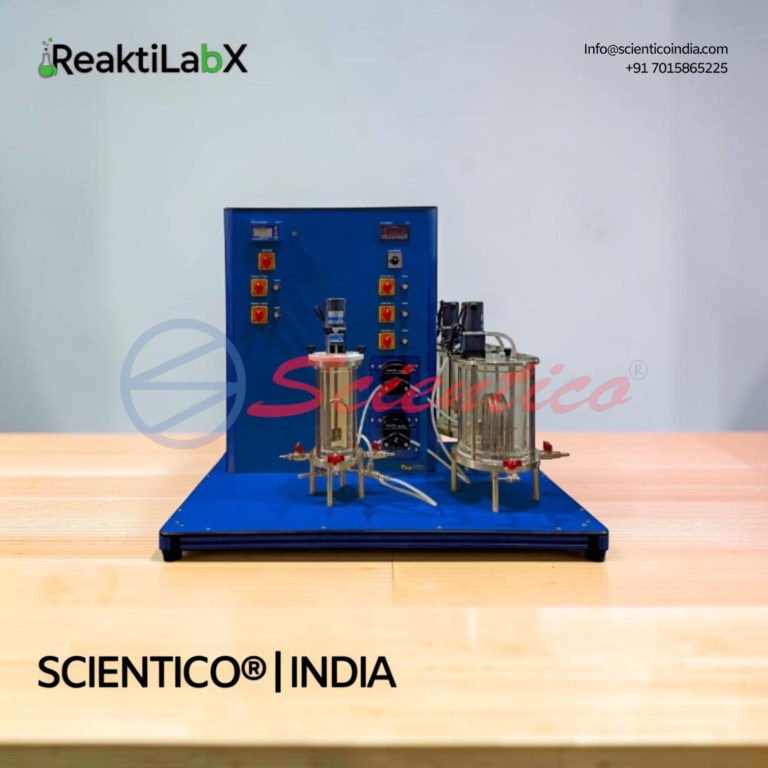
Batch Stirred Tank Reactor (Stand Alone) | ReaktiLabX – 18
The Batch Stirred Tank Reactor (Stand Alone) ReaktiLabX - 18 is typically employed when reaction rates are extremely slow or product amounts to be produced are minimal. This Batch Stirred Tank Reactor (Stand Alone) is a complete self-contained batch type unit, operating standalone with its own heating water circuit, pumps, and reactant and product tanks. It preheats reactants at the beginning of the unit before delivery into the reactor.
View product details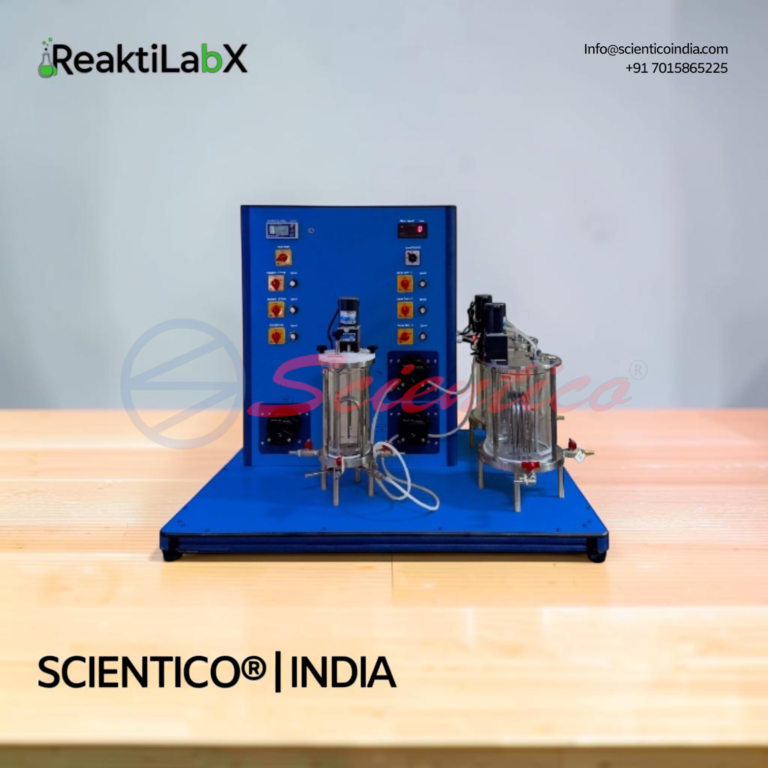
Continuous Stirred Tank Reactor (Stand Alone) | ReaktiLabX – 13
The Continuous Stirred Tank Reactor (Standalone) ReaktiLabX - 13 provides for the dependable manufacture of substantial amounts of consistent-quality output. This Continuous Stirred Tank Reactor (Standalone) includes its own heating water circuit, connections, pumps, and reactant and product tanks, allowing it to operate as a self-contained unit. It attaches to the supply unit and is secured in place by two pins.
View product details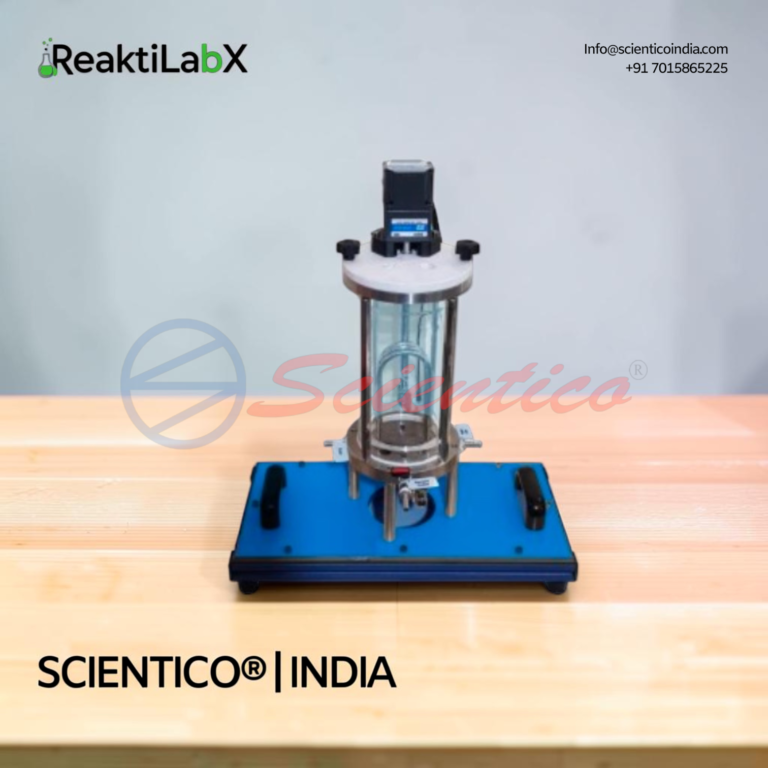
Continuous Stirred Tank Reactor | ReaktiLabX – 08
The Continuous Stirred Tank Reactor ReaktiLabX - 08 studies the operation and behavior of a stirred tank reactor in both continuous and discontinuous operation. This Continuous Stirred Tank Reactor attaches to a supply unit and is secured in place by two pins, using quick-release connections for fast installation. It provides for the dependable manufacture of substantial amounts of consistent-quality output.
View product details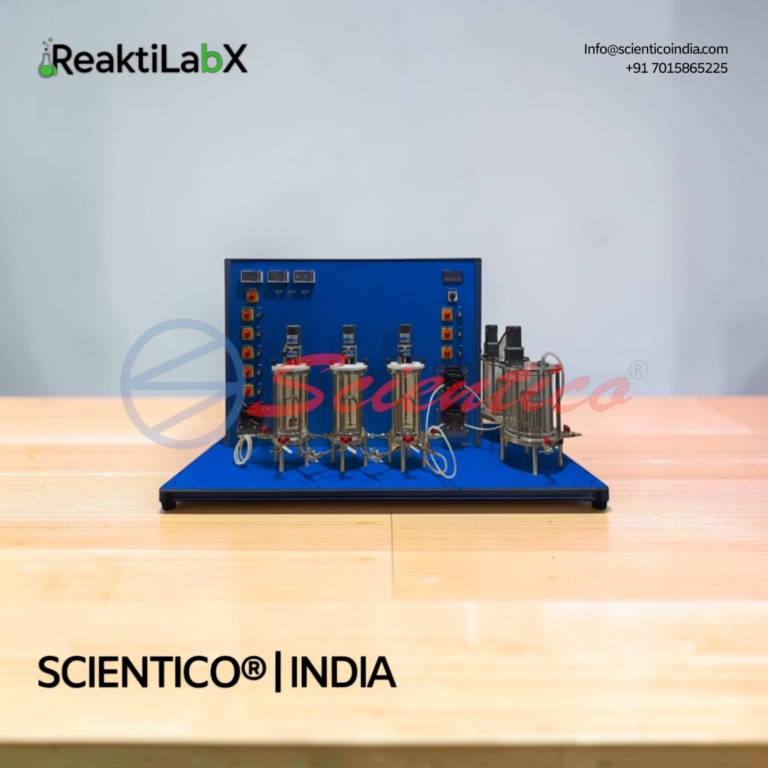
Continuous Stirred Tank Reactor in Series (Stand Alone) | ReaktiLabX – 14
The Continuous Stirred Tank Reactor in Series (Stand-Alone) ReaktiLabX - 14 connects continuous stirred tank reactors in series, providing higher conversion than a single stirred tank reactor. This Continuous Stirred Tank Reactor in Series (Stand-Alone) includes its own heating water circuit, pumps, and reactant and product tanks, functioning as a self-contained unit. Stirred tank behavior and operation can be studied sequentially.
View product details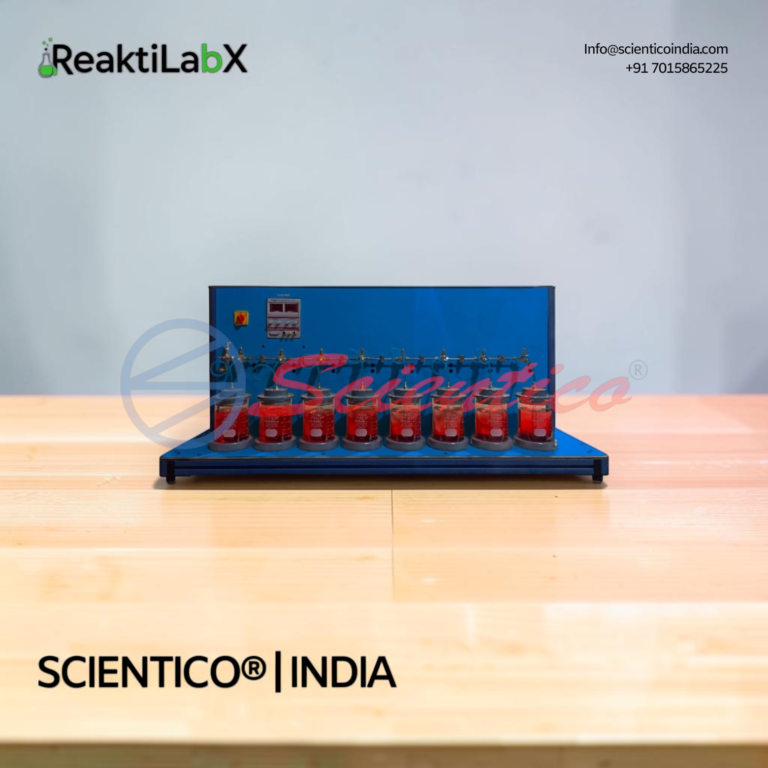
Corrosion Study Unit | ReaktiLabX – 04
The Corrosion Study Unit ReaktiLabX - 04 enables the simultaneous investigation of a number of variables that affect corrosion processes. This Corrosion Study Unit uses eight glass jars to compare various materials in a variety of settings, with samples submerged in the necessary electrolyte solution. It supports studies of sacrificial anodes, local components, and external voltage effects on corrosion.
View product details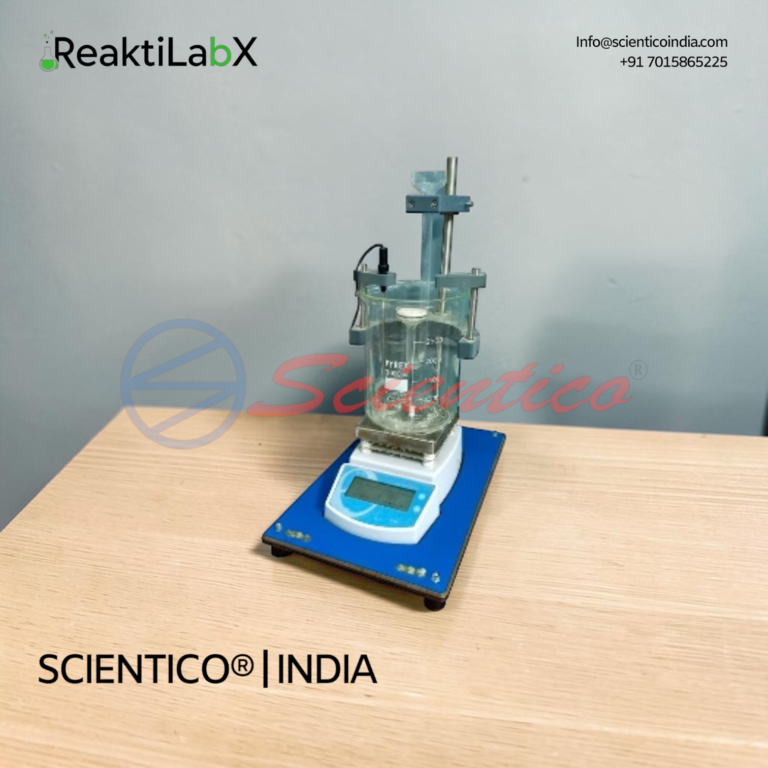
Diffusion in Liquids | ReaktiLabX – 02
The Diffusion in Liquids ReaktiLabX - 02 studies microscopic mass transfer of particles like atoms, molecules, and ions occurring through diffusion due to changes in concentration. This Diffusion in Liquids apparatus uses a concentrated salt solution and a U-shaped tube with capillaries to study diffusion behavior. Diffusion is critical to a number of processes, including assembling the components of chemical reactions.
View product detailsChoose the process before the catalogue model
A batch reactor, continuous stirred-tank reactor, tubular reactor and plug-flow teaching system represent different mixing and residence-time assumptions. Treating them as interchangeable creates a tender that is easy to price but difficult to teach from. Start with the experiment, then document the process arrangement and measurement points that make the experiment possible.
Six points to settle before requesting quotations
- Reactor model and learning outcome: state the physical model students must investigate and the calculations they must complete.
- Feed and collection path: identify batch or continuous operation, number of feeds, mixing and product collection requirements.
- Variables to observe or control: list temperature, flow, concentration, residence time, agitation or other variables required by the experiment.
- Measurement method: require each bidder to identify sensor locations, sampling points, indicators and any software included.
- Utilities and materials: confirm electrical supply, water, drain, ventilation and compatible wetted materials for the proposed exercise.
- Supplied scope: separate the reactor, service unit, vessels, pumps, sensors, accessories, manuals and consumable assumptions.
Products in this Scientico equipment family
The links below open the current product records. Use the product page and downloadable datasheet to confirm the offered configuration; do not infer a specification from this guide.
Batch Stirred Tank Reactor (Stand Alone) | ReaktiLabX – 18
The Batch Stirred Tank Reactor (Stand Alone) ReaktiLabX - 18 operates as a self-contained unit for studying batch reactor behavior. This Batch Stirred Tank Reactor (Stand Alone) features…
Review product record and datasheetContinuous Stirred Tank Reactor (Stand Alone) | ReaktiLabX – 13
The Continuous Stirred Tank Reactor (Standalone) ReaktiLabX - 13 operates as a self-contained unit with its own pumps, tanks, and heating water circuit. This Continuous Stirred Tank Reactor…
Review product record and datasheetContinuous Stirred Tank Reactor | ReaktiLabX – 08
The Continuous Stirred Tank Reactor ReaktiLabX - 08 studies stirred tank reactor behavior in continuous and discontinuous operation. This Continuous Stirred Tank Reactor features a glass DN 100…
Review product record and datasheetContinuous Stirred Tank Reactor in Series (Stand Alone) | ReaktiLabX – 14
The Continuous Stirred Tank Reactor in Series (Stand-Alone) ReaktiLabX - 14 connects three glass reactors in series as a self-contained unit. This Continuous Stirred Tank Reactor in Series…
Review product record and datasheetCorrosion Study Unit | ReaktiLabX – 04
The Corrosion Study Unit ReaktiLabX - 04 investigates corrosion behavior and protection measures using 8 glass electrolyte vessels. This Corrosion Study Unit tests stainless steel, steel, copper, brass,…
Review product record and datasheetDiffusion in Liquids | ReaktiLabX – 02
The Diffusion in Liquids ReaktiLabX - 02 studies mass transfer through diffusion in liquid solutions using a U-tube with capillaries. This Diffusion in Liquids apparatus features a transparent…
Review product record and datasheetDiffusion in Liquids and Gases | ReaktiLabX – 01
The Diffusion in Liquids and Gases ReaktiLabX - 01 studies mass transfer through diffusion in both liquid and gas phases. This Diffusion in Liquids and Gases apparatus uses…
Discontinuous Stirred Tank Reactor | ReaktiLabX – 17
The Discontinuous Stirred Tank Reactor ReaktiLabX - 17 studies batch reactor behavior for slow reaction rates and small product volumes. This Discontinuous Stirred Tank Reactor features a glass…
Review product record and datasheetFixed Bed Catalysis | ReaktiLabX – 05
The Fixed Bed Catalysis Apparatus ReaktiLabX - 05 studies the breakdown of saccharose into glucose and fructose using fixed bed catalysis. This Fixed Bed Catalysis Apparatus features three…
Review product record and datasheetFluidized Bed Reactor | ReaktiLabX 19
Fluidized Bed Reactor ReaktiLabX 19 supports a solid bed of catalytic particles on an upward gas flow, enabling simple catalyst loading and removal. This fluidized bed reactor is…
Review product record and datasheetGaseous Diffusion Apparatus | ReaktiLabX – 03
The Gaseous Diffusion Apparatus ReaktiLabX - 03 studies mass transfer through diffusion in gases using a heated water bath and diffusion tube. This Gaseous Diffusion Apparatus features a…
Review product record and datasheetLaminar Flow Reactor | ReaktiLabX – 12
The Laminar Flow Reactor ReaktiLabX - 12 studies continuous tubular reactor behavior under controlled laminar flow conditions. This Laminar Flow Reactor features a boro 3.3 glass tube, PMMA…
Review product record and datasheetPlug-Flow Reactor (PFR) | ReaktiLabX – 10
The Plug-Flow Reactor (PFR) ReaktiLabX - 10 studies continuous tubular reactor behavior using a glass sphere fixed bed. This Plug-Flow Reactor (PFR) features a PMMA construction with transparent…
Review product record and datasheetService Unit for Chemical Reactors | ReaktiLabX – 07
The Service Unit for Chemical Reactors ReaktiLabX - 07 supplies and supports six different chemical reactor types for hands-on study. This Service Unit for Chemical Reactors features dual…
Review product record and datasheetStirred Tanks in Series | ReaktiLabX – 09
The Stirred Tanks in Series ReaktiLabX - 09 connects three identical glass stirred tank reactors in series for higher conversion. This Stirred Tanks in Series system uses variable…
Review product record and datasheetTrickle Bed Reactor | ReaktiLabX 15
Trickle Bed Reactor ReaktiLabX 15 is a bench-scale glass column apparatus for studying gas-liquid flow through packed beds. It measures pressure drop, hold-up and flow regime in a…
Review product record and datasheetTubular Flow Reactor | ReaktiLabX – 06
The Tubular Flow Reactor ReaktiLabX - 06 studies continuous reactor behavior using a concentric stainless steel tube and T-piece mixing system. This Tubular Flow Reactor features dual peristaltic…
Review product record and datasheetTubular Reactor | ReaktiLabX – 11
The Tubular Reactor ReaktiLabX - 11 studies continuous reactor behavior using a helical tube design with preheated reactant mixing. This Tubular Reactor features stainless steel coiled preheating tubes,…
Review product record and datasheetWetted Wall Gas Absorption Column | ReaktiLabX 16
Wetted Wall Gas Absorption Column ReaktiLabX 16 determines gas/liquid mass transfer coefficients used to design absorption towers. This wetted wall gas absorption column studies oxygen uptake into deoxygenated…
Review product record and datasheetBuild a quotation that can be approved
Send the syllabus experiment, preferred reactor model, quantities, destination, available utilities and tender format. Ask for a written model reference, included-scope list and deviations against the same requirement.
What a comparable supplier response should show
A useful response names the proposed product and model, answers each technical line, identifies included accessories and documents, records deviations, lists site utilities and states what is excluded. This lets an institution or distributor compare scope before price and gives the acceptance team a written reference for delivery.