
Explore the relevant equipment category
Browse the catalogue category and review individual product specifications for your laboratory requirement.
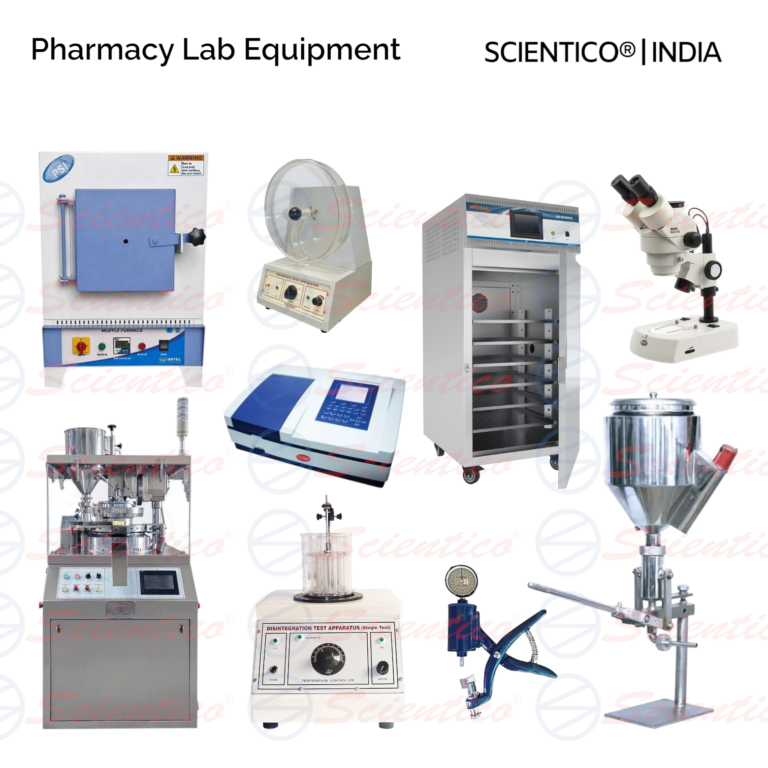
Pharmacy Lab Equipment
Review pharmacy laboratory equipment against the approved practical method, required measurements and proposed teaching arrangement.
Browse categoryWho this list is for
This is the list I hand to a head of department who has been told to furnish a pharmacology practical room and has three weeks to produce a purchase indent. It covers experimental pharmacology apparatus, anatomy and histology teaching aids, physiology and recording instruments, and the general laboratory support that never appears on the first draft and always appears in the first month of teaching.
Everything below is teaching and demonstration equipment. Production-scale and GMP-qualified pharmaceutical equipment is a different category with different qualification documents, and nothing on this page should be read as suitable for commercial manufacture.
Pharmacy education in India is regulated by the Pharmacy Council of India, and colleges are inspected against the current regulations and syllabus. I do not publish quantity or area figures, because they change and because an equipment supplier is the wrong source for them. Confirm every count and every room dimension against the current PCI norms and syllabus for your programme before the indent goes to purchase. The broader programme list sits on the B.Pharm equipment list for PCI inspection, and the diploma version on the D.Pharm laboratory guide.
Experimental pharmacology apparatus
This is the group that gets specified worst. Most indents name the instrument and stop, so the college receives a working unit with the wrong speed range, no timer, or no spare glassware, and the practical cannot run as written in the syllabus.
| Instrument | What it is | Practical area it supports | What to check when specifying |
|---|---|---|---|
| Rota rod apparatus | A motor-driven rotating rod above a divided base, with lane counters and timers | Practicals concerned with motor coordination and skeletal muscle relaxant activity | Rod diameter and surface finish, variable or fixed speed and the actual range, number of lanes, independent timer per lane, automatic cut-off on fall, base material and how easily it is cleaned |
| Actophotometer | An enclosed chamber with photocell beams and a digital counter | Locomotor activity practicals, CNS stimulant and depressant demonstrations | Number and arrangement of photocell beams, digital counter with preset timer, chamber material and lid fit, whether the count resets or accumulates, mains stability |
| Analgesiometer | Heat-source apparatus in eddy current or hot plate form | Analgesic activity practicals | Temperature setting and display resolution, stability of the set point, safety cut-out, cut-off timer, whether you need the eddy current type, the hot plate type or both |
| Plethysmograph | Volume displacement measuring apparatus | Anti-inflammatory and oedema practicals | Digital versus mercury displacement. Many institutions now refuse mercury outright on disposal grounds, so state the preference in the tender rather than discovering it at inspection. Check resolution, chamber size and calibration method |
| Organ bath assembly | Jacketed glass chamber, reservoir, aeration and thermostatic circulation on a stand | Isolated tissue practicals and dose response demonstrations | Number of chambers, bath volume, jacket and circulating water bath rating, aeration manifold and needle valves, tissue holders, quantity of spare inner and outer glassware quoted in the same order |
| Student organ bath with single unit stand | Compact single chamber version for smaller batches | Introductory tissue practicals | Whether the stand accepts the transducer or lever you already own, thread and clamp compatibility, height adjustment range |
| Digital thermostatic circulator | Heated circulating water bath feeding the organ bath jackets | All isolated tissue work | Flow rate, temperature stability, hose barb size, tank capacity against the number of baths it must feed |
| Electronic stimulator | Square wave stimulator with variable voltage, frequency and pulse width | Nerve muscle and tissue stimulation practicals | Output range, isolation, polarity reversal, output leads and electrode compatibility, earthing arrangement in the room |
Where animal use arises
Some pharmacology practicals involve animals. Whether they may be conducted at your institution, in what form, and under what conditions is decided by your institutional animal ethics committee and the applicable national regulations. That determination belongs to the institution and its ethics committee, not to an equipment supplier, and I will not represent what any ethics body requires. Confirm it internally before you commit budget to any apparatus whose only use is an animal practical.
This matters commercially as well as procedurally. Departments that have not yet secured the relevant approvals frequently buy the apparatus first and then find the practical cannot be run. Sequence the approval question ahead of the purchase order.
Simulation and computer-based alternatives
Many departments now teach a substantial part of experimental pharmacology through simulation software, virtual experiment packages, mannequin and model based demonstration, and recorded data sets. This is a genuine procurement consideration because it changes what you buy, not merely how you teach.
| Decision | What changes in the purchase list |
|---|---|
| Department teaches largely by simulation | Fewer wet apparatus units, more computer terminals, a projector or large display, network points, licence terms and renewal, and a smaller stock of consumable glassware |
| Department teaches by demonstration plus simulation | One or two apparatus units per instrument rather than a full batch set, plus display and recording so a single demonstration reaches the whole batch |
| Department teaches by full practical batches | Apparatus quantity driven by batch size, heavy spare glassware provision, more bench length and more service points |
Decide this before you write quantities. The most expensive mistake I see is a full batch quantity of an apparatus that the department demonstrates once a semester on a projector.
Anatomy and histology teaching aids
Human anatomy and physiology sits alongside pharmacology in most pharmacy and allied health programmes, and the same room often carries both. Camera lucida turns up on nearly every enquiry and is nearly always ordered without the one detail that matters.
| Item | What it is | Practical area it supports | What to check when specifying |
|---|---|---|---|
| Camera lucida | A prism and mirror drawing attachment that superimposes the microscope image onto the drawing paper | Histology and micrometry record work, tissue drawing | Eyepiece tube diameter compatibility with the microscopes you already own. This is the single most common return. Also check prism type, mirror adjustment, and whether it clamps or slips onto the tube |
| Compound microscope | Monocular or binocular student microscope with LED illumination | Histology, blood cell study, microbiology practicals | Objective set and whether achromatic or plan, mechanical stage, coaxial coarse and fine focus, LED with intensity control, availability of the same model in future years so the batch stays matched |
| Prepared histology slide sets | Mounted tissue sections supplied as a boxed set | Tissue identification practicals | Contents list checked against your syllabus topics, mounting quality, storage box, replacement availability for breakage |
| Anatomical models | Torso, skeleton, heart, brain, kidney, eye, ear and joint models | Anatomy demonstration and viva preparation | Dissectible or fixed, numbered key card supplied, stand or base, size against the room and against a class viewing from a distance |
| Charts | Laminated wall charts of systems and pathways | Demonstration and revision | Lamination and eyelets, size, whether the set matches the syllabus rather than a generic bundle |
| Micrometry set | Stage micrometer and eyepiece micrometer | Calibration exercises and measurement of tissue sections | Eyepiece diameter, division interval, certificate supplied with the stage micrometer |
Physiology and recording instruments
Recording is where old and new equipment sit in the same room. Some departments still teach on a smoked drum because the physical trace teaches something a screen does not, and some have moved entirely to transducers and acquisition software. Both are defensible. Buying half of each without checking that they connect is not.
| Instrument | What it is | Practical area it supports | What to check when specifying |
|---|---|---|---|
| Student kymograph | Rotating drum recorder with gear-selectable drum speeds | Muscle and tissue recording practicals | Drum speed range and how speeds are changed, drum size, stand rigidity, whether smoking and varnishing consumables and a drying arrangement are included |
| Electronic or digital recording unit | Amplifier and acquisition unit with software output | The same practicals, recorded to a computer | Number of channels, transducer compatibility, software licence terms, export format, computer specification required, who supports the software after the warranty |
| Force transducer | Isometric transducer connecting tissue to the recording unit | Isolated tissue recording | Range. A transducer with the wrong range gives a flat or clipped trace and this is the most frequent mismatch in the whole room. Check connector type against the amplifier before ordering |
| Levers, stands and accessories | Simple and isotonic levers, clamps, boss heads, tissue hooks | All recording practicals | Thread compatibility with the stand, quantity, spares. These are cheap and always short |
| Sphygmomanometer and stethoscope | Human blood pressure measurement | Human physiology practicals | Aneroid or mercury, cuff sizes, quantity per batch, calibration check arrangement |
| Spirometer | Lung volume measurement apparatus | Respiratory physiology practicals | Type, mouthpiece hygiene and consumable supply, whether digital output is required |
| Haemocytometer set | Improved Neubauer counting chamber with cover glass and pipettes | Blood cell counting practicals | Chamber ruling type, cover glass thickness supplied, pipette set, tally counter, breakage spares |
| Haemoglobinometer and ESR stand | Basic haematology teaching apparatus | Blood practicals | Type, tube specification and replacement supply, stand stability |
General laboratory support
This block decides whether the room actually functions. It is the block most often left to a second purchase order and most often delayed.
| Item | Why the pharmacology room needs it | What to check when specifying |
|---|---|---|
| Analytical and precision balances | Preparation work for practicals and record keeping | Readability, capacity, draught shield, internal or external calibration, where the balance bench will sit away from vibration |
| Hot air oven and incubator | Drying and controlled temperature holding | Chamber size against actual use, temperature uniformity, shelf count, door seal |
| Water bath and magnetic stirrer with hot plate | Routine preparation | Temperature range, stirring capacity, chemical resistance of the top plate |
| Centrifuge | Blood and sample practicals | Rotor type, tube sizes, imbalance protection, lid interlock |
| pH meter and conductivity meter | Solution work supporting practicals | Electrode type and storage solution, buffer supply, electrode replacement availability |
| Refrigerator | Reagent and slide storage | Capacity, whether a separate unit is required from any general use fridge, temperature logging if the department wants records |
| Glassware and plasticware | Every practical | Quantity by batch size plus a breakage allowance, class of volumetric ware, cleaning and drying arrangements |
| Storage and safety | Chemicals, slides, models, records | Lockable chemical cupboard, model storage that does not crush, first aid, eyewash, fire extinguisher, waste segregation including sharps |
Calibration and maintenance for the balances, ovens, water baths and pH meters should be scheduled from day one rather than after the first inspection question. A workable structure is set out in the calibration and maintenance schedule guide.
Services and layout for a pharmacology practical room
Confirm room area and student positions against the current PCI norms for your programme. What follows is the practical services list that decides whether the equipment works once it is in place.
| Service | What to plan |
|---|---|
| Power | Socket density along both sides of every bench, not one socket per bench. Recording units, stimulators, circulators and actophotometers all draw at once. Proper earthing for stimulator and recording equipment |
| Backup supply | A stable supply or UPS for recording and acquisition equipment. A power dip mid-trace loses a whole batch practical |
| Water and drainage | Sinks sized for organ bath and glassware washing, with a separate wash-up and drying area rather than one sink shared with the demonstration bench |
| Benching | Chemical resistant tops, one stable island or wall bench for the balance and microscopes away from vibration and away from direct sunlight |
| Ventilation | Room ventilation and, where solvent handling occurs, a fume extraction point. Confirm against your institution’s safety policy |
| Store and preparation room | A separate lockable room for chemicals, models, slide boxes and spare glassware. Rooms without one lose equipment within two sessions |
| Display | Projector or large screen if any part of the teaching is by demonstration or simulation, with the cabling planned before benching is fixed |
If the room is part of a wider build, the ordering of civil work, services and delivery is set out in the new laboratory setup timeline, and phasing the spend across intake growth is covered in the budget planning guide by intake. Shared health science departments often buy against the nursing list at the same time, which is set out in the B.Sc Nursing laboratory equipment list.
Turning the list into a document that buys correctly
A pharmacology indent fails in predictable ways. These are the ones I see most often on incoming enquiries.
| Common failure | What it produces | Fix in the specification |
|---|---|---|
| Instrument named with no range or count | Comparable quotes that are not comparable | State range, resolution, channel or lane count, and included accessories as separate line items |
| Camera lucida ordered without tube diameter | An attachment that does not fit the department’s microscopes | Record the eyepiece tube diameter of the installed microscopes in the specification |
| Transducer range not stated | Unusable traces | State range and connector type, and name the recording unit it must work with |
| No spare glassware | Organ bath work stops on the first breakage | Quote spares as a priced line in the same order |
| Mercury instruments accepted by default | A disposal problem and possible refusal at inspection | State the department’s position on mercury explicitly |
| Calibration expectation left vague | Disputes at handover | State what certificate is required and from whom, and whether third party accredited calibration is needed |
The wording that produces comparable quotes is set out in the specification writing guide. For a government or aided college, the paperwork set is listed in the tender documents checklist, and the authorisation letter buyers most often forget is explained on the manufacturer authorisation form page.
Documentation and inspection context
Inspection and accreditation panels look at records more than at machines. Build the file as the equipment arrives rather than reconstructing it later.
| Record | Why it is asked for |
|---|---|
| Equipment register with make, model, serial, date of purchase and location | Establishes what exists and where |
| Purchase order, invoice and delivery record | Links the register to the spend |
| Calibration or test certificates and the next due date | Shows the department controls measurement |
| Maintenance and breakdown log | Shows equipment is in service, not merely present |
| Practical utilisation records and batch schedules | Shows the equipment is actually used for the syllabus |
| Safety records, waste handling and training | Shows the room is operated to policy |
| Ethics approvals where practicals involve animals | Held and issued by the institution, not by any supplier |
The record structure used for engineering programmes carries across almost unchanged, and is set out in the accreditation laboratory documentation guide. Our own certification position and the documents we can supply with a shipment are on the quality certifications page, and catalogue material for indent preparation is on the downloads page.
If you are buying from outside India, the shipping and paperwork sequence is covered in the importer guide, and continuity of spares is discussed in the spare parts and after sales note. Before you shortlist any manufacturer, including us, run the checks in the manufacturer due diligence guide.
What we make and what we do not claim
We have manufactured and exported teaching and training equipment since 1993 from our own works in Ambala, Haryana, and supply to more than sixty countries. The range covers laboratory and engineering teaching equipment, pharmacy and process equipment, medical and nursing training equipment, and incinerators. Our quality management system is certified to ISO 9001:2015, and CE conformity documentation is available on applicable models.
Two limits stated plainly. We are not ISO/IEC 17025 accredited and we are not NABL accredited. What we issue with equipment is a factory calibration certificate. If your institution or your tender requires accredited third party calibration, that has to be arranged separately, and it is better to identify that at specification stage than at handover. Second, everything described here is education and demonstration equipment. It is not offered as validated for commercial pharmaceutical production or GMP manufacturing, which is a separate category with its own qualification requirements.
Pricing is quote based. We do not publish prices, because quantity, accessories, spares and destination change the figure enough that a published number would mislead you.
Sending your list for a quotation
Send the room dimensions, the programme and annual intake, the batch size that will work at one time, whether the department teaches by full practical batches or by demonstration and simulation, and the syllabus practical list. If you already have microscopes, recording units or stands, tell us the makes and the tube and connector details so accessories are quoted to fit what you own rather than to a generic assumption. If you have a draft indent, send it as it stands and we will mark the lines that will produce non comparable quotes before it goes out. Reach us through the contact page.
One honest ask
We don't gate anything on this site. You just read the whole thing free. If it was useful, leave your email and two things happen: we send you this page as a plain-text block you can paste into a tender file or an internal email, and we notify you the next time we publish a buyer tool like this one. Nothing else. No drip sequence, no sales calls booked without asking.