
MAF full form in tender: MAF means Manufacturer Authorisation Form (also spelled Manufacturer Authorization Form). In a tender, it generally refers to a document identifying a named manufacturer or producer and a bidder authorised to offer specified goods for that procurement. The tender itself determines whether an MAF is required, who may issue it, its scope, format and any commitments it must contain.
A tender may call the document a Manufacturer Authorisation Form, manufacturer authorisation letter or OEM authorisation. These labels do not guarantee identical requirements: check the tender definitions and annexure for the permitted issuer, named bidder, covered goods and required wording.
Some procurement documents use “manufacturer”, “producer”, “OEM” or “authorised representative” in different ways. Use the term and issuer relationship defined by the specific buyer. A general explanation cannot replace the tender clause or its prescribed form.
Explore the relevant equipment category
Browse the catalogue category and review individual product specifications for your laboratory requirement.
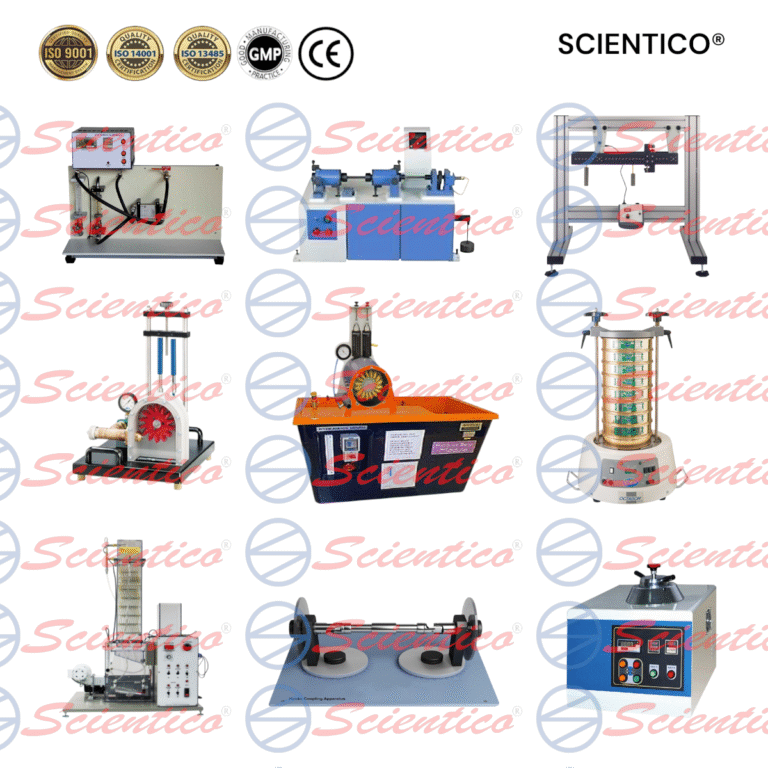
Engineering Training Equipment
Review engineering teaching apparatus by discipline, experiment and measurement requirement before selecting individual models.
Browse categoryWhy tenders demand it
A buyer may request an MAF to document the relationship between a bidder and the manufacturer or producer of the goods being offered. The exact purpose and evidence requested depend on the procurement document; read its eligibility, qualification, technical and documentation clauses together.
If the tender marks an MAF as mandatory, a missing or inconsistent document may affect bid responsiveness under that tender’s evaluation rules. Whether a clarification or correction is allowed also depends on the buyer’s rules, so do not assume a missing document can be added later.
Before bidding, verify: whether an MAF is required; the permitted issuer; the tender reference and issuing authority; the bidder’s legal name; the exact goods, models or line items covered; the letter’s scope and validity; any required signatory, letterhead, seal or electronic signature; and any warranty or support statement expressly requested.
An MAF is separate from technical compliance evidence. It does not by itself prove that a proposed model meets every specification or guarantee bid acceptance. Use a clause-by-clause laboratory equipment tender compliance matrix and the tender’s own evaluation criteria to document technical fit. For the wider bid-file checklist, see the lab equipment tender documents checklist.
What an MAF normally contains
Start with the tender’s prescribed annexure, if one is provided. Depending on that document, an MAF may ask for some or all of these details:
- Issuer identity. The legal name and contact details of the manufacturer, producer or other issuer permitted by the tender.
- Tender and buyer reference. The exact tender/NIT identifier and the issuing authority, using the buyer’s required format.
- Bidder identity. The bidder’s registered legal name and address as they appear in the submission.
- Covered goods. Product descriptions, catalogue/model identifiers or BOQ line items clearly tied to the offer.
- Authorisation scope. The specific activity permitted, such as quoting or supplying the listed goods, as required by the tender.
- Commitments and validity. Warranty, spare-parts, service or validity statements only to the extent requested and accepted by the issuer.
- Execution details. Required date, authorised signatory, designation, signature, seal or electronic-signature requirements.
These are verification prompts, not a universal template. Published tender examples illustrate the variation: a Rajasthan Agriculture Department laboratory-equipment RFP includes an OEM authorisation annexure, while a KEMSA laboratory-equipment tender gives its own manufacturer/producer authorisation terms. These are examples only; follow the current tender you are bidding.
If the tender prescribes exact wording or an annexure, use it instead of substituting a generic letter. Share the relevant clause and format when requesting a review. Where the same bid asks for supporting quality or conformity documents, check the applicable model and request the specific documents separately.
What to send us to request one
Send the following to [email protected], or on WhatsApp at +91 7015865225:
- The tender reference or NIT number, and the full name of the issuing authority.
- The bid closing date, and the date any pre-bid clarification window closes.
- The line items and technical specifications you intend to bid, ideally as the relevant pages of the tender document rather than a summary.
- Your full legal name and registered address, spelled exactly as it should appear on the letter.
- Any format, annexure or mandated wording the tender requires for the authorisation.
- A named contact person with a direct phone number and email, in case something in the specification needs a quick conversation.
Send this early, not on closing day. The reason is practical rather than administrative. Before we can authorise anything, someone here has to read the specified lines against our catalogue and confirm we can actually supply them compliantly. Occasionally a specification contains a clause we cannot meet as written, and that is a conversation you want to have while the pre-bid query window is still open, not four hours before submission. We will confirm what we can issue and how quickly once we have seen the tender. We do not quote a standard turnaround, because a two line request against standard models and a forty line request with custom specifications are not the same job.
If you are still assembling the technical side of the bid, our laboratory equipment RFQ checklist template gives you the specification details we need in order to quote accurately, which speeds up both the pricing and the authorisation.
Common reasons an MAF request stalls
A request is easier to review when it includes the exact tender language and the bidder’s details. Check these points before sending it:
- Legal bidder name: copy it from the bidder’s registration and tender submission.
- Relevant tender pages: attach the MAF clause, annexure and any related eligibility or technical requirements.
- Item and model mapping: list the tender line numbers and the proposed catalogue/model references. Do not treat a similar name as proof of technical equivalence.
- Dates and destination: include the submission deadline and any pre-bid clarification deadline so the request can be assessed in context.
- Known differences: flag any parameter that does not match the published product record and ask the buyer about an allowed clarification or equivalent specification where appropriate.
Use Scientico’s current laboratory equipment catalogue to identify the relevant product record. A request can then be reviewed against the actual product information and tender wording; authorisation and any quotation remain subject to that review.
MAF and technical compliance work together
An MAF and a technical compliance matrix answer different questions. The authorisation addresses the bidder’s relationship to the manufacturer or producer as defined by the tender. The matrix maps each tender clause to the offered product’s documented specification and notes evidence or deviations.
Use the tender compliance matrix template to record the exact model and supporting catalogue or datasheet reference for each line. If a model does not match a clause, record the difference accurately and use the procurement process for clarification; do not describe a non-matching specification as compliant.
For shipment and documentation questions, confirm the Incoterm, destination, required certificates and supporting records for the selected model in the written offer. The guide to sourcing laboratory equipment from India explains common export-document topics, but the tender and quotation control the transaction-specific scope.
Who we issue authorisation letters to
For a tender that includes Scientico equipment, send the tender clause, bidder’s registered name, destination, relevant BOQ lines and proposed product/model references for review. Issuance is not automatic: the company needs to check the request against the tender wording, product scope and any applicable territory or channel arrangements.
If you are exploring an ongoing distributor relationship, review the laboratory equipment distributor information and describe the territory and technical support capability you can provide. Any appointment is subject to a separate review.
Frequently asked questions
Can I request an MAF if I am not an appointed distributor?
You may submit a tender-specific request for review. Include the relevant clause, bidder details and product lines. Whether an authorisation can be issued depends on the tender and the company’s review; submission does not guarantee approval.
Is there a charge for issuing an MAF?
Ask for the applicable terms when you submit the request. Any notarisation, attestation, courier or other third-party requirement should be identified early and confirmed in writing.
Can one MAF cover several tenders?
Check each tender’s wording. If the tenders have different references or issuing authorities, ask whether a combined authorisation is permitted rather than assuming one format will satisfy both.
What if the tender prescribes a specific format?
Send the prescribed annexure and clause. The buyer’s format controls the request; any wording that cannot be confirmed should be raised through the tender’s clarification process.
What if the tender specification does not match the product record?
Record the exact difference against the relevant clause and request clarification where the procurement process allows it. Do not describe a difference as compliant without supporting evidence.
How can my company ask about becoming a distributor?
Share your company profile, proposed territory, institutional customer experience and technical support capability through the distributor contact route. Any appointment requires a separate review.
Bidding a tender that includes our equipment?
Send us the tender reference, the closing date, the line items you intend to bid and your registered company name, and we will confirm what authorisation we can issue and how quickly. Contact Scientico India about a manufacturer authorisation form for your tender.
One honest ask
We don't gate anything on this site. You just read the whole thing free. If it was useful, leave your email and two things happen: we send you this page as a plain-text block you can paste into a tender file or an internal email, and we notify you the next time we publish a buyer tool like this one. Nothing else. No drip sequence, no sales calls booked without asking.