🔎 Manufacturer-direct laboratory equipment enquiries - Request a model-specific international quotation →
✓ Established 1993 ✓ Model-Specific Specifications ✓ Manufacturer-Direct Enquiries ✓ International Quotations ✓ Destination-Based Delivery Terms

Bioethanol Process Trainer

Model RVX 126

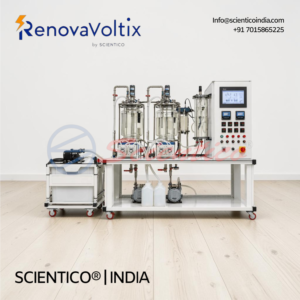
The Bioethanol Process Trainer RVX 126 demonstrates three-stage bioethanol production through mashing, fermentation, and distillation processes. This bioethanol process trainer features stainless steel mash and fermentation tanks with enzyme and yeast addition, hot water jacket heating, CO2 monitoring, and borosilicate glass distillation unit with Vigreux column and Liebig-West condenser. Integrated pH, temperature, and CO2 measurement for complete process analysis.

The Bioethanol Process Trainer RVX 126 is an educational apparatus for studying bioethanol production through mashing, fermentation, and distillation processes. This bioethanol process trainer enables investigation of liquefaction, saccharification, fermentation, and distillation stages from raw materials to ethanol conversion on laboratory scale.

Product Overview

The RVX 126 bioethanol process trainer consists of three main components: stainless steel mash tank with enzyme addition capability, fermentation tank with yeast fermentation monitoring, and borosilicate glass distillation unit. Mash tank converts starch to glucose through alpha-amylase and glucoamylase enzyme addition with pH control via acid and base circuits. Temperature sensors and pH meter monitor mash properties. Fermentation tank receives mashed solution and converts sugars to ethanol and CO2 via yeast addition, with CO2 concentration measurement and temperature monitoring. Both tanks heat indirectly through hot water jackets with integrated thermostatic bath and circulation pump. Distillation unit includes 5L reactor flask with 1500W heating mantle, Vigreux distillation column, Liebig-West condenser, cold finger dephlegmator, and decanting funnel. Two centrifugal pumps transfer solutions between stages. Motorized valves control hot water flow. Electronic console displays temperature, pH, and CO2 measurements. Optional LABVIEW DAQ software transmits sensor data to PC.

Bioethanol Process Trainer RVX 126 — Technical Specifications

Parameter Value
Mash Tank Material Stainless steel
Fermentation Tank Material Stainless steel
Distillation Unit Material Borosilicate glass
Distillation Flask Capacity 5L with discharge stopcock
Heating Mantle 1500W
Temperature Sensors K-type, 9 total locations
pH Meter Range 0 to 14 pH
CO2 Meter Range 0 to 100%
Peristaltic Pumps 2 units, 0 to 15 mL/min flow
Centrifugal Pumps 2 units, 0 to 4 L/min flow
Distillation Column Type Vigreux
Condenser Type Liebig-West with interchangeable fittings
Acid/Base Vessel Capacity 1L each
Decanting Funnel Capacity 500 mL
Thermostatic Bath Integrated hot water circulation system
Structure Material Anodized aluminum with painted steel and HDF panels

Technical Data

Mash Tank:

  • Material: stainless steel
  • Upper inlet for water, starch, and enzyme addition
  • Inclined base with drain port
  • Temperature sensor measuring mash temperature
  • Temperature sensor measuring jacket outlet temperature
  • pH meter measuring mash pH (0 to 14 range)
  • Indirect heating through hot water jacket

Fermentation Tank:

  • Material: stainless steel
  • Inclined base with drain port
  • Temperature sensor measuring preparation temperature
  • Temperature sensor measuring jacket outlet temperature
  • CO2 meter measuring CO2 concentration (0 to 100%)
  • Indirect heating through hot water jacket
  • Sight glass for process observation

Distillation Unit:

  • Material: borosilicate glass
  • Reactor flask capacity: 5L with discharge stopcock
  • Reactor lid with 4 inlets
  • Heating mantle: 1500W
  • Vigreux distillation column
  • Cold finger dephlegmator
  • Liebig-West condenser with interchangeable fittings
  • Decanting funnel: 500 mL
  • Stirring rod with stirring lock
  • Temperature tapings at key points
  • 4 temperature sensors at different distillation points

Pumps:

  • 2 peristaltic pumps for acid/base introduction, 0 to 15 mL/min flow
  • 2 centrifugal pumps for solution transfer, 0 to 4 L/min flow
  • Directional valves for backwashing

Instrumentation:

  • 9 K-type temperature sensors total
  • pH meter with digital display
  • CO2 meter with digital display (0 to 100%)
  • Hot water circulation system with pump and thermostatic bath
  • Acid and base solution vessels: 1L each

Valves:

  • 2 motorized valves for hot water diversion
  • 6 ball valves for drainage and pumping
  • 1 ball valve for hot water system drainage

Key Features

  • Three-Stage Process: Bioethanol process trainer covers mashing, fermentation, and distillation in integrated system
  • Enzyme Control: Dual enzyme addition (alpha-amylase and glucoamylase) for starch liquefaction and saccharification
  • pH Management: Integrated acid and base circuits with peristaltic pumps for precise pH control
  • Fermentation Monitoring: CO2 meter tracks fermentation progress and gas concentration measurement
  • Temperature Precision: 9 K-type sensors monitor mash, fermentation, and distillation temperatures across all stages
  • Advanced Distillation: Vigreux column with Liebig-West condenser and dephlegmator for ethanol separation
  • Dual Heating Systems: Hot water jacket indirect heating for mash and fermentation tanks, 1500W heating mantle for distillation
  • Automated Controls: Motorized valves, multiple pumps, and stirrer controls via electronic console

Experiments

  • Bioethanol production process familiarization
  • Plant component and system operation study
  • Temperature effect on bioethanol purity analysis
  • pH effect on bioethanol yield investigation
  • Mashing time effect on bioethanol yield
  • Fermentation time effect on bioethanol yield
  • Different raw materials comparison for bioethanol production
  • Various yeast types effect on fermentation

Construction and Design

The Bioethanol Process Trainer RVX 126 features anodized aluminum structure with painted steel and HDF panels. Stainless steel construction includes mash tank with upper inlet for enzyme addition and inclined base for gravity drainage. Fermentation tank mirrors mash tank design with yeast addition capability and inclined drain port. Borosilicate glass distillation unit includes 5L reactor flask with Vigreux column, Liebig-West condenser, and cold finger dephlegmator. Sight glasses on both fermentation and mash tanks enable process observation. Nine K-type temperature sensors monitor critical points throughout all three stages. Hot water circulation system with thermostatic bath and pump maintains indirect heating for both fermentation and mash tanks. Two centrifugal pumps transfer solutions between stages with directional valve backwashing capability. Two peristaltic pumps introduce acid and base solutions. Electronic console consolidates all control switches, digital displays, and monitoring instruments. Mobile wheels facilitate relocation.

Software

DAQ software in National Instruments LABVIEW environment (optional). Measures and calculates apparatus results. Runs on any Windows environment.

Scope of Delivery

  • 1 Experimental unit
  • 1 CO2 sensor
  • 1 Instruction manual

Q: What are the three main stages of the Bioethanol Process Trainer RVX 126?
A: Mashing converts starch to glucose using enzymes. Fermentation converts sugars to ethanol and CO2 using yeast. Distillation separates and purifies ethanol from the fermented liquid.

Q: How does the Bioethanol Process Trainer RVX 126 control temperature?
A: Mash and fermentation tanks use indirect heating through hot water jackets connected to a thermostatic bath and circulation pump. The distillation unit uses a 1500W heating mantle.

Q: What monitoring capabilities does the Bioethanol Process Trainer RVX 126 provide?
A: Nine K-type temperature sensors monitor all stages, pH meter measures mash acidity, and CO2 meter tracks fermentation gas production and concentration.

Q: Can the Bioethanol Process Trainer RVX 126 process different raw materials?
A: Yes. The mash tank accepts various starch-containing raw materials with flexible enzyme addition for different liquefaction and saccharification requirements.

Q: Does the Bioethanol Process Trainer RVX 126 include distillation accessories?
A: Yes. The borosilicate glass distillation unit includes Vigreux column, Liebig-West condenser, cold finger dephlegmator, stirring rod with lock, and 500 mL decanting funnel.

Need Assistance? We're Here to Help!

Connect with our team for product specifications, pricing, and customized solutions for your institution or project.

Trade enquiries

Distributors, dealers, resellers and bulk buyers

We manufacture Bioethanol Process Trainer | RVX 126 at our own works in Ambala, India. Manufacturer-direct, three ways to work with us.

01

Become a distributor, dealer or agent in your territory

Already selling to colleges or hospitals in your market? Add a manufacturer-direct line. Terms reviewed on application.

or message on WhatsApp
02

Wholesale and bulk quotation

Holding a live enquiry? Send the model, quantity, destination and required Incoterm. We will confirm the supplied scope and available export documents.

or message on WhatsApp
03

OEM authorisation letter for a tender

Bidding a tender that requests a manufacturer authorisation form (MAF)? Send the tender reference, deadline and listed equipment so we can confirm what can be issued.

or message on WhatsApp

Full distributor guide OEM and export enquiries

Renewable EnergyModel RVX 126
🏭
Manufacturer DirectProduct-specific enquiry, not a generic catalogue
🌍
Destination MatchedConfiguration and delivery scope reviewed together
📄
Decision-Ready ReplyApplicable documentation confirmed before ordering
Product-specific enquiry

Get a quotation your team can evaluate

A bare price can hide configuration, accessories, voltage, documentation and delivery assumptions. Send the product and destination now so the quoted scope can be reviewed before a purchase decision.

Avoid the mismatchDo not approve a generic price that leaves supplied scope unclear.
Your product is attachedNo need to retype the model or copy the page URL.
Move toward an approvable quoteAdd the destination; quantity and tender details can follow.

No account is required. Organisation, quantity and tender details are optional. Include the country code so the team can reach you internationally.

1993
Manufacturing Since
Direct
Manufacturer Supply
Quote-based
International Orders
Model
RVX 126

Overview

The Bioethanol Process Trainer RVX 126 is an educational apparatus for studying bioethanol production through mashing, fermentation, and distillation processes. This bioethanol process trainer enables investigation of liquefaction, saccharification, fermentation, and distillation stages from raw materials to ethanol conversion on laboratory scale.

Product Overview

The RVX 126 bioethanol process trainer consists of three main components: stainless steel mash tank with enzyme addition capability, fermentation tank with yeast fermentation monitoring, and borosilicate glass distillation unit. Mash tank converts starch to glucose through alpha-amylase and glucoamylase enzyme addition with pH control via acid and base circuits. Temperature sensors and pH meter monitor mash properties. Fermentation tank receives mashed solution and converts sugars to ethanol and CO2 via yeast addition, with CO2 concentration measurement and temperature monitoring. Both tanks heat indirectly through hot water jackets with integrated thermostatic bath and circulation pump. Distillation unit includes 5L reactor flask with 1500W heating mantle, Vigreux distillation column, Liebig-West condenser, cold finger dephlegmator, and decanting funnel. Two centrifugal pumps transfer solutions between stages. Motorized valves control hot water flow. Electronic console displays temperature, pH, and CO2 measurements. Optional LABVIEW DAQ software transmits sensor data to PC.

Key Features

Key Features

  • Three-Stage Process: Bioethanol process trainer covers mashing, fermentation, and distillation in integrated system
  • Enzyme Control: Dual enzyme addition (alpha-amylase and glucoamylase) for starch liquefaction and saccharification
  • pH Management: Integrated acid and base circuits with peristaltic pumps for precise pH control
  • Fermentation Monitoring: CO2 meter tracks fermentation progress and gas concentration measurement
  • Temperature Precision: 9 K-type sensors monitor mash, fermentation, and distillation temperatures across all stages
  • Advanced Distillation: Vigreux column with Liebig-West condenser and dephlegmator for ethanol separation
  • Dual Heating Systems: Hot water jacket indirect heating for mash and fermentation tanks, 1500W heating mantle for distillation
  • Automated Controls: Motorized valves, multiple pumps, and stirrer controls via electronic console

Experiments

  • Bioethanol production process familiarization
  • Plant component and system operation study
  • Temperature effect on bioethanol purity analysis
  • pH effect on bioethanol yield investigation
  • Mashing time effect on bioethanol yield
  • Fermentation time effect on bioethanol yield
  • Different raw materials comparison for bioethanol production
  • Various yeast types effect on fermentation

Construction and Design

The Bioethanol Process Trainer RVX 126 features anodized aluminum structure with painted steel and HDF panels. Stainless steel construction includes mash tank with upper inlet for enzyme addition and inclined base for gravity drainage. Fermentation tank mirrors mash tank design with yeast addition capability and inclined drain port. Borosilicate glass distillation unit includes 5L reactor flask with Vigreux column, Liebig-West condenser, and cold finger dephlegmator. Sight glasses on both fermentation and mash tanks enable process observation. Nine K-type temperature sensors monitor critical points throughout all three stages. Hot water circulation system with thermostatic bath and pump maintains indirect heating for both fermentation and mash tanks. Two centrifugal pumps transfer solutions between stages with directional valve backwashing capability. Two peristaltic pumps introduce acid and base solutions. Electronic console consolidates all control switches, digital displays, and monitoring instruments. Mobile wheels facilitate relocation.

Software

DAQ software in National Instruments LABVIEW environment (optional). Measures and calculates apparatus results. Runs on any Windows environment.

Scope of Delivery

  • 1 Experimental unit
  • 1 CO2 sensor
  • 1 Instruction manual

Specifications

Bioethanol Process Trainer RVX 126 — Technical Specifications

Parameter Value
Mash Tank Material Stainless steel
Fermentation Tank Material Stainless steel
Distillation Unit Material Borosilicate glass
Distillation Flask Capacity 5L with discharge stopcock
Heating Mantle 1500W
Temperature Sensors K-type, 9 total locations
pH Meter Range 0 to 14 pH
CO2 Meter Range 0 to 100%
Peristaltic Pumps 2 units, 0 to 15 mL/min flow
Centrifugal Pumps 2 units, 0 to 4 L/min flow
Distillation Column Type Vigreux
Condenser Type Liebig-West with interchangeable fittings
Acid/Base Vessel Capacity 1L each
Decanting Funnel Capacity 500 mL
Thermostatic Bath Integrated hot water circulation system
Structure Material Anodized aluminum with painted steel and HDF panels

Technical Data

Mash Tank:

  • Material: stainless steel
  • Upper inlet for water, starch, and enzyme addition
  • Inclined base with drain port
  • Temperature sensor measuring mash temperature
  • Temperature sensor measuring jacket outlet temperature
  • pH meter measuring mash pH (0 to 14 range)
  • Indirect heating through hot water jacket

Fermentation Tank:

  • Material: stainless steel
  • Inclined base with drain port
  • Temperature sensor measuring preparation temperature
  • Temperature sensor measuring jacket outlet temperature
  • CO2 meter measuring CO2 concentration (0 to 100%)
  • Indirect heating through hot water jacket
  • Sight glass for process observation

Distillation Unit:

  • Material: borosilicate glass
  • Reactor flask capacity: 5L with discharge stopcock
  • Reactor lid with 4 inlets
  • Heating mantle: 1500W
  • Vigreux distillation column
  • Cold finger dephlegmator
  • Liebig-West condenser with interchangeable fittings
  • Decanting funnel: 500 mL
  • Stirring rod with stirring lock
  • Temperature tapings at key points
  • 4 temperature sensors at different distillation points

Pumps:

  • 2 peristaltic pumps for acid/base introduction, 0 to 15 mL/min flow
  • 2 centrifugal pumps for solution transfer, 0 to 4 L/min flow
  • Directional valves for backwashing

Instrumentation:

  • 9 K-type temperature sensors total
  • pH meter with digital display
  • CO2 meter with digital display (0 to 100%)
  • Hot water circulation system with pump and thermostatic bath
  • Acid and base solution vessels: 1L each

Valves:

  • 2 motorized valves for hot water diversion
  • 6 ball valves for drainage and pumping
  • 1 ball valve for hot water system drainage

Buying Bioethanol Process Trainer: Distributor & Tender Guidance

Bioethanol Process Trainer is the product name procurement teams should use when searching, preparing a BOQ or comparing suppliers. A model reference identifies the proposed configuration; it should not replace the product name or the buyer’s required experiment. This equipment is considered for renewable-energy teaching involving solar, wind, storage, conversion, grid interaction or energy-performance measurements.

What to include in the RFQ

State the product name, quantity, destination, curriculum or tender reference, and energy source and rating, load or storage arrangement, measurement points, controllers, indoor or outdoor operation, software and exercises. This lets the technical team respond against the intended use rather than guess from a model code.

How distributors should quote it

Keep Bioethanol Process Trainer as the BOQ line item. Add the proposed model, included accessories, documentation, packing and delivery basis as separate fields so the end buyer can verify the offer.

How to compare suppliers

Check which energy conversions and measurements are physically demonstrated and which modules are included in the quoted system. Record exclusions and alternatives in writing before commercial comparison.

Why Buy From Scientico

🏭

In-House Manufacturer

Designed & built in our Ambala facility since 1993 — not a reseller. Full control over quality & customisation.

✅

Configuration Review

Specifications, documentation and options are confirmed against the selected model.

🌏

International Enquiries

Share your destination and procurement requirements for an export quotation.

📦

Quote-Based Supply

Send the model, quantity and delivery location for a tailored proposal.

🛠

Support Scope

Support and warranty terms are documented in the applicable quotation.

🎓

Built for Teaching

Designed around curriculum experiments with clear, repeatable, hands-on results.

Frequently Asked Questions

Q: What are the three main stages of the Bioethanol Process Trainer RVX 126? A: Mashing converts starch to glucose using enzymes. Fermentation converts sugars to ethanol and CO2 using yeast. Distillation separates and purifies ethanol from the fermented liquid.

Q: How does the Bioethanol Process Trainer RVX 126 control temperature? A: Mash and fermentation tanks use indirect heating through hot water jackets connected to a thermostatic bath and circulation pump. The distillation unit uses a 1500W heating mantle.

Q: What monitoring capabilities does the Bioethanol Process Trainer RVX 126 provide? A: Nine K-type temperature sensors monitor all stages, pH meter measures mash acidity, and CO2 meter tracks fermentation gas production and concentration.

Q: Can the Bioethanol Process Trainer RVX 126 process different raw materials? A: Yes. The mash tank accepts various starch-containing raw materials with flexible enzyme addition for different liquefaction and saccharification requirements.

Q: Does the Bioethanol Process Trainer RVX 126 include distillation accessories? A: Yes. The borosilicate glass distillation unit includes Vigreux column, Liebig-West condenser, cold finger dephlegmator, stirring rod with lock, and 500 mL decanting funnel.

Bioethanol Process Trainer | RVX 126

Related Laboratory Equipment

Explore related apparatus in this equipment range. Request a model-specific international quotation.

Biodiesel production trainer apparatusBiodiesel Process Trainer | RVX 125Biogas Process Trainer by Scientico IndiaBiogas Process Trainer | RVX 127Battery Management System (BMS) Trainer by Scientico IndiaBattery Management System (BMS) Trainer | RVX 121Solar thermal flat plate collectorDomestic Water Heating with Flat Collector | RVX 131Wind Energy Training System | RVX-007, Scientico IndiaWind Energy Training System | RVX-007Energy Conversion in a Wind Power Plant by Scientico IndiaEnergy Conversion in a Wind Power Plant | RVX 104Wind Energy Training System (Vertical Type) | RVX-008, Scientico IndiaWind Energy Training System (Vertical Type) | RVX-008Fan Heater Unit by Scientico IndiaFan Heater Unit | RVX 129
📄 Download Datasheet

Get the product datasheet

Share your details to open the complete datasheet, then print or save it as a PDF.

Bioethanol Process Trainer | RVX 126