
A soil mechanics laboratory equipment list should identify the tests your course or project needs, the measurements to record and the complete arrangement needed to carry out each test. Use equipment names as a starting index, then turn the list into a test-by-test bill of quantities. This guide is a purchasing aid; confirm the current methods and programme requirements before using it in a tender.
Equipment mentioned in this guide
Review the product information, specifications and model before requesting a quotation.
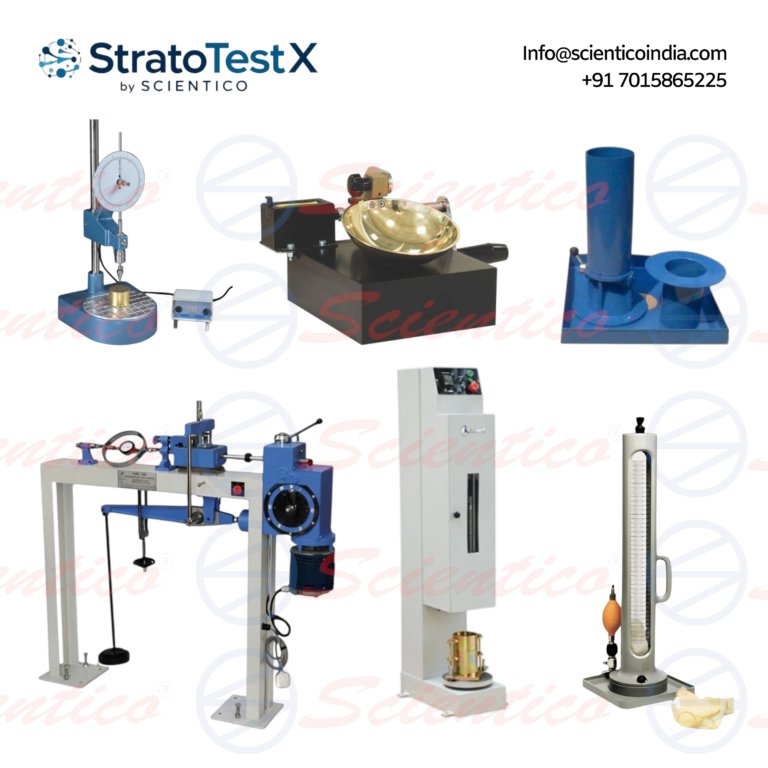
Soil Testing Equipment | StratoTestX
SCIENTICO StratoTestX is a range of Soil Testing Equipment designed for laboratory testing and evaluation of soil properties for civil engineering, geotechnical engineering, construction, and research applications.
View product details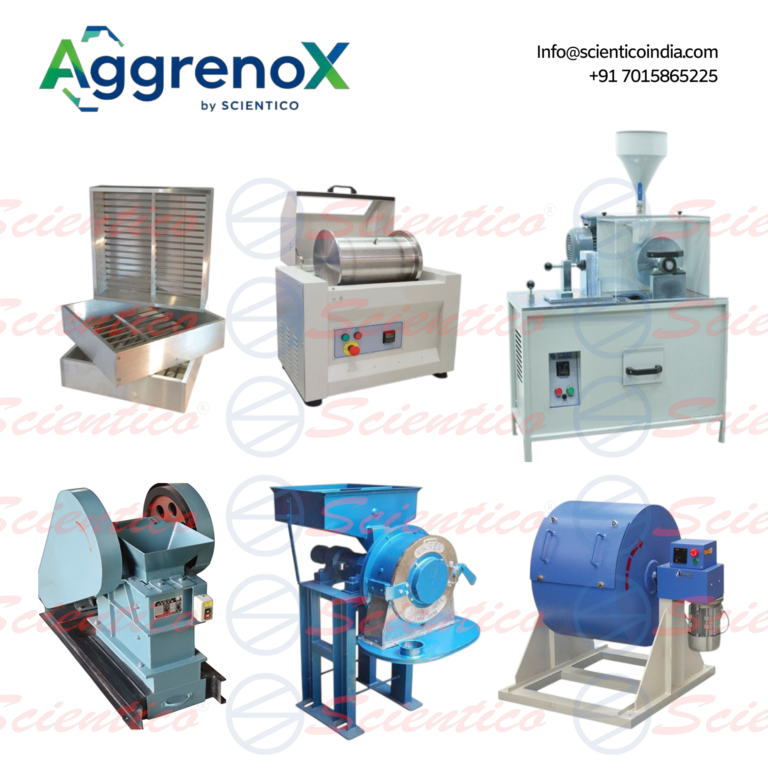
Aggregate Testing Equipment | AggrenoX
SCIENTICO AggrenoX is a range of Aggregate Testing Equipment designed for laboratory testing and evaluation of aggregates used in concrete, road construction, and other civil engineering applications.
View product details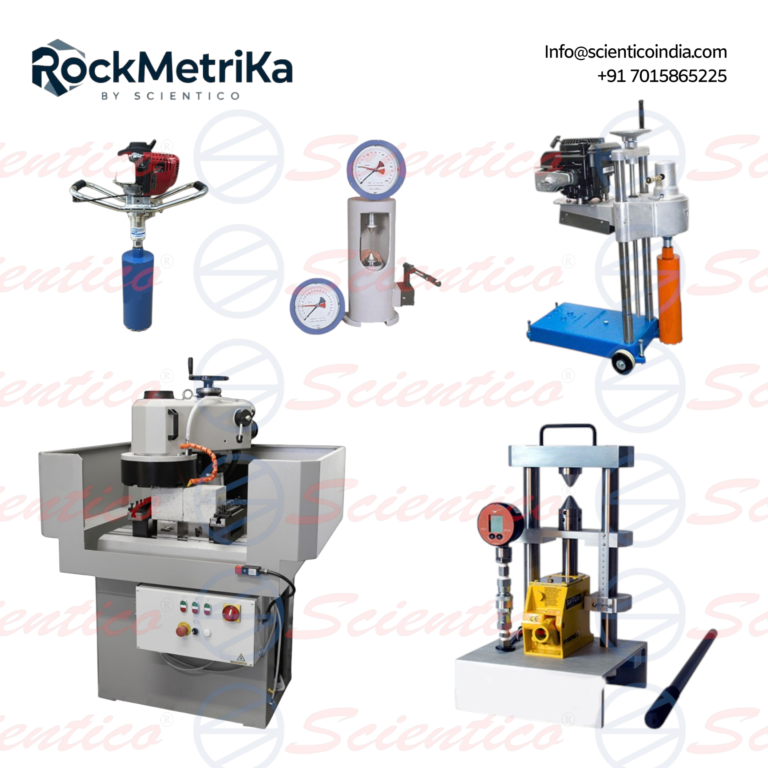
Rock Testing Equipment | RockMetrika
SCIENTICO RockMetrika is a range of Rock Testing Equipment designed for laboratory testing and evaluation of rock specimens for civil engineering, geotechnical, mining, and geological applications.
View product detailsStart with a test schedule
Record each practical activity from the approved syllabus or project brief. Identify sample preparation, testing, observations, calculations, cleaning and storage separately. A test frame without the required specimen preparation tools or measuring arrangement may leave the exercise incomplete even when the headline equipment name matches.
An institutional example is the AVIT soil-mechanics laboratory equipment list, which includes classification, compaction, shear, consolidation and permeability equipment. It illustrates a department's range; it is not a universal minimum or a specification for every college.
Build the equipment schedule by test family
| Test family | Planning requirement | Questions for the offer |
|---|---|---|
| Classification and index properties | Sample preparation, particle-size and consistency observations | Which preparation items, containers, sieves, balances and reading tools are included? |
| Compaction | Specified preparation and compaction method | Which mould, rammer or loading arrangement is offered, and against which requested method? |
| Permeability | Appropriate sample and water-flow arrangement | How are head, flow, sample dimensions and readings obtained? What water and drainage are needed? |
| Shear and compression | Loading, specimen handling and measurement | What load/displacement measurement, fixtures and operating range are proposed? |
| Consolidation | Specimen setup, sustained loading and time-based readings | What loading system, sample accessories, measurement and recording method are included? |
| Pavement-related work | Activities specifically required by the course or project | Is the complete specimen preparation and testing arrangement in the BOQ? |
Write the method before fixing dimensions
Where a method or standard is specified, record its identifier, edition and applicable test conditions in the requirement. Confirm the scope of that method from the controlling document before prescribing specimen dimensions, speeds, loads or equipment tolerances. A supplier's catalogue or an online list does not establish that a particular configuration meets the latest method.
For every important dimension or measurement, ask the bidder to identify the offered value and its supporting drawing or specification. Record deviations explicitly. Avoid marking a bid compliant because it uses the same apparatus name.
Separate test equipment from shared support items
Balances, drying or conditioning equipment, trays, measuring tools and specimen preparation items can support several tests. List them once in a shared-inventory schedule, then map their availability to each activity. An item already owned by the department should be recorded as usable, unavailable or requiring review; the absence of a new purchase line should not be mistaken for the absence of a teaching requirement.
Check whether accessories, fixtures, containers, loading parts, software and consumables are included, optional or buyer-provided. Record replacement-part references where they are available. Ask for requested documents by exact model rather than assuming certificates or manuals accompany every unit.
Calculate station quantities from the timetable
Use planned intake, group size, session duration, simultaneous groups and test duration to assess access. A slow test can occupy an instrument beyond one teaching session; account for that occupancy when scheduling subsequent groups. Do not copy a generic student-to-machine ratio into an approval file without checking the applicable programme and authority requirements.
For an upgrade, begin with the actual inventory and the experiments that cannot currently be completed. Stage purchases around documented teaching gaps, the availability of utilities and the ability to operate and maintain the selected apparatus.
Compare offers and agree receiving checks
- Match every requested test to an exact proposed model and configuration.
- Compare range, resolution, fixtures, sample preparation and included accessories.
- Record utilities, space, site-side work and operating instructions to be confirmed.
- Identify the requested documentation and acceptance demonstration in the written offer.
- Record delivery basis, installation or training responsibility, warranty and exclusions separately.
At receiving, compare the supplied model and accessory list with the agreed schedule. Carry out only the inspection or demonstration defined in the approved acceptance plan and operating instructions. Resolve missing items or deviations in writing before treating the installation as complete.
Send a soil-laboratory BOQ for model matching
Prepare the test list, current inventory, quantities, measurement needs, utilities, destination, deadline and requested documentation. Use the model-matching checklist and tender compliance matrix to make supplier responses comparable. Browse the engineering training catalogue for published ranges; availability of each soil-testing line must be confirmed rather than inferred from this article.
Send the syllabus or BOQ for a model-specific response. Identify unresolved requirements so the quotation can separate confirmed scope from items requiring clarification.
Buying for a Saudi institution? See our civil engineering lab equipment supplier page for Saudi Arabia, covering soil, concrete and highway testing equipment with SABER conformity and freight packing.