🔎 Manufacturer-direct laboratory equipment enquiries - Request a model-specific international quotation →
✓ Established 1993 ✓ Model-Specific Specifications ✓ Manufacturer-Direct Enquiries ✓ International Quotations ✓ Destination-Based Delivery Terms

Heat Conduction and Convection

Model ThermoFlux – 7106

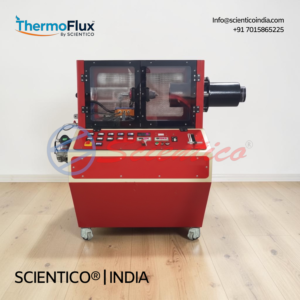
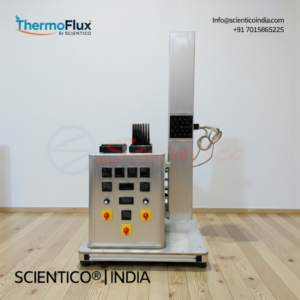
Heat Conduction and Convection ThermoFlux – 7106 is a laboratory apparatus for fundamental experiments on heat conduction and convection using six interchangeable metal cooling fin samples of different materials and lengths.

Two long samples (copper, steel; 154 mm, 48.4 cm²) and four short samples (copper, aluminium, brass, steel; 104 mm, 32.6 cm²) are heated at one end by a 30 W heater (temperature limit: 160°C). Six continuously adjustable fans (max. 40 m³/h, 14,400 min⁻¹, 8 W each) provide forced air flow for free and forced convection comparison.

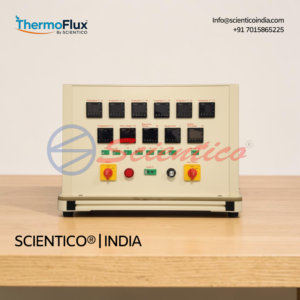
Eight temperature sensors cover -100 to 400°C. Flow velocity is measured 0 to 10 m/s. Heating power is controlled 0 to 30 W. Microprocessor-based instrumentation is fully integrated in the housing. Temperatures, heating power, and air velocity are displayed and controlled via software. Optional DAQ software in the National Instruments LabVIEW environment supports PC-based data acquisition on any Windows system.

Supplied by SCIENTICO India with an instruction manual.

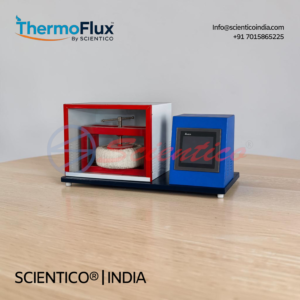
The Heat Conduction and Convection ThermoFlux – 7106 is a laboratory apparatus designed for basic experiments on heat conduction and convection, two of the three fundamental forms of heat transfer. Six interchangeable metal samples, each functioning as a cooling fin, are heated at one end and dissipate heat through conduction along their length and convection to the surrounding air.

Six fans below the sample provide continuously adjustable forced air flow, enabling comparison between free convection with still air and forced convection with flowing air. The effect of different materials and different sample lengths on heat transfer can be directly compared. Microprocessor-based instrumentation is integrated into the housing; heating power and fan speed are controlled and displayed via software.


Product Overview

The Heat Conduction and Convection ThermoFlux – 7106 centres on six metal samples: two long samples (copper and steel) with a heat-dissipating length of 154 mm and a heat transfer area of 48.4 cm², and four short samples (copper, aluminium, brass, and steel) with a heat-dissipating length of 104 mm and a heat transfer area of 32.6 cm².

Each sample is placed on a heater rated at 30 W with a temperature limit of 160°C. The sample is heated at one end; heat is conducted along its length and dissipated to the environment, replicating the behaviour of a cooling fin. Six fans with a maximum flow rate of 40 m³/h, nominal speed of 14,400 min⁻¹, and a power consumption of 8 W per fan provide adjustable forced air flow around the sample, enabling heat conduction and convection experiments under both free and forced convection conditions.

Eight temperature sensors measure temperatures across the range -100 to 400°C. Flow velocity is measured from 0 to 10 m/s. Heating power is measured and controlled over 0 to 30 W. All measured values, including temperatures, heating power, and air velocity, are displayed in the software. The integrated microprocessor-based instrumentation requires no additional external devices or error-prone wiring. Optional DAQ software in the National Instruments LabVIEW environment enables PC-based data acquisition on any Windows system.

Heat Conduction and Convection ThermoFlux – 7106: Technical Specifications

Parameter Value
Apparatus Type Heat conduction and convection trainer using metal cooling fin samples
Total Samples Included 6 (2 long, 4 short)
Long Samples: Materials Copper, steel
Long Samples: Heat-Dissipating Length 154 mm
Long Samples: Heat Transfer Area 48.4 cm²
Short Samples: Materials Copper, aluminium, brass, steel
Short Samples: Heat-Dissipating Length 104 mm
Short Samples: Heat Transfer Area 32.6 cm²
Heater: Heating Power 30 W
Heater: Temperature Limitation 160°C
Fans 6 fans, continuously adjustable
Fan: Max. Flow Rate 40 m³/h
Fan: Nominal Speed 14,400 min⁻¹
Fan: Power Consumption 8 W
Temperature Measurement Range 8 x -100 to 400°C
Flow Velocity Measurement Range 0 to 10 m/s
Heating Power Measurement Range 0 to 30 W
Temperature Sensors 5 (as stated in specifications)
Instrumentation Microprocessor-based, integrated in housing
Software Optional DAQ software (National Instruments LabVIEW environment)
Software Compatibility Any Windows environment

Technical Data

Heater

Parameter Value
Heating Power 30 W
Temperature Limitation 160°C

Long Samples (2x)

Parameter Value
Materials Copper, steel
Length Dissipating Heat 154 mm
Heat Transfer Area 48.4 cm²

Short Samples (4x)

Parameter Value
Materials Copper, aluminium, brass, steel
Length Dissipating Heat 104 mm
Heat Transfer Area 32.6 cm²

Fans (6x)

Parameter Value
Max. Flow Rate 40 m³/h
Nominal Speed 14,400 min⁻¹
Power Consumption 8 W

Measuring Ranges

Parameter Range
Flow Velocity 0 to 10 m/s
Temperature 8 x -100 to 400°C
Heating Power 0 to 30 W

Key Features

  • Apparatus Type: heat conduction and convection trainer using metal cooling fin samples
  • Total Samples: 6 interchangeable metal samples (2 long, 4 short)
  • Long Samples: copper and steel, 154 mm heat-dissipating length, 48.4 cm² heat transfer area
  • Short Samples: copper, aluminium, brass, and steel, 104 mm heat-dissipating length, 32.6 cm² heat transfer area
  • Heater Rating: 30 W, temperature limitation 160°C
  • Fans: 6 fans, continuously adjustable flow rate
  • Fan: Max. Flow Rate: 40 m³/h
  • Fan: Nominal Speed: 14,400 min⁻¹
  • Fan: Power Consumption: 8 W
  • Convection Modes: free convection (still air) and forced convection (flowing air)
  • Temperature Measurement: 8 x -100 to 400°C
  • Flow Velocity Measurement: 0 to 10 m/s
  • Heating Power Measurement: 0 to 30 W
  • Instrumentation: microprocessor-based, integrated in housing, no additional external devices required
  • Software Display: temperatures, heating power, and air velocity displayed in software
  • Software: optional DAQ software, National Instruments LabVIEW environment, Windows compatible

Experiments

  • Effect of heat conduction and convection on heat transfer
  • Effect of free and forced convection on heat transfer
  • Calculate convective heat transfers
  • Effect of different materials on heat conduction
  • Effect of sample length on heat transfer

Construction and Design

The Heat Conduction and Convection ThermoFlux – 7106 is built around a heater on which interchangeable metal samples are placed. Each sample is heated at one end. Heat is conducted along the sample length and dissipated to the surrounding air, replicating the behaviour of a cooling fin.

Six interchangeable samples are provided: two long samples (copper and steel) with a heat-dissipating length of 154 mm and a heat transfer area of 48.4 cm², and four short samples (copper, aluminium, brass, and steel) with a heat-dissipating length of 104 mm and a heat transfer area of 32.6 cm². This range of materials and lengths enables direct experimental comparison of heat conduction and convection performance across different geometries and thermal conductivities.

Six fans are positioned below the sample. The fans deliver a maximum flow rate of 40 m³/h at a nominal speed of 14,400 min⁻¹, consuming 8 W each. Fan flow rate is continuously adjustable, conveying air flow evenly around the sample for both free convection (still air) and forced convection (flowing air) experiments. The heater is rated at 30 W with a temperature limitation of 160°C.

Eight temperature sensors cover the range -100 to 400°C. Flow velocity is measured over 0 to 10 m/s. Heating power is controlled and measured over 0 to 30 W. Microprocessor-based instrumentation is fully integrated into the housing, eliminating the need for additional external devices or error-prone wiring. Temperatures, heating power, and air velocity are all displayed via the software interface.


Software (Optional): ThermoFlux – 7106

DAQ software is specially designed in the National Instruments LabVIEW environment to measure and calculate results from the apparatus. The software is optional. When software is used, a set of electronic sensors is included. Heating power and flow velocity of the air flow are adjusted and displayed via the software. The software is compatible with any Windows environment.


Scope of Delivery

  • 1 experimental unit
  • 1 instruction manual

Optional Accessories

  • DAQ software package (ThermoFlux – 7106, National Instruments LabVIEW environment, Windows compatible), supplied with electronic sensors

Q: What metal samples are included with the Heat Conduction and Convection ThermoFlux – 7106?
A: Six interchangeable metal samples are included. Two long samples (copper and steel) have a heat-dissipating length of 154 mm and a heat transfer area of 48.4 cm². Four short samples (copper, aluminium, brass, and steel) have a heat-dissipating length of 104 mm and a heat transfer area of 32.6 cm².

Q: How does the unit demonstrate both free and forced convection?
A: Six continuously adjustable fans are positioned below the sample. When the fans are off, the sample dissipates heat to still air, demonstrating free convection. When the fans are on, air flow is conveyed evenly around the sample, demonstrating forced convection. Flow velocity is adjustable and measured over 0 to 10 m/s.

Q: What is the heater specification for this heat conduction and convection apparatus?
A: The heater has a heating power of 30 W and a temperature limitation of 160°C. Heating power is continuously adjustable over 0 to 30 W and is displayed and controlled via the software.

Q: What parameters are measured and displayed by the unit?
A: The unit measures temperature (8 x -100 to 400°C), flow velocity (0 to 10 m/s), and heating power (0 to 30 W). All values are displayed via the software interface. The integrated microprocessor-based instrumentation requires no additional external devices.

Q: Is PC-based data acquisition available for the ThermoFlux – 7106?
A: Yes, as an optional feature. Optional DAQ software developed in the National Instruments LabVIEW environment enables PC-based data acquisition and control of heating power and fan speed. The software is compatible with any Windows environment and is supplied with a set of electronic sensors.

Need Assistance? We're Here to Help!

Connect with our team for product specifications, pricing, and customized solutions for your institution or project.
Trade enquiries

Distributors, dealers, resellers and bulk buyers

We manufacture Heat Conduction and Convection | ThermoFlux – 7106 at our own works in Ambala, India. Manufacturer-direct, three ways to work with us.

01

Become a distributor, dealer or agent in your territory

Already selling to colleges or hospitals in your market? Add a manufacturer-direct line. Terms reviewed on application.

or message on WhatsApp
02

Wholesale and bulk quotation

Holding a live enquiry? Send the model, quantity, destination and required Incoterm. We will confirm the supplied scope and available export documents.

or message on WhatsApp
03

OEM authorisation letter for a tender

Bidding a tender that requests a manufacturer authorisation form (MAF)? Send the tender reference, deadline and listed equipment so we can confirm what can be issued.

or message on WhatsApp

Full distributor guide OEM and export enquiries

Thermodynamics Lab Equipment
🏭
Manufacturer DirectProduct-specific enquiry, not a generic catalogue
🌍
Destination MatchedConfiguration and delivery scope reviewed together
📄
Decision-Ready ReplyApplicable documentation confirmed before ordering
Product-specific enquiry

Get a quotation your team can evaluate

A bare price can hide configuration, accessories, voltage, documentation and delivery assumptions. Send the product and destination now so the quoted scope can be reviewed before a purchase decision.

Avoid the mismatchDo not approve a generic price that leaves supplied scope unclear.
Your product is attachedNo need to retype the model or copy the page URL.
Move toward an approvable quoteAdd the destination; quantity and tender details can follow.

No account is required. Organisation, quantity and tender details are optional. Include the country code so the team can reach you internationally.

1993
Manufacturing Since
Direct
Manufacturer Supply
Quote-based
International Orders
Model
Configuration

Overview

The Heat Conduction and Convection ThermoFlux – 7106 is a laboratory apparatus designed for basic experiments on heat conduction and convection, two of the three fundamental forms of heat transfer. Six interchangeable metal samples, each functioning as a cooling fin, are heated at one end and dissipate heat through conduction along their length and convection to the surrounding air.

Six fans below the sample provide continuously adjustable forced air flow, enabling comparison between free convection with still air and forced convection with flowing air. The effect of different materials and different sample lengths on heat transfer can be directly compared. Microprocessor-based instrumentation is integrated into the housing; heating power and fan speed are controlled and displayed via software.


Product Overview

The Heat Conduction and Convection ThermoFlux – 7106 centres on six metal samples: two long samples (copper and steel) with a heat-dissipating length of 154 mm and a heat transfer area of 48.4 cm², and four short samples (copper, aluminium, brass, and steel) with a heat-dissipating length of 104 mm and a heat transfer area of 32.6 cm².

Each sample is placed on a heater rated at 30 W with a temperature limit of 160°C. The sample is heated at one end; heat is conducted along its length and dissipated to the environment, replicating the behaviour of a cooling fin. Six fans with a maximum flow rate of 40 m³/h, nominal speed of 14,400 min⁻¹, and a power consumption of 8 W per fan provide adjustable forced air flow around the sample, enabling heat conduction and convection experiments under both free and forced convection conditions.

Eight temperature sensors measure temperatures across the range -100 to 400°C. Flow velocity is measured from 0 to 10 m/s. Heating power is measured and controlled over 0 to 30 W. All measured values, including temperatures, heating power, and air velocity, are displayed in the software. The integrated microprocessor-based instrumentation requires no additional external devices or error-prone wiring. Optional DAQ software in the National Instruments LabVIEW environment enables PC-based data acquisition on any Windows system.

Key Features

Key Features

  • Apparatus Type: heat conduction and convection trainer using metal cooling fin samples
  • Total Samples: 6 interchangeable metal samples (2 long, 4 short)
  • Long Samples: copper and steel, 154 mm heat-dissipating length, 48.4 cm² heat transfer area
  • Short Samples: copper, aluminium, brass, and steel, 104 mm heat-dissipating length, 32.6 cm² heat transfer area
  • Heater Rating: 30 W, temperature limitation 160°C
  • Fans: 6 fans, continuously adjustable flow rate
  • Fan: Max. Flow Rate: 40 m³/h
  • Fan: Nominal Speed: 14,400 min⁻¹
  • Fan: Power Consumption: 8 W
  • Convection Modes: free convection (still air) and forced convection (flowing air)
  • Temperature Measurement: 8 x -100 to 400°C
  • Flow Velocity Measurement: 0 to 10 m/s
  • Heating Power Measurement: 0 to 30 W
  • Instrumentation: microprocessor-based, integrated in housing, no additional external devices required
  • Software Display: temperatures, heating power, and air velocity displayed in software
  • Software: optional DAQ software, National Instruments LabVIEW environment, Windows compatible

Experiments

  • Effect of heat conduction and convection on heat transfer
  • Effect of free and forced convection on heat transfer
  • Calculate convective heat transfers
  • Effect of different materials on heat conduction
  • Effect of sample length on heat transfer

Construction and Design

The Heat Conduction and Convection ThermoFlux – 7106 is built around a heater on which interchangeable metal samples are placed. Each sample is heated at one end. Heat is conducted along the sample length and dissipated to the surrounding air, replicating the behaviour of a cooling fin.

Six interchangeable samples are provided: two long samples (copper and steel) with a heat-dissipating length of 154 mm and a heat transfer area of 48.4 cm², and four short samples (copper, aluminium, brass, and steel) with a heat-dissipating length of 104 mm and a heat transfer area of 32.6 cm². This range of materials and lengths enables direct experimental comparison of heat conduction and convection performance across different geometries and thermal conductivities.

Six fans are positioned below the sample. The fans deliver a maximum flow rate of 40 m³/h at a nominal speed of 14,400 min⁻¹, consuming 8 W each. Fan flow rate is continuously adjustable, conveying air flow evenly around the sample for both free convection (still air) and forced convection (flowing air) experiments. The heater is rated at 30 W with a temperature limitation of 160°C.

Eight temperature sensors cover the range -100 to 400°C. Flow velocity is measured over 0 to 10 m/s. Heating power is controlled and measured over 0 to 30 W. Microprocessor-based instrumentation is fully integrated into the housing, eliminating the need for additional external devices or error-prone wiring. Temperatures, heating power, and air velocity are all displayed via the software interface.


Software (Optional): ThermoFlux – 7106

DAQ software is specially designed in the National Instruments LabVIEW environment to measure and calculate results from the apparatus. The software is optional. When software is used, a set of electronic sensors is included. Heating power and flow velocity of the air flow are adjusted and displayed via the software. The software is compatible with any Windows environment.


Scope of Delivery

  • 1 experimental unit
  • 1 instruction manual

Optional Accessories

  • DAQ software package (ThermoFlux – 7106, National Instruments LabVIEW environment, Windows compatible), supplied with electronic sensors

Specifications

Heat Conduction and Convection ThermoFlux – 7106: Technical Specifications

Parameter Value
Apparatus Type Heat conduction and convection trainer using metal cooling fin samples
Total Samples Included 6 (2 long, 4 short)
Long Samples: Materials Copper, steel
Long Samples: Heat-Dissipating Length 154 mm
Long Samples: Heat Transfer Area 48.4 cm²
Short Samples: Materials Copper, aluminium, brass, steel
Short Samples: Heat-Dissipating Length 104 mm
Short Samples: Heat Transfer Area 32.6 cm²
Heater: Heating Power 30 W
Heater: Temperature Limitation 160°C
Fans 6 fans, continuously adjustable
Fan: Max. Flow Rate 40 m³/h
Fan: Nominal Speed 14,400 min⁻¹
Fan: Power Consumption 8 W
Temperature Measurement Range 8 x -100 to 400°C
Flow Velocity Measurement Range 0 to 10 m/s
Heating Power Measurement Range 0 to 30 W
Temperature Sensors 5 (as stated in specifications)
Instrumentation Microprocessor-based, integrated in housing
Software Optional DAQ software (National Instruments LabVIEW environment)
Software Compatibility Any Windows environment

Technical Data

Heater

Parameter Value
Heating Power 30 W
Temperature Limitation 160°C

Long Samples (2x)

Parameter Value
Materials Copper, steel
Length Dissipating Heat 154 mm
Heat Transfer Area 48.4 cm²

Short Samples (4x)

Parameter Value
Materials Copper, aluminium, brass, steel
Length Dissipating Heat 104 mm
Heat Transfer Area 32.6 cm²

Fans (6x)

Parameter Value
Max. Flow Rate 40 m³/h
Nominal Speed 14,400 min⁻¹
Power Consumption 8 W

Measuring Ranges

Parameter Range
Flow Velocity 0 to 10 m/s
Temperature 8 x -100 to 400°C
Heating Power 0 to 30 W

Buying Heat Conduction and Convection: Distributor & Tender Guidance

Heat Conduction and Convection is the product name procurement teams should use when searching, preparing a BOQ or comparing suppliers. A model reference identifies the proposed configuration; it should not replace the product name or the buyer’s required experiment. This equipment is considered for thermal-engineering teaching where learners measure heat, temperature, pressure, work, efficiency or energy balance.

What to include in the RFQ

State the product name, quantity, destination, curriculum or tender reference, and heat source, measurement points, operating range, instrumentation, utilities, safety provisions and experiment list. This lets the technical team respond against the intended use rather than guess from a model code.

How distributors should quote it

Keep Heat Conduction and Convection as the BOQ line item. Add the proposed model, included accessories, documentation, packing and delivery basis as separate fields so the end buyer can verify the offer.

How to compare suppliers

Ask every bidder to state the measurable parameters, operating conditions and included instruments against the same syllabus outcome. Record exclusions and alternatives in writing before commercial comparison.

Why Buy From Scientico

🏭

In-House Manufacturer

Designed & built in our Ambala facility since 1993 — not a reseller. Full control over quality & customisation.

✅

Configuration Review

Specifications, documentation and options are confirmed against the selected model.

🌏

International Enquiries

Share your destination and procurement requirements for an export quotation.

📦

Quote-Based Supply

Send the model, quantity and delivery location for a tailored proposal.

🛠

Support Scope

Support and warranty terms are documented in the applicable quotation.

🎓

Built for Teaching

Designed around curriculum experiments with clear, repeatable, hands-on results.

Frequently Asked Questions

Q: What metal samples are included with the Heat Conduction and Convection ThermoFlux – 7106? A: Six interchangeable metal samples are included. Two long samples (copper and steel) have a heat-dissipating length of 154 mm and a heat transfer area of 48.4 cm². Four short samples (copper, aluminium, brass, and steel) have a heat-dissipating length of 104 mm and a heat transfer area of 32.6 cm².

Q: How does the unit demonstrate both free and forced convection? A: Six continuously adjustable fans are positioned below the sample. When the fans are off, the sample dissipates heat to still air, demonstrating free convection. When the fans are on, air flow is conveyed evenly around the sample, demonstrating forced convection. Flow velocity is adjustable and measured over 0 to 10 m/s.

Q: What is the heater specification for this heat conduction and convection apparatus? A: The heater has a heating power of 30 W and a temperature limitation of 160°C. Heating power is continuously adjustable over 0 to 30 W and is displayed and controlled via the software.

Q: What parameters are measured and displayed by the unit? A: The unit measures temperature (8 x -100 to 400°C), flow velocity (0 to 10 m/s), and heating power (0 to 30 W). All values are displayed via the software interface. The integrated microprocessor-based instrumentation requires no additional external devices.

Q: Is PC-based data acquisition available for the ThermoFlux – 7106? A: Yes, as an optional feature. Optional DAQ software developed in the National Instruments LabVIEW environment enables PC-based data acquisition and control of heating power and fan speed. The software is compatible with any Windows environment and is supplied with a set of electronic sensors.

Related Guides & Resources

In-depth guides from Scientico on Thermodynamics lab setup, experiments and procurement.

Heat Conduction and Convection | ThermoFlux – 7106

Related Laboratory Equipment

Explore related apparatus in this equipment range. Request a model-specific international quotation.

Single-shaft jet engine trainerGas Turbine Jet Engine Test Bench | ThermoFlux 7086AHeat Exchanger Service Unit | ThermoFlux – 7108, Scientico IndiaHeat Exchanger Service Unit | ThermoFlux – 7108Gas Turbine Jet Engine | ThermoFlux – 7086, model-specific lab equipment manufactured by Scientico IndiaGas Turbine Jet Engine | ThermoFlux – 7086Heat Transfer Service Unit | ThermoFlux – 7049, Scientico IndiaHeat Transfer Service Unit | ThermoFlux – 7049Free and Forced Convection Heat Exchanger | ThermoFlux – 7027, model-specific lab equipment manufactured by Scientico IndiaFree and Forced Convection Heat Exchanger | ThermoFlux – 7027Heat Transfer through Composite WallHeat Transfer through Composite Wall Apparatus | ThermoFlux-2904Flow Boiling Demonstration by Scientico IndiaFlow Boiling Demonstration | ThermoFlux-7091Jacketed Vessel Coil Type Heat Exchanger by Scientico IndiaJacketed Vessel Coil Type Heat Exchanger ThermoFlux | ThermoFlux-7108/4
📄 Download Datasheet

Get the product datasheet

Share your details to open the complete datasheet, then print or save it as a PDF.

Heat Conduction and Convection | ThermoFlux – 7106