
Environmental engineering lab equipment is the set of instruments a college or testing laboratory uses to measure water and wastewater quality, chiefly BOD incubators, COD digestion units, jar test apparatus, turbidity meters, pH and DO meters, and related glassware. For an environmental engineering teaching lab, the core trio is BOD (biochemical oxygen demand), COD (chemical oxygen demand), and physico-chemical water quality testing, since these three cover the majority of the syllabus and most real-world effluent analysis. This guide explains what each instrument does, typical specifications to check before buying, and how to plan a complete lab for civil and environmental engineering programmes.
Equipment mentioned in this guide
Review the product information, specifications and model before requesting a quotation.
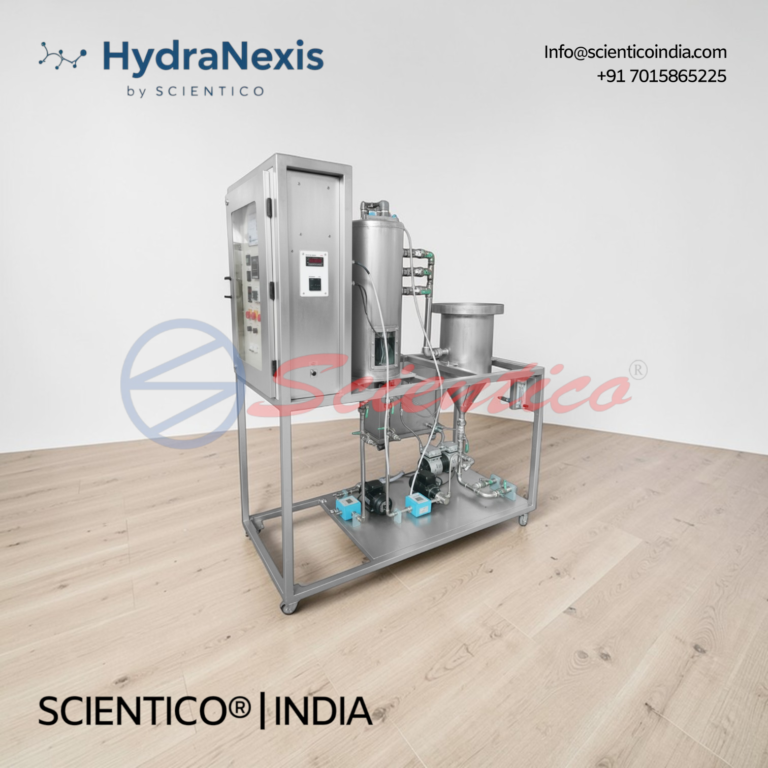
Aerobic Water Treatment Pilot Plant – HydraNexis HNX 06
Product OverviewThe HydraNexis HNX 06 pilot plant is based on the conventional single-stage activated sludge process, consisting of an oxidation (aeration) reactor followed by a secondary settler. Raw water containing dissolved organic matter is pumped into the oxidation reactor, where aerobic microorganisms biodegrade organic pollutants using dissolved oxygen supplied through air diffusion.
View product details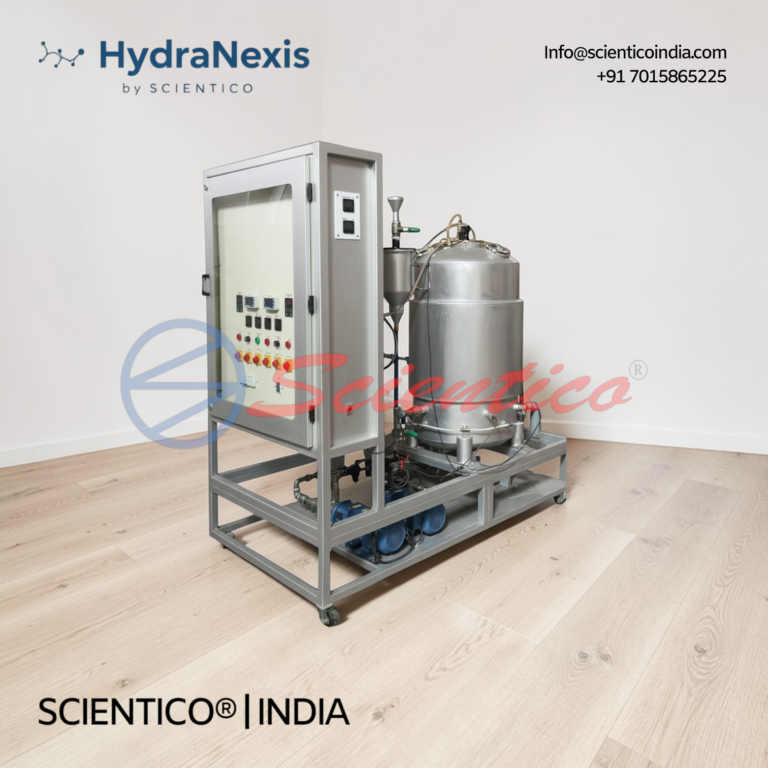
Anaerobic Water Treatment Pilot Plant – HydraNexis HNX 04
The Anaerobic Water Treatment Pilot Plant (HydraNexis HNX 04) is a laboratory and pilot-scale system designed to demonstrate anaerobic degradation of organic pollutants in wastewater. Manufactured by SCIENTICO under the HydraNexis series, this unit is intended for environmental engineering education, research laboratories, and process optimization studies. It enables controlled investigation of anaerobic digestion and biogas generation under measurable operating conditions. morticia xxx
View product detailsWhat equipment is needed for an environmental engineering lab?
A functional environmental engineering laboratory blends temperature-controlled incubation, chemical digestion, and electrochemical measurement. The exact list depends on your curriculum (AICTE/university scheme, diploma vs degree) and whether you also run environmental project work or consultancy testing. Most labs are built around the following categories.
- BOD measurement: BOD incubator (cooling type), DO meter or Winkler titration glassware, BOD bottles.
- COD measurement: COD digester / reflux apparatus, heating block or digestion tubes, reflux condensers.
- Coagulation studies: jar test apparatus (flocculator) for dosing and settling experiments.
- Physical/chemical parameters: turbidity meter (nephelometer), pH meter, conductivity/TDS meter, colorimeter or spectrophotometer.
- Sample preparation: hot air oven, muffle furnace, water bath, magnetic stirrer, analytical balance.
- Solids and microbiology support: vacuum filtration assembly, desiccator, autoclave for sample sterilisation.
Core instruments at a glance
| Equipment | What it measures / does | Common specs to check |
|---|---|---|
| BOD Incubator | Maintains samples at a stable low temperature during the incubation period | Temperature range (commonly down to ~5°C, set point typically 20°C), accuracy, capacity in litres, internal lighting, PID controller |
| COD Digester | Heats samples with reagents for chemical oxygen demand reflux | Number of test positions, set temperature (around 150°C for standard reflux), timer, tube size compatibility |
| Jar Test Apparatus | Simulates coagulation/flocculation for dose optimisation | Number of stirrer positions (commonly 4–6), variable RPM, digital speed display, illuminated base |
| Turbidity Meter | Measures cloudiness in NTU | Measuring range, resolution, calibration standards supplied |
| pH / DO Meter | Acidity/alkalinity and dissolved oxygen | Range, resolution, ATC (automatic temperature compensation), electrode type |
| Hot Air Oven / Muffle Furnace | Drying and ignition for solids tests | Max temperature, chamber size, temperature uniformity, controller type |
How does BOD testing work in the lab?
BOD measures the oxygen consumed by micro-organisms as they break down organic matter in a water sample over a fixed incubation period, the classic test runs for five days at 20°C (BOD₅). The procedure is straightforward but demands tight temperature control, which is exactly why the BOD incubator is the centrepiece.
- Prepare and aerate dilution water, then dilute the sample so oxygen is not fully depleted.
- Fill BOD bottles, record the initial dissolved oxygen (DO) using a DO meter or the Winkler titration method.
- Seal and place the bottles in a BOD incubator held at 20°C, in the dark to prevent algal photosynthesis.
- After five days, measure the final DO.
- Calculate BOD from the DO depletion and the dilution factor.
Because the result hinges on a steady 20°C across the whole chamber, look for an incubator with a cooling (refrigerated) system, a reliable controller, and good internal air circulation. Temperature drift is the most common source of inconsistent student results.
How is COD different, and what equipment does it need?
COD measures the oxygen equivalent of organic matter that can be chemically oxidised, typically using a strong oxidant under reflux. Unlike BOD’s five-day wait, COD is a same-session test, which makes it popular for routine effluent screening. The sample is heated with the oxidising reagent in a COD digester (or open-reflux apparatus with condensers), then the result is read by titration or, in closed-reflux setups, colorimetrically.
- Open reflux: uses reflux flasks and condensers on a heating mantle; good for teaching the underlying chemistry.
- Closed reflux: uses sealed digestion tubes in a thermostatic block, then a colorimeter/spectrophotometer for the reading, faster and uses less reagent.
For a teaching lab, many departments keep both: open reflux to demonstrate the principle and a block digester for throughput. COD and BOD together let students compare biodegradable load versus total chemically oxidisable load, a key concept in wastewater treatment design.
What instruments cover general water quality testing?
Beyond BOD and COD, a water quality bench typically handles turbidity, pH, conductivity/TDS, dissolved oxygen, total solids, hardness, and optical parameters. A jar test apparatus rounds out the set by letting students optimise coagulant dosing, directly mirroring how a real water treatment plant selects alum or polymer doses. If you are scoping a full bench for treatment-focused coursework, browse a category like Water Treatment Lab Equipment to see how individual instruments map to typical experiments.
Mapping experiments to equipment
| Experiment | Primary equipment | Supporting items |
|---|---|---|
| BOD₅ determination | BOD incubator, DO meter | BOD bottles, aerator, dilution water |
| COD determination | COD digester / reflux apparatus | Reflux flasks, condensers, titration set |
| Optimum coagulant dose | Jar test apparatus | Turbidity meter, beakers, pipettes |
| Turbidity & colour | Turbidity meter, colorimeter | Calibration standards |
| Total/suspended solids | Hot air oven, muffle furnace, balance | Desiccator, filtration assembly |
How do you choose and buy environmental lab equipment?
For Indian colleges and export buyers alike, sound procurement comes down to matching specs to your syllabus, checking quality documentation, and confirming after-sales support. Use this checklist before you request a quote.
- Match the syllabus: confirm each instrument supports the specific experiments in your university or AICTE scheme.
- Verify build and certification: look for ISO 9001:2015 and CE marking, and ask for calibration and conformity documents with the consignment.
- Check capacity and throughput: size the BOD incubator and number of COD/jar-test positions to your batch size so students aren’t queuing.
- Plan consumables and spares: electrodes, BOD bottles, digestion tubes, and reagents are recurring costs, budget for them.
- Confirm power and utilities: match voltage/frequency for export destinations and ensure adequate bench space and water/drainage.
Scientico is an ISO 9001:2015 and model-specific manufacturer and exporter based in Ambala, Haryana, building engineering, nursing, medical and pharmacy lab equipment and exporting to 30+ countries since 1993. The company is GeM-registered for Indian government and institutional buyers, supplies calibration and conformity documentation with each order, and can issue a model-specific CIF proforma invoice after technical review of an enquiry. For a tailored quote on an environmental engineering setup, share your experiment list and batch size over WhatsApp at +91-7015865225.
A practical buying sequence
- List every experiment in your course scheme.
- Map experiments to equipment using the tables above.
- Decide capacities based on student batch size.
- Request an itemised quote with specifications and documentation.
- Confirm warranty, installation guidance, and spares availability.
Built methodically, an environmental engineering lab gives students hands-on command of the measurements that underpin water and wastewater treatment design, from a single BOD bottle to a full coagulation study, while staying within budget and procurement rules.
Frequently Asked Questions
What is the difference between BOD and COD testing?
BOD (biochemical oxygen demand) measures oxygen consumed by micro-organisms breaking down organic matter, typically over five days at 20°C in a BOD incubator. COD (chemical oxygen demand) measures oxygen equivalent of chemically oxidisable matter using a digester and oxidant in the same session. BOD reflects biodegradable load; COD reflects total chemically oxidisable load, and both are usually taught together.
What is the most important instrument in a BOD test?
The BOD incubator is the centrepiece because the standard BOD5 test requires samples held steadily at 20°C in the dark for five days. A refrigerated (cooling-type) incubator with a reliable controller and good internal air circulation keeps temperature uniform, which is the main factor in getting consistent, repeatable results. A DO meter or Winkler titration glassware is used to read dissolved oxygen.
What equipment is needed for a complete environmental engineering lab?
A complete lab typically includes a BOD incubator, COD digester or reflux apparatus, jar test apparatus, turbidity meter, pH and DO meters, conductivity/TDS meter, a colorimeter or spectrophotometer, plus support items such as a hot air oven, muffle furnace, analytical balance, water bath and filtration assembly. The exact list should match your university or AICTE course scheme.
Does Scientico provide certification and export documentation?
Yes. Scientico is an ISO 9001:2015 and model-specific manufacturer in Ambala, India, exporting to over 60 countries since 1993. Calibration and conformity documents are supplied with orders, the company is GeM-registered for Indian institutional buyers, and a CIF proforma invoice can be issued within 24 hours of enquiry.
How do I get a price quote for environmental lab equipment?
Pricing is quote-based rather than published, so the best approach is to share your experiment list, required capacities and student batch size. Scientico can then prepare an itemised quotation with specifications, and for export buyers issue a model-specific CIF proforma invoice after technical review. Enquiries can be sent via WhatsApp at +91-7015865225.
One honest ask
We don't gate anything on this site. You just read the whole thing free. If it was useful, leave your email and two things happen: we send you this page as a plain-text block you can paste into a tender file or an internal email, and we notify you the next time we publish a buyer tool like this one. Nothing else. No drip sequence, no sales calls booked without asking.