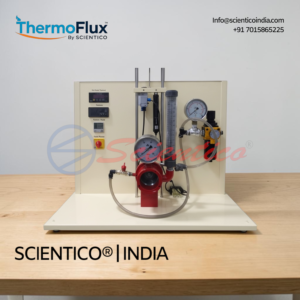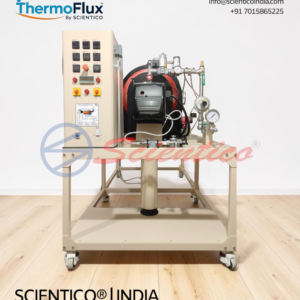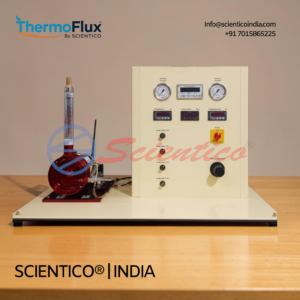

Bubble Point Calculation Unit | ThermoFlux-27
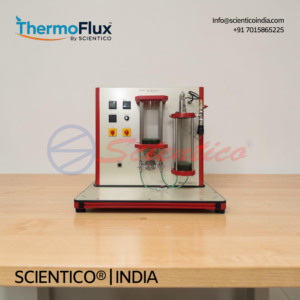
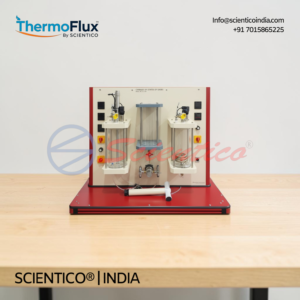
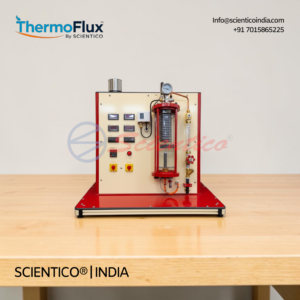
The Bubble Point Calculation Unit ThermoFlux-27 is a standalone laboratory unit for comparative study of bubble point and dew point phenomena. This bubble point calculation unit includes a boiler with a temperature controller and 0 to 3 kW power regulating knob, a 3-litre glass and stainless steel feed tank, a 0.5-litre glass and stainless steel vapour separation tank, and a 780 mm coil-type glass condenser. Three temperature channels (-100 to 400°C each), a cooling water flow rate measurement (1 to 7 lpm), and a system pressure gauge (0 to 4 bar) provide complete process monitoring. Students separate a solvent from a solution using both the bubble point method and the dew point method on the same apparatus.
The Bubble Point Calculation Unit ThermoFlux-27 is a standalone laboratory unit for studying and comparing the bubble point and dew point phenomena through direct experimentation. This bubble point calculation unit enables students to separate a solvent from a solution using both the bubble point method and the dew point method on the same apparatus. A coil condenser, glass and stainless steel feed and vapour separation tanks, and three temperature measurement channels provide a complete platform for comparative vapour-liquid equilibrium experiments.
Product Overview
The ThermoFlux-27 is designed as a self-contained unit for performing comparative experiments on bubble point and dew point behaviour. A boiler heats the feed solution, with heater temperature controlled by a dedicated temperature controller and heating power adjustable via a regulating knob across a range of 0 to 3 kW. Boiler vapour temperature and vapour separation temperature are each measured independently, with three temperature measurement channels covering -100 to 400°C.
The feed tank has a capacity of approximately 3 litres and is constructed from glass and stainless steel. The vapour separation tank has a capacity of approximately 0.5 litres, also in glass and stainless steel. A coil-type glass condenser, 780 mm in height, condenses the separated vapour back to liquid. Cooling water flow rate to the condenser is adjustable and measured within a range of 1 to 7 litres per minute. System pressure is monitored by a pressure gauge with a range of 0 to 4 bar.
The unit supports two structured experiments: solvent separation from a solution using the bubble point method and solvent separation using the dew point method. Both experiments are conducted on the same apparatus, enabling direct comparative analysis of the two separation approaches.
Bubble Point Calculation Unit ThermoFlux-27, Technical Specifications
| Parameter | Value |
|---|---|
| Model | ThermoFlux-27 |
| Unit Type | Standalone bubble point and dew point experiment unit |
| Heater Control | Temperature controller with power regulating knob |
| Heating Power Range | 0 to 3 kW |
| Temperature Measurement Channels | 3 |
| Temperature Measurement Range | -100 to 400°C per channel |
| Measurements | Boiler vapour temperature, vapour separation temperature |
| Condenser Type | Coil |
| Condenser Material | Glass |
| Condenser Height | 780 mm |
| Feed Tank Capacity | Approx. 3 litres |
| Vapour Separation Tank Capacity | Approx. 0.5 litres |
| Tank Materials | Glass and stainless steel |
| Cooling Water Flow Rate Range | 1 to 7 lpm |
| System Pressure Gauge Range | 0 to 4 bar |
| Scope of Delivery | 1 experimental unit, 1 instruction manual |
Technical Data
Condenser
| Parameter | Value |
|---|---|
| Type | Coil |
| Material | Glass |
| Height | 780 mm |
Tanks
| Tank | Capacity | Material |
|---|---|---|
| Feed tank | Approx. 3 litres | Glass and stainless steel |
| Vapour separation tank | Approx. 0.5 litres | Glass and stainless steel |
Measuring Ranges
| Parameter | Range |
|---|---|
| Temperature | 3 channels, -100 to 400°C each |
| Heating Power | 0 to 3 kW |
| Cooling Water Flow Rate | 1 to 7 lpm |
| System Pressure Gauge | 0 to 4 bar |
Heater
| Parameter | Value |
|---|---|
| Temperature Control | Heater temperature controller |
| Power Adjustment | Heater power regulating knob |
| Maximum Power | 3 kW |
Key Features
- Bubble Point Calculation Unit Function: Standalone unit for comparative bubble point and dew point experiments
- Heating System: Temperature controller with power regulating knob, 0 to 3 kW heating power range
- Temperature Measurement: 3 channels, -100 to 400°C each, covering boiler vapour and vapour separation temperatures
- Condenser: Coil type, glass construction, 780 mm height
- Feed Tank: Approx. 3 litres, glass and stainless steel
- Vapour Separation Tank: Approx. 0.5 litres, glass and stainless steel
- Cooling Water Flow Rate: 1 to 7 lpm, measured during operation
- System Pressure Gauge: 0 to 4 bar
- Experiment Methods: Bubble point method and dew point method, both on same apparatus for direct comparison
Experiments
- Separate the solvent from a solution using the bubble point method
- Separate the solvent from a solution using the dew point method
Construction and Design
The Bubble Point Calculation Unit ThermoFlux-27 is a standalone apparatus built around a boiler, two tanks, and a coil-type glass condenser. The feed tank, with a capacity of approximately 3 litres, and the vapour separation tank, with a capacity of approximately 0.5 litres, are both fabricated from glass and stainless steel, allowing visual observation of liquid levels and phase separation during experiments. The coil condenser is constructed entirely from glass and stands 780 mm in height, condensing separated vapour back to liquid for collection and measurement.
The boiler heater is governed by a dedicated temperature controller. A heater power regulating knob allows continuous adjustment of heating power from 0 to 3 kW. Three independent temperature measurement channels, each covering -100 to 400°C, monitor boiler vapour temperature and vapour separation temperature throughout each experiment. Cooling water flow to the condenser is controllable within a range of 1 to 7 litres per minute. A system pressure gauge with a range of 0 to 4 bar monitors operating pressure across the unit.
This bubble point calculation unit supports both the bubble point and dew point separation methods on the same apparatus, enabling direct side-by-side comparison of the two approaches for solvent separation from a solution.
Scope of Delivery
- 1 experimental unit
- 1 instruction manual
Q1: What is the difference between the bubble point and dew point experiments performed on the ThermoFlux-27?
Both experiments involve separating a solvent from a solution but approach phase transition from different directions. The bubble point method identifies the temperature at which the first bubble of vapour forms in a liquid mixture. The dew point method identifies the temperature at which the first drop of liquid condenses from a vapour mixture. The ThermoFlux-27 supports both methods on the same apparatus for direct comparison.
Q2: What are the tank capacities and materials on the ThermoFlux-27?
The feed tank has a capacity of approximately 3 litres and the vapour separation tank approximately 0.5 litres. Both tanks are constructed from glass and stainless steel.
Q3: How is the heating power controlled on this bubble point calculation unit?
A dedicated heater temperature controller governs the boiler temperature. A heater power regulating knob provides continuous manual adjustment of heating power from 0 to 3 kW.
Q4: What temperature ranges are covered by the measurement channels?
Three temperature measurement channels are provided, each covering -100 to 400°C. They monitor boiler vapour temperature and vapour separation temperature independently during experiments.
Q5: What type of condenser is used and what are its dimensions?
The condenser is a coil type, constructed from glass, with a height of 780 mm. It receives cooling water at a flow rate between 1 and 7 litres per minute to condense separated vapour during experiments.
Need Assistance? We're Here to Help!
Connect with our team for product specifications, pricing, and customized solutions for your institution or project.