Thermal Conductivity of Metal Bar | ThermoFlux-2908
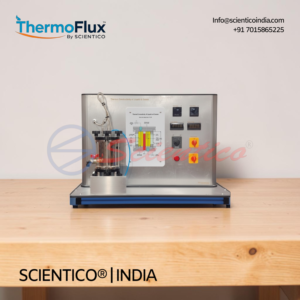
The Thermal Conductivity of Metal Bar ThermoFlux-2908 determines thermal conductivity of mild steel through controlled heat conduction experiments. Features a 25 mm diameter test bar with thermocouples positioned along its length, band heater at one end, heat sink at the other, and thermal insulation to minimize heat loss. Digital instrumentation includes 0-199.9 V voltmeter, 0-1.999 A ammeter, multi-channel temperature indicator, and dimmer stat control. Requires 230 V.A.C. stabilized supply, 1 m × 1.5 m floor space, and 2 lpm water supply.
The Thermal Conductivity of Metal Bar ThermoFlux-2908 is designed to determine the thermal conductivity of metal materials by measuring heat transmission through a test bar under controlled conditions. This apparatus demonstrates how thermal energy transfers through molecular motion in solid materials using a heated copper bar with thermocouples positioned along its length.
Product Overview
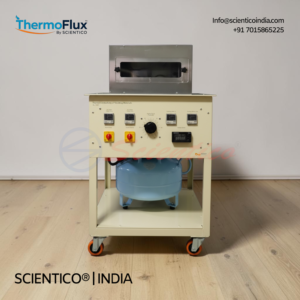
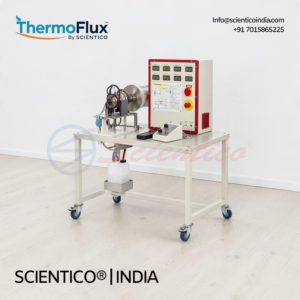
The Thermal Conductivity of Metal Bar ThermoFlux-2908 consists of a mild steel test bar, 25 mm diameter, with thermocouples mounted along its length to measure temperature at respective positions. A band heater at one end supplies controlled thermal input, while a heat sink at the opposite end dissipates heat. The test portion is well insulated to minimize heat loss through the sides. A digital voltmeter (0-199.9 volts) and digital ammeter (0-1.999 amp) measure heater input power. A dimmer stat allows variable adjustment of heat input for different thermal load experiments. A multi-channel digital temperature indicator displays all thermocouple readings simultaneously. Measuring flask and stop clock enable precise thermal data collection. Water supply at 2 liters per minute constant head flows through the heat sink for consistent cooling conditions.
Thermal Conductivity of Metal Bar ThermoFlux-2908 — Technical Specifications
| Specification | Details |
|---|---|
| Test Bar Material | Mild steel |
| Test Bar Diameter | 25 mm |
| Thermocouple Placement | Mounted along the length of bar |
| Heating Element | Band heater at one end |
| Cooling Element | Heat sink at opposite end |
| Insulation | Well insulated test portion to prevent heat loss |
| Voltage Measurement | Digital voltmeter, 0-199.9 volts |
| Current Measurement | Digital ammeter, 0-1.999 amp |
| Temperature Display | Multi-channel digital temperature indicator |
| Heat Control | Dimmer stat for variable input |
| Cooling Water Supply | 2 liters per minute at constant head |
| Power Supply | 230 V.A.C. stabilized with earthing |
| Floor Space | 1 m × 1.5 m at working height |
Technical Data
Test Bar Assembly
- Material: Mild steel
- Diameter: 25 mm
- Length: Adequate for thermocouple placement
- Thermocouple distribution: Along entire bar length
Heating and Cooling System
- Heat source: Band heater at one end
- Heat sink: At opposite end for heat dissipation
- Cooling medium: Water at 2 liters per minute constant head
- Insulation: Test portion well insulated to minimize lateral heat loss
Instrumentation
- Voltage measurement: Digital display, 0-199.9 volts
- Current measurement: Digital display, 0-1.999 amp
- Temperature channels: Multi-channel digital indicator
- Heat control: Dimmer stat for adjustable input
- Data collection: Measuring flask and stop clock
Key Features
- Mild steel test bar: 25 mm diameter with adequate length for thermal conductivity measurement of metal bar samples
- Thermocouples along bar length: Positioned to measure temperature gradient across the metal bar for accurate thermal property determination
- Band heater at one end: Provides controlled, uniform heating to establish temperature difference in thermal conductivity of metal bar testing
- Heat sink at opposite end: Dissipates heat and maintains temperature gradient essential for metal bar thermal analysis
- Well insulated test portion: Minimizes lateral heat loss, ensuring one-dimensional heat flow through the metal bar
- Digital voltmeter: 0-199.9 volts displays heater input voltage for precise power control
- Digital ammeter: 0-1.999 amp measures heater current consumption
- Multi-channel digital temperature indicator: Simultaneous display of all thermocouple readings for temperature gradient analysis
- Dimmer stat control: Variable adjustment of heat input enables experiments at different thermal loads
- Water-cooled heat sink: 2 liters per minute constant head supply maintains stable cold-end temperature
Experiments
- Determination of thermal conductivity of mild steel test bar
- Measurement of temperature gradient along the metal bar length
- Analysis of steady-state heat conduction through the metal bar
- Study of effect of heater input on thermal conductivity measurement
- Verification of Fourier’s law of heat conduction using the metal bar
- Heat transfer rate calculation at various input levels
- Comparison of thermal properties at different operating temperatures
Construction and Design
The Thermal Conductivity of Metal Bar ThermoFlux-2908 features a mild steel test bar, 25 mm in diameter, with thermocouples mounted at intervals along its entire length. A band heater is fixed at one end to supply controlled thermal input. A heat sink is positioned at the opposite end, cooled by constant water supply at 2 liters per minute. The test portion of the bar is well insulated with thermal insulation material to prevent heat loss through lateral surfaces, ensuring heat flows primarily along the bar axis. A digital voltmeter and ammeter measure heater input power. A dimmer stat allows operators to adjust heat input for variable thermal load testing. A multi-channel digital temperature indicator displays readings from all thermocouples simultaneously. A measuring flask collects coolant water while a stop clock records time intervals for thermal data analysis.
Scope of Delivery
- Mild steel test bar, 25 mm diameter
- Thermocouples (complete set along bar length)
- Band heater assembly
- Heat sink assembly
- Thermal insulation for test portion
- Digital voltmeter (0-199.9 V)
- Digital ammeter (0-1.999 A)
- Multi-channel digital temperature indicator
- Dimmer stat control unit
- Measuring flask
- Stop clock
- Water inlet and outlet connections
- Power cord with earthing
Required for Operation
- 230 V.A.C. stabilized power supply with earthing
- Floor space: 1 m × 1.5 m at working height
- Water supply at 2 liters per minute at constant head
- Level surface for apparatus placement
Optional Accessories
- Software for data acquisition on LabView
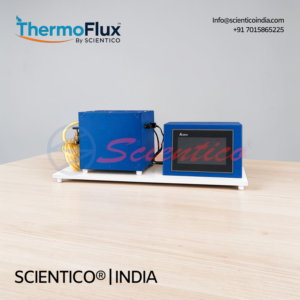
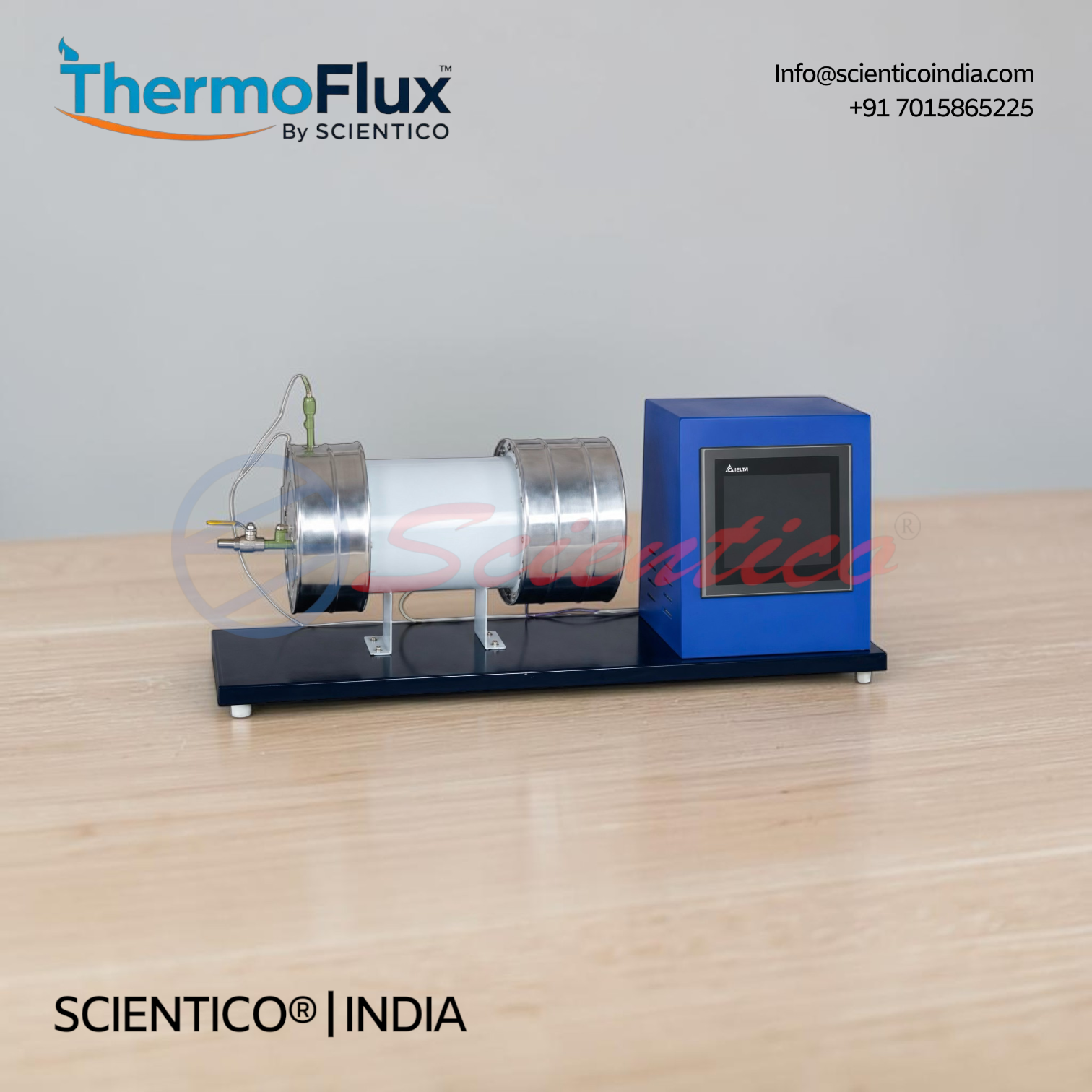
- HMI touchscreen panel for easy usage and automated data logging
Q: How does the Thermal Conductivity of Metal Bar ThermoFlux-2908 ensure one-dimensional heat flow?
A: The test portion is well insulated with thermal insulation material on all lateral surfaces, ensuring heat flows primarily along the bar axis from the heated end to the heat sink, eliminating lateral heat loss.
Q: Why is water supply required at 2 liters per minute?
A: The heat sink requires constant water flow at 2 liters per minute to maintain a stable cold-end temperature, which is essential for accurate thermal conductivity measurement of the metal bar.
Q: How many thermocouples are used in the apparatus?
A: Multiple thermocouples are mounted along the length of the metal bar to measure temperature at respective positions, enabling accurate temperature gradient determination across the bar.
Q: Can the heater input be adjusted during experiments?
A: Yes, the dimmer stat allows variable adjustment of heat input, enabling experiments at different thermal loads to study the effect of input power on thermal conductivity of the metal bar.
Q: What is the purpose of the measuring flask and stop clock?
A: The measuring flask collects coolant water from the heat sink, while the stop clock records time intervals, allowing precise measurement of heat dissipation rate and thermal data collection for calculations.
Need Assistance? We're Here to Help!
Connect with our team for product specifications, pricing, and customized solutions for your institution or project.