🔎 Manufacturer-direct laboratory equipment enquiries - Request a model-specific international quotation →
✓ Established 1993 ✓ Model-Specific Specifications ✓ Manufacturer-Direct Enquiries ✓ International Quotations ✓ Destination-Based Delivery Terms

Turbo Jet Engine Test Bench

Model SCI-917

The Turbo Jet Engine Test Bench SCI-917 studies jet engine operation, specific thrust, and fuel-air ratio. This turbo jet engine test bench delivers 82 N maximum thrust at 117,000 RPM, features an electric starter and integrated fuel system, and records speed, temperature, pressure, and fuel consumption with USB PC transfer.

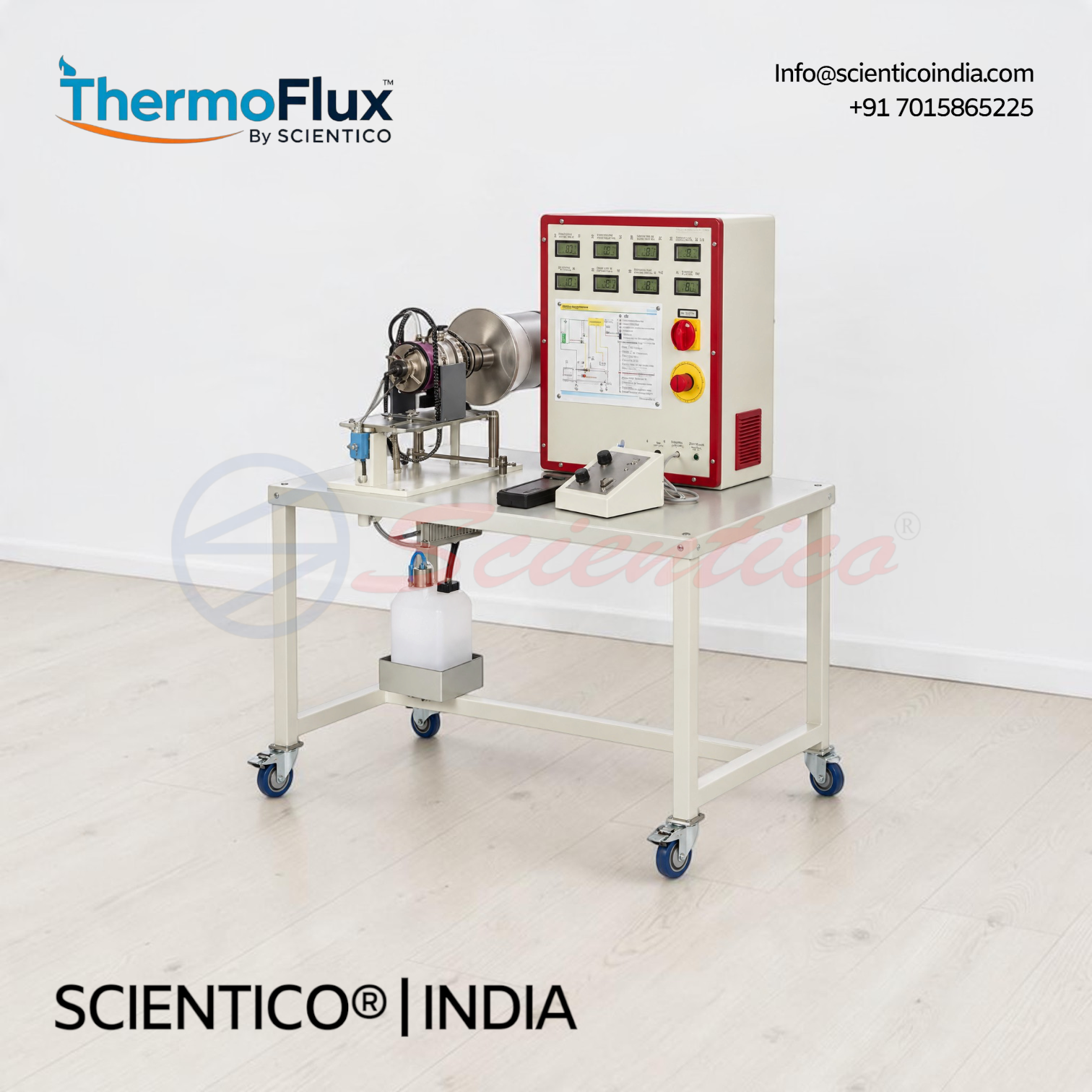
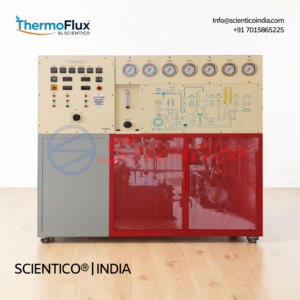
The Turbo Jet Engine Test Bench SCI-917 is an educational test bench for studying jet engine operation, thrust, and fuel-air ratio. This turbo jet engine test bench includes a compressor, annular combustion chamber, turbine, propelling nozzle, and integrated fuel and ignition systems.

Product Overview

The SCI-917 turbo jet engine test bench simulates an open cyclic process with ambient air intake. A single-stage radial compressor compresses air, which mixes with fuel and ignites in the annular combustion chamber. The turbine extracts energy to drive the compressor, and the nozzle expels gas to generate thrust. An electric starter enables automatic start-up. Maximum thrust is 82 N at 117,000 RPM. Real-time sensors record speed, temperature, pressure, and fuel consumption. Data displays digitally or transmits to PC via USB.

Turbo Jet Engine Test Bench SCI-917 — Technical Specifications

Parameter Value
Model No SCI-917
Maximum Thrust 82 N at 117,000 RPM
Speed Range 35,000 to 117,000 RPM
Maximum Fuel Consumption 22 L/h (full load)
Exhaust Gas Temperature 610°C
Sound Level 130 dB(A) at 1 m
Fuel Type Kerosene or petroleum with turbine oil
Starter Electric
Fuel Tank Capacity 5 L
Differential Pressure Range 0 to 150 mbar
Combustion Chamber Pressure Range 0 to 2.5 bar
Temperature Sensors 2 x 0 to 1200°C, 1 x 0 to 400°C
Speed Measurement Range 0 to 120,000 RPM
Fuel Consumption Measurement Range 0 to 25 L/h
Force Measurement Range 0 to ±200 N
Power Requirements 230V 50Hz 1 phase, 230V 60Hz 1 phase, 120V 60Hz 1 phase
Dimensions (L x W x H) 1200 x 900 x 330 mm
Weight Approximately 120 kg

Technical Data

Jet Engine:

  • Single-stage radial compressor
  • Annular combustion chamber
  • Turbine
  • Propelling nozzle
  • Electric starter with automatic start-up
  • Integrated fuel system and ignition system

Performance:

  • Maximum thrust: 82 N at 117,000 RPM
  • Speed range: 35,000 to 117,000 RPM
  • Maximum fuel consumption: 22 L/h at full load
  • Exhaust gas temperature: 610°C
  • Sound level: 130 dB(A) at 1 m

Fuel System:

  • Fuel type: kerosene or petroleum with turbine oil
  • Fuel tank capacity: 5 L

Measuring Ranges:

  • Differential pressure: 0 to 150 mbar
  • Combustion chamber pressure: 0 to 2.5 bar
  • Temperature: 2 x 0 to 1200°C, 1 x 0 to 400°C
  • Speed: 0 to 120,000 RPM
  • Fuel consumption: 0 to 25 L/h
  • Force: 0 to ±200 N

Electrical and Physical:

  • Power: 230V 50Hz 1 phase, 230V 60Hz 1 phase, or 120V 60Hz 1 phase
  • Dimensions: 1200 x 900 x 330 mm
  • Weight: approximately 120 kg

Key Features

  • Thrust Measurement: Maximum 82 N thrust at 117,000 RPM with force range 0 to ±200 N
  • Real-Time Monitoring: Speed, temperature, pressure, and fuel consumption sensors with digital display or USB PC transfer
  • Automatic Start-Up: Electric starter for smooth engine activation
  • Fuel-Air Analysis: Study of fuel-air ratio (lambda) and fuel consumption up to 22 L/h
  • Integrated Design: Compressor, combustion chamber, turbine, nozzle, and fuel system in one bench
  • Wide Speed Range: 35,000 to 117,000 RPM operating range

Experiments

  • Jet engine start-up procedures
  • Specific thrust measurement
  • Fuel-air ratio (lambda) analysis
  • Fuel consumption measurement
  • Speed and thrust relationship study
  • Exhaust gas temperature monitoring
  • Combustion chamber pressure analysis
  • Differential pressure measurement
  • Operational behavior study across speed range
  • Jet propulsion fundamentals demonstration

Construction and Design

The Turbo Jet Engine Test Bench SCI-917 integrates a single-stage radial compressor, annular combustion chamber, turbine, and propelling nozzle on one bench. A fully integrated fuel system supplies kerosene or petroleum with turbine oil from a 5 L tank. The starter and ignition system activate the engine electrically. Measurement and control equipment track speed, temperature, pressure, and force. The bench measures 1200 x 900 x 330 mm and weighs approximately 120 kg.

Software

Data acquisition software for real-time recording of speed, temperature, and mass flow, with digital display or USB transfer to PC for advanced analysis.

Scope of Delivery

  • 1 Turbo jet engine test bench with integrated fuel, starter, and ignition systems
  • 1 Measurement and control equipment set
  • 1 Instruction manual

Q: What is the maximum thrust of the Turbo Jet Engine Test Bench SCI-917?
A: The bench produces maximum thrust of 82 N at 117,000 RPM.

Q: What fuel does the Turbo Jet Engine Test Bench SCI-917 use?
A: It runs on kerosene or petroleum mixed with turbine oil, with a 5 L fuel tank.

Q: What power supply does the Turbo Jet Engine Test Bench SCI-917 require?
A: It supports 230V 50Hz 1 phase, 230V 60Hz 1 phase, or 120V 60Hz 1 phase.

Q: How is data recorded on the Turbo Jet Engine Test Bench SCI-917?
A: Sensors record speed, temperature, pressure, and fuel consumption. Data displays digitally or transfers to a PC via USB.

Need Assistance? We're Here to Help!

Connect with our team for product specifications, pricing, and customized solutions for your institution or project.
Trade enquiries

Distributors, dealers, resellers and bulk buyers

We manufacture Turbo Jet Engine Test Bench | SCI-917 at our own works in Ambala, India. Manufacturer-direct, three ways to work with us.

01

Become a distributor, dealer or agent in your territory

Already selling to colleges or hospitals in your market? Add a manufacturer-direct line. Terms reviewed on application.

or message on WhatsApp
02

Wholesale and bulk quotation

Holding a live enquiry? Send the model, quantity, destination and required Incoterm. We will confirm the supplied scope and available export documents.

or message on WhatsApp
03

OEM authorisation letter for a tender

Bidding a tender that requests a manufacturer authorisation form (MAF)? Send the tender reference, deadline and listed equipment so we can confirm what can be issued.

or message on WhatsApp

Full distributor guide OEM and export enquiries

Thermodynamics Lab EquipmentModel SCI-917
🏭
Manufacturer DirectProduct-specific enquiry, not a generic catalogue
🌍
Destination MatchedConfiguration and delivery scope reviewed together
📄
Decision-Ready ReplyApplicable documentation confirmed before ordering
Product-specific enquiry

Get a quotation your team can evaluate

A bare price can hide configuration, accessories, voltage, documentation and delivery assumptions. Send the product and destination now so the quoted scope can be reviewed before a purchase decision.

Avoid the mismatchDo not approve a generic price that leaves supplied scope unclear.
Your product is attachedNo need to retype the model or copy the page URL.
Move toward an approvable quoteAdd the destination; quantity and tender details can follow.

No account is required. Organisation, quantity and tender details are optional. Include the country code so the team can reach you internationally.

1993
Manufacturing Since
Direct
Manufacturer Supply
Quote-based
International Orders
Model
SCI-917

Overview

The Turbo Jet Engine Test Bench SCI-917 is an educational test bench for studying jet engine operation, thrust, and fuel-air ratio. This turbo jet engine test bench includes a compressor, annular combustion chamber, turbine, propelling nozzle, and integrated fuel and ignition systems.

Product Overview

The SCI-917 turbo jet engine test bench simulates an open cyclic process with ambient air intake. A single-stage radial compressor compresses air, which mixes with fuel and ignites in the annular combustion chamber. The turbine extracts energy to drive the compressor, and the nozzle expels gas to generate thrust. An electric starter enables automatic start-up. Maximum thrust is 82 N at 117,000 RPM. Real-time sensors record speed, temperature, pressure, and fuel consumption. Data displays digitally or transmits to PC via USB.

Key Features

Key Features

  • Thrust Measurement: Maximum 82 N thrust at 117,000 RPM with force range 0 to ±200 N
  • Real-Time Monitoring: Speed, temperature, pressure, and fuel consumption sensors with digital display or USB PC transfer
  • Automatic Start-Up: Electric starter for smooth engine activation
  • Fuel-Air Analysis: Study of fuel-air ratio (lambda) and fuel consumption up to 22 L/h
  • Integrated Design: Compressor, combustion chamber, turbine, nozzle, and fuel system in one bench
  • Wide Speed Range: 35,000 to 117,000 RPM operating range

Experiments

  • Jet engine start-up procedures
  • Specific thrust measurement
  • Fuel-air ratio (lambda) analysis
  • Fuel consumption measurement
  • Speed and thrust relationship study
  • Exhaust gas temperature monitoring
  • Combustion chamber pressure analysis
  • Differential pressure measurement
  • Operational behavior study across speed range
  • Jet propulsion fundamentals demonstration

Construction and Design

The Turbo Jet Engine Test Bench SCI-917 integrates a single-stage radial compressor, annular combustion chamber, turbine, and propelling nozzle on one bench. A fully integrated fuel system supplies kerosene or petroleum with turbine oil from a 5 L tank. The starter and ignition system activate the engine electrically. Measurement and control equipment track speed, temperature, pressure, and force. The bench measures 1200 x 900 x 330 mm and weighs approximately 120 kg.

Software

Data acquisition software for real-time recording of speed, temperature, and mass flow, with digital display or USB transfer to PC for advanced analysis.

Scope of Delivery

  • 1 Turbo jet engine test bench with integrated fuel, starter, and ignition systems
  • 1 Measurement and control equipment set
  • 1 Instruction manual

Specifications

Turbo Jet Engine Test Bench SCI-917 — Technical Specifications

Parameter Value
Model No SCI-917
Maximum Thrust 82 N at 117,000 RPM
Speed Range 35,000 to 117,000 RPM
Maximum Fuel Consumption 22 L/h (full load)
Exhaust Gas Temperature 610°C
Sound Level 130 dB(A) at 1 m
Fuel Type Kerosene or petroleum with turbine oil
Starter Electric
Fuel Tank Capacity 5 L
Differential Pressure Range 0 to 150 mbar
Combustion Chamber Pressure Range 0 to 2.5 bar
Temperature Sensors 2 x 0 to 1200°C, 1 x 0 to 400°C
Speed Measurement Range 0 to 120,000 RPM
Fuel Consumption Measurement Range 0 to 25 L/h
Force Measurement Range 0 to ±200 N
Power Requirements 230V 50Hz 1 phase, 230V 60Hz 1 phase, 120V 60Hz 1 phase
Dimensions (L x W x H) 1200 x 900 x 330 mm
Weight Approximately 120 kg

Technical Data

Jet Engine:

  • Single-stage radial compressor
  • Annular combustion chamber
  • Turbine
  • Propelling nozzle
  • Electric starter with automatic start-up
  • Integrated fuel system and ignition system

Performance:

  • Maximum thrust: 82 N at 117,000 RPM
  • Speed range: 35,000 to 117,000 RPM
  • Maximum fuel consumption: 22 L/h at full load
  • Exhaust gas temperature: 610°C
  • Sound level: 130 dB(A) at 1 m

Fuel System:

  • Fuel type: kerosene or petroleum with turbine oil
  • Fuel tank capacity: 5 L

Measuring Ranges:

  • Differential pressure: 0 to 150 mbar
  • Combustion chamber pressure: 0 to 2.5 bar
  • Temperature: 2 x 0 to 1200°C, 1 x 0 to 400°C
  • Speed: 0 to 120,000 RPM
  • Fuel consumption: 0 to 25 L/h
  • Force: 0 to ±200 N

Electrical and Physical:

  • Power: 230V 50Hz 1 phase, 230V 60Hz 1 phase, or 120V 60Hz 1 phase
  • Dimensions: 1200 x 900 x 330 mm
  • Weight: approximately 120 kg

Buying Turbo Jet Engine Test Bench: Distributor & Tender Guidance

Turbo Jet Engine Test Bench is the product name procurement teams should use when searching, preparing a BOQ or comparing suppliers. A model reference identifies the proposed configuration; it should not replace the product name or the buyer’s required experiment. This equipment is considered for thermal-engineering teaching where learners measure heat, temperature, pressure, work, efficiency or energy balance.

What to include in the RFQ

State the product name, quantity, destination, curriculum or tender reference, and heat source, measurement points, operating range, instrumentation, utilities, safety provisions and experiment list. This lets the technical team respond against the intended use rather than guess from a model code.

How distributors should quote it

Keep Turbo Jet Engine Test Bench as the BOQ line item. Add the proposed model, included accessories, documentation, packing and delivery basis as separate fields so the end buyer can verify the offer.

How to compare suppliers

Ask every bidder to state the measurable parameters, operating conditions and included instruments against the same syllabus outcome. Record exclusions and alternatives in writing before commercial comparison.

Why Buy From Scientico

🏭

In-House Manufacturer

Designed & built in our Ambala facility since 1993 — not a reseller. Full control over quality & customisation.

✅

Configuration Review

Specifications, documentation and options are confirmed against the selected model.

🌏

International Enquiries

Share your destination and procurement requirements for an export quotation.

📦

Quote-Based Supply

Send the model, quantity and delivery location for a tailored proposal.

🛠

Support Scope

Support and warranty terms are documented in the applicable quotation.

🎓

Built for Teaching

Designed around curriculum experiments with clear, repeatable, hands-on results.

Frequently Asked Questions

Q: What is the maximum thrust of the Turbo Jet Engine Test Bench SCI-917? A: The bench produces maximum thrust of 82 N at 117,000 RPM.

Q: What fuel does the Turbo Jet Engine Test Bench SCI-917 use? A: It runs on kerosene or petroleum mixed with turbine oil, with a 5 L fuel tank.

Q: What power supply does the Turbo Jet Engine Test Bench SCI-917 require? A: It supports 230V 50Hz 1 phase, 230V 60Hz 1 phase, or 120V 60Hz 1 phase.

Q: How is data recorded on the Turbo Jet Engine Test Bench SCI-917? A: Sensors record speed, temperature, pressure, and fuel consumption. Data displays digitally or transfers to a PC via USB.

Related Guides & Resources

In-depth guides from Scientico on Thermodynamics lab setup, experiments and procurement.

Turbo Jet Engine Test Bench | SCI-917

Related Laboratory Equipment

Explore related apparatus in this equipment range. Request a model-specific international quotation.

Tray Dryer | ThermoFlux – 7101, model-specific lab equipment manufactured by Scientico IndiaTray Dryer | ThermoFlux – 7101Two Shaft Gas Turbine Study Apparatus  | ThermoFlux – 7087, model-specific lab equipment manufactured by Scientico IndiaTwo Shaft Gas Turbine Study Apparatus | ThermoFlux – 7087Thermoelectric Engine | ThermoFlux – 7085, model-specific lab equipment manufactured by Scientico IndiaThermoelectric Engine | ThermoFlux – 7085Two Stage Air Compressor | ThermoFlux – 7092, model-specific lab equipment manufactured by Scientico IndiaTwo Stage Air Compressor | ThermoFlux – 7092Thermal Expansion Apparatus | ThermoFlux-26, Scientico IndiaThermal Expansion Apparatus | ThermoFlux-26Unsteady State Heat Transfer | ThermoFlux – 7096, model-specific lab equipment manufactured by Scientico IndiaUnsteady State Heat Transfer | ThermoFlux – 7096Thermal Conductivity of Metal Bar _ ThermoFlux-2908Thermal Conductivity of Metal Bar | ThermoFlux-2908Unsteady State Heat Transfer Module | ThermoFlux – 7049/5, Scientico IndiaUnsteady State Heat Transfer Module | ThermoFlux – 7049/5
📄 Download Datasheet

Get the product datasheet

Share your details to open the complete datasheet, then print or save it as a PDF.

Turbo Jet Engine Test Bench | SCI-917