
Equipment mentioned in this guide
Review the product information, specifications and model before requesting a quotation.
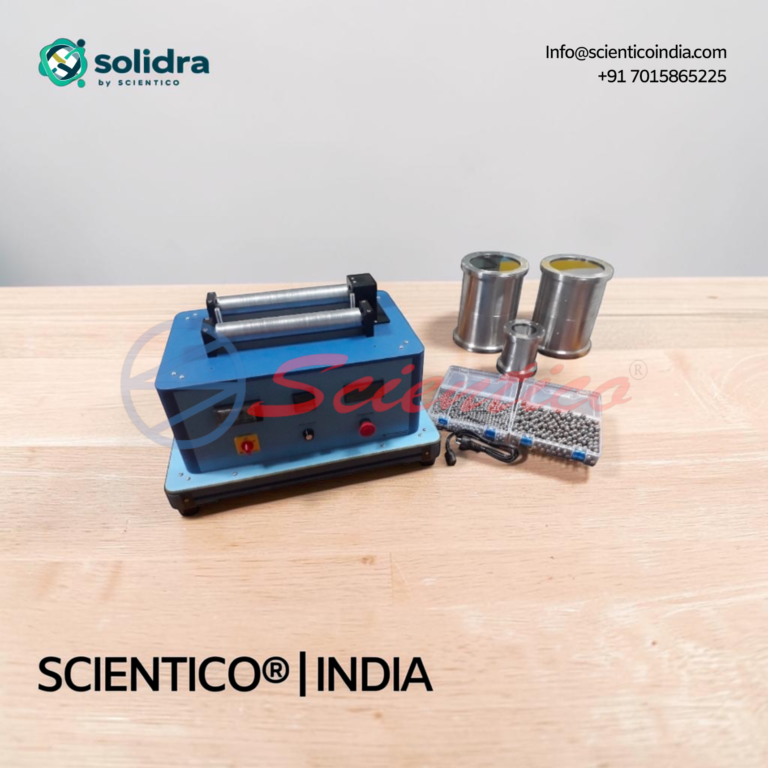
Ball Mill | Solidra – 02
The Ball Mill Solidra - 02 is a form of mill with grinding bodies, featuring drums that open at the front for loading material and milling balls. This Ball Mill uses drums mounted on a drive roller and a loose roller with adjustable spacing between the axles. It demonstrates cascade and cataract motion states, observable through transparent drum fronts.
View product detailsSize reduction equipment for pharmacy and process teaching laboratories
Size reduction is one of the few unit operations that a pharmacy student meets in theory, in the practical lab, and again in a viva. It is also one of the operations where colleges buy badly. The usual pattern is a purchase list carrying two words, “grinder” and “sieve set”, and a committee that discovers at the demonstration stage that the machine bought cannot show the mechanism the syllabus asks the student to describe.
I have been building and exporting teaching equipment since 1993, and I have sat through enough specification meetings to know where the money goes wrong. This page is written for the person who has to produce a defensible purchase list or tender schedule for size reduction, whether they buy from us or from anybody else.
Why particle size is taught as its own topic
Particle size governs how a powder behaves at nearly every later stage of a pharmaceutics course: flow through a hopper, mixing and the tendency to segregate, dissolution surface area, content uniformity in a blend, and the feel of a dispersed system. The syllabus teaches size reduction first, then size separation, then size analysis, because those three sit together as one chain of reasoning.
So a teaching lab is not buying a mill to produce powder. It is buying a mill so a student can see a mechanism, change one variable, and measure what changed. That single sentence should drive every line of the specification. A sealed industrial grinder that produces perfect powder behind a steel shroud teaches almost nothing.
The four mechanisms a student has to be able to name
| Mechanism | What happens to the particle | Materials it suits | Typical teaching mill |
|---|---|---|---|
| Impact | A fast moving surface or another particle strikes the solid and fractures it | Brittle, crystalline, friable solids | Hammer mill, ball mill |
| Attrition | Rubbing and abrasion between two surfaces, or between particle and surface | Softer, abrasive or sticky solids | Ball mill, colloid mill |
| Cutting | A sharp edge shears the material rather than shattering it | Tough, fibrous, plant and polymer material | Cutter mill |
| Compression | Slow crushing between two converging surfaces | Hard and moderately hard solids, coarse work | Roller mill, end runner and edge runner mill |
Most real mills combine two of these. A hammer mill is impact with a good deal of attrition against the screen. A ball mill is impact when the media cataracts and attrition when it cascades, which is exactly why the speed variable matters in the practical. Say this openly in the lab manual rather than pretending each machine is a pure case.
The central comparison: which mill demonstrates what
This is the table that most departments actually need, and the reason this page exists. Read the last two columns together, because the honest question is not what a mill can do but what a class of thirty can observe from it in a two hour slot.
| Mill | Mechanism shown | Suits | What the student observes and varies | How common in Indian teaching labs |
|---|---|---|---|---|
| Ball mill | Impact and attrition from tumbling media | Brittle solids, dry batch work, small quantities | Effect of drum speed, media size and media loading on the fineness produced; the idea of an optimum speed below which the charge only slides and above which it centrifuges | Very common. Usually the first mill on the list |
| Hammer mill | Impact against swinging or fixed beaters, with attrition at the screen | Brittle and crystalline solids, dried granules | Effect of screen aperture and rotor speed on product fineness; heat generation on continued running | Very common. The workhorse demonstration |
| Cutter mill | Cutting between rotating and stationary knives | Tough, fibrous and resilient material such as dried plant matter | Why a fibrous material that a hammer mill only flattens is reduced cleanly by a knife edge | Common in pharmacognosy and pharmaceutics labs |
| Colloid mill | High shear in the narrow gap between a rotor and a stator, in the wet state | Suspensions, emulsions, coarse dispersions | Effect of gap setting and number of passes on the coarseness of a dispersion; wet milling as a different problem from dry milling | Reasonably common, and rising. It appears on enquiry lists more often than it used to |
| Fluid energy or jet mill | Inter-particle impact and attrition in a high velocity gas stream, with inbuilt classification | Heat sensitive and hard materials where very fine sizes are wanted | Milling with no moving contact part; that fine particles leave and coarse ones recirculate; the role of the collector | Least common of the six. Bought as a demonstration unit, and it needs a compressed air supply |
| Roller mill | Compression, with some shear where roll speeds differ | Ointment and paste bases, coarse crushing depending on the design | The effect of roll gap and roll speed differential | Occasional. The triple roller mill for semisolids is the version most labs actually own |
| End runner and edge runner mill | Crushing and shearing under a heavy pestle or stone wheels | Classic small scale trituration and paste work | The mechanised version of mortar and pestle work, and why it is slow | Bought for syllabus completeness rather than throughput |
Two honest notes on that table. First, the fluid energy mill is the item most often written into a list and least often used after the first year, because the compressed air supply, the drying of that air, and the fines collector are all separate purchases that nobody costed. Confirm your compressed air point before you specify one. Second, a colloid mill is easier to live with than its reputation suggests, since it needs only power, a stand, and a drain, but the rotor and stator are wear parts and should be budgeted as such.
Where the milling section sits inside the wider department list, work from the programme pages rather than from a mill catalogue. The B Pharm laboratory equipment list shows how the pharmaceutics bench connects to pharmaceutical chemistry and pharmacology, and the D Pharm diploma equipment guide carries a lighter version of the same chain for a two year programme. Pharmacy education in India is regulated by the Pharmacy Council of India, and colleges are inspected against the current regulations and syllabus, so confirm the item list, quantities and any area requirement against the current PCI norms and syllabus for your programme rather than against any supplier list, ours included.
Chemical engineering departments teach the same operation from a different direction, with crushing and grinding energy laws and screen effectiveness. If your institution runs both, the chemical engineering lab equipment list is worth reading beside this page, because a shared ball mill and sieve shaker between two departments is a common and sensible arrangement. Mechanical departments occasionally hold the same sieve sets for soil and aggregate work, which is covered in the mechanical engineering equipment guide.
What to specify for a teaching unit, line by line
Below is the structure I would use for a tender schedule. Write each line as a requirement with a verifiable answer, not as a preference.
| Specification line | What to write | Why it matters in a teaching lab |
|---|---|---|
| Construction and contact parts | State the material of every part that touches the charge, and the finish. Ask for a declaration of contact materials in the offer | Stainless contact parts are easier to clean and easier to defend at inspection. Mild steel painted parts corrode where students wash them |
| Drive and speed control | State the drive arrangement, the supply, and whether speed is fixed, stepped by pulley, or variable by drive | If the practical asks the student to study the effect of speed, a fixed speed machine cannot run the experiment. This is the single most common specification failure I see |
| Speed indication | Ask for a speed readout or a defined method of measuring speed | A student who cannot read the speed cannot plot anything against it |
| Feed arrangement | Hopper or charging port, its opening size, and whether it can be closed while running | An open throat on a running impact mill is both a dust source and a hazard |
| Discharge and collection | Collection vessel, how it seals, and how it is removed | Product lost to the floor is product the student cannot weigh |
| Screen or gap | Screens supplied with the unit, their apertures, and how they are changed. For a colloid mill, the gap adjustment and its indication | The variable being studied must be adjustable by a student without a workshop |
| Guarding and interlocks | Fixed guards over drives, an interlock on any hinged access, an emergency stop, a lockable isolator, motor overload protection and earthing | Students operate these machines. The guarding standard should be higher than in a works, not lower |
| Visibility of the mechanism | Ask for a viewing window, a transparent jar or lid, or a design where the action is visible with the guard closed | This is the difference between a teaching mill and a production mill. Say it explicitly or you will not get it |
| Dismantling for cleaning | Which parts come off without tools, which need tools, and whether the tools are supplied | A mill that takes forty minutes to strip will be cleaned badly between batches |
| Noise | Ask the supplier to state the expected noise character and recommend mounting | Ball mills with steel media and hammer mills are loud. A jet mill brings compressor noise as well |
| Documentation | Operating manual, wiring diagram, spare parts list with part numbers, and the test certificate issued with the unit | Accreditation files are built from documents, not from machines |
On certificates, be precise in the tender wording so bids are comparable. We are an ISO 9001:2015 certified manufacturer and we issue factory calibration certificates with instruments. We are not ISO/IEC 17025 or NABL accredited, and a factory certificate is not a NABL certificate. If your file needs accredited calibration, write that as a separate line item so every bidder prices the same thing. Our position on this is set out on the quality certifications page, and the wider question of how to test a supplier’s claims is covered in the guide to evaluating a lab equipment manufacturer.
One boundary worth stating in the purchase note itself. Everything described here is education and demonstration equipment. Production scale milling and GMP qualified equipment for manufacturing a medicinal product is a different category with a different validation and documentation burden, and a teaching mill should never be described in a college file as suitable for it.
Dust and containment
Dry size reduction generates dust. That is not a caveat, it is the operation. A lab that installs milling equipment without deciding where the dust goes will have a nuisance problem within a term and a housekeeping finding at inspection.
Treat containment as a specification item with three parts.
| Requirement | Equipment feature to specify |
|---|---|
| Contain at source | Dust tight joints and gaskets on the milling chamber, a closable feed port, a sealed collection vessel rather than an open pan |
| Extract what escapes | An extraction spigot of a stated diameter on the machine, or siting the unit inside a fume or dust extraction hood. For a fluid energy mill, a cyclone and bag or cartridge collector sized for the air volume |
| Provide for the operator | Personal protective equipment as a stores line: eye protection, dust masks, gloves and hearing protection held in the lab and replaced on a schedule |
The failure I see most often is that the extraction spigot exists on the machine and nothing was ever connected to it, because the ducting and the fan were in a different budget head. Put the extraction system in the same requisition as the mill. The new lab setup checklist sets out the civil and services items that have to be ready before equipment arrives, and services are where milling installations slip.
The evaluation equipment that has to be bought alongside
A mill without a means of measuring the result is a demonstration, not an experiment. The syllabus pairs size reduction with size separation and size analysis for that reason, and the purchase list should follow.
| Item | Role in the practical | Specification points |
|---|---|---|
| Test sieve set | Separates the milled product into fractions by aperture | Frame diameter and material, the aperture series wanted, and the standard the sieves are made to. State the standard and the designations you want rather than only mesh numbers |
| Sieve shaker | Applies reproducible agitation so results are comparable between student groups | Number of sieves the nest accepts, clamping arrangement, timer, and the type of motion. A timer is not optional if two groups are to compare results |
| Analytical or precision balance | Weighs the fraction retained on each sieve | Readability appropriate to the sample mass, draught shield, and a calibration record |
| Sieve brushes, receivers and lids | Recovery and cleaning between samples | Soft brush for fine apertures. Wire brushes destroy fine cloth |
The exercise the student writes up is straightforward: mill a sample, nest the sieves in order, shake for a fixed time, weigh what each sieve retains, and express the result as a distribution. The teaching value comes from repeating it after changing one milling variable. That is why the mill, the shaker and the balance have to be bought together and why splitting them across two financial years produces a lab that can mill but cannot measure.
Sieve designations and tolerances come from published standards, and quoting the standard in your purchase order removes an argument at inspection time. The reference page on IS and ASTM standards for laboratory testing lists the families most often cited in Indian college tenders, and the accreditation documentation guide covers how equipment records are usually presented.
Recurring costs nobody puts in the first requisition
Milling equipment has genuine consumables. If the first purchase order is the only order the department is allowed to place for three years, the mill will be out of action by year two.
| Wear item | On which mill | Why it goes |
|---|---|---|
| Screens and perforated plates | Hammer mill, cutter mill | Aperture wear and blinding, plus damage from tramp material. Departments also want extra apertures to run the experiment properly |
| Beaters, hammers and knives | Hammer mill, cutter mill | Edges dull and the product coarsens without anyone noticing. Knives need sharpening or replacement |
| Liners and grinding media | Ball mill | Media wear down and shed, and liners abrade. Media are also lost during charging and discharging by students |
| Rotor and stator | Colloid mill | The working surfaces define the gap. Once worn, the gap setting stops meaning anything |
| Gaskets, seals and clamps | All | They are what makes the machine dust tight, and they perish |
| Drive belts and bearings | All belt driven mills | Ordinary rotating plant wear |
| Sieve cloth and frames | Sieve set | Fine cloth is fragile and is usually damaged by cleaning rather than by use |
| Air line filters and dryer elements | Fluid energy mill | Wet or dirty air ruins the run and the sample |
Two practical points. Ask for the spare parts list with part numbers at the quotation stage, not after commissioning, and check that the supplier will sell single wear parts rather than assemblies. The page on spare parts and after sales support sets out what a serious supply arrangement should include. Then put the wear parts into the annual maintenance plan rather than treating each failure as an emergency purchase, using the calibration and maintenance schedule guide as the format, and reflect the consumable spend in the departmental estimate through the budget planning guide by intake.
Writing the tender line so bids are comparable
Most disputes over milling equipment start with a one line specification and end with three offers that cannot be compared. Write the schedule so that each bidder answers the same questions: mechanism, contact materials, drive and speed range, speed indication, screens or gap adjustment supplied, guarding and interlocks, extraction connection, dismantling arrangement, documents supplied, and the wear parts list with prices.
The method for turning that into tender language is in the guide on writing lab equipment specifications, and the surrounding paperwork for a government college purchase is in the tender documents checklist. If your tender asks for a manufacturer authorisation, the MAF explainer covers what that form is and who can sign it. Buyers outside India ordering this class of equipment will find the practical sequence in the guide to sourcing lab equipment from India, and current catalogue material sits on the downloads page.
How I would sequence the purchase
If the budget cannot take everything at once, buy in this order. First the hammer mill or the ball mill, whichever your practical manual leans on, together with the sieve set, the shaker and the balance, because that combination completes one full experiment. Second the cutter mill, which adds little in the abstract but does let the pharmacognosy side of the department work on fibrous material. Third the colloid mill, which brings wet milling into the course. Last the fluid energy mill, and only after the compressed air supply exists and has been costed with its dryer and collector.
Whatever the order, buy the extraction and the guarding with the first machine rather than after the first inspection comment. Those two are the items that decide whether students are allowed to operate the equipment at all, and a mill that only staff may switch on has already lost most of its teaching value.
We manufacture this class of teaching equipment at our own works in Ambala, Haryana, and supply to institutions in more than sixty countries, with CE conformity documentation available on applicable models. If you send the syllabus reference, your annual student intake, the electrical supply at the bench, and whether a compressed air point and an extraction duct already exist in the room, we will mark up your draft schedule against the range and tell you plainly which lines are worth buying now and which can wait a year. Send your requirement to our team and we will respond with a quotation and the supporting documents your file needs.
One honest ask
We don't gate anything on this site. You just read the whole thing free. If it was useful, leave your email and two things happen: we send you this page as a plain-text block you can paste into a tender file or an internal email, and we notify you the next time we publish a buyer tool like this one. Nothing else. No drip sequence, no sales calls booked without asking.