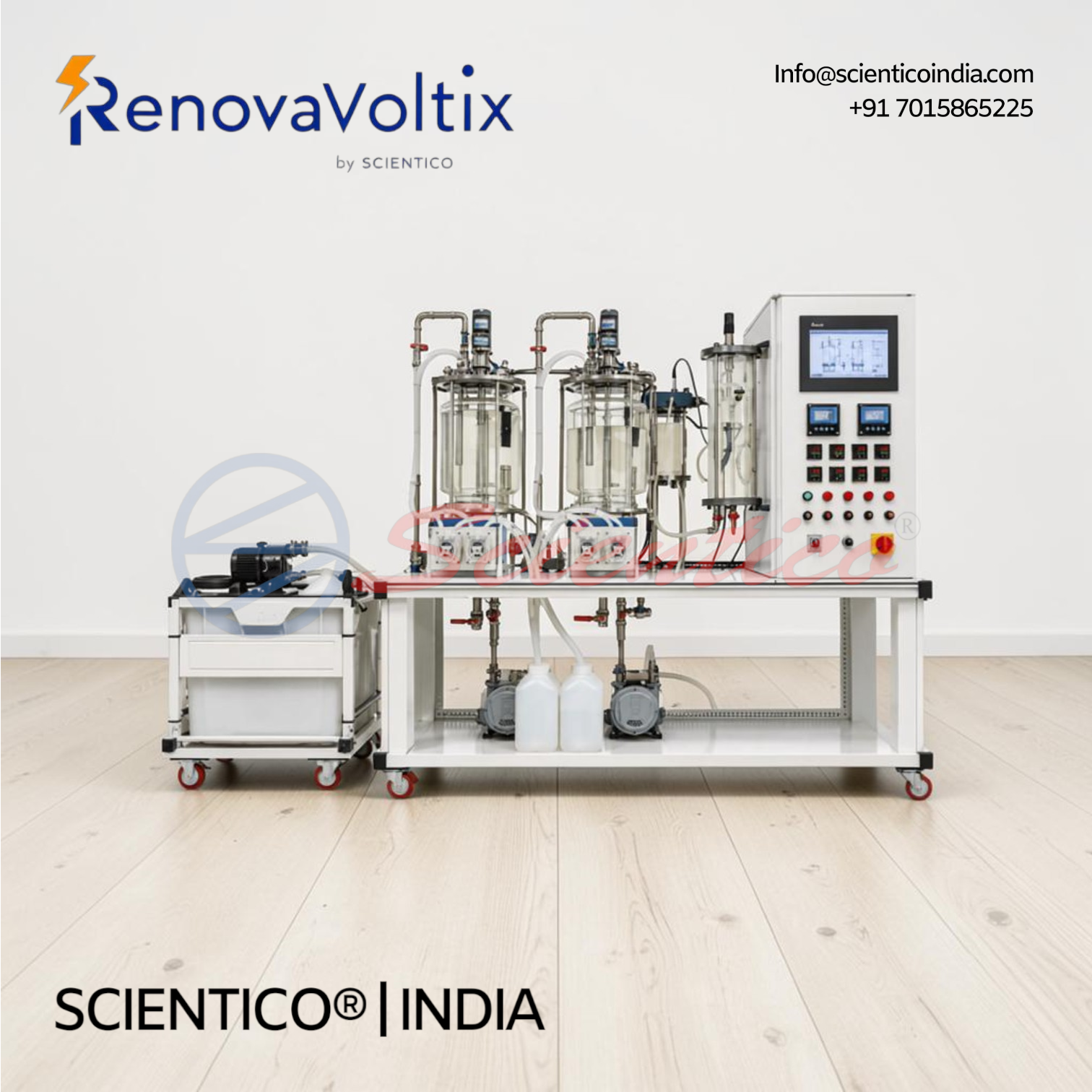
Biogas Process Trainer | RVX 127
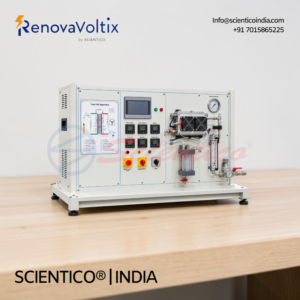
The Biogas Process Trainer RVX 127 demonstrates single-stage or two-stage anaerobic digestion for biogas production from biodegradable material. This biogas process trainer features dual 7.5L digesters with independent heating blankets (0 to 100°C), four peristaltic pumps for substrate and pH control, dual pH meters, and industrial-grade CH4 and CO2 sensors for biogas composition analysis. Volumetric tanks with water displacement measurement track gas generation.
The Biogas Process Trainer RVX 127 is an educational apparatus for studying anaerobic digestion and biogas generation through microbial breakdown of biodegradable material. This biogas process trainer enables investigation of single-stage or two-stage anaerobic digestion with temperature, pH, and biogas composition monitoring across psychrophilic, mesophilic, and thermophilic operating ranges.
Product Overview
The RVX 127 biogas process trainer includes two 7.5L packed anaerobic digesters with 25mm diameter bacto ball reactor packing and individual heating blankets with thermostats for temperature control from 0 to 100°C. Four peristaltic pumps manage substrate feed, acid addition, base addition, and inter-digester transfer through a 2L buffer tank. Two pH meters and temperature sensors monitor each digester stage. Biogas generated flows to two volumetric tanks measuring gas volume via water displacement. Industrial-grade methane (CH4) and carbon dioxide (CO2) sensors with 0 to 100% range analyze biogas composition. Electronic console displays temperature, pH, methane, and CO2 measurements. Acid and base storage vessels maintain pH control capability. Two 3L polyethylene vessels provide acid and base supply. Optional LABVIEW DAQ software transmits all sensor data to PC. Anodized aluminum structure with stainless steel metallic elements ensures durability.
Biogas Process Trainer RVX 127 — Technical Specifications
| Parameter | Value |
|---|---|
| Digester Tank Capacity | 7.5L each, 2 units |
| Reactor Packing | 25mm diameter bacto balls |
| Heating Blanket Temperature Range | 0 to 100°C |
| Peristaltic Pump Flow Range | 0 to 15 mL/min per pump |
| Peristaltic Pumps Total | 4 units |
| Buffer Tank Capacity | 2L |
| Acid/Base Vessel Capacity | 3L each, 2 units |
| Volumetric Tank Capacity | 3.2L each, 2 units |
| CH4 Sensor Range | 0 to 100% |
| CO2 Sensor Range | 0 to 100% |
| pH Meter Range | 0 to 14 |
| Temperature Sensor Type | K-type |
| Temperature Measurement Range | -100 to 400°C |
| Structure Material | Anodized aluminum with painted steel and HDF panels |
| Main Metallic Elements | Stainless steel |
Technical Data
Digesters:
- 2 glass tanks with hot water jacket circulation
- Capacity: 7.5L each
- Reactor packing: 25mm diameter bacto balls
- Heating blanket with thermostat per digester
- Temperature range: 0 to 100°C
- pH meter range: 0 to 14 per digester
- K-type temperature sensor per digester
Pumps:
- 2 peristaltic pumps for biological process feed, 0 to 15 mL/min range
- 2 peristaltic pumps for acid and base introduction, 0 to 15 mL/min range
- Calibration enables feeding flow measurement
Buffer and Storage Tanks:
- Intermediate buffer tank: 2L capacity
- Acid vessel: 3L high-density polyethylene
- Base vessel: 3L high-density polyethylene
- Volumetric tanks: 3.2L each (upper and lower positions), 2 units total
Sensors and Instrumentation:
- CH4 sensor: 0 to 100% range with digital display
- CO2 sensor: 0 to 100% range with digital display
- 2 pH meters: 0 to 14 range
- Multiple K-type temperature sensors
- Temperature measurement range: -100 to 400°C
- Industrial-grade CH4 and CO2 sensors
Electronic Console:
- Temperature digital displays
- CH4 and CO2 sensor digital displays
- Pump switches and controllers
- Heating blanket switches
- All cables and accessories for normal operation
Key Features
- Dual-Digester System: Biogas process trainer enables single-stage or two-stage anaerobic digestion with separate temperature and pH control
- Wide Temperature Control: Heating blankets allow operation across psychrophilic (room temperature), mesophilic (35°C), and thermophilic (55°C) ranges
- Four Peristaltic Pumps: Precise control of substrate feed, acid, base, and inter-digester transfer with calibration-based flow measurement
- Biogas Composition Analysis: Industrial-grade CH4 and CO2 sensors measure 0 to 100% concentration ranges
- Volumetric Gas Measurement: Two 3.2L volumetric tanks with water displacement measurement for biogas volume tracking
- Dual pH Control: Two independent pH meters enable pH optimization at each digestion stage
- Packed Reactor Design: 25mm bacto ball packing increases surface area for microbial attachment
- Buffer Tank Integration: 2L intermediate buffer tank manages excess flow from first digester stage
Experiments
- Anaerobic digestion stabilization process study
- Temperature effect on anaerobic digestion, biogas purification, and quality
- Feeding wastewater pH effect on anaerobic digestion and biogas composition
- Feeding rate influence on digestion, purification, and biogas quality
- Feeding wastewater type influence on digestion and biogas production
- Nutrient concentration effect on anaerobic digestion and biogas quality
- Hydraulic load effect on digestion, purification, and biogas quality
- Inhibitor influence on anaerobic digestion and biogas production
- Mesophilic versus thermophilic anaerobic digestion comparison
- Optimum operation temperature determination
- Optimum feeding rate determination
- Optimum solids and water ratio determination
- Degradable versus non-degradable solids ratio optimization
- Multistage anaerobic digestion nature investigation
- Kinetics determination
- Carbon balance calculation
- Solids balance calculation
- Biogas balance calculation
Construction and Design
The Biogas Process Trainer RVX 127 features anodized aluminum structure with painted steel and HDF panels. Two 7.5L glass digester tanks with hot water jacket circulation provide robust construction. Bacto ball reactor packing of 25mm diameter increases microbial surface area. Individual heating blankets with thermostat control temperature from 0 to 100°C independently per digester. Four peristaltic pumps deliver substrate, acid, base, and inter-stage transfer flows. Two independent pH meters and K-type temperature sensors monitor digestion parameters in each stage. Buffer tank collects excess flow from first digester when operating in two-stage mode. Volumetric tanks with water displacement measurement system track biogas generation. Industrial-grade CH4 and CO2 sensors mounted at volumetric tank outlet analyze biogas composition. Electronic console consolidates all temperature, pH, methane, and CO2 displays with pump and heating switches. Stainless steel metallic elements ensure chemical resistance.
Software
DAQ software in National Instruments LABVIEW environment (optional). Measures and calculates apparatus results. Runs on any Windows environment.
Scope of Delivery
- 1 Experimental unit
- 1 Instruction manual
Q: Can the Biogas Process Trainer RVX 127 operate in single-stage or two-stage mode?
A: Yes. The two 7.5L digesters enable single-stage operation in one digester or two-stage operation with hydrolysis and acidogenesis in the first digester and methanogenesis in the second digester.
Q: What temperature ranges does the Biogas Process Trainer RVX 127 support?
A: Independent heating blankets control temperature from 0 to 100°C, enabling psychrophilic (room temperature), mesophilic (35°C), and thermophilic (55°C) operating modes.
Q: How does the Biogas Process Trainer RVX 127 measure biogas composition?
A: Industrial-grade CH4 and CO2 sensors measure methane and carbon dioxide concentration at 0 to 100% ranges, with digital display on electronic console.
Q: What pH control capability does the Biogas Process Trainer RVX 127 provide?
A: Two independent pH meters with 0 to 14 range enable pH optimization in each digester stage. Two peristaltic pumps deliver acid and base from 3L storage vessels for precise control.
Q: How is biogas volume measured in the Biogas Process Trainer RVX 127?
A: Two 3.2L volumetric tanks employ water displacement measurement where biogas enters the upper chamber and displaced water collects in the lower chamber for volume tracking.
Need Assistance? We're Here to Help!
Connect with our team for product specifications, pricing, and customized solutions for your institution or project.