
I am Scientico Instruments and Chemicals, a manufacturer-direct lab equipment supplier in Lebanon shipping from Ambala, India since 1993. I sell to private universities in Beirut, to Lebanese University campuses, and to donor-funded rehabilitation projects run through the EU, AFD, USAID and the World Bank. the quoted configuration can include ISO 9001:2015 QC and CE conformity paperwork, invoiced in USD, delivered CIF Port of Beirut or CIF Port of Tripoli. No middleman markup, no European reseller layer, one engineer answering your emails from quote through commissioning.
Lebanon is not an easy market. I know that. Payment routing is harder than it was ten years ago, the private-university track and the public-tender track behave like two different countries, and donor projects have their own paperwork rhythm. What I offer is a straight line from a Lebanese buyer to the factory that actually built the equipment, priced in dollars, documented in English and French.
Equipment mentioned in this guide
Review the product information, specifications and model before requesting a quotation.
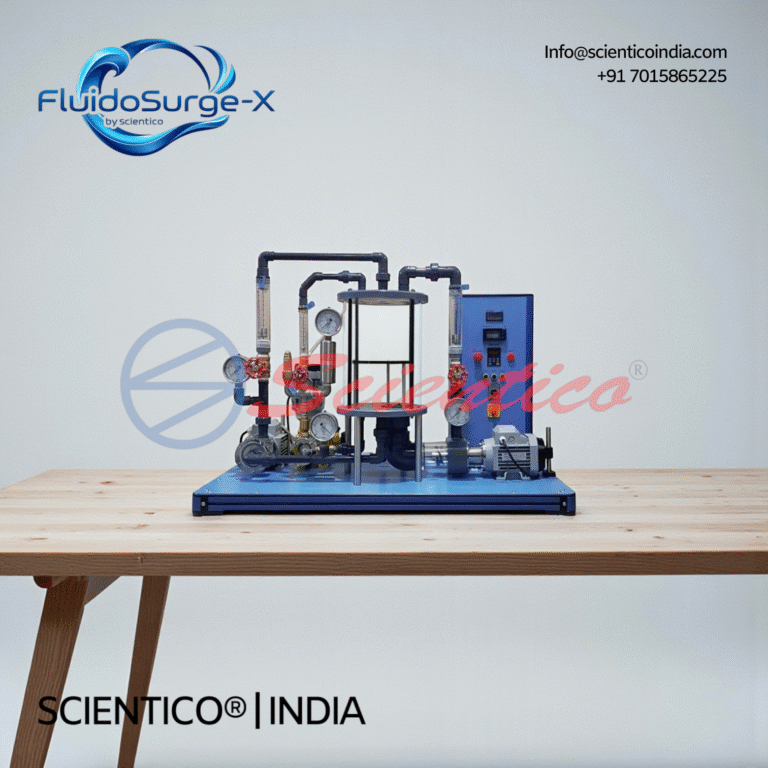
Multi Pump Test Rig Apparatus | FluidoSurge-X 294
The FluidoSurge X-294 is a multi pump test rig (series and parallel centrifugal pump test rig) that lets students run single, series and parallel pump configurations on one apparatus and compare the resulting head–discharge–efficiency characteristics.
View product details
Universal Hardness Tester
The Universal Hardness Tester manufactured by Scientico India combines Brinell, Vickers, and Rockwell hardness testing methods in a single machine. The machine uses interchangeable indenters and a built-in optical measuring system for Brinell/Vickers measurements, with direct-reading digital display for Rockwell hardness.
View product details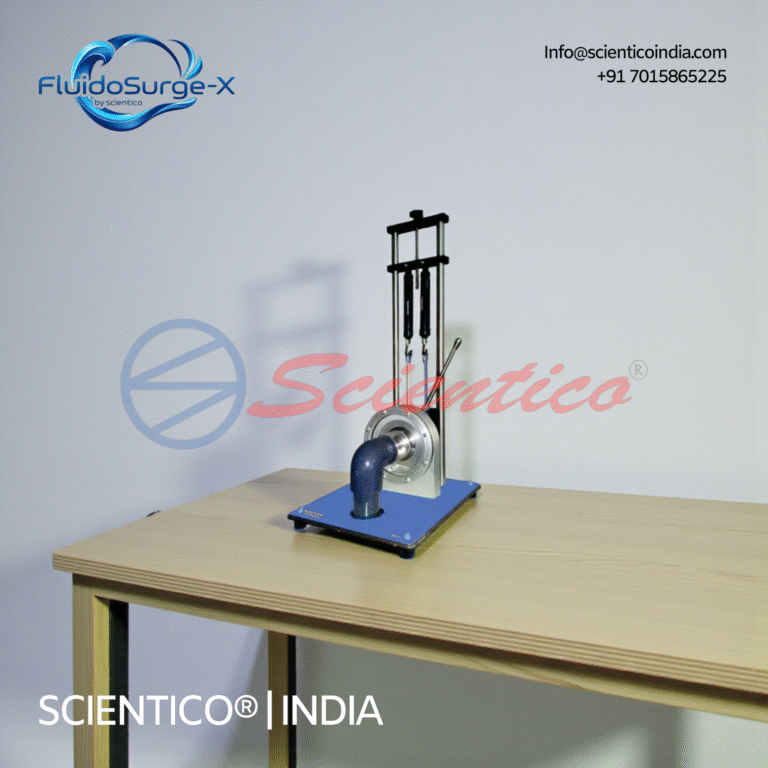
Kaplan Turbine Apparatus | FluidoSurgeX 208
The Kaplan Turbine Apparatus FluidoSurgeX 208 is a laboratory-scale training system designed to study the operating characteristics of a Kaplan reaction turbine. Manufactured by SCIENTICO, the apparatus demonstrates energy conversion from hydraulic power to mechanical power. It is suitable for instructional experiments in fluid mechanics and hydraulic machinery laboratories. The system operates using a controlled water supply from a hydraulic bench.
View product details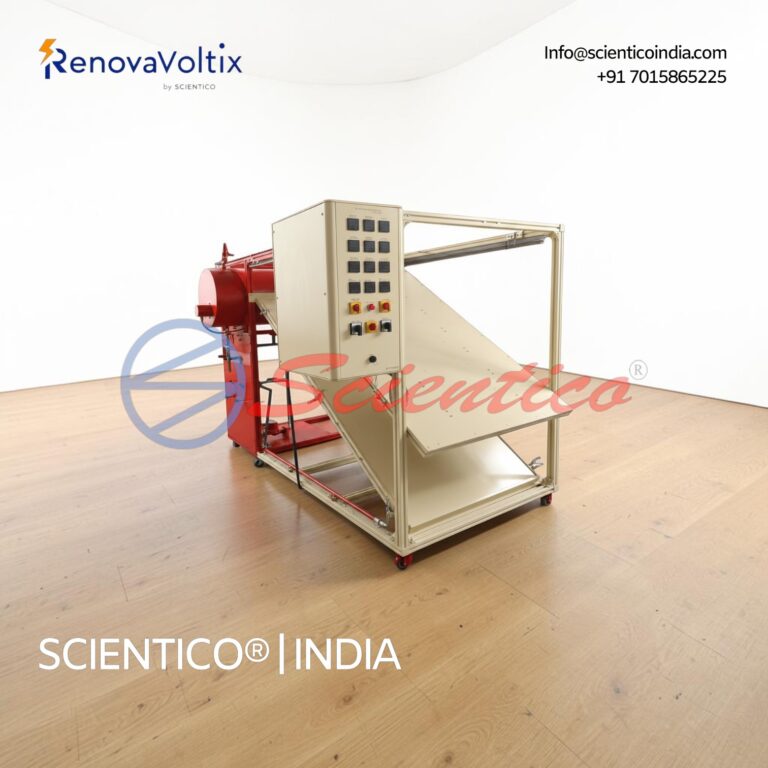
Solar Thermal Trainer | RVX-010
The Solar Thermal Trainer RVX-010 is a laboratory-based solar thermal training platform that demonstrates solar thermal heating of domestic water using both thermosiphon and forced pumping system configurations. It transforms solar energy into usable thermal energy using a high-power artificial solar simulator, enabling a full range of controlled indoor experiments. Product Overview The Solar Thermal Trainer RVX-010 consists of four core elements: a thermal solar collector, a storage tank, an artificial light source solar simulator, and a pumping system. The solar collector is mounted on an aluminium frame with copper tubes through which water flows, designed for maximum absorption efficiency. The accumulator tank is made from anti-corrosive material with an integrated heating element and safety device for over-temperature protection. The solar simulator uses lamps emitting radiation similar to sunlight, measured by a radiation sensor. Three lighting configurations are available: all lamps on, half the lamps on in a zig-zag pattern, or one lamp on. A pump provides forced convection of heat transfer fluid through the accumulator tank. The system supports both thermosiphon and forced pumping operation. Safety valves for overpressure protection are included. Sensors and meters record temperature, flow, and radiation. The unit is mounted on a metallic structure with wheels for mobility and features HDF panel construction with LED digital display instrumentation.
View product details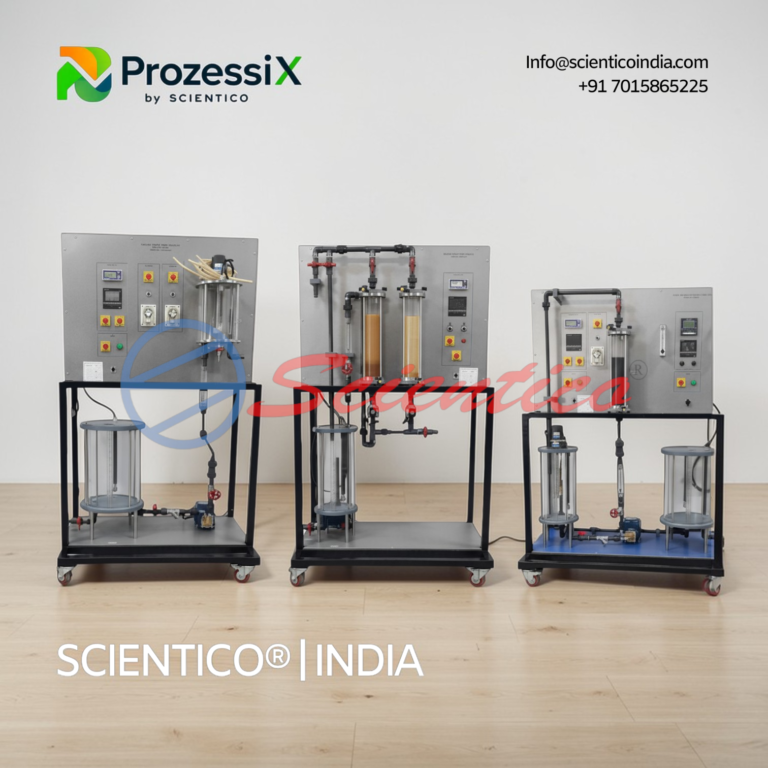
Analytical Process Control Trainer | ProzessiX PX-04
The Prozessix PX-04 is an analytical process control trainer for instrumentation and process engineering laboratories, giving students hands-on PID loop tuning across flow, level, temperature and pressure processes on a single bench.
View product details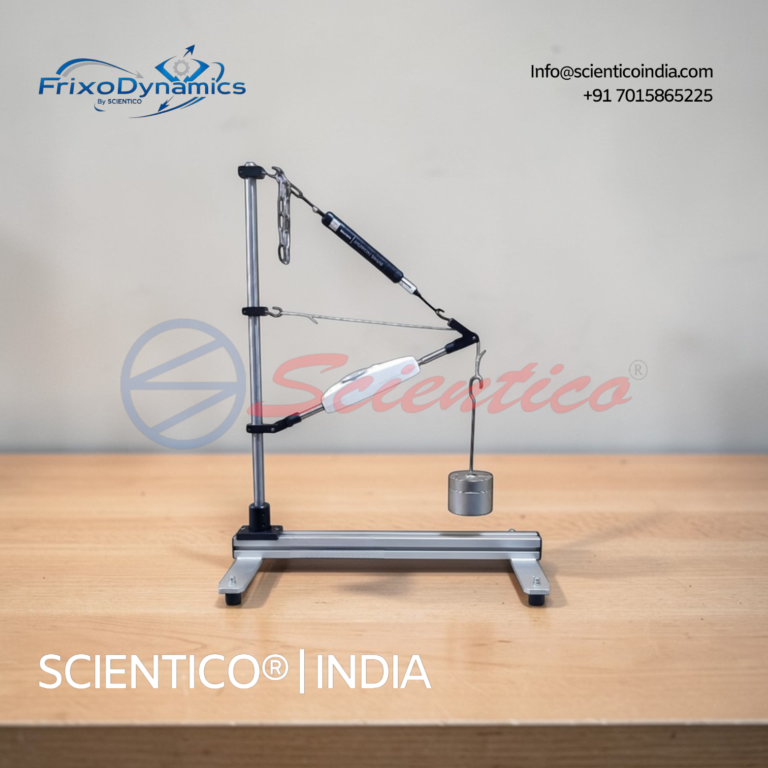
Forces in a Jib Crane Apparatus | FrixoDynamics FX-510
The SCIENTICO FrixoDynamics FX-510 Forces in a Jib Crane Apparatus is a wall-mounted experimental unit designed for the study of force distribution in a two-member jib crane structure. It enables students to measure compressive and tensile forces in the jib and tie members directly using an integrated force gauge and spring balance, and to compare those measured values against theoretical predictions derived from the triangle of forces and polygon of forces methods. The jib inclination and tie angle are adjustable, allowing a range of geometric configurations to be tested. Manufactured by SCIENTICO, the FX-510 is suitable for supply to engineering institutions and distributors worldwide.
View product detailsWhy Lebanon colleges import lab equipment from India
The math is simple. A CE-marked Indian-built universal testing machine or fluid mechanics bench lands in Beirut at roughly 40 to 55 percent of the European catalogue price for equivalent specification. That gap matters when a private university department is stretching a USD budget, and it matters more when a donor grant has a fixed ceiling and you need to equip a full lab rather than three benches. Indian manufacturing has closed the quality gap on teaching and research equipment in the last decade. What still separates the two markets is price, and that is not going away.
The second reason is English documentation. AUB, LAU, NDU and Balamand run their engineering and health-science programs in English. Manuals, lab sheets, calibration certificates and commissioning reports from Scientico are written in English by default, with French versions on request for USJ, USEK and Lebanese University departments that prefer francophone documentation. Third reason: one WhatsApp number, one engineer, one PO. You do not chase a European brand’s regional office in Dubai that then routes you to a distributor in Cyprus.
Equipment Scientico supplies to Lebanon
These are the categories where Lebanese demand is real and where I have units ready to quote:
- Fluid mechanics and hydraulics trainers for civil and mechanical engineering programs, FluidoSurge benches, pump test rigs, turbine apparatus.
- Strength of materials and civil testing equipment, universal testing machines, hardness testers, concrete cube presses. Heavy demand from Lebanese civil-engineering departments and materials labs.
- Renewable energy trainers, solar PV, solar thermal, wind. This category has moved fast in Lebanon since the grid collapse of 2021 forced every serious engineering program to teach off-grid systems.
- Thermodynamics and heat transfer trainers, ThermoFlux benches, heat exchangers, refrigeration units.
- Nursing lab equipment, simulation manikins, skill trainers, basic patient-care apparatus. High volume for nursing colleges expanding across Beirut and Tripoli.
- Pharmacy lab equipment, dissolution testers, tablet hardness testers, compounding stations. Ordered against MoPH-linked pharmacy program requirements.
Representative units buyers usually price first: the FluidoSurgeX multi-pump test rig, the FortiTestX universal hardness tester, the Kaplan turbine apparatus, the RVX solar thermal trainer, the ProZessix analytical process control trainer, and the FrixoDynamics jib crane apparatus.
Accreditation and regulators in Lebanon
Higher education in Lebanon is licensed and supervised by the Ministry of Education and Higher Education (MEHE) through the Directorate General of Higher Education (DGHE), with technical and vocational institutes under the Directorate General of Vocational and Technical Education (DGVTE). Lebanese University (LU) is the country’s largest public higher-education institution and runs the biggest public-sector procurement volume for teaching labs. Program accreditation is coordinated through the Lebanese Accreditation Council (COLIBAC), and professional recognition for graduates flows through the Order of Engineers and Architects in Beirut and Tripoli (OEA), the Order of Pharmacists of Lebanon, and the Order of Nurses in Lebanon. Health-sciences equipment specifications frequently reference guidance from the Ministry of Public Health (MoPH).
What this means for a supplier: tender specifications from LU and DGVTE-linked institutes routinely ask for ISO 9001 quality-system evidence and CE conformity for electrical apparatus. I attach both with every proforma. If a project is EU or AFD funded, the technical evaluation committee usually wants a full CE technical file summary and traceability. If the buyer is a private engineering faculty preparing lab accreditation, the ISO 17025 calibration lineage of measurement instruments matters more than the CE mark. I know which document each track wants, and I do not send the wrong one.
Ports and import logistics for Lebanon
Ex-works Ambala to Lebanese lab, typical CIF path:
| Stage | Documents | Handled by |
|---|---|---|
| Factory QC, crating, ISO/CE dossier | Packing list, commercial invoice, ISO 9001 cert, CE DoC, test reports | Scientico Ambala |
| Inland Ambala to Mundra or Nhava Sheva | Stuffing report, VGM, ICD e-way | Scientico appointed forwarder |
| Sea freight to Port of Beirut (primary) or Port of Tripoli (secondary, growing for project cargo) | Bill of Lading, CIF insurance certificate, certificate of origin | Scientico appointed forwarder |
| Beirut or Tripoli customs clearance | Import declaration, HS classification, buyer’s tax ID, MEHE / MoPH end-user letter where applicable | Buyer’s clearing agent in Lebanon |
| Last-mile trucking to campus, uncrating, installation, commissioning | Delivery note, installation report, training sign-off | Buyer’s transporter + Scientico engineer (remote or visit) |
Beirut is the default. Tripoli is a working alternative and has been picking up project cargo since the 2020 blast damaged Beirut’s east-basin capacity. I quote CIF against either. Overland via Syria is on nobody’s route sheet right now and I do not price it.
Language and documentation
Lebanon is trilingual and the paperwork reflects that. BOQs and tender documents from the public sector and Lebanese University typically arrive in Arabic and French. Private universities (AUB, LAU, NDU, Balamand, BAU) run in English. USJ and Saint-Joseph-affiliated faculties work in French. I quote in English and French as standard. Arabic technical translation is available on request for public tenders where an Arabic dossier adds real evaluation credibility (معدات مختبر, laboratory equipment).
Common procurement paths in Lebanon
There are three tracks and they behave very differently. First, direct RFQ from private universities. A department head or the university procurement office emails a specification, I return a USD proforma, they issue a PO and pay by international wire. This channel stayed functional through the 2019 crisis and is the fastest closing loop in the country today. Second, public-sector tenders through the Public Procurement Authority (ppa.gov.lb, established under Law 244/2021) and historically via Central Inspection. These tenders are open, technically strict, and cash-constrained. Payment timing is the real risk here, not spec compliance. Third, donor-funded rehabilitation and TVET upgrade projects, post-Beirut-blast lab reconstruction, EU and AFD funded technical-institute equipping, World Bank and KfW programs, listed on UN Development Business and UNGM. Donor projects are the biggest fresh-money channel in the country right now for teaching labs.
Every track wants the same technical file. What changes is the payment instrument, the timeline, and the language of the BOQ. I quote all three the same way and adjust the paperwork.
How to request a quote
Send the BOQ or the specification sheet. I return a CIF Beirut or CIF Tripoli proforma in USD, priced in English and French, within 24 hours on working days. If the project is donor-funded I include the ISO 9001 certificate, the CE Declaration of Conformity, factory photos and reference-project descriptions in the same email so the technical evaluation committee has a complete file. If it is a private-university direct PO I keep it lean, proforma, lead time, incoterms, bank details.
Two ways to start: WhatsApp +91 7015865225 for a same-day reply, or the Scientico contact form to send BOQ attachments. If you want to see how my hub pricing and specification pages are structured before you ask, review the multi-pump test rig buyer’s guide, the universal testing machine guide, the nursing lab equipment guide, the pharmacy lab equipment guide, or the renewable energy trainer guide. That is what a Lebanese lab equipment supplier from India looks like on the specification side. The rest is just getting the PO issued and the wire cleared.
One honest ask
We don't gate anything on this site. You just read the whole thing free. If it was useful, leave your email and two things happen: we send you this page as a plain-text block you can paste into a tender file or an internal email, and we notify you the next time we publish a buyer tool like this one. Nothing else. No drip sequence, no sales calls booked without asking.
Levant opportunity · manufacturer-direct product research
Find laboratory equipment for Lebanon by product name and model
Lebanese universities, technical institutes, project teams and import partners may buy through institution budgets, contractors or funded programmes. Whichever route applies, the technical offer should remain comparable: exact model, teaching outcome, measurements, included accessories, utilities, documentation and destination scope.
What buyers are actually trying to source
The product path below covers renewable energy, water treatment, heat transfer, fluid mechanics, refrigeration and control-valve training. Search a model directly when the BOQ is specific; send the complete list when the project mixes disciplines or needs a compliance response.
 RVX-001
Indoor Solar Energy Training System
Renewable-energy laboratory training
View specifications & enquire → HydraNexis HNX-06
Aerobic Water Treatment Pilot Plant
Water-treatment and environmental engineering
View specifications & enquire →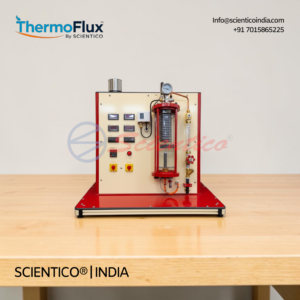 ThermoFlux-7051
Boiling Heat Transfer Apparatus
Boiling and heat-transfer study
View specifications & enquire → FluidoSurge-X 205
Advance Fluid Friction Apparatus
Fluid mechanics and pipe-friction teaching
View specifications & enquire →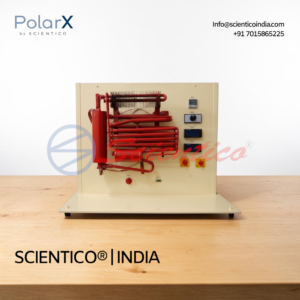 PolarX-504
Absorption Refrigeration Trainer
Refrigeration and air-conditioning training
View specifications & enquire →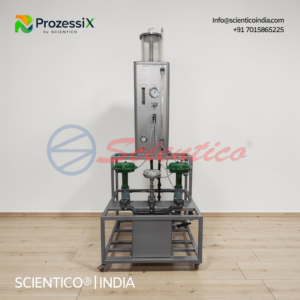 ProzessiX PX-06
Control Valve Characteristics Training Panel
Control-valve characteristics and measurement
View specifications & enquire →Search the full catalogue for Lebanon Browse all product families
Turn a list into a quotation that can be approved
State the buyer and funding route, destination, quantities, site utilities, manuals, requested certificates, inspection or acceptance process, tender deadline and local installation responsibility. Currency, payment, logistics and delivery assumptions are confirmed only in a written commercial offer.
- Attach the syllabus, BOQ or named apparatus list.
- Add quantity, destination, utilities and required date.
- State manuals, certificates, inspection, installation and training requirements.
- Ask for the proposed model, included accessories, exclusions and deviations.
- Review the datasheet and commercial quotation together.
Questions before you request a quote
Can Scientico work from a donor or contractor equipment schedule?
Yes. Send the original specification, quantities, end-user context, deadline and required compliance format.
Can I request one product before discussing a full lab?
Yes. Open the product record and use its enquiry path; add the wider list when it is ready.
Are commercial terms shown on the page final?
No. The formal quotation confirms configuration, price, currency, logistics and validity.
Products, documentation and commercial terms are confirmed for each written quotation. This page does not imply local stock, representation, approval, installation, shipping route or delivery timing.