Air Duct Training System | PolarX – 580
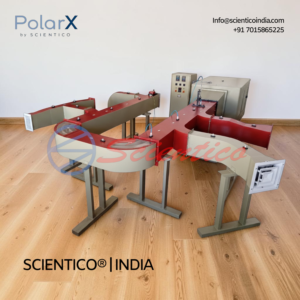
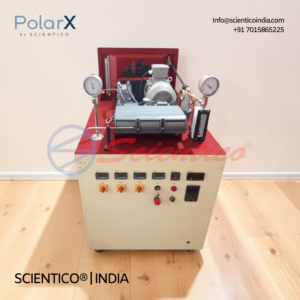
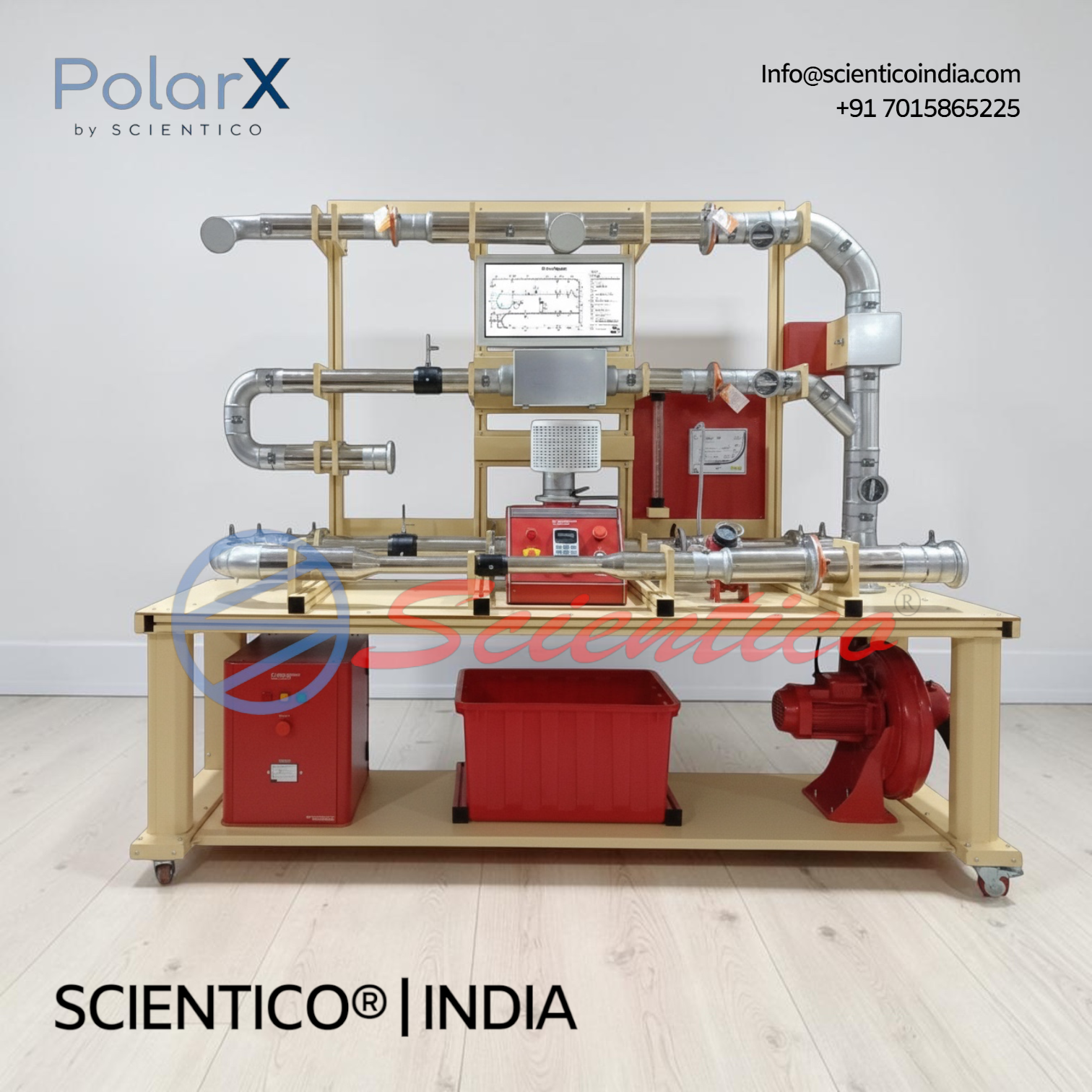
The Air Duct Training System PolarX – 580 examines air distribution methods using a variable, trainee-built duct configuration on a mobile-frame radial fan (1.5~1.75kW, up to 1200m³/h). This Air Duct Training System includes pipe bends, branches, reducers, and 3 types of 180° bends in DN100, DN80, and DN-50 diameters, along with throttle valves and iris diaphragms for flow control. Measurement tools include U tube, inclined tube, and digital manometers, pitot tubes, and an anemometer, covering pressure range -25~25kPa and velocity range 0.25~30m/s. A switch cabinet with fan speed control and a dedicated storage box complete the system.
The Air Duct Training System PolarX – 580 examines different ways to disperse air within a structure using a variable, trainee-built duct configuration. This Air Duct Training System is used to study ventilation systems found in offices, sports arenas, production halls, conference rooms, and other spaces.
Product Overview Ventilation systems typically include additional features for conditioning the air in the room, in addition to the air duct system itself. Filters and other components for sound absorption or air purification might also be present. A fan with a speed controller supplies air to the air duct system in this Air Duct Training System.
Using commercial parts including pipes, disk valves, bends, branches, and filters, the trainee builds variable air duct systems. Connections for measuring pressure can be placed anywhere in the system. The impacts of each component on pressure loss, and consequently on the air’s velocity and flow rate, are examined. Two manometers with varying measuring ranges and a manual air velocity measurement instrument are available for this purpose. The fan’s characteristics are also ascertained, and its power consumption is quantified.
Air Duct Training System PolarX – 580, Technical Specifications
| Component | Type / Detail |
|---|---|
| Diagram | P&ID diagram of air duct system |
| Fan | Radial fan, on mobile frame, to connect air ducts |
| Duct Material | Pipes with pipe bends, joints and components |
| Iris/Filter Diameters | Different diameters of iris and filters |
| Pipe Diameters | Different pipe diameters |
| Elbow Types | Different types of elbows |
| 180° Bends | 3 different types (sharp, short, long) |
| Pitot Tubes | On different pipe diameters, to measure air velocity |
| Pressure Connections | Variable locations |
| Flow Control | Air speed reducers and flow control valves |
| Manometers | U tube, inclined tube, and digital manometer, 3 different measuring ranges |
| Velocity Measurement | Anemometer |
| Control | Switch cabinet with fan speed control |
| Storage | Storage box to keep parts in a single place |
Technical Data
Fan
| Parameter | Value |
|---|---|
| Power Consumption | 1.5~1.75kW |
| Max. Volumetric Flow Rate | 1200m³/h |
| Max. Pressure Difference | -2000~2000Pa |
| Speed | 0~2800min-1 |
Pipe Bends and Connections (each DN100 and DN80)
| Component | Detail |
|---|---|
| Pipe Bends | 90° pipe bend, 45° pipe bend |
| Branch | 45° branch with reducer |
| Fittings | Reducer & T piece, plug-in connection, pipe coupling, enlargement & contraction |
| 180° Bends | 3 types: sharp, short, long bend |
Pipes
| Parameter | Value |
|---|---|
| Length | 400mm, 800mm |
| Diameter | DN100, DN80, DN-50 |
Flow Restriction Elements (each DN100 and DN80)
| Component | Detail |
|---|---|
| Throttle Valve | Included |
| Iris Diaphragm | Included |
Filters (each DN100 and DN80)
| Component | Detail |
|---|---|
| Pocket Filter | Included |
| Filter Cartridge | Single stage and two stage |
Measuring Ranges
| Parameter | Value |
|---|---|
| Pressure | -25~25kPa |
| Velocity | 0.25~30m/s |
| Power | 0~4kW |
Key Features
- Application: Air Duct Training System for ventilation engineering and air distribution study
- Fan: Radial fan on mobile frame, 1.5~1.75kW, up to 1200m³/h flow rate
- Pressure Range: -2000~2000Pa, fan speed 0~2800min-1
- Duct Components: Pipe bends, branches, T pieces, reducers, and couplings in DN100 and DN80
- 180° Bend Options: 3 types, sharp, short, and long bend
- Pipe Diameters: DN100, DN80, DN-50, in 400mm and 800mm lengths
- Flow Control: Throttle valves and iris diaphragms, each DN100 and DN80
- Filtration: Pocket filters and single/two stage filter cartridges
- Measurement Tools: U tube, inclined tube, and digital manometers; pitot tubes; anemometer
- Control Cabinet: Switch cabinet with fan speed control
- Storage: Dedicated storage box for parts organization
Experiments
- Plan, setup and test air duct systems
- Typical components of ventilation technology
- Measure the flow rate and velocity of the air
- Determination of the pressure loss via different components: pipe bends, angles, distributors, etc.
- Measure dynamic and static pressures
- Recording of system characteristics
- Recording of the fan characteristic
- Determination of the operating point
- Calculate the fan efficiency
Construction and Design
The Air Duct Training System PolarX – 580 uses a radial fan mounted on a mobile frame to connect the air ducts. The duct system is built from pipes with pipe bends, joints, and components in varying diameters, including DN100, DN80, and DN-50. Three types of 180° bends, sharp, short, and long, are available, along with different types of elbows and iris diaphragms. Pitot tubes are placed on different pipe diameters to measure air velocity, and pressure measuring connections can be positioned at variable locations. A switch cabinet houses the fan speed control, and a P&ID diagram represents the full air duct system layout. A storage box keeps all parts organized in a single place.
Scope of Delivery
- 1 Trainer
- 1 Instructional manual
- 1 set of accessories
Q: What is the maximum flow rate and pressure range of the Air Duct Training System PolarX – 580?
A: The fan delivers up to 1200m³/h flow rate with a maximum pressure difference of -2000~2000Pa.
Q: How many types of 180° bends are included?
A: Three types are included: sharp, short, and long bend.
Q: What filtration options are available?
A: Pocket filters and filter cartridges, available in single stage and two stage, each in DN100 and DN80.
Q: What instruments are used to measure air velocity and pressure?
A: U tube, inclined tube, and digital manometers for pressure, along with pitot tubes and an anemometer for velocity.
Q: Can the duct configuration be changed?
A: Yes. The trainee builds variable air duct systems using commercial parts including pipes, disk valves, bends, branches, and filters.
Need Assistance? We're Here to Help!
Connect with our team for product specifications, pricing, and customized solutions for your institution or project.