
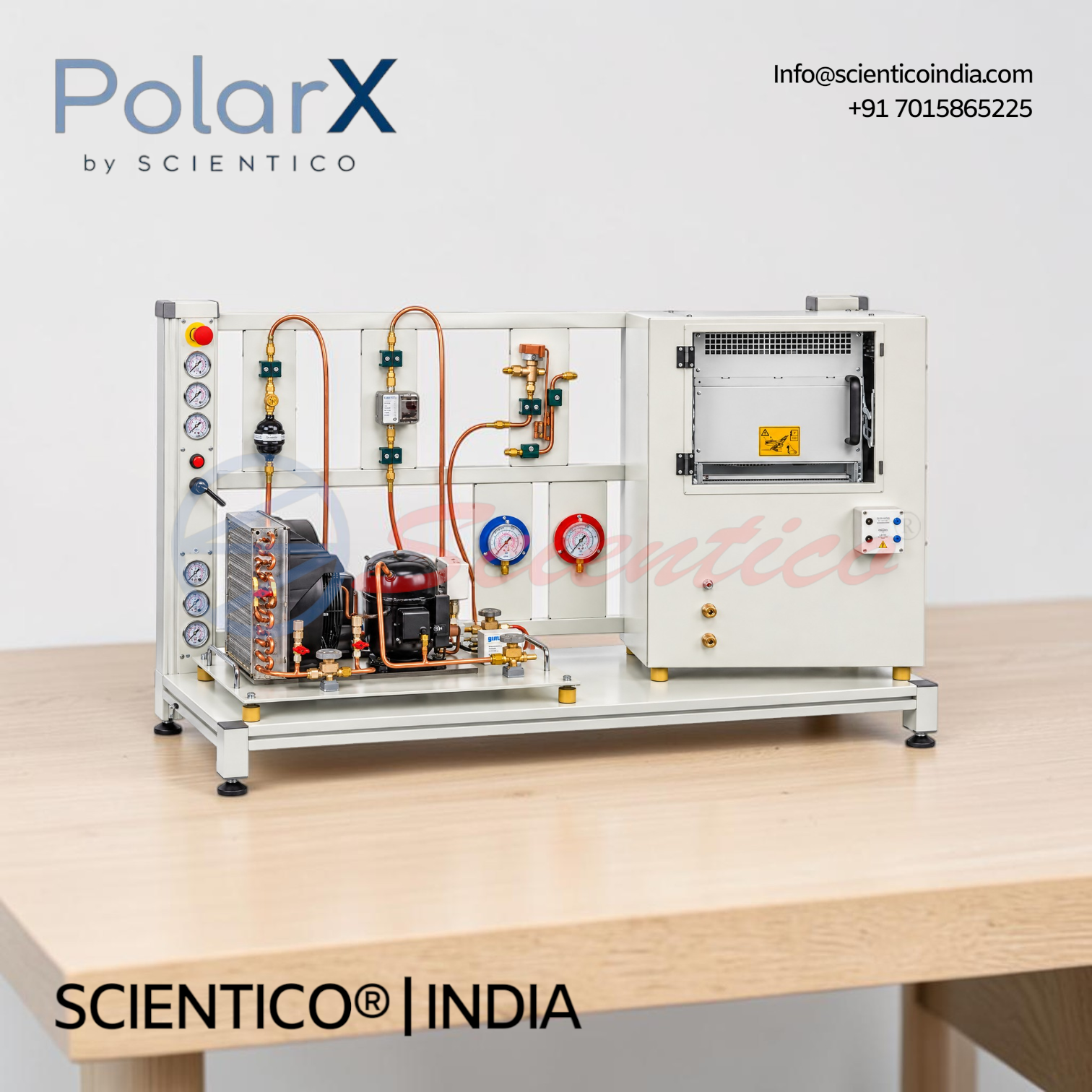
Refrigeration Components for Basic Experiments | PolarX-1011
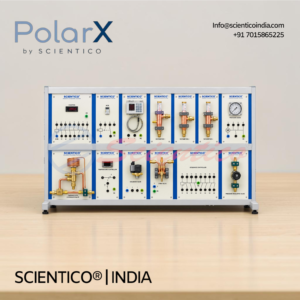
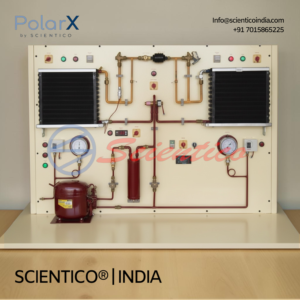
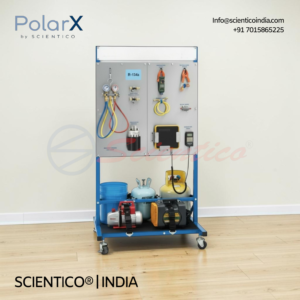
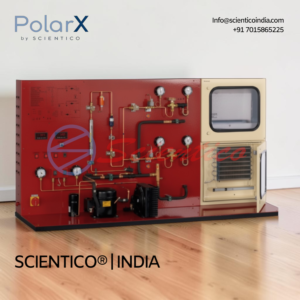
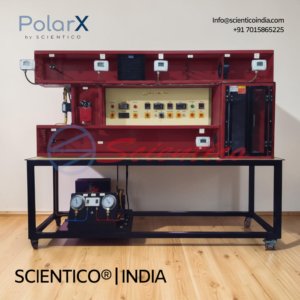
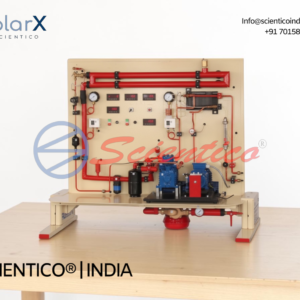
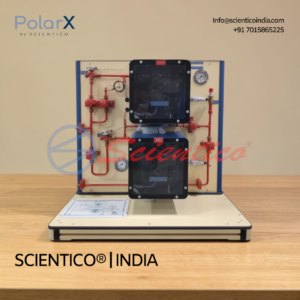
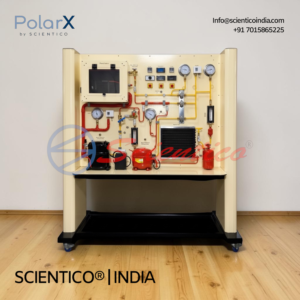
The Refrigeration Components for Basic Experiments PolarX-1011 provides hands-on training using authentic industrial refrigeration components for simple circuit design and operation. Includes expansion elements, filters, thermostats, superheater, flow meter, high- and low-pressure manometers, thermostatic and pressure-controlled expansion valves, liquid separator, and measurement instruments. Students learn circuit design, component operation, pressure and temperature measurement, and fault-finding using real refrigeration components and technical documentation.
The Refrigeration Components for Basic Experiments PolarX-1011 enables students to design and operate simple refrigeration circuits using real industrial components. This system provides practice-oriented learning with genuine refrigeration equipment, high- and low-pressure manometers, temperature measurement instruments, and flow monitoring for comprehensive refrigeration cycle understanding.
Product Overview
The Refrigeration Components for Basic Experiments PolarX-1011 is designed for setup of simple refrigeration circuits and hands-on experimentation using authentic industrial refrigeration components. The system includes expansion elements, filters, switches, and thermostats for circuit assembly. A superheater or equivalent heat exchanger ensures complete refrigerant evaporation before compressor intake while providing supercooling of liquid refrigerant upstream of the expansion element. A flow meter monitors expansion element control behavior. High- and low-pressure manometers demonstrate pressure ratios throughout the refrigeration circuit. Pressure and temperature measuring instruments enable tracking of refrigerant state and plotting of the refrigeration cycle on a log p-h diagram using laboratory thermometers. Components include a sight glass with filter/drier, thermostatic and pressure-controlled expansion valves, delivery and intake manometers, superheater, liquid separator, 3-pin circuit breaker, and electric two-point thermostat with switch hysteresis. Assembly aids and technical drawings support circuit design, component operation, troubleshooting, and fault-finding activities for comprehensive refrigeration components learning.
Refrigeration Components for Basic Experiments PolarX-1011 — Technical Specifications
| Specification | Details |
|---|---|
| Expansion Elements | Included for simple refrigeration circuits |
| Filters | Included for refrigerant purification |
| Switches | Included for circuit control |
| Thermostats | Included for temperature control |
| Superheater / Heat Exchanger | Ensures complete refrigerant evaporation and liquid supercooling |
| Flow Meter | Monitors expansion element control behavior |
| High-Pressure Manometer | Demonstrates high-side pressure ratios |
| Low-Pressure Manometer | Demonstrates low-side pressure ratios |
| Pressure Measuring Instruments | For refrigerant state tracking |
| Temperature Measuring Instruments | Laboratory thermometers for cycle plotting |
| Sight Glass | With integrated filter/drier assembly |
| Thermostatic Expansion Valve | For thermal control of refrigerant flow |
| Pressure-Controlled Expansion Valve | For pressure-based expansion control |
| Liquid Separator | For separation of liquid and vapor phases |
| Electric Two-Point Thermostat | With switch hysteresis for precise control |
| 3-Pin Circuit Breaker | For electrical circuit protection |
| Assembly Aids | Included for circuit construction support |
| Documentation | Technical drawings and operating instructions |
Technical Data
Refrigeration Components Assembly
- Expansion elements: Multiple types for different circuit designs
- Filter/drier: Integrated with sight glass for visual inspection
- Switches: For circuit activation and shutdown
- Thermostats: Electric two-point with hysteresis for control
Heat Transfer Components
- Superheater: Ensures complete refrigerant evaporation
- Heat exchanger: Provides supercooling of liquid refrigerant
- Function: Prevents liquid slugging and improves compressor efficiency
Measurement and Monitoring Equipment
- Flow meter: Tracks expansion element response and control behavior
- High-pressure manometer: Measures discharge side pressure
- Low-pressure manometer: Measures intake side pressure
- Pressure instruments: Enable refrigerant state determination
- Temperature instruments: Laboratory thermometers for log p-h diagram plotting
Valve and Control Components
- Thermostatic expansion valve: Adjusts flow based on superheat
- Pressure-controlled expansion valve: Adjusts flow based on pressure differential
- Liquid separator: Separates liquid refrigerant from vapor phase
- Three-pin circuit breaker: Provides electrical circuit protection
Key Features
- Real industrial refrigeration components: Provides authentic hands-on experience with genuine equipment used in refrigeration components systems
- Simple refrigeration circuit design: Enables students to assemble various basic refrigeration components configurations for learning
- Superheater and heat exchanger: Ensures complete refrigerant evaporation and supercooling for optimal refrigeration components operation
- Dual expansion valve types: Both thermostatic and pressure-controlled expansion valves demonstrate different refrigeration components control strategies
- High- and low-pressure manometers: Display pressure ratios across refrigeration components for system analysis
- Flow meter monitoring: Tracks expansion element control behavior in refrigeration components circuits
- Temperature and pressure measurement: Enables plotting of refrigeration cycle on log p-h diagram using laboratory thermometers
- Sight glass with filter/drier: Allows visual inspection of refrigerant state in refrigeration components assemblies
- Liquid separator: Separates liquid and vapor phases to protect refrigeration components from liquid slugging
- Electric two-point thermostat: Provides temperature-based control with switch hysteresis for stable refrigeration components operation
- Three-pin circuit breaker: Electrical protection for safe refrigeration components circuit operation
- Assembly aids: Simplify refrigeration components circuit construction for students
- Technical documentation: Includes drawings and operating instructions for refrigeration components systems
Learning Objectives and Experiments
- Design of different simple refrigeration circuits using refrigeration components
- Operation and adjustment of refrigeration components in circuit configurations
- Function and use of sight glass with filter/drier in refrigeration components systems
- Flow meter monitoring of expansion element response in refrigeration components circuits
- Interpretation of delivery and intake manometer readings in refrigeration components
- Superheater role in refrigeration components evaporation and liquid supercooling
- Thermostatic expansion valve tuning and pressure-controlled expansion valve adjustment in refrigeration components
- Three-pin circuit breaker and electrical thermostat operation in refrigeration components
- Liquid separator function in protecting refrigeration components from liquid damage
- Technical drawing interpretation for refrigeration components assembly
- Operating instruction comprehension for refrigeration components systems
- Fault diagnosis and troubleshooting in refrigeration components circuits
Construction and Design
The Refrigeration Components for Basic Experiments PolarX-1011 provides a modular assembly of authentic industrial refrigeration components suitable for hands-on circuit design and operation. Expansion elements, filters, switches, and thermostats are configured for easy integration into simple refrigeration circuits. The superheater or equivalent heat exchanger is positioned to ensure complete evaporation of refrigerant before compressor intake and supercooling of liquid refrigerant upstream of the expansion element. A flow meter is integrated to monitor expansion element control behavior during operation. High- and low-pressure manometers are mounted for clear visibility of pressure ratios throughout the refrigeration components circuit. A sight glass with integrated filter/drier allows visual inspection of refrigerant flow and state. Thermostatic and pressure-controlled expansion valves provide two control strategies for refrigerant components circuits. A liquid separator protects the compressor by separating liquid refrigerant from the vapor phase. An electric two-point thermostat with switch hysteresis provides temperature-based circuit control. A three-pin circuit breaker offers electrical protection. Temperature measurement uses laboratory thermometers for accurate log p-h diagram plotting. Assembly aids and technical drawings guide students through refrigeration components circuit construction, operation, and fault-finding procedures.
Scope of Delivery
- Expansion elements (multiple types)
- Filters and filter/drier assemblies
- Switches for circuit control
- Thermostats (electric two-point with hysteresis)
- Superheater or equivalent heat exchanger
- Flow meter for monitoring
- High-pressure manometer
- Low-pressure manometer
- Sight glass assembly with filter/drier
- Thermostatic expansion valve
- Pressure-controlled expansion valve
- Liquid separator
- Three-pin circuit breaker
- Pressure measuring instruments
- Temperature measuring instruments (laboratory thermometers)
- Assembly aids and support components
- Technical drawings
- Operating instructions manual
- Connecting tubes and fittings
- Mounting hardware
Required for Operation
- Refrigerant (type specified by manufacturer)
- Refrigeration oil compatible with refrigerant
- Electrical power supply as specified
- Adequate bench or table space for circuit assembly
- Well-ventilated workspace for refrigeration component handling
- Access to technical documentation for circuit design
Optional Accessories and Software
- Additional expansion valve types for advanced experiments
- Extended measurement instruments for enhanced data collection
- Supplementary refrigeration components for circuit complexity
- Digital pressure and temperature data logging equipment
- Advanced technical documentation for specialized circuits
Q: What is the purpose of the superheater in the Refrigeration Components for Basic Experiments PolarX-1011?
A: The superheater ensures complete evaporation of the refrigerant before it enters the compressor, preventing liquid slugging damage. It also provides supercooling of the liquid refrigerant upstream of the expansion element to improve overall refrigeration components system efficiency.
Q: How do the thermostatic and pressure-controlled expansion valves differ in refrigeration components circuits?
A: The thermostatic expansion valve adjusts refrigerant flow based on superheat at the compressor suction. The pressure-controlled expansion valve adjusts flow based on the pressure differential across the valve. Both demonstrate different control strategies for refrigeration components operation.
Q: What is the function of the liquid separator in refrigeration components systems?
A: The liquid separator protects the compressor by removing liquid refrigerant from the vapor stream. This prevents liquid slugging, which can damage the compressor in refrigeration components circuits.
Q: Can students plot the refrigeration cycle using the PolarX-1011 refrigeration components?
A: Yes, pressure and temperature measuring instruments enable students to track the refrigerant state at various points and plot the refrigeration cycle on a log p-h diagram using measured values from laboratory thermometers.
Q: What learning outcomes does the Refrigeration Components for Basic Experiments PolarX-1011 support?
A: Students learn to design simple refrigeration circuits, operate and adjust refrigeration components, interpret technical drawings, understand pressure and temperature relationships in refrigeration cycles, and troubleshoot faults in refrigeration components systems using real industrial equipment.
Need Assistance? We're Here to Help!
Connect with our team for product specifications, pricing, and customized solutions for your institution or project.