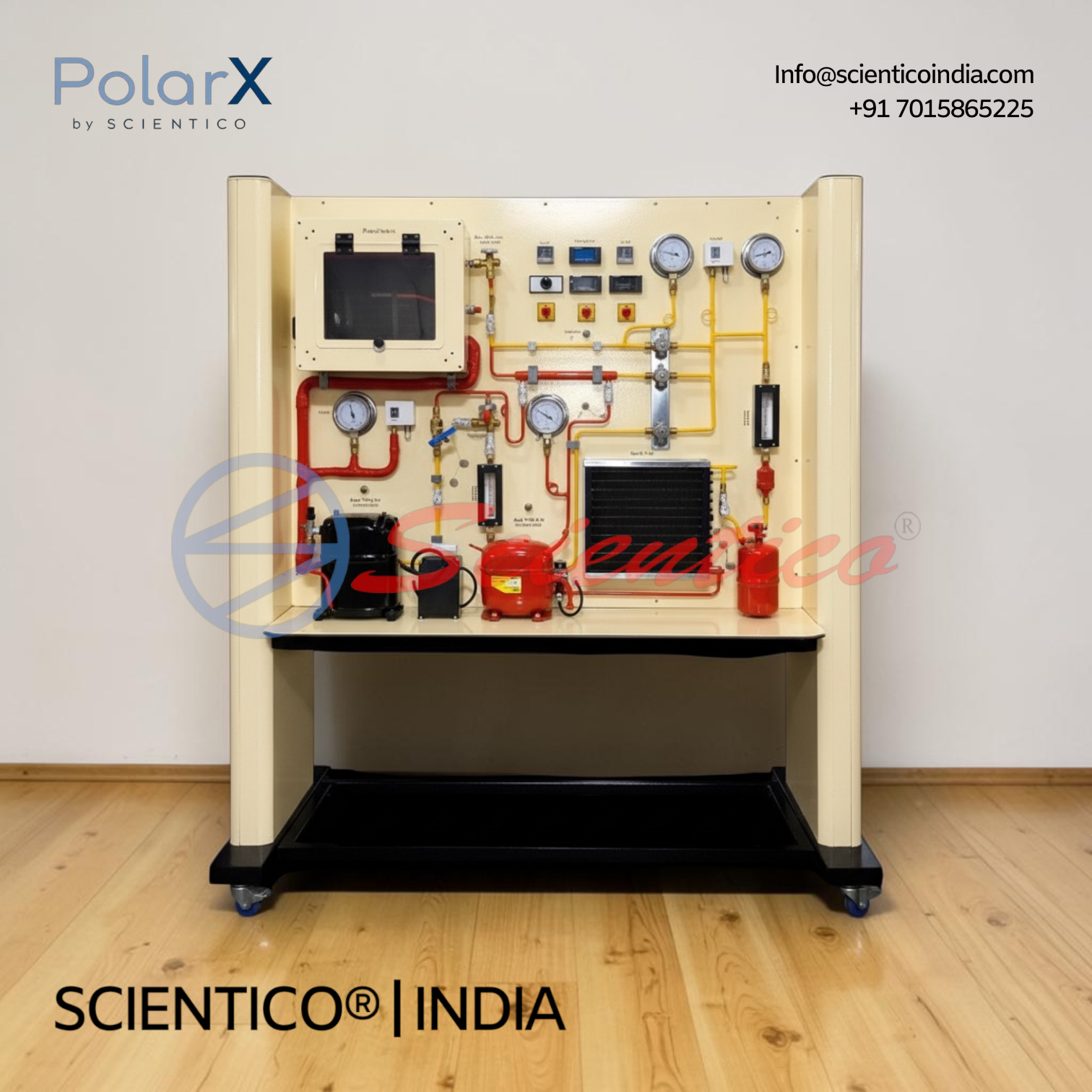
Refrigeration System with Two-Stage Compression | PolarX – 532
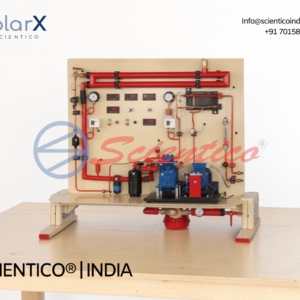
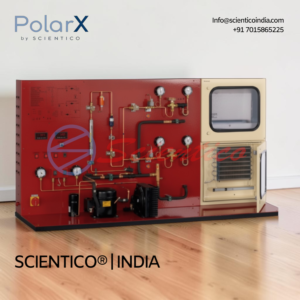
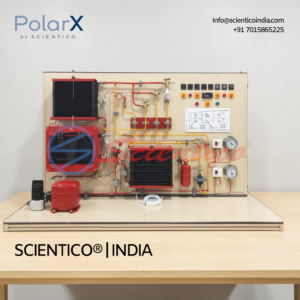
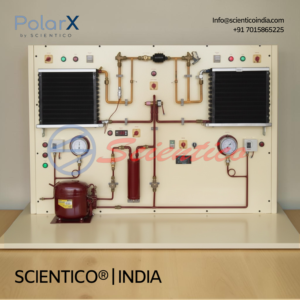
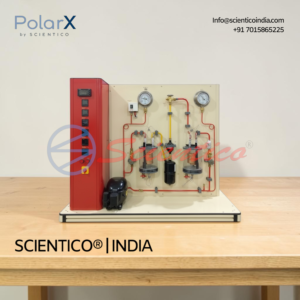
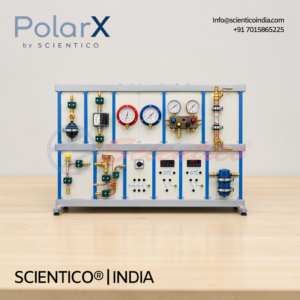
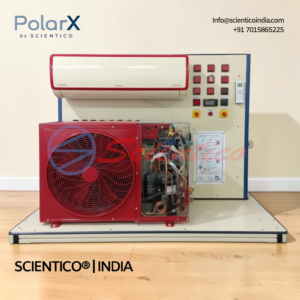
The Refrigeration System with Two-Stage Compression PolarX – 532 generates particularly low temperatures by linking hermetic low and high pressure compressors in series. This Refrigeration System with Two-Stage Compression uses injection intercooling (IRC-1909) between the LP and HP stages, with an add-on heat exchanger for additional liquid refrigerant super cooling. A closed refrigeration chamber with evaporator, fan, and adjustable electric heater serves as the cooling load, monitored by 8 Type-k temperature sensors, 3 power meters, and 2 refrigerant flow meters (up to 100LPH). Optional LABVIEW-based DAQ software enables real-time p-h diagram representation of the refrigeration cycle.
The Refrigeration System with Two-Stage Compression PolarX – 532 is designed for the generation of particularly low temperatures. This Refrigeration System with Two-Stage Compression links two compressors in series, each operating at a low pressure ratio, to overcome the drop in volumetric efficiency that occurs at high pressure ratios.
Product Overview Large pressure differences between the evaporator and condenser are necessary to reach very low temperatures. Since a compressor’s volumetric efficiency drops sharply at high pressure ratios, this Refrigeration System with Two-Stage Compression uses two compressors linked in series, each with a low pressure ratio. This allows the low pressure stage compressor to be sized more advantageously, since its large specific volume requires higher capacity at lower drive power.
Intercooling between the low pressure and high pressure compressors (LP and HP) further increases compression efficiency by bringing the HP compressor’s outlet temperature down to safe levels. The IRC-1909 equipment employs injection intercooling. The receiver injects a small quantity of liquid refrigerant into the LP compressor’s outlet line. As this liquid refrigerant evaporates, it cools the intake gas for the HP compressor.
An add-on heat exchanger in the injection cooler can increase the super cooling of the liquid refrigerant upstream of the expansion valve. This, in turn, increases the evaporator’s capacity. Valves allow the heat exchanger for refrigerant super cooling or the injection intercooling to be switched off, demonstrating the impact of each on the system.
Sensors record and display all relevant measured values. Simultaneous transmission of measurements to the optional programme enables real-time analysis and representation of the process in the p-h diagram. Two flow meters display the volumetric flow rates for the intercooling and the total volumetric flow rate.
Refrigeration System with Two-Stage Compression PolarX – 532, Technical Specifications
| Component | Type / Detail |
|---|---|
| Compression Type | Two-stage, hermetic low and high pressure compressors |
| Intercooling | Adjustable via refrigerant injection |
| Super Cooling | Heat exchanger for additional super cooling of liquid refrigerant |
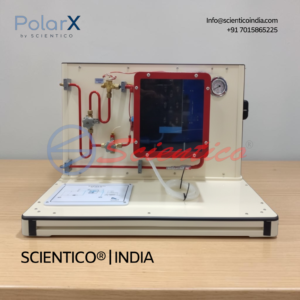
| Cooling Load | Closed refrigeration chamber with evaporator, fan, and adjustable electric heater |
| Display | Digital display for temperatures, compressor drive power, and cooling load power |
| Software Representation | Real-time process representation in p-h diagram (optional software) |
| Refrigerant | R134A |
| Condenser | Fan Cool, Continuous Tubing and External Finned |
| Evaporator | Forced Air, Heat Absorbed, Continuous Tubing and External Finned |
Technical Data
Low Pressure Compressor (LP)
| Parameter | Value |
|---|---|
| Power Consumption | 350W |
| Refrigeration Capacity | 1000W at -5/30°C |
| Suction Side (low pressure gauge) | -1~16bar |
| Delivery Side (high pressure gauge) | -1~25bar |
High Pressure Compressor (HP)
| Parameter | Value |
|---|---|
| Power Consumption | approx. 250W |
| Refrigeration Capacity | 500W at -5/30°C |
| Suction Side (low pressure gauge) | -1~16bar |
| Delivery Side (high pressure gauge) | -1~25bar |
Digital Multifunctional Power Meter
| Parameter | Value |
|---|---|
| Range of AC Volt | 0~500 volts |
| Range of AC Ampere | 0~40 Ampere |
| Total | 03 |
Liquid Receiver
| Parameter | Value |
|---|---|
| Maximum Working Pressure | 450psig |
| Capacity | 1.2L |
Filter Drier
| Parameter | Value |
|---|---|
| Maximum Working Pressure | 450psig |
Temperature Sensor
| Parameter | Value |
|---|---|
| Range | -40~400°C |
| Type | Type-k |
| Total | 08 |
Pressure Safety Switch
| Side | Value |
|---|---|
| Suction Side | Not specified |
| Delivery Side | Not specified |
Refrigerant Flow Meter
| Parameter | Value |
|---|---|
| Range | up to 100LPH |
| Total | 02 |
Power
| Component | Value |
|---|---|
| Heater | 0~200W |
| LP Compressor | 375W |
| HP Compressor | 575W |
Key Features
- System Type: Refrigeration System with Two-Stage Compression using hermetic LP and HP compressors
- Intercooling: Adjustable via refrigerant injection (PolarX – 532)
- Super Cooling: Add-on heat exchanger for additional liquid refrigerant super cooling
- Cooling Load: Closed refrigeration chamber with evaporator, fan, and adjustable electric heater
- Refrigerant: R134A
- Temperature Sensors: 8 x Type-k, range -40~400°C
- Flow Measurement: 2 refrigerant flow meters, range up to 100LPH each
- Power Metering: 3 digital multifunctional power meters, 0~500V AC / 0~40A AC
- Display: Digital readout for temperatures, compressor drive power, and cooling load power
- Software Capability: Real-time p-h diagram process representation (optional)
Experiments
- Effect of the additional refrigerant inter cooling
- Distribution of the compressor pressure ratios
- Use the log p-h diagram to represent and comprehend the refrigeration cycle operation
- Design and function of a refrigeration system with two-stage compression and injection inter cooling
- Effect of the inlet temperature at the HP compressor on the efficiency of the compression, with inter cooling and without inter cooling
Construction and Design
The Refrigeration System with Two-Stage Compression PolarX – 532 links two hermetic compressors, low pressure and high pressure, in series. The IRC-1909 equipment employs injection intercooling, where the receiver injects a small quantity of liquid refrigerant into the LP compressor’s outlet line. An add-on heat exchanger in the injection cooler provides additional super cooling of the liquid refrigerant upstream of the expansion valve. Valves allow the heat exchanger or the injection intercooling to be switched off independently. The system includes a closed refrigeration chamber containing an evaporator with fan and adjustable electric heater as the cooling load. A digital display shows temperatures, compressor drive power, and cooling load power. Two flow meters display volumetric flow rates for intercooling and total flow.
Software
PolarX – 532 (optional). A DAQ software package, specially designed in National Instruments LABVIEW environment, measures and calculates the results of the apparatus. The software is optional. When the software is used, a set of electronic sensors is included. The software can be run on any Windows environment. It enables real-time representation of the process in the p-h diagram.
Q: Why does this system use two compressors instead of one?
A: A single compressor’s volumetric efficiency drops sharply at high pressure ratios. Linking two compressors in series, each with a low pressure ratio, allows the low pressure stage to be sized more advantageously.
Q: What is injection intercooling?
A: The receiver injects a small quantity of liquid refrigerant into the LP compressor’s outlet line. As it evaporates, it cools the intake gas for the HP compressor, bringing the HP compressor’s outlet temperature down to safe levels.
Q: Can the intercooling and super cooling functions be tested independently?
A: Yes. Valves make it possible to turn off the heat exchanger for refrigerant super cooling or the injection intercooling, allowing their individual impact on the system to be observed.
Q: How many temperature sensors does the system have?
A: The system includes 8 Type-k temperature sensors with a range of -40~400°C.
Q: Is the DAQ software required to operate the unit?
A: No. The PolarX – 532 software is optional, and a set of electronic sensors is included when the software is used.
Need Assistance? We're Here to Help!
Connect with our team for product specifications, pricing, and customized solutions for your institution or project.