
Renewable Energy Lab Equipment: Solar PV, Wind, and Fuel Cell Trainers for Engineering Colleges
Renewable energy engineering has moved from elective to core curriculum in many B.Tech and M.Tech Electrical and Mechanical Engineering programmes over the last five years, driven by AICTE curriculum updates, ABET outcome requirements for sustainability competencies, and employer demand. A dedicated renewable energy lab is now a differentiator in NBA and NAAC assessments for institutions targeting A+ grade. This guide covers the equipment required to build a functional, accreditation-ready renewable energy lab from scratch.
Equipment mentioned in this guide
Review the product information, specifications and model before requesting a quotation.
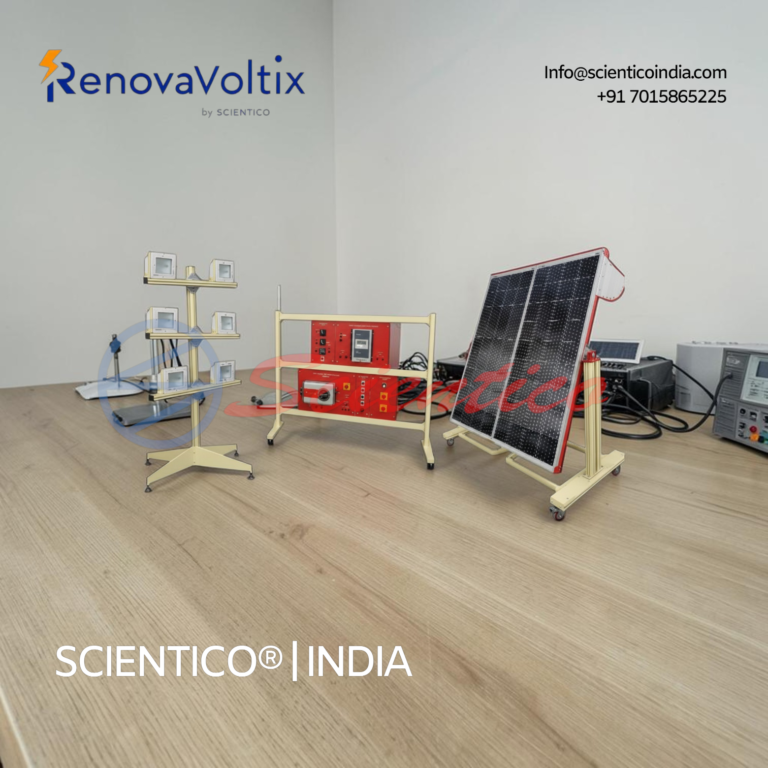
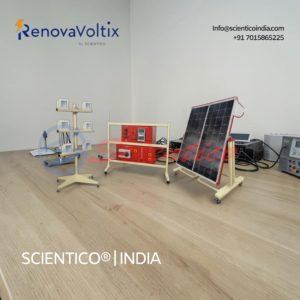
Indoor Solar Energy Training System | RVX 001
The Indoor Solar Energy Training System RVX-001 is a comprehensive solar power experimental platform designed to demonstrate the full cycle of solar energy utilisation, from photovoltaic generation through battery storage to load delivery. As a purpose-built solar energy trainer, the RVX-001 enables hands-on investigation of how solar PV modules transform solar power into usable electrical energy across a range of real-world conditions.
View product details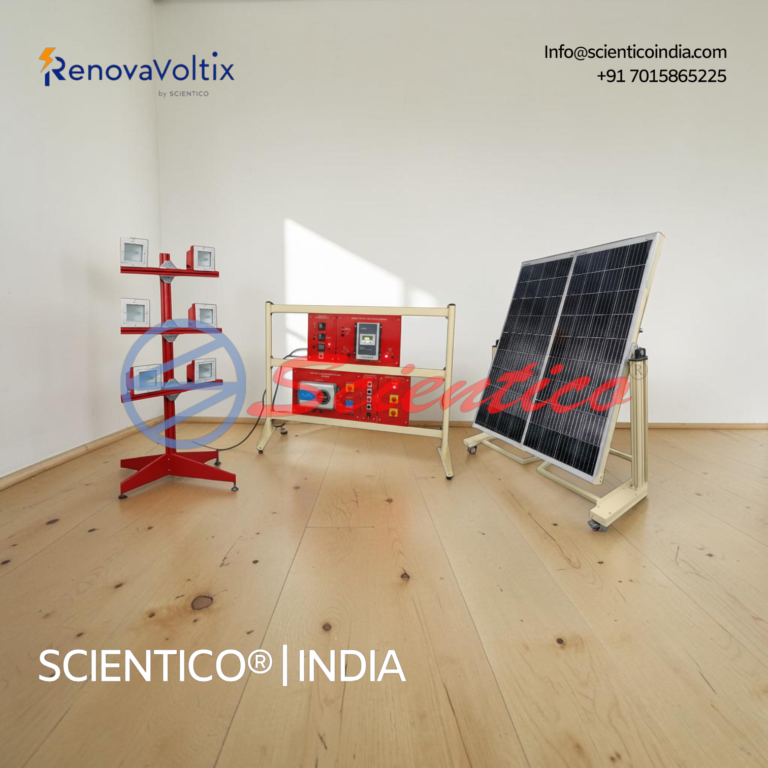
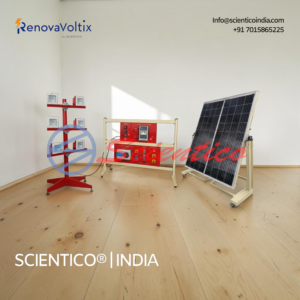
On-Grid Solar Energy with Storage | RVX-005
The On-Grid Solar Energy with Storage RVX-005 is a grid-tied solar power training system that combines grid-connected solar panels with battery storage capabilities. It demonstrates solar energy generation, excess energy storage, and live interaction with the main electrical grid.
View product details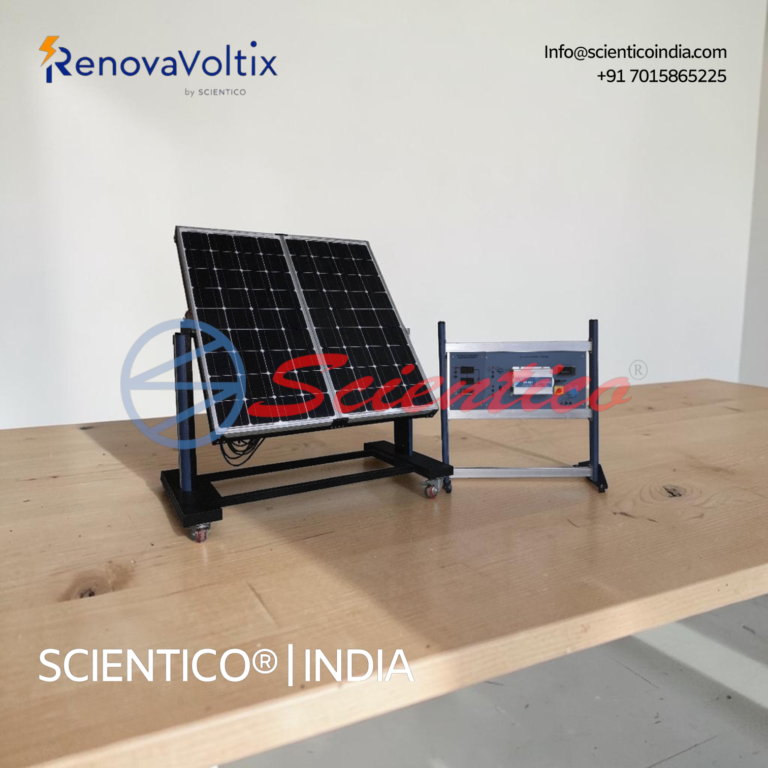
Outdoor Solar Energy Training System | RVX-002
The Outdoor Solar Energy Training System RVX-002 is a field-ready solar power experimental platform designed to demonstrate the complete cycle of solar energy utilisation, from photovoltaic generation through battery storage to load delivery. As a purpose-built solar energy trainer, the RVX-002 enables hands-on investigation of how solar PV modules transform solar power into usable electrical energy across real outdoor conditions.
View product details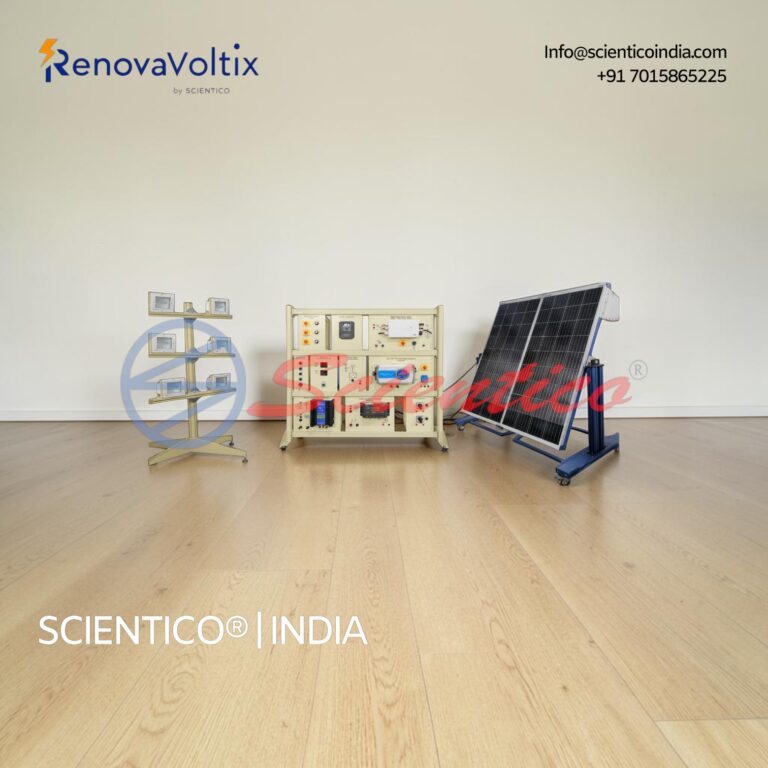
Photovoltaic Solar Energy Advanced Trainer | RVX-006
The Photovoltaic Solar Energy Advanced Trainer RVX-006 is a modular solar power training system for the theoretical and practical study of electric energy generation from photovoltaic panels. It covers PV panel characterisation, off-grid battery storage operation, and on-grid mains-connected operation in a single integrated platform. Product Overview The Photovoltaic Solar Energy Advanced Trainer RVX-006 supports three operational domains: PV panel characterisation, off-grid system operation, and on-grid system operation. For panel characterisation, the system supports solar radiation measurement, inclination and azimuth adjustment, shadow formation response investigation, and recording of voltage-irradiation, current-irradiation, current-voltage, and current-power curves. Inner resistance of the solar panel is calculable. Voltage and current measurement under overload is supported. For off-grid operation, the system measures generated power and battery charging, supports supplying a DC load from solar panel and battery, and enables design and testing of a standalone PV system in direct storage operation and 230V AC. For on-grid operation, the system measures electricity delivered to the mains grid, electricity produced by the solar panel and exchanged with the mains grid alongside AC lamp loading, and grid-connected inverter efficiency. Response of a PV system to mains failure can be investigated. An Artificial Light Source Module with intensity control is included as standard for indoor use.
View product details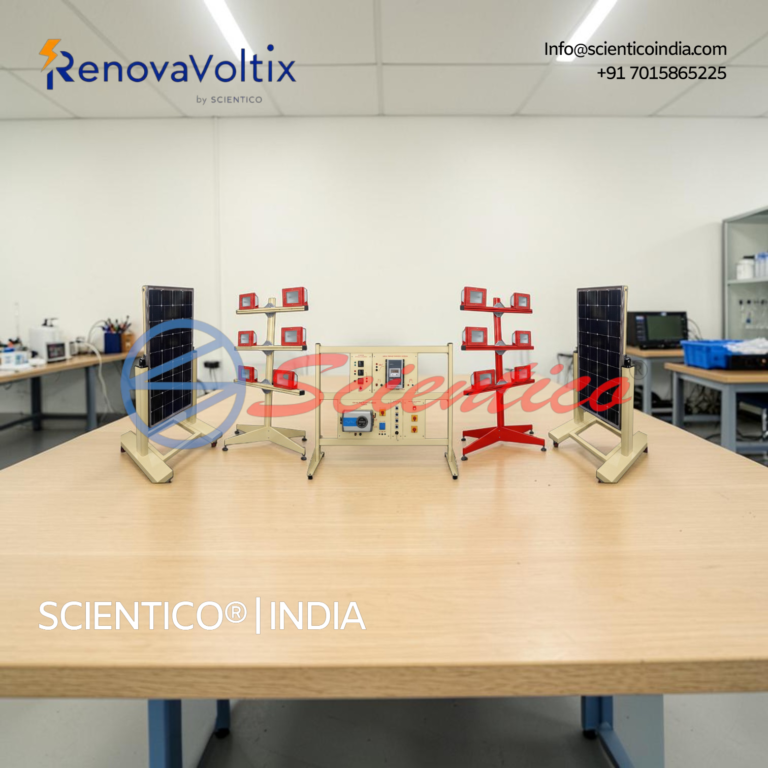
Photovoltaic Solar Panel Measurement Trainer | RVX-004
The Photovoltaic Solar Panel Measurement Trainer RVX-004 is a dedicated PV panel measurement and performance analysis training system for educational institutions, vocational training centres, and research laboratories. It delivers hands-on experience in solar panel measurement, efficiency determination, and comparative analysis of different PV panel types.
View product details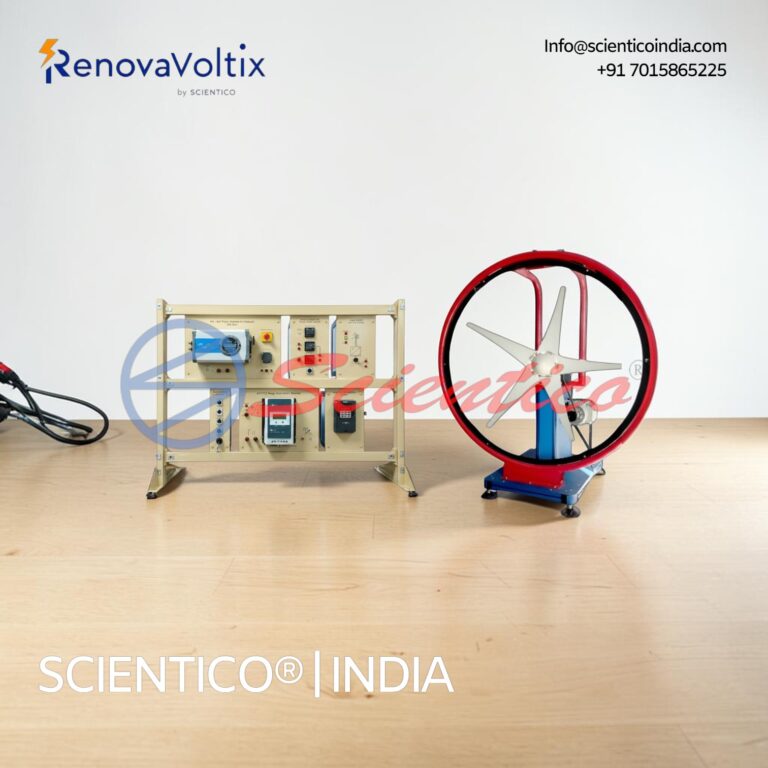
Wind Energy Training System | RVX-007
The Wind Energy Training System RVX-007 is a live demonstration wind power training platform that introduces the fundamental concepts of wind turbine operation, kinetic-to-mechanical energy conversion, and mechanical-to-electrical energy generation. It provides hands-on experience in wind turbine concepts and applications in a single integrated setup. Product Overview The Wind Energy Training System RVX-007 demonstrates the complete energy conversion chain of a wind turbine system. The platform covers no-load voltage measurement of the wind turbine, investigation of wind turbine velocity and output relationships, and independent wind energy AC output system operation. The setup includes an AC three-phase motor with AC motor driver simulating wind turbine drive, an AC to DC converter, MPPT charge controller for battery charging, and an off-grid inverter for AC output. Measurement capability includes voltage, current, and RPM. The system operates as a live wind power training demonstration unit covering both conceptual and applied aspects of wind turbine and generator operation.
View product detailsSolar PV Lab Equipment
Solar photovoltaic experiments form the foundation of any renewable energy lab. The core apparatus and the experiments they enable:
| Apparatus | Experiments | Key Specification |
|---|---|---|
| Solar PV Trainer (I-V Characteristics) | I-V curve generation, maximum power point (MPP) determination, fill factor calculation, efficiency vs. irradiance | Monocrystalline and polycrystalline modules (minimum 2 types), electronic load for variable loading, irradiance measurement |
| Solar PV System Trainer (Grid-Tie) | Grid-connected inverter operation, power factor, reactive power, synchronisation | 250W–1kW PV array, grid-tie inverter, energy meter |
| Battery Charge Controller Trainer | PWM and MPPT charge controller comparison, battery SoC tracking, charging efficiency | PWM and MPPT controller modules, 12V battery bank |
See our dedicated Solar PV experiment guide covering I-V characteristics, fill factor, and efficiency calculations for the standard experiment procedure and observation tables.
Wind Energy Lab Equipment
- Wind Turbine Trainer (bench-top), horizontal axis wind turbine with variable pitch blades, generator output measurement (AC voltage, current, power), RPM measurement. Experiments: cut-in/cut-out wind speed, power curve, Betz limit concept
- Wind Tunnel (small scale), for aerodynamics experiments: blade profile testing, drag and lift measurement on aerofoil sections
- Hybrid Solar-Wind Trainer, combined solar PV and wind turbine feeding a common DC bus; demonstrates energy management and storage in a hybrid system
Fuel Cell and Hydrogen Energy Equipment
Fuel cell trainers are being added to advanced renewable energy labs at M.Tech level and in institutions with hydrogen energy research programmes:
- PEM Fuel Cell Trainer, hydrogen/air Proton Exchange Membrane fuel cell, polarisation curve measurement, power density calculation, electrolysis demonstration
- Electrolyser Trainer, water electrolysis for hydrogen production, Faradaic efficiency calculation, demonstration of energy storage via hydrogen
Energy Audit and Smart Grid Equipment
- Power Quality Analyser, measures harmonics, power factor, voltage and current waveforms; demonstration of power quality issues in distributed generation
- Building Energy Audit Kit, thermal imaging camera, clamp meter, lux meter, CO₂ sensor; practical energy audit exercises
- Smart Grid Simulation Software, MATLAB/Simulink or dedicated trainer software for grid stability, load flow analysis, and renewable integration studies
Budget Planning for a Renewable Energy Lab
A complete renewable energy lab for a 30-student B.Tech batch, covering solar PV, wind energy, and basic energy audit, typically costs USD 25,000–50,000 CIF. An M.Tech-level lab adding fuel cells and smart grid trainers ranges from USD 45,000–90,000. See our engineering lab equipment cost guide for budget methodology. Scientico India’s engineering training equipment range includes renewable energy trainers, contact us at [email protected] for a full BOQ with CIF pricing. View our quality certifications and FAQ for documentation and export details.
Get Specifications & Pricing
Scientico India manufactures model-specific, ISO 9001:2015-compliant laboratory apparatus for universities worldwide. Contact us for full specifications, pricing, and documentation.
Scientico India manufactures model-specific, ISO 9001:2015 laboratory equipment, exported to 30+ countries since 1993. Request a model-specific CIF proforma invoice after technical review.
View Engineering Lab Equipment →Request a QuoteOne honest ask
We don't gate anything on this site. You just read the whole thing free. If it was useful, leave your email and two things happen: we send you this page as a plain-text block you can paste into a tender file or an internal email, and we notify you the next time we publish a buyer tool like this one. Nothing else. No drip sequence, no sales calls booked without asking.
Clean-energy research and teaching path
Match the intended energy experiment to a verified trainer
A clean-energy laboratory request becomes comparable when the buyer identifies the energy source, conversion stage, variables, measurements, controllable load, environment and learning or research output. Use the verified product paths below as starting points, then confirm the current offered configuration in writing.
- Separate photovoltaic, grid-storage, outdoor solar, solar-thermal, wind and hybrid outcomes.
- List the input, variables, measurements, loads and calculations for every experiment.
- State student or researcher capacity, environment, utilities and safety boundary.
- Request an exact model, supplied modules, documents, deviations and acceptance exercise.
 Indoor Solar Energy Training System | RVX 001Controlled indoor solar-energy teaching and measurement pathway.Open product →
 On-Grid Solar Energy with Storage | RVX-005Grid-connected solar and storage pathway.Open product →
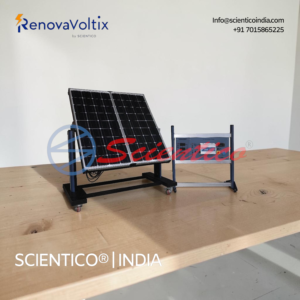 Outdoor Solar Energy Training System | RVX-002Outdoor solar-energy experiment pathway.Open product →
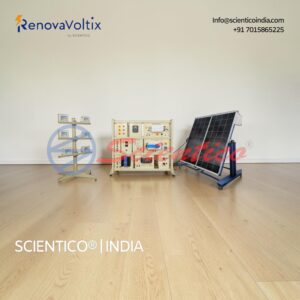 Photovoltaic Solar Energy Advanced Trainer | RVX-006Advanced photovoltaic generation and measurement pathway.Open product →
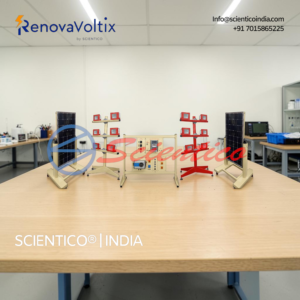 Photovoltaic Solar Panel Measurement Trainer | RVX-004PV-panel characteristics and performance-measurement pathway.Open product →
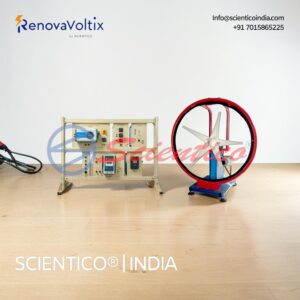 Wind Energy Training System | RVX-007Catalogue reference: RVX-007Wind-energy conversion and measurement pathway.Open product →
| Decision | Buyer should state | Supplier response should show |
|---|---|---|
| Research or teaching question | State the hypothesis, learning outcome or required demonstration | Map the offered model to observable variables and outputs |
| Energy source | State solar, controlled light, wind, grid, battery or hybrid input | Identify every source, emulator and interface included |
| Measurement | List voltage, current, power, speed, irradiation, temperature or other required quantities | Identify instruments, sensors, ranges and data path |
| Load and conversion | Define adjustable loads, storage, inverter or conversion stages | Separate included modules from optional equipment |
| Environment and capacity | State indoor/outdoor conditions and users per station | Identify site requirements, protection and station quantity |
| Evidence and acceptance | Provide the experiment list and required records | Supply model documents and one agreed acceptance exercise |
Choose the energy pathway before choosing the trainer
Photovoltaic measurement, stand-alone generation, grid interaction, battery storage, solar thermal and wind conversion are different teaching jobs. Define the input source, conversion stage, controllable load, measurements and calculations required by the curriculum. A long feature list has little value when it does not expose the quantities students must vary and observe.
Compare the source and operating environment
An indoor photovoltaic trainer may use a controlled source, while an outdoor arrangement depends on site conditions. Wind training may use a controlled drive or another stated source. Record available space, lighting or environmental assumptions, mains connection, storage, ventilation and protection. Ask the supplier to identify every source, module, instrument, load and interface included in the offered model.
Build a complete renewable-energy station schedule
For each station, list the model, source, panels or conversion devices, loads, instruments, protection, software, experiment manual and interconnection accessories. State student capacity and whether multiple groups must work simultaneously. Add one acceptance exercise that confirms the intended input, measurement and output path. This makes solar and wind quotations comparable without treating different learning outcomes as equivalent.