
How to Set Up a Thermodynamics Lab for B.Tech Mechanical Engineering: A Complete Guide
The thermodynamics and heat transfer lab is one of the most technically demanding labs to set up in a mechanical engineering department — and one of the most important. It’s where students first encounter real-world energy systems: refrigeration cycles, heat exchangers, steam engines, and combustion processes. Getting this lab right is the difference between students who understand thermodynamics and students who merely memorise it. This guide walks through every decision you’ll need to make, from space planning to equipment selection to safety compliance.
What Does a Complete Thermodynamics Lab Need to Cover?
Before you order a single piece of equipment, clarify which experiments your curriculum requires. AICTE’s model curriculum for B.Tech Mechanical Engineering maps thermodynamics and heat transfer to two separate lab courses, though many universities combine them into one. The standard experiments that must be covered for a complete thermodynamics lab are:
- Heat Transfer: Linear and radial heat conduction, natural and forced convection, radiation (Stefan-Boltzmann), double pipe and shell and tube heat exchangers
- Refrigeration and Air Conditioning: Vapour compression refrigeration cycle (COP determination), air conditioning trainer, ice plant
- Steam and Gas: Steam calorimeter, Morse test on multi-cylinder engine, Junkers calorimeter
- Compressors: Reciprocating air compressor (isothermal, polytropic, adiabatic efficiency)
- Boilers: Boiler performance test (if applicable to curriculum)
AICTE’s approved model curriculum is publicly available and should be your primary reference for experiment coverage [AICTE Model Curriculum — Mechanical Engineering, 2021].
Space and Infrastructure Requirements
A thermodynamics lab has more infrastructure requirements than most labs because of the energy systems it hosts. Before equipment procurement, confirm these civil and electrical provisions are in place:
- Floor space: Minimum 80–100 sq. metres for a complete setup supporting 20 students per batch. Refrigeration units and compressor test rigs need a 1.5–2 metre clearance zone around them.
- Electrical supply: Three-phase 415V, 50 Hz supply with individual MCBs for each equipment position. Refrigeration units draw 3–5 kW; compressors can draw 7–15 kW. Total connected load for a complete thermodynamics lab is typically 40–60 kW.
- Ventilation: Refrigeration and combustion experiments require good ventilation. A minimum of 10–12 air changes per hour is recommended for labs using refrigerants or running internal combustion engines.
- Water supply: Heat exchangers and condensers require a cold water supply at 15–20 LPM. An overhead tank with gravity feed is adequate; a pressurised supply is preferable.
- Flooring: Anti-slip epoxy or ceramic tile flooring near any equipment with refrigerant or water lines.
Essential Equipment and What to Look For
Shell and Tube Heat Exchanger
The Shell and Tube Heat Exchanger apparatus is the centrepiece of any heat transfer lab. For educational purposes, it should allow both parallel and counter flow operation, with at least four temperature measurement points and individual flow control for shell-side and tube-side fluids. Look for borosilicate glass end caps that allow students to visually observe flow patterns — this significantly improves learning outcomes compared to fully opaque metal shell designs.
Refrigeration Training Unit
The Refrigeration Training Unit must use a refrigerant compliant with your country’s environmental regulations. In India, R134a is standard; UAE and GCC countries may require R410A compliance. The unit should have a sight glass on the liquid line, P-H diagram capability (via pressure transducers at key points), and a Schrader valve access for pressure measurements. Students should be able to plot the complete refrigeration cycle on a P-H diagram from live measurements — not from textbook values.
Reciprocating Air Compressor Test Rig
The compressor test rig should measure: inlet pressure and temperature, outlet pressure and temperature, volumetric flow rate (using a calibrated orifice plate or air box), electrical power input, and compressor speed. Look for units with an intercooler section for two-stage compression — this makes the rig versatile for both single-stage and two-stage efficiency calculations. Our Compressor Test Rig Experiment Guide covers the full calculation methodology.
Heat Conduction and Convection Apparatus
These are typically the most straightforward pieces to specify. Linear heat conduction requires a metal rod (25–38mm diameter, 300–400mm long) with embedded thermocouples at known spacing and a variable heater at one end. Natural/forced convection apparatus uses a vertical duct with a blower and heater. See our detailed Heat Conduction Experiment Guide for the exact specifications that work for undergraduate lab sessions.
Safety Compliance: Non-Negotiable Items
A thermodynamics lab operates equipment at elevated temperatures, pressures, and electrical loads. Safety compliance is not optional — it’s a direct NBA and ABET accreditation criterion. The following must be in place before any student accesses the lab:
- CO₂ fire extinguisher (electrical fires) and dry powder extinguisher (general) — one of each, placed at marked locations near exit
- Emergency stop buttons on the wall adjacent to each high-power equipment position
- Pressure relief valves certified to ASME or BS standards on any pressurised vessel (compressor receiver, boiler)
- Safety data sheets (SDS) for refrigerants posted in the lab
- Personal protective equipment station: heat-resistant gloves, safety goggles, lab coats
- First aid kit with burn treatment supplies
The Bureau of Indian Standards (BIS) publishes IS 1900 series standards for laboratory safety in educational institutions — these are the formal reference documents for any NBA safety compliance query [Bureau of Indian Standards — BIS].
Cost Benchmarks for a Complete Thermodynamics Lab
Budgeting for a thermodynamics lab requires separating civil work costs from equipment costs. Equipment cost benchmarks for a complete B.Tech Mechanical Engineering thermodynamics lab (covering all AICTE-required experiments), sourced from a CE-certified Indian manufacturer:
| Equipment | Approx. Cost (INR) | Approx. Cost (USD) |
|---|---|---|
| Shell and tube heat exchanger apparatus | 90,000–1,40,000 | 1,080–1,680 |
| Refrigeration training unit | 1,80,000–2,80,000 | 2,160–3,360 |
| Reciprocating air compressor test rig | 1,20,000–1,80,000 | 1,440–2,160 |
| Heat conduction apparatus (linear + radial) | 60,000–90,000 | 720–1,080 |
| Convection heat transfer apparatus | 70,000–1,10,000 | 840–1,320 |
| Double pipe heat exchanger | 65,000–95,000 | 780–1,140 |
| Complete lab (all experiments) | 8–18 lakhs | 9,600–21,600 |
For institutions in the Middle East and Africa, shipping costs add USD 500–2,000 per consignment depending on volume, with typical delivery times of 10–14 days (GCC) to 18–26 days (East Africa). For an accurate CIF proforma invoice to your port, contact Scientico India at [email protected] with your institution name, country, and experiment list.
A Note on Experiment Guides and Accreditation Readiness
Every piece of thermodynamics equipment you procure should come with an experiment manual that includes: aim and theory, apparatus list, step-by-step procedure, observation table, sample calculations, result interpretation, and at least five viva questions. These manuals serve double duty as learning resources for students and as documentary evidence for accreditation visitors that your lab produces educationally valid outcomes — not just equipment demonstrations. Our complete thermodynamics lab equipment range ships with such manuals for every experiment.
Get Specifications & Pricing
Scientico India manufactures CE-certified, ISO 9001:2015-compliant laboratory apparatus for universities and institutions. Contact us for full specifications, pricing, and documentation.
WhatsApp: +91 701-586-5225 | [email protected] | FAQ — Shipping, Payment & Warranty
Scientico India manufactures CE-certified, ISO 9001:2015 laboratory equipment — exported to 60+ countries since 1993. Get a CIF proforma invoice within 24 hours.
View Engineering Lab Equipment →Request a QuoteLab Equipment Featured in This Guide
Manufactured in-house by Scientico India — ISO 9001:2015 & CE certified, exported to 60+ countries. Request a CIF quote within 24 hours.
 Wind Tunnel | FluidoSurge-X 216View details & get quote →
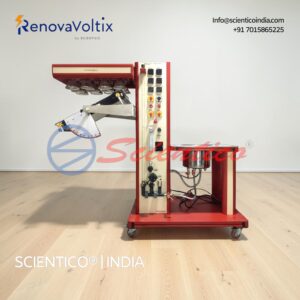 Solar Thermal Energy Training System | RVX-009View details & get quote →
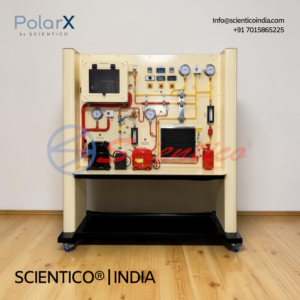 Refrigeration System with Two-Stage Compression | PolarX – 532View details & get quote →
 Pipe Surge and Water Hammer Apparatus | FluidoSurge-X 324View details & get quote →
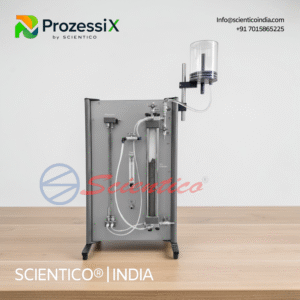 Flow Through Particle Layers Trainer | ProzessiX PX-02View details & get quote →
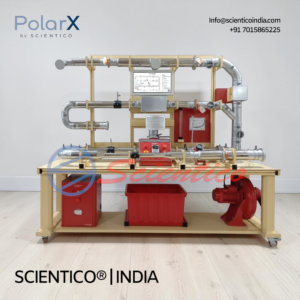 Air Duct Training System | PolarX – 580View details & get quote →