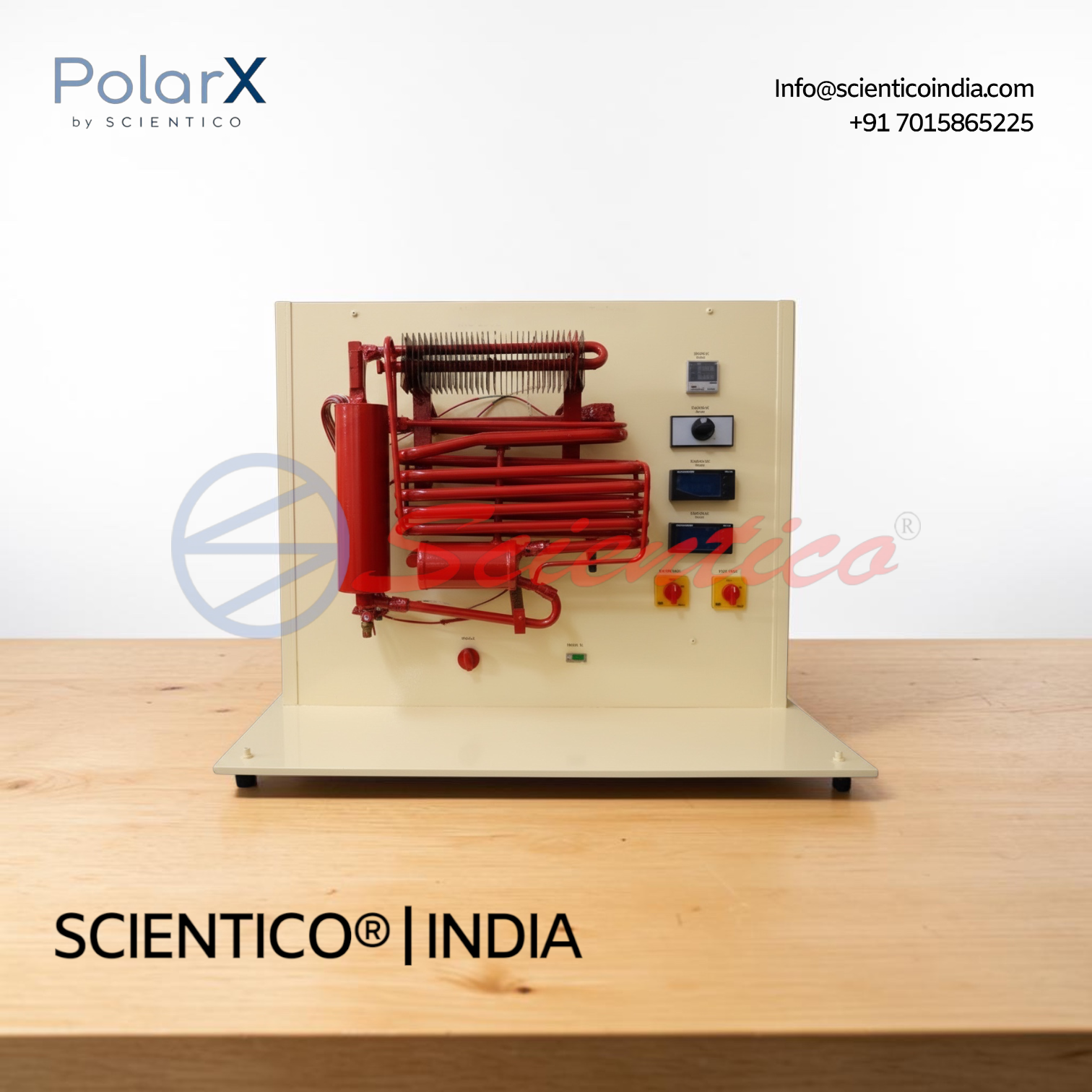
Absorption Refrigeration Trainer | PolarX – 504
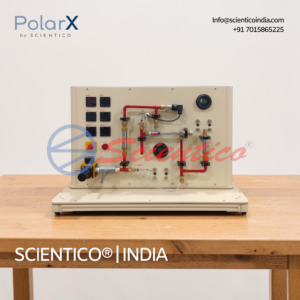
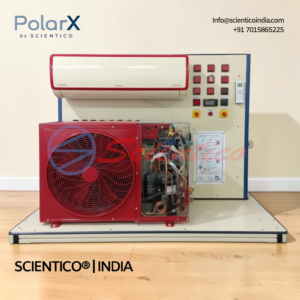
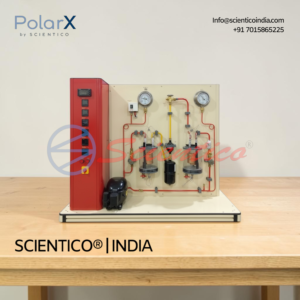
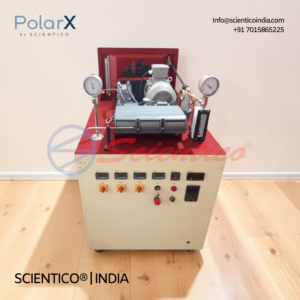
The Absorption Refrigeration Trainer PolarX – 504 is a laboratory unit demonstrating the operation of an absorption refrigeration system using an ammonia-water working medium and hydrogen as an auxiliary gas. Its primary components are an evaporator, absorber, boiler with bubble pump, and condenser. This absorption refrigeration trainer is heated by an adjustable electric heater (60 to 180 W) at the boiler, with an optional gas burner (propane, LPG, or natural gas) as an alternative, and an adjustable 50 W evaporator heater as the cooling load. Four K-type temperature sensors (-40 to 400°C) and two digital multifunctional power meters (0 to 500 V, 0 to 40 A each) monitor all circuit parameters digitally, with power measurement from 0 to 200 W. Optional LabVIEW-based DAQ software is available for Windows-based data acquisition.1
The Absorption Refrigeration Trainer PolarX – 504 is a laboratory unit designed to demonstrate the fundamental operation of an absorption refrigeration system using an ammonia-water solution as the working medium and hydrogen as an auxiliary gas. This absorption refrigeration trainer includes an evaporator, absorber, boiler with bubble pump, and condenser as its primary components, with an adjustable electric heater at the evaporator as the cooling load and digital displays for temperature and power measurement across the refrigeration circuit.
Product Overview
The Absorption Refrigeration Trainer PolarX – 504 demonstrates the principle that liquids begin to evaporate at low temperatures when pressure is lowered. Ammonia liquid evaporates in the evaporator, removing heat from the surrounding air. The absorber absorbs the ammonia steam in water to reduce the evaporation pressure. The high-concentration ammonia solution is continuously purified to sustain the absorption process. In the boiler, acting as a generator, the high-concentration ammonia solution is heated until the ammonia evaporates again. A bubble pump transports the solution within the circuit. The ammonia steam is then condensed and cooled in the condenser before returning to the evaporator. The low-concentration ammonia solution flows back to the absorber. Hydrogen is used as an auxiliary gas to maintain the pressure differential throughout the system.
The boiler can be heated by an adjustable electric heater (60 to 180 W) or alternatively by an optional gas burner using propane, LPG, or natural gas with a piezoelectric igniter. An adjustable 50 W electric heater at the evaporator serves as the cooling load. Power measurement covers a range of 0 to 200 W. Two digital multifunctional power meters each measure AC voltage (0 to 500 V) and AC current (0 to 40 A). Four K-type temperature sensors with a range of -40 to 400°C measure temperatures digitally across the refrigeration circuit. Digital data is captured and displayed for temperatures in the refrigeration circuit as well as the heating capacity at the boiler and the evaporator. Optional LabVIEW-based DAQ software is available for PC-based data acquisition.
Absorption Refrigeration Trainer PolarX – 504, Technical Specifications
| Parameter | Value |
|---|---|
| Working Medium | Ammonia-water solution |
| Auxiliary Gas | Hydrogen |
| Primary Components | Evaporator, absorber, boiler with bubble pump, condenser |
| Electric Heater Power (Boiler) | 60 to 180 W, adjustable |
| Evaporator Heater Power | 50 W, adjustable |
| Gas Burner Fuel (Optional) | Propane, LPG, or natural gas |
| Gas Burner Ignition (Optional) | Piezoelectric igniter |
| Power Measuring Range | 0 to 200 W |
| Digital Power Meters | 2 |
| AC Volt Range (per meter) | 0 to 500 V |
| AC Ampere Range (per meter) | 0 to 40 A |
| Temperature Sensor Type | K-type |
| Temperature Sensor Range | -40 to 400°C |
| Number of Temperature Sensors | 4 |
Technical Data
Working Medium and Auxiliary Gas
| Parameter | Value |
|---|---|
| Working Medium | Ammonia-water solution |
| Auxiliary Gas | Hydrogen |
Electric Heater (Boiler)
| Parameter | Value |
|---|---|
| Power | 60 to 180 W, adjustable |
Gas Burner (Optional)
| Parameter | Value |
|---|---|
| Fuel | Propane, LPG, or natural gas |
| Ignition | Piezoelectric igniter |
Evaporator Heater
| Parameter | Value |
|---|---|
| Power | 50 W, adjustable |
Digital Multifunctional Power Meter
| Parameter | Value |
|---|---|
| Number of Units | 2 |
| AC Volt Range | 0 to 500 V |
| AC Ampere Range | 0 to 40 A |
Temperature Sensors
| Parameter | Value |
|---|---|
| Type | K-type |
| Range | -40 to 400°C |
| Total Number | 4 |
Power Measurement
| Parameter | Value |
|---|---|
| Power Range | 0 to 200 W |
Key Features
- Absorption Refrigeration Trainer Configuration: Evaporator, absorber, boiler with bubble pump, and condenser
- Working Medium: Ammonia-water solution
- Auxiliary Gas: Hydrogen, used to maintain pressure differential
- Boiler Heater: Adjustable electric heater, 60 to 180 W
- Alternative Boiler Heating: Optional gas burner (propane, LPG, or natural gas) with piezoelectric igniter
- Evaporator Heater: Adjustable, 50 W, serves as cooling load
- Bubble Pump: Transports solution within the circuit
- Power Measurement Range: 0 to 200 W
- Digital Power Meters: 2 units, each measuring AC voltage (0 to 500 V) and AC current (0 to 40 A)
- Temperature Sensors: 4 x K-type, range -40 to 400°C, digital display
- Digital Displays: Temperature and power values displayed digitally
- Waste Heat Utilisation: Generated waste heat can be used for process cooling applications
- Quiet Operation: No mechanical compressor, silent running
- Software: Optional LabVIEW-based DAQ software, Windows compatible
Experiments
- Demonstrating the fundamental workings of an absorption refrigeration system
- Study of the essential parts of the absorption refrigeration system
- Operational behaviour under load
Construction and Design
The Absorption Refrigeration Trainer PolarX – 504 is built around four primary components: an evaporator, an absorber, a boiler acting as a generator with a bubble pump, and a condenser. The working medium is an ammonia-water solution. Hydrogen serves as an auxiliary gas to maintain the pressure differential across the circuit. Ammonia liquid evaporates in the evaporator, absorbing heat from the surrounding air. The ammonia steam is absorbed by water in the absorber to reduce evaporation pressure. The high-concentration ammonia solution is continuously circulated to prevent the absorption process from stopping. The boiler heats the solution until ammonia evaporates again, and a bubble pump transports the solution through the circuit. The ammonia steam condenses in the condenser and returns to the evaporator. The low-concentration ammonia solution flows back to the absorber.
The boiler is heated by an adjustable electric heater rated at 60 to 180 W. An optional gas burner using propane, LPG, or natural gas with a piezoelectric igniter provides an alternative heating source. An adjustable 50 W electric heater at the evaporator serves as the cooling load. Two digital multifunctional power meters, each covering 0 to 500 V AC and 0 to 40 A AC, monitor electrical power input. Four K-type temperature sensors with a range of -40 to 400°C measure temperatures at all relevant points in this absorption refrigeration trainer circuit, with all values shown on digital displays. Power measurement covers 0 to 200 W.
Software
PolarX – 504 Software (Optional)
- Developed in the National Instruments LabVIEW environment
- Designed specifically for data acquisition with this apparatus
- Measures, processes, and stores experimental results on a PC
- A set of electronic sensors is included when the software option is selected
- Compatible with any Windows operating system
Scope of Delivery
- 1 experimental module
- 1 instruction manual
Q1: What working medium and auxiliary gas are used in the Absorption Refrigeration Trainer PolarX – 504?
The unit uses an ammonia-water solution as the working medium. Hydrogen is used as an auxiliary gas to maintain the pressure differential throughout the system without a mechanical compressor.
Q2: How is the boiler heated in this absorption refrigeration trainer?
The boiler is heated by an adjustable electric heater rated at 60 to 180 W as standard. An optional gas burner using propane, LPG, or natural gas with a piezoelectric igniter is available as an alternative heating source.
Q3: What is the purpose of the evaporator heater in this unit?
The adjustable 50 W electric heater at the evaporator simulates the cooling load. It produces the heat input that the evaporating ammonia must remove, replicating the load that would be applied in a real refrigeration application.
Q4: What temperature and power parameters are measured and displayed?
Four K-type temperature sensors (range -40 to 400°C) measure temperatures across the refrigeration circuit. Two digital multifunctional power meters each measure AC voltage (0 to 500 V) and AC current (0 to 40 A). Power measurement covers a range of 0 to 200 W. All values are shown on digital displays.
Q5: What is the operating advantage of an absorption refrigeration system over a compression refrigeration system?
An absorption refrigeration system operates without a mechanical compressor, running on thermal energy instead of mechanical energy. This results in quiet operation. The generated waste heat can also be used for cooling in process technology applications, improving overall system efficiency.
Need Assistance? We're Here to Help!
Connect with our team for product specifications, pricing, and customized solutions for your institution or project.