
Chemical Reactions
Reaction engineering is where a rate law on paper stops being algebra and becomes a vessel with a stirrer, a heater and a sampling port.
Chemical Reactions
Frequently Asked Questions
How can an institution request a quotation?
Send the product or experiment requirement, quantity, destination and any tender requirements to Scientico. The quotation is prepared against the confirmed scope.
What information should be included in a laboratory equipment enquiry?
Include the required model or syllabus, quantity, electrical supply, required accessories, destination and preferred delivery terms. This allows the equipment scope to be checked correctly.
Which documents can be discussed before ordering?
Ask for the documentation required for the selected model and destination. Availability of manuals, calibration records, declarations, packing information and export documents is confirmed in the quotation.
Showing 1–12 of 19 results
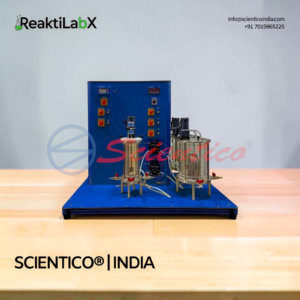

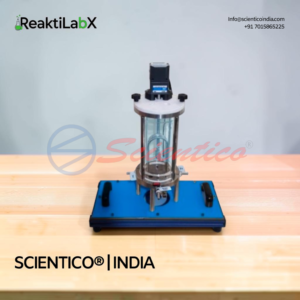
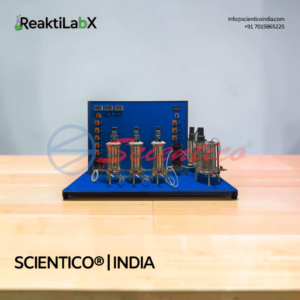
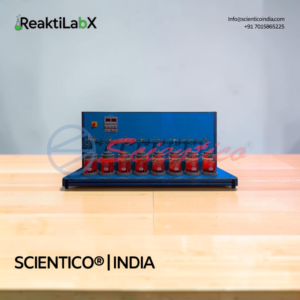


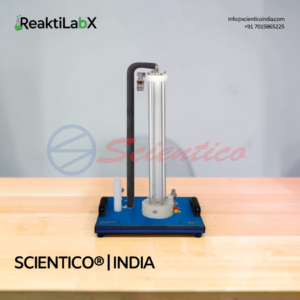
How to Specify Chemical Reactions for a Lab or Tender
Support reaction-engineering teaching with batch, tubular, stirred-tank, plug-flow, catalytic and related reactor systems. Start with the product or experiment name. Use a catalogue model only to identify the configuration being offered after the buyer's functional requirement is clear.
Questions to settle before requesting prices
- Which reactor model and kinetics exercise is required?
- What feed, temperature-control and sampling arrangement is needed?
- Which variables must be measured or controlled?
- What materials, utilities and safe operating limits apply?
How to compare distributor or supplier offers
Compare reactor geometry, feed and residence-time arrangement, measurement points, control functions and supported calculations.
Keep the buyer's original line numbers. Record the offered product, model, included scope, deviation and document reference in separate columns.
Information Scientico needs
Send the product names or syllabus, quantities, destination, required utilities, requested documents and submission deadline. If a reference brand or model appears, attach the underlying specification so equivalence can be checked.
Specifying a Chemical Reactions lab?
These set out the equipment list, the specification and the documentation an evaluator asks for.
Related equipment ranges
Departments equipping this lab usually specify these alongside it.
Distributors and tender bidders
We manufacture at our own works in Ambala and supply through distributors in most markets.
All Chemical Reactions Products (19)
Browse by the product or apparatus name used in a syllabus, BOQ or tender. Each page keeps its catalogue model as a secondary technical reference and provides the available specification and quotation route.
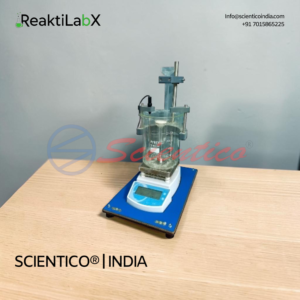
- Batch Stirred Tank Reactor (Stand Alone) | ReaktiLabX - 18
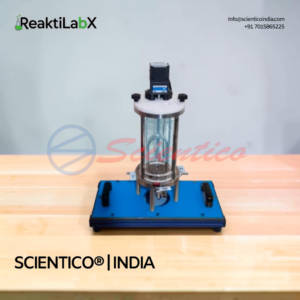
- Continuous Stirred Tank Reactor (Stand Alone) | ReaktiLabX - 13
- Continuous Stirred Tank Reactor | ReaktiLabX - 08
- Continuous Stirred Tank Reactor in Series (Stand Alone) | ReaktiLabX - 14
- Corrosion Study Unit | ReaktiLabX - 04
- Diffusion in Liquids | ReaktiLabX - 02
- Diffusion in Liquids and Gases | ReaktiLabX - 01
- Discontinuous Stirred Tank Reactor | ReaktiLabX - 17
- Fixed Bed Catalysis | ReaktiLabX - 05
- Fluidized Bed Reactor | ReaktiLabX 19
- Gaseous Diffusion Apparatus | ReaktiLabX - 03
- Laminar Flow Reactor | ReaktiLabX - 12
- Plug-Flow Reactor (PFR) | ReaktiLabX - 10
- Service Unit for Chemical Reactors | ReaktiLabX - 07
- Stirred Tanks in Series | ReaktiLabX - 09
- Trickle Bed Reactor | ReaktiLabX 15
- Tubular Flow Reactor | ReaktiLabX - 06
- Tubular Reactor | ReaktiLabX - 11
- Wetted Wall Gas Absorption Column | ReaktiLabX 16
About Chemical Reactions
Reaction engineering is where a rate law on paper stops being algebra and becomes a vessel with a stirrer, a heater and a sampling port. The equipment in this category exists so students can measure conversion, watch it change with residence time and temperature, and then argue about which reactor configuration they would choose for a given duty.
We have manufactured and exported this class of apparatus since 1993 from our own works in Ambala, Haryana, to more than 60 countries. What follows is how departments approach the category: which units a syllabus needs, what each demonstrates, and what has to appear in the specification so the unit you receive is the unit you intended to buy.
The reactor units a reaction engineering lab is built around
Most undergraduate syllabi are satisfied by a small family of bench units. The value is not in owning every variant. It is in owning the set that allows a direct comparison between reactor types under conditions the students set themselves.
ApparatusWhat the student measuresWhat it teaches
Batch reactor with stirrer and temperature controlConcentration against time at a controlled temperatureRate law determination, order of reaction, rate constant, effect of temperature on rate
Continuous stirred tank reactorSteady state outlet concentration at a set feed ratePerfect mixing assumption, space time, conversion in a single stirred stage
Cascade of stirred tanks in seriesConcentration stage by stage across the cascadeHow conversion climbs as tanks are added, approach to plug flow behaviour
Plug flow or coiled tubular reactorOutlet conversion against flow rate and jacket temperatureAxial concentration profile, why a tubular unit outperforms a single stirred tank at equal volume
Packed bed reactorConversion across a packed section, pressure drop over the bedHeterogeneous contacting, bed voidage, catalyst or packing effects
Residence time distribution unit with tracer detectionDetector response against time after a pulse or step inputMean residence time, variance, dispersion and dead volume in a real vessel
The comparison the syllabus asks for
The exercise that appears in almost every reaction engineering course is the comparison between a batch reactor, a stirred tank and a tubular reactor on the same duty. If the units share a common feed arrangement and a common analysis method, students make that comparison with their own numbers instead of copying it from a textbook. If the units are mismatched, it collapses into three unrelated experiments.
BasisBatchStirred tank, continuousTubular, plug flow
ModeCharge, react, dischargeSteady flow in and outSteady flow along the tube
Concentration fieldUniform in space, falls with timeUniform, and equal to the outlet valueFalls along the length, steady in time
Design variableReaction timeSpace time, volume over volumetric flowSpace time along the tube
Conversion at equal volumeDepends on holding timeLowest for positive order kineticsHighest for positive order kinetics
Typical teaching pointKinetics and rate constantsWhy outlet concentration governs the rateWhy staging or a tube recovers the lost conversion
Student workloadFrequent samplingWaiting for steady stateFlow setting and steady state checks
Residence time distribution work sits underneath all of it. A tracer input and an in-line detector let students see that a real stirred tank is not ideally mixed and that a real tube carries dispersion. Departments often use this experiment as evidence of higher order laboratory outcomes for accreditation, since it asks students to compare a measured response with a model rather than fill in a table. Our note on laboratory documentation for accreditation covers how those records are usually assembled, and the requirements guide for engineering colleges covers the coverage expected per intake.
What to write into the specification
A weak line item reads "CSTR apparatus, complete with accessories". That wording lets any bidder supply any vessel, the evaluation turns on price alone, and the department lives with the outcome for a decade. State the following instead, as requirements rather than preferences.
ItemState in the specificationWhy it decides the outcome
Wetted materialsReactor body, internals, seals, tubing and fittings, named individuallyGlass, stainless steel and polymer wetted parts each restrict which chemistries the department can run later
VisibilityWhether the reacting volume must be visible to the classA transparent vessel turns a numerical exercise into something students can see happening
Heating and temperature controlHeating method, controller type, sensor type and location, whether jacketed circulation is requiredKinetics experiments are meaningless if temperature drifts during a run
AgitationStirrer type, drive, speed adjustment and speed indicationThe perfect mixing assumption has to be defensible, and speed is a variable students should be able to change
Feed and flow measurementPump or gravity feed, flow indication and adjustment for each streamSpace time is calculated from flow, so flow accuracy sets the quality of every result
Sampling arrangementNumber and position of sampling points, valve type, sample handlingSampling that disturbs the reactor, or that scalds a student, is a design defect not an inconvenience
InstrumentationWhich quantities are indicated on the panel, sensor ranges, whether data logging is requiredDecides whether readings are taken by hand or logged, and how many students can work at once
Cleaning and drainDrain points, dead legs, ability to flush between batchesA vessel that cannot be emptied and rinsed quickly loses laboratory hours every week
CalibrationFactory calibration certificates for supplied instrumentsSets what the department can show an auditor at handover
If you are drafting a full purchase list rather than a single item, the specification writing guide shows how to phrase clauses that survive technical evaluation without being restrictive, and the chemical engineering laboratory equipment list sets this category alongside fluid mechanics, heat transfer and mass transfer so nothing is bought twice. Where a property has to be tested against a published method rather than demonstrated, cite the applicable test method in the clause itself.
Services and site preparation
ServiceWhat to confirm before delivery
ElectricalSupply voltage and frequency, phase, earthing, socket position at each bench, residual current protection
WaterFeed for cooling or jacket circulation, pressure available at the bench, hose connection type
DrainageFloor or bench drain within reach, and a decision on how spent contents will be collected
ExtractionFume extraction or a hood where the department intends to run anything volatile or odorous
Bench and accessLoad bearing bench, clearance above tall columns, room for a class to gather at the unit
Extraction is the service most often left until installation day, and the one that most often delays commissioning. Settle it while the layout is on paper. The new laboratory timeline checklist sequences civil work, services and equipment arrival so a room is ready when the crates land, and the budget planning guide by intake helps size the order to the class strength you actually teach.
Safe student operation
These units are handled by second and third year students, in groups, often at the end of a long day. Specify for that: guarding on the stirrer drive, an accessible isolation switch, over temperature protection independent of the main controller, relief on any closed volume, restrained tubing, and sampling valves positioned so a hand is never above a hot line. Ask any bidder to describe these features in the offer rather than assert that the unit is safe.
Quality position, stated plainly
We are an ISO 9001:2015 certified manufacturer, and CE conformity documentation is available on applicable models. We are not ISO/IEC 17025 or NABL accredited, and we do not present ourselves as a calibration laboratory. Instruments supplied with our units carry factory calibration certificates. Accredited calibration is arranged separately with an accredited laboratory, and is worth planning into the annual schedule in our calibration and maintenance schedule guide. Certificates on file can be seen under quality certifications, and technical literature under downloads.
For distributors, resellers and tender bidders
This is a strong category for a distributor because a department rarely buys one unit. It buys a set, then returns for the next building or the next intake. What decides whether you keep that account is usually not price.
Specification detail that survives evaluation. Committees reject offers that answer a nine line specification with a one line description. Describe wetted materials, control arrangement, instrumentation and sampling item by item in your own submission, before the bid closes.
Manufacturer authorisation. Most government and institutional tenders require an authorisation letter from the manufacturer against the specific tender number and date. We issue these for our own products. If the term is new to you, start with what a manufacturer authorisation form is and then the practical note on obtaining an MAF for a live tender.
Documentation pack. Technical literature, general arrangement details, operating and maintenance manuals, factory calibration certificates and conformity documentation, assembled before submission rather than after award. Portal listings have their own rules, covered in the public procurement portal guide and the tender documents checklist.
Spares over the product life. Seals, gaskets, tubing, heaters, sensors and glassware decide whether a unit is still running in year eight. Agree the spares and after sales arrangement at the start of the relationship, not after the first breakage.
Installation responsibility. Write into the contract who prepares services, who unpacks, who commissions and who trains staff. Ambiguity here is where distributor margin disappears.
Distributors and importers evaluating us as a supply partner can review the dealership and distribution terms, the framework in manufacturer due diligence, and, for cross border orders, the export documentation guide alongside the importer guide to sourcing from India. Reference material on published standards is collected in the standards reference for laboratory testing.
Working out what your lab needs
Pricing in this category is quote based, because a reaction engineering bench is defined by its materials, its control arrangement and the services in your room rather than by a catalogue line. The useful first step is not a price list. It is a short conversation about the experiments the syllabus requires, the class strength per batch, the chemistry the department intends to run now and in five years, and the services already present at the bench.
Send the experiment list, the draft specification or simply the syllabus page, and we will respond with a configuration set against it, flag any wording that would cause a problem at technical evaluation or at installation, confirm what the room has to provide in the way of power, water, drainage and extraction, and quote on that basis. Departments building a laboratory from an empty room, departments replacing a bench that has reached the end of its life, and distributors preparing a bid against a live tender are all welcome to get in touch with our team.
Need help matching the requirement?
Tell us the product or experiment, quantity and destination so the configuration and commercial scope can be reviewed.
Chemical Reactions Guides & Resources
Setup guides, experiment procedures and buying advice from Scientico's engineering team.