Boundary Layers Module | FluidoSurge-X 356
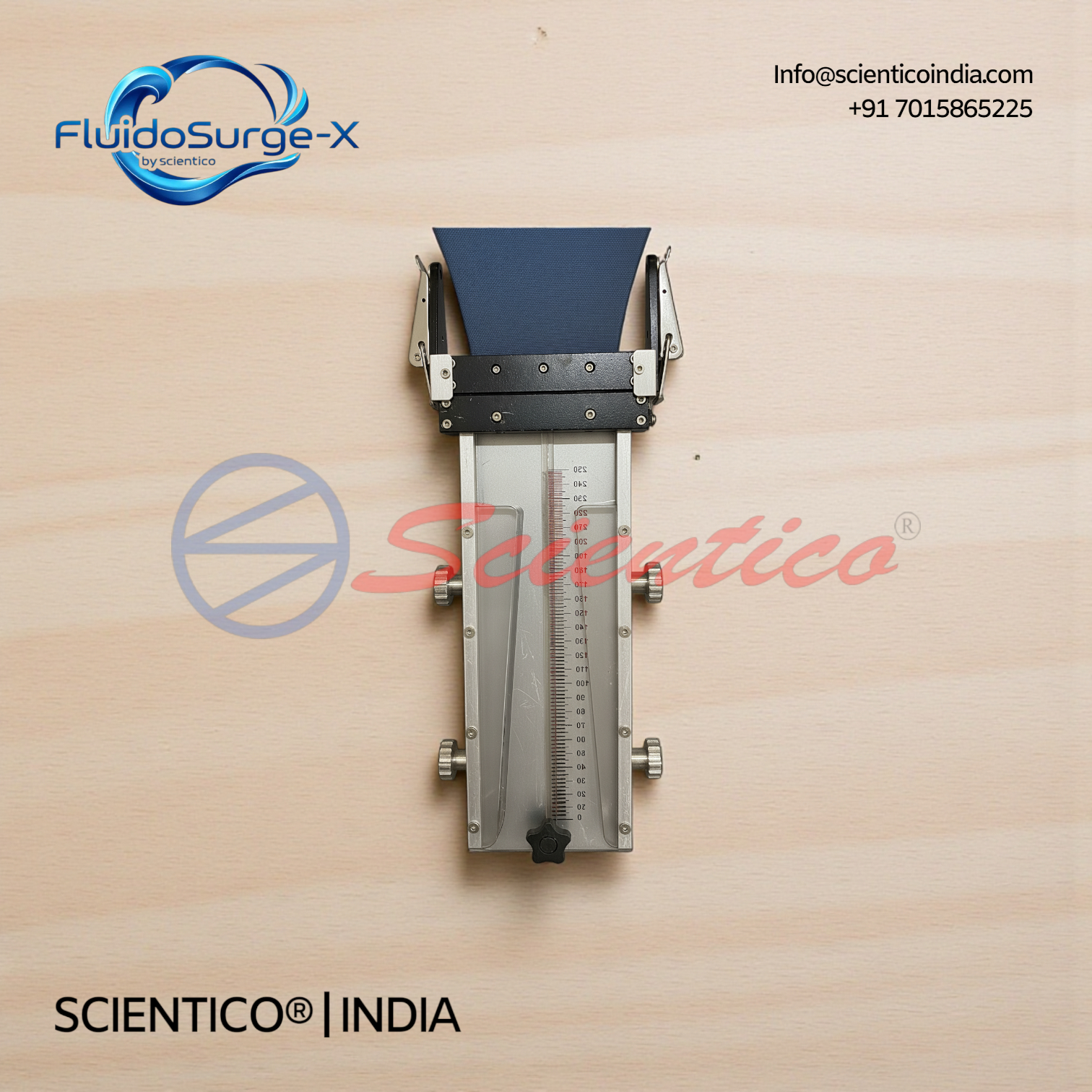
The Boundary Layers Module is a laboratory accessory designed for experimental investigation of boundary layer development over a flat plate. Made by Scientico India, ISO 9001:2015 certified, and supplied with a calibration certificate and operation manual.
The Boundary Layers Module FluidoSurge-X 356 is a laboratory accessory designed for experimental investigation of boundary layer development over a flat plate. Manufactured by SCIENTICO, the unit enables detailed study of laminar and turbulent boundary layers and the influence of surface roughness. It is intended for use with the compatible aerodynamics trainer in fluid mechanics laboratories.
Product Overview
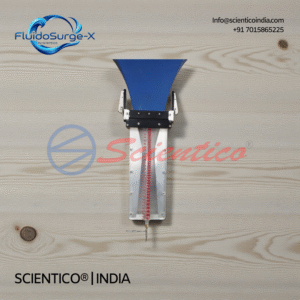
FluidoSurge-X 356 allows air to flow parallel to a flat plate to analyze boundary layer formation. The plate is provided with two different surface finishes to compare the effect of smooth and rough conditions on boundary layer behavior. A horizontally movable Pitot tube, adjusted using a micrometer screw, measures total pressure at various distances from the plate surface. The plate itself can be moved along the flow direction to enable pressure measurement at different streamwise positions.
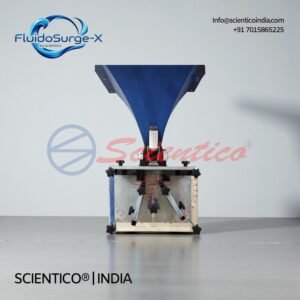
Removable side bodies can be installed to introduce degressive or progressive pressure gradients, allowing investigation of boundary layer interference effects and internal friction behavior.
Request Specifications & Pricing
model-specific, ISO 9001:2015 compliant. Supplied to universities and institutions in 30+ countries.
WhatsApp: +91 701-586-5225 | Email: [email protected]
View Quality Certifications | FAQ, Shipping, Warranty, Lead Time
Plate
| Parameter | Specification |
|---|---|
| Dimensions (L x W) | 260 x 55 mm |
| Thickness | 5 mm |
| Chamfer | 33° |
| Movement Range (Streamwise) | 0 to 250 mm |
| Surface Types | 1 Smooth Surface, 1 Rough Surface |
Pitot Tube
| Parameter | Specification |
|---|---|
| Diameter | 0.7 mm |
| Vertical Adjustment Range | 0.35 to 50 mm |
| Adjustment Method | Micrometer screw |
Side Bodies
| Parameter | Specification |
|---|---|
| Quantity | 2 |
| Inclination | 1:12.5 |
| Function | Boundary layer interference studies |
Manometer System
-
16 tube manometers for displaying dynamic pressures
Key Features
-
Experimental study of boundary layer development on flat plate
-
Comparison of smooth and rough surface effects
-
Horizontally movable Pitot tube with micrometer adjustment
-
Streamwise movable plate for pressure distribution study
-
Removable side bodies for pressure gradient interference
-
Quick release attachment to compatible aerodynamics trainer
-
Visualization of internal friction and boundary layer behavior
Applications
-
Fluid mechanics and aerodynamics laboratories
-
Study of laminar and turbulent boundary layers
-
Investigation of surface roughness effects
-
Analysis of pressure gradients and flow interference
-
Educational demonstration of internal friction in gases
Construction & Design Details
The module includes a flat plate assembly mounted in the measuring section of the compatible aerodynamics trainer. The Pitot tube is mounted on a precision adjustment mechanism allowing fine positioning relative to the plate surface. The interchangeable smooth and rough plates enable comparative studies. Removable side bodies introduce controlled pressure gradients, enabling extended analysis of boundary layer separation and interference.
Experiments
-
Investigation of boundary layer formation on a flat plate
-
Influence of surface roughness on boundary layer characteristics
-
Measurement of velocity distribution within the boundary layer
-
Boundary layer interference under degressive pressure gradient
-
Boundary layer interference under progressive pressure gradient
-
Study of internal friction effects in airflow
Required for Operation
-
Aerodynamics Trainer FluidoSurge-X 356 (compatible unit required)
Standard Scope of Delivery
-
1 Experimental Unit
-
1 Smooth Surface Plate
-
1 Rough Surface Plate
-
2 Removable Side Bodies
-
1 Instruction Manual
Export & Supply Capability
SCIENTICO manufactures the Boundary Layers Module FluidoSurge-X 356 for engineering colleges and research laboratories. The unit is suitable for domestic and international supply with appropriate export packing and documentation.
Q1. What is the purpose of this module?
It is used to study boundary layer formation and behavior on a flat plate.
Q2. How is velocity within the boundary layer measured?
A Pitot tube measures total pressure at different distances from the plate surface, from which velocity is determined.
Q3. Can surface roughness effects be analyzed?
Yes. The module includes both smooth and rough plates for comparative analysis.
Q4. What is the function of the side bodies?
They create degressive or progressive pressure gradients to study boundary layer interference.
Q5. Is the module standalone?
No. It requires a compatible aerodynamics trainer for operation.
Need Assistance? We're Here to Help!
Connect with our team for product specifications, pricing, and customized solutions for your institution or project.