Analytical Process Control Trainer | ProzessiX PX-04

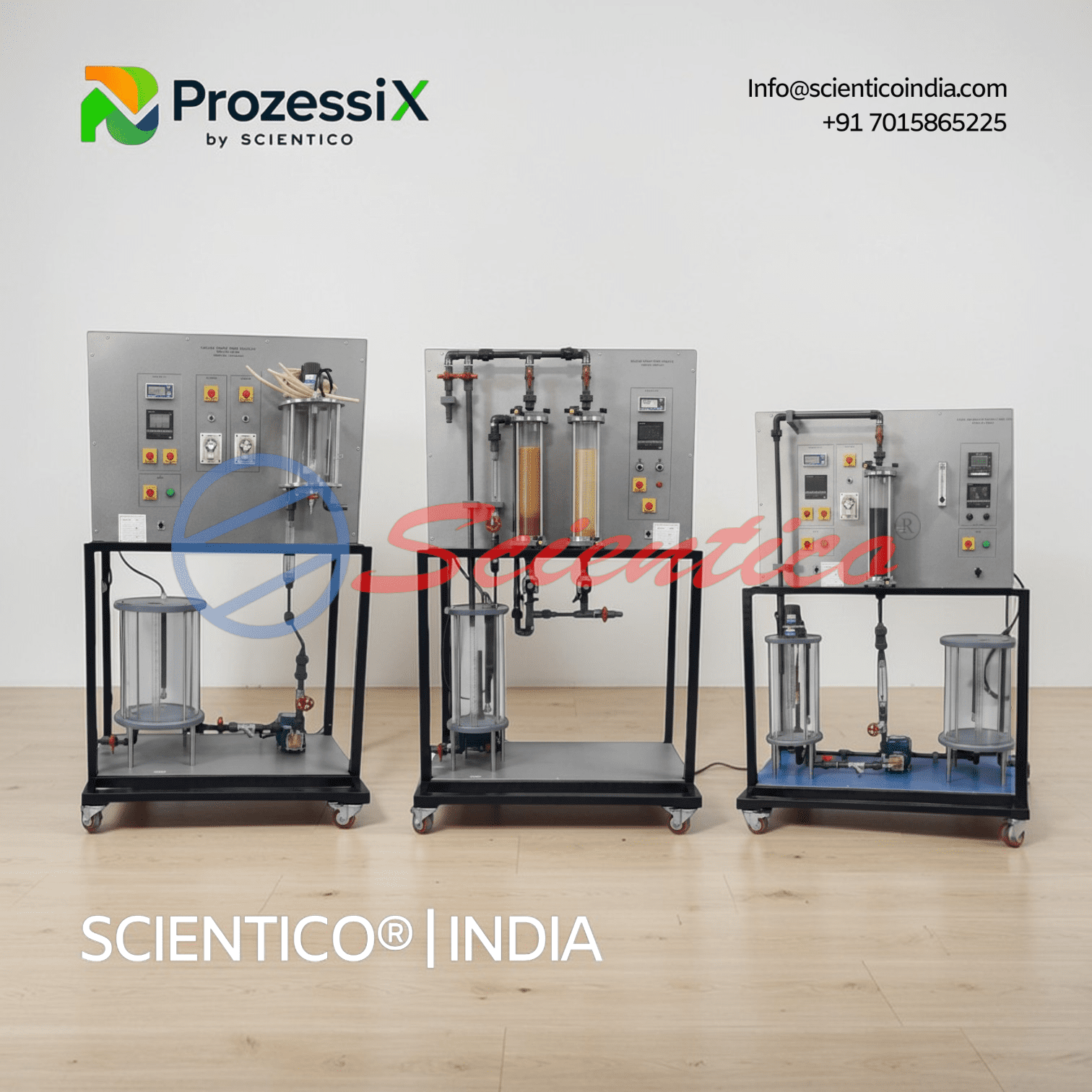
The Analytical Process Control Trainer, ProzessiX PX-04, is a modular laboratory system designed to study analytical process measurement and control of pH, conductivity, ORP, and dissolved oxygen in water-based processes.

The trainer includes industrial-style components such as pumps, reagent tanks, analytical sensors, and universal process controllers. It enables hands-on training in chemical parameter control, sensor calibration, and dosing operations. Manufactured by SCIENTICO, the system is suitable for engineering institutions, pilot plants, and international technical training laboratories.

The Analytical Process Control Trainer is a comprehensive laboratory system designed to study and regulate chemical properties of process fluids using analytical instrumentation. The trainer enables practical experimentation in monitoring and controlling parameters such as pH, conductivity, oxidation-reduction potential (ORP), and dissolved oxygen (DO).

Manufactured by SCIENTICO under the ProzessiX series, Model PX-04 is developed for engineering colleges, technical universities, pilot plants, and industrial training centers. The system provides hands-on experience in analytical measurement, dosing control, and process automation relevant to industries such as pharmaceuticals, beverages, water treatment, and refining.

Product Overview

Analytical process control is an essential aspect of modern industrial operations where chemical properties must be continuously monitored and adjusted to maintain product quality and process efficiency. The Analytical Process Control Trainer replicates these industrial control scenarios in a laboratory-scale environment.

The system is built as a floor-standing workstation equipped with pumps, tanks, piping networks, and multiple sensor-based control modules. It enables students and operators to perform practical activities such as installing and calibrating analytical sensors, controlling dosing pumps, and adjusting process variables manually or through control modules.

The trainer is designed with modular architecture consisting of a base unit and additional functional modules. The base module provides pH control, while additional modules enable control of conductivity, ORP, and dissolved oxygen. These modules can be installed or removed as required, allowing flexible configuration depending on the experiment or training requirement.

The apparatus includes realistic industrial components such as metering pumps, centrifugal pumps, transmitters, reagent tanks, and bypass piping networks. Users learn to connect combination glass electrodes, calibrate sensor modules, set injection ratios for dosing pumps, and calculate measurement resolution for various analytical parameters.

The system provides a structured platform for understanding process control concepts, instrumentation tagging, and interpretation of piping and instrumentation diagrams used in industrial plants.

Base Module

Parameter Specification
Controller Universal Process Controller
pH Sensor Range 0–14
Sump Tank Capacity 20 L
Process Tank Capacity 5 L
Rotameter Range Water: 1–7 LPM
Product Pump Max flow 10 LPM, Max head 10 m
Metering Pump Peristaltic type, Quantity: 2
Metering Pump Flow 0–2 LPH
Metering Pump Speed Variable


Conductivity Control Module

Parameter Specification
Controller Universal Process Controller
Conductivity Sensor Range 0–2000 µS/cm
Process Tank Capacity 10 L
Ion Exchange Chambers Internal Diameter: 70 mm, Height: 400 mm, Material: Glass, Quantity: 2
Product Pump Max flow 10 LPM, Max head 10 m
Rotameter Range Water: 1–7 LPM
Beakers Capacity 5 L, Graduation 100 mL, Material: Plastic, Quantity: 4


ORP & DO Control Module

Parameter Specification
Controller Universal Process Controller
ORP Sensor Range -2000 to 2000 mV
DO Sensor Range 0–20 mg/L
DO Process Tank Capacity 15 L
ORP Process Tank Capacity 10 L
Activated Carbon Chamber Internal Diameter: 70 mm, Height: 400 mm, Material: Glass
Product Pump Max flow 10 LPM, Max head 10 m
Metering Pump Peristaltic type, Max flow 0–2 LPH, Variable speed
Rotameters Water: 1–7 LPM; Nitrogen: 0.1–1 m³/h; Air: 0.1–1 m³/h
Stirrer Speed 0–300 RPM

Optional Software

Parameter Specification
Software

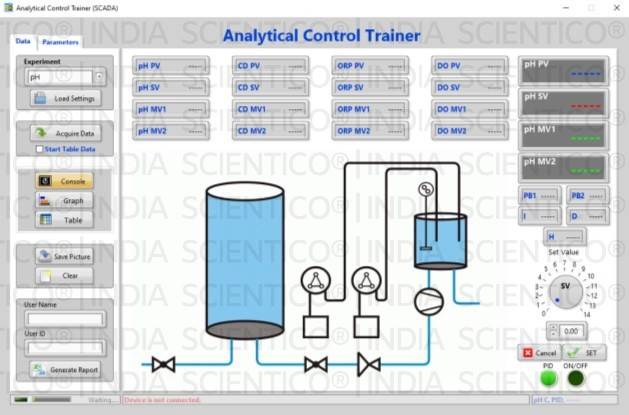
ProzessiX PX-04 DAQ Software (Optional)

Development Platform National Instruments™ LabVIEW™
Operating System Compatible with Windows™

Scope of Delivery

  • 1 Experimental module

  • 1 Instruction manual

Key Features

  • Modular analytical process control training system
  • Control of pH, conductivity, ORP, and dissolved oxygen
  • Floor-standing workstation with industrial-style layout
  • Universal process controllers for each module
  • Peristaltic metering pumps for reagent dosing control
  • Centrifugal pumps for process circulation
  • Ion exchange and activated carbon chambers for process conditioning
  • Sensor calibration and electrode installation training
  • Variable injection ratio control for dosing pumps
  • Optional PC-based data acquisition and monitoring software
  • Realistic piping network for process flow simulation

Applications

  • Chemical engineering and process engineering laboratories
  • Industrial instrumentation and analytical measurement training
  • Water and wastewater treatment control studies
  • Pharmaceutical and beverage process monitoring education
  • Study of analytical sensors and calibration procedures
  • Training in dosing control and chemical property adjustment
  • Pilot plant demonstrations of analytical process control

Construction & System Design

The Analytical Process Control Trainer is constructed as a modular floor-standing training system designed for laboratory and pilot-scale environments. The base workstation integrates pumps, tanks, piping networks, and sensor modules to replicate industrial analytical control systems.

Each module contains a universal process controller with dedicated sensors and transmitters for monitoring chemical parameters. Peristaltic metering pumps allow precise dosing of reagents to adjust water chemistry during experiments. Centrifugal pumps circulate process fluids through the system.

The conductivity module incorporates ion exchange chambers made of glass, while the ORP and dissolved oxygen module includes an activated carbon chamber and gas flow rotameters for air and nitrogen supply. A stirrer provides controlled mixing to maintain homogeneous conditions within process tanks.

The modular design allows individual modules to be added or removed depending on the training requirements. The system also supports optional data acquisition software developed in the LabVIEW environment, enabling PC-based monitoring and analysis.

Export & Supply Capability

The ProzessiX PX-04 Analytical Process Control Trainer is manufactured by SCIENTICO for supply to domestic and international educational and research institutions. The system is suitable for export to engineering universities, R&D laboratories, and industrial training centers.

Standard supply includes the experimental module and detailed instruction manual. Optional DAQ software can be supplied for advanced control and monitoring applications. The system is packaged for secure international shipment and supported with documentation for installation and training purposes.

Q1. What is the purpose of the Analytical Process Control Trainer?
The trainer is designed to teach how to measure, control, and adjust chemical properties such as pH, conductivity, ORP, and dissolved oxygen in process fluids.

Q2. What modules are included in this training system?
The system includes a base module for pH control and additional modules for conductivity control and ORP/DO control, which can be installed or removed depending on the training requirement.

Q3. What type of pumps are used in the system?
The trainer uses centrifugal pumps for process circulation and peristaltic metering pumps for controlled reagent dosing.

Q4. Can the system be connected to a computer for monitoring?
Yes. Optional ProzessiX PX-04 data acquisition software developed in the National Instruments™ LabVIEW™ environment allows PC-based monitoring and data logging.

Q5. What industries use analytical process control systems?
Analytical process control is widely used in pharmaceutical manufacturing, beverage production, water treatment plants, chemical processing industries, and refinery operations.

Q6. What skills can students learn using this trainer?
Students can learn sensor installation, calibration procedures, dosing pump operation, chemical parameter control, process monitoring, and interpretation of instrumentation diagrams.

You may also like

Lorem ipsum dolor sit amet, consectetur adipiscing elit, sed do eiusmod tempor incididunt ut labore et dolore magna aliqua. Ut enim ad minim veniam, quis nostrud exercitation ullamco laboris nisi ut aliquip ex ea commodo consequat.

Testimonials

Lorem ipsum dolor sit amet, consectetur adipiscing elit, sed do eiusmod tempor incididunt ut labore et dolore magna aliqua. Ut enim ad minim veniam, quis nostrud exercitation ullamco laboris nisi ut aliquip ex ea commodo consequat.

Subscribe to our newsletter

Lorem ipsum dolor sit amet, consectetur adipiscing elit, sed do eiusmod tempor incididunt ut labore et dolore magna aliqua.

    My Quote List

    Cart Quote is empty.
    Scroll to Top