Q1: What is the bearing friction apparatus used for in engineering education?
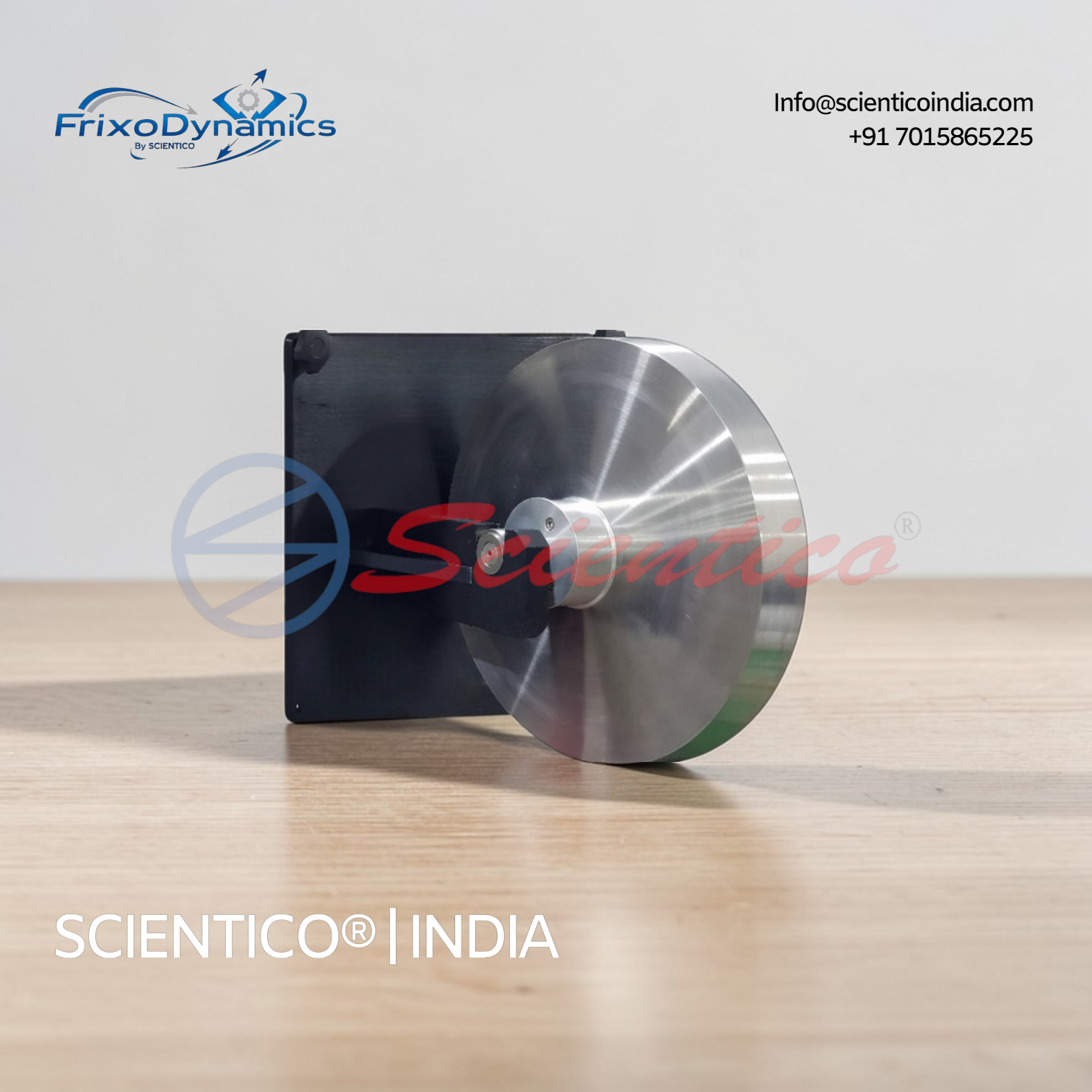
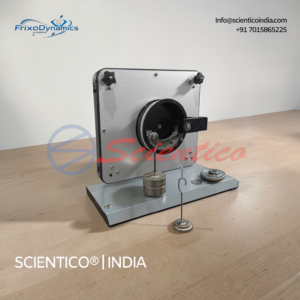
The FX-521 is used to measure and compare the friction torque in sliding bearings of three different shell materials — gun metal, cast iron, and PTFE — and in a Type 6203 grooved ball rolling bearing, all under the same flywheel dead load. Students apply incremental torque via a cable and weight system until the flywheel begins to rotate, record the critical torque for each bearing configuration, and draw direct quantitative comparisons between sliding and rolling bearing friction performance.
Q2: How is the friction torque measured on the FX-521?
Friction torque is measured using the onset-of-motion method. Dead weights are added incrementally to the hanger on the cable drum until the flywheel just begins to rotate at near-constant slow speed. The total hanging weight at this point, multiplied by the effective radius of the cable drum, gives the frictional torque of the bearing under the flywheel’s dead load. This measurement is taken for each bearing shell material and for the rolling bearing, allowing direct comparison.
Q3: Why does bearing shell material affect the friction torque in a sliding bearing?
Different materials have different surface hardness, surface roughness at the microscopic level, and affinity for lubrication films, all of which influence the friction force between the shaft journal and the bearing shell. Gun metal and cast iron produce higher friction torques than PTFE because PTFE has an inherently low coefficient of friction and is widely used as a self-lubricating bearing material. The FX-521 makes this difference directly measurable and quantifiable.
Q4: Can the FX-521 be used for rotational dynamics experiments?
Yes. When the rolling bearing configuration is installed, the flywheel rotates with very low frictional resistance, making it suitable for introductory experiments in rotational dynamics. The flywheel’s known mass and diameter allow the moment of inertia to be calculated, and the low bearing friction means that deceleration experiments reflect the rotational dynamics of the flywheel rather than being dominated by bearing losses.
Q5: What is included in the scope of delivery for the FX-521?
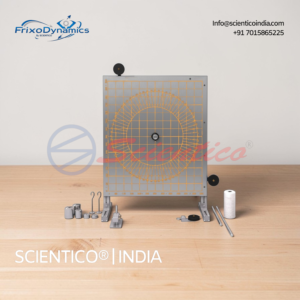
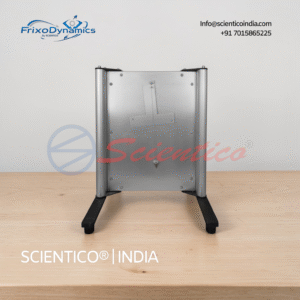
The FX-521 is supplied as a complete experimental kit including: one wall-mounted bearing friction experimental unit with anodised aluminium base plate, galvanised steel flywheel (300 mm, 22.2 kg), stainless steel shaft, cable drum, and bearing housing; three sets of sliding bearing shells (gun metal, cast iron, PTFE — two shells per set); four roller bearings (Type 6203); one set of calibrated weights (1 x 1 N hanger, 5 x 1 N, 1 x 2 N, 3 x 5 N); one hanger; one thread; and one instructional manual.