Pivot Friction Apparatus | FrixoDynamics FX-522

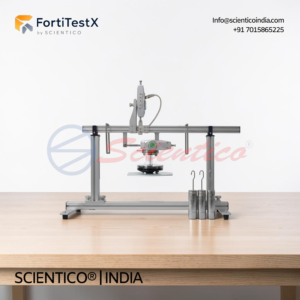
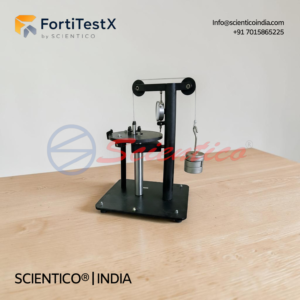
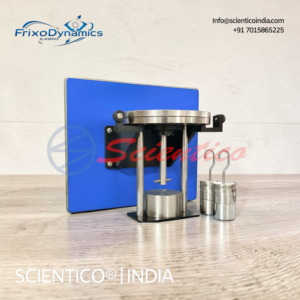
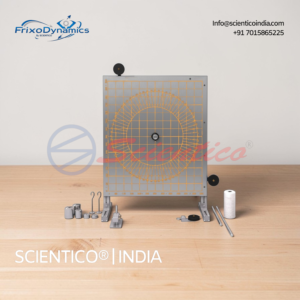
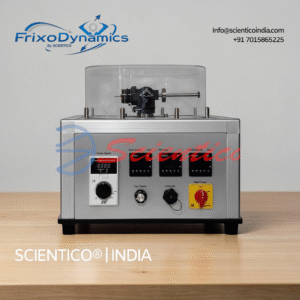
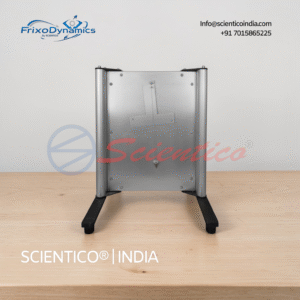
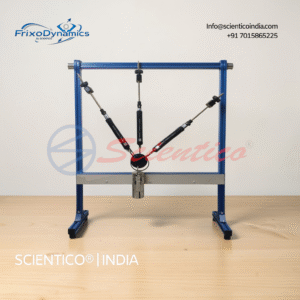
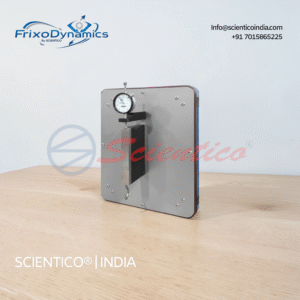
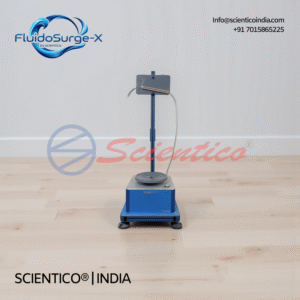
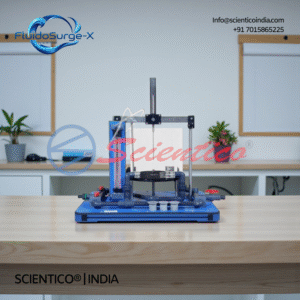
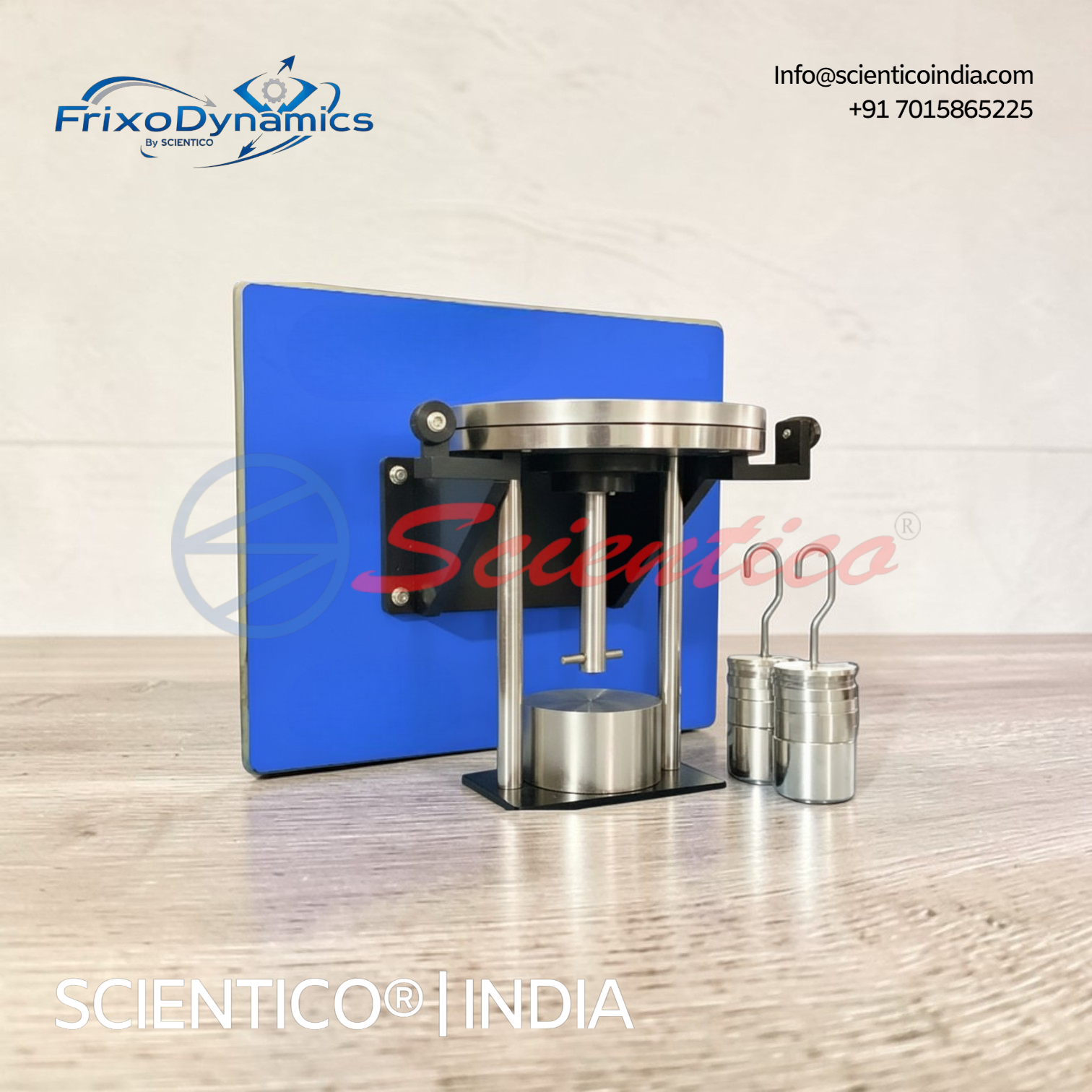
The SCIENTICO FrixoDynamics FX-522 Pivot Friction Apparatus is a hand-operated bench-top unit for the experimental investigation of friction in axial (pivot) bearings. A vertical shaft fitted with interchangeable conical bearing journals — at cone angles of 60°, 90°, 120°, and 180° flat — mates with interchangeable bearing housings of different materials, enabling independent study of cone geometry and material selection effects on friction torque. A 200 mm anodised aluminium disc at the top of the shaft accepts axial dead weights and provides the torque application surface via a rope wound around its periphery. The onset-of-motion method — adding weight to the rope hanger until the shaft just begins to rotate — gives the friction torque directly. Two additional 5 kg axial loading weights and a fine-increment weight set (down to 0.1 N) support a wide range of axial load and torque conditions. A rolling contact bearing comparison experiment is also supported. All components are stored in a foam-inlaid storage unit. Manufactured by SCIENTICO, available for institutional supply and international distribution.

The SCIENTICO FrixoDynamics FX-522 Pivot Friction Apparatus is a hand-operated bench-top experimental unit for the investigation of friction in axial bearings — also known as pivot or thrust bearings. The apparatus uses a vertical shaft fitted with interchangeable bearing journals of four different cone angles (60°, 90°, 120°, and 180° flat) and corresponding interchangeable bearing housings of different materials, enabling students to study the effects of cone geometry and material selection on frictional torque. An anodised aluminium disc of 200 mm diameter serves as the load platform and pulley, accepting axial dead weights above and a rope at its periphery for manual torque application. No power supply is required. Manufactured by SCIENTICO, the FX-522 is suitable for supply to engineering institutions and distributors worldwide.

Product Overview

Axial bearings — or pivot bearings — support loads acting along the shaft axis and are encountered in a wide range of engineering applications including vertical shaft machines, thrust assemblies, and rotary equipment. The friction torque in an axial bearing depends on the axial load, the coefficient of friction between the journal and the bearing housing material, and the geometry of the bearing surface — particularly the cone angle in conical pivot bearings. As the cone angle decreases from 180° (flat disc bearing) toward a sharp point, the contact area geometry changes and the relationship between axial load, contact pressure, and resulting friction torque is modified. The FX-522 allows all of these dependencies to be investigated systematically.

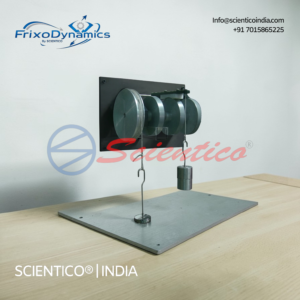
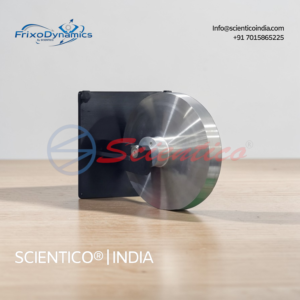
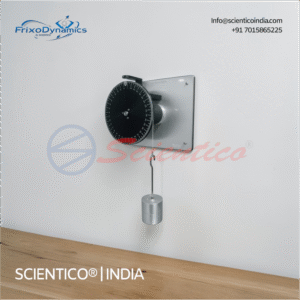
The vertical shaft carries the bearing journal at its lower end. Four interchangeable journal geometries are provided — cone angles of 60°, 90°, 120°, and 180° (flat pivot) — each of which mates with a corresponding bearing housing bolted below the shaft. The bearing housings are available in different materials, enabling the influence of material selection on friction torque to be studied independently of cone geometry. The anodised aluminium disc at the top of the shaft performs two functions: it accepts axial loading weights stacked on its upper surface, increasing the axial load on the bearing journal, and it functions as a pulley from which a rope is hung to apply and measure torque.

Torque is applied manually by pulling the rope wound around the disc periphery, and the load at which the shaft begins to rotate corresponds to the frictional torque of the bearing at the current axial load, cone angle, and material pairing. By systematically varying the axial load using the provided weight sets — including two additional 5 kg loading weights — and repeating the measurement for each cone angle and bearing material, students generate a comprehensive dataset covering the key variables governing axial bearing friction. A comparison experiment using a rolling contact bearing in place of the plain pivot journal demonstrates the reduction in friction torque achievable with rolling element bearings under the same axial load.

Parameter Specification
Model FrixoDynamics FX-522
Disc Diameter 200 mm
Disc Material Anodised aluminium
Shaft Orientation Vertical
Bearing Cone Angles 60°, 90°, 120°, 180° (flat)
Additional Axial Loading Weights 2 x 5 kg
Weight Set 2 x 0.5 N, 2 x 5 N hangers, 4 x 2 N, 4 x 1 N, 6 x 0.5 N, 10 x 0.1 N
Torque Application Rope on disc periphery, hand-operated
Power Requirement None — hand-operated
Storage Storage unit with foam inlay
Scope of Delivery 1 experimental unit, 2 sets of weights, 1 thread, 1 storage unit with foam inlay, 1 instructional manual

Key Features

  • Four interchangeable bearing journal cone angles — 60°, 90°, 120°, and 180° flat — for systematic investigation of cone geometry effect on axial bearing friction torque
  • Interchangeable bearing housings of different materials enable independent study of material selection effect on friction torque
  • Comparison between plain pivot bearing and rolling contact bearing under identical axial loading conditions
  • 200 mm anodised aluminium disc serves as both axial load platform and torque application pulley in a single integrated component
  • Two additional 5 kg axial loading weights provide a wide range of axial load conditions for friction torque versus load experiments
  • Fine-increment weight set (down to 0.1 N) for precise torque measurement at the onset of rotation
  • Hand-operated — no power supply or motor required, suitable for any laboratory environment
  • Supplied in a dedicated storage unit with foam inlay for organised component storage and transport

Applications

  • Determination of friction torque in axial (pivot) bearings as a function of axial load
  • Investigation of the effect of bearing cone angle on friction torque under constant axial load
  • Study of the influence of bearing material selection on axial bearing friction
  • Comparison of plain pivot bearing and rolling contact bearing friction torque under identical conditions
  • Investigation of the relationship between cone angle geometry and contact pressure distribution in pivot bearings
  • Undergraduate laboratory practicals in machine elements, tribology, mechanical engineering design, and applied mechanics
  • Supplementary demonstration for courses covering thrust bearing design, axial load transmission, and bearing selection

Construction and System Design

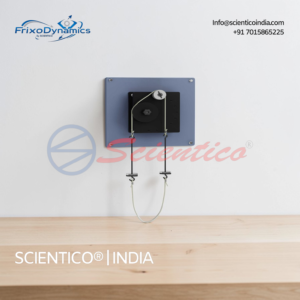
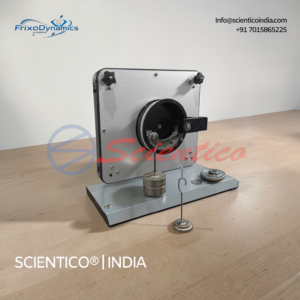
The FX-522 is built around a vertical shaft assembly mounted on a rigid base. The bearing journal is bolted to the lower end of the shaft and mates with the bearing housing bolted below it. Both the journal and the housing are interchangeable, allowing any combination of the four cone angles and the available bearing materials to be assembled quickly for successive experiments. The bearing housing is fixed in position, and the shaft rotates within it — applying the journal cone geometry to the inner bearing surface under the axial load imposed from above.

The anodised aluminium disc is mounted at the top of the shaft and rotates with it. The disc upper surface is flat and accepts stacked axial loading weights directly, transmitting the combined weight of the disc and all added masses as the axial load on the bearing journal below. Two additional 5 kg weights are provided specifically for axial loading, extending the load range available for friction torque versus axial load experiments.

A rope is wound around the periphery of the 200 mm disc. To apply torque, the rope is pulled by hand or loaded with a weight hanger. The load at which the shaft just begins to rotate at near-constant slow speed defines the onset-of-motion friction torque. The fine-increment weight set — including denominations down to 0.1 N — allows precise determination of this threshold, even for low-friction rolling bearing configurations. All components are stored in a foam-inlaid storage unit that organises the journals, housings, weights, and accessories securely between laboratory sessions.

Export and Supply Capability

The SCIENTICO FrixoDynamics FX-522 is available for supply to engineering colleges, technical universities, mechanical engineering departments, research institutions, and industrial training centres. SCIENTICO manufactures and exports laboratory equipment to institutions and distributors across multiple regions. Standard packaging is suitable for international shipment. Bulk orders, customised configurations, and institutional procurement enquiries are welcomed. Please contact SCIENTICO directly for pricing, lead times, and shipping terms.

Q1: What is the pivot friction apparatus used for in engineering education?

The FX-522 is used to investigate friction in axial (pivot) bearings — bearings that support loads acting along the shaft axis. Students measure the friction torque at the onset of rotation for different bearing cone angles, bearing housing materials, and axial load magnitudes, developing a quantitative understanding of how these three variables independently affect axial bearing friction. A rolling contact bearing comparison experiment is also supported.

Q2: What is the effect of cone angle on pivot bearing friction?

The cone angle determines the geometry of the contact surface between the bearing journal and the housing. As the cone angle decreases from 180° (flat disc) toward a sharper point, the contact radius and contact pressure distribution change, altering the friction torque for the same axial load and material pairing. The FX-523 allows students to measure this effect directly by testing all four cone angles — 60°, 90°, 120°, and 180° — under the same axial load and material conditions.

Q3: How is the friction torque measured on the FX-522?

Friction torque is measured using the onset-of-motion method. A rope is wound around the 200 mm disc periphery and loaded incrementally using weights on a hanger, or pulled by hand. The load at which the shaft just begins to rotate at near-constant slow speed corresponds to the friction torque of the bearing at the current axial load, cone angle, and material combination. The friction torque equals the applied rope load multiplied by the disc radius (100 mm).

Q4: How is the axial load varied on the FX-522?

The axial load is varied by stacking calibrated weights on the upper surface of the aluminium disc. The disc’s own weight contributes a baseline axial load, and the two additional 5 kg weights — along with the fine-increment weight set — allow the total axial load to be increased in controlled steps. Repeating the friction torque measurement at each axial load level generates a friction torque versus axial load characteristic for each bearing configuration.

Q5: What is included in the scope of delivery for the FX-522?

The FX-522 is supplied as a complete experimental kit including: one pivot friction experimental unit with vertical shaft, anodised aluminium disc, interchangeable bearing journals (60°, 90°, 120°, 180°), and interchangeable bearing housings; two sets of calibrated weights (2 x 0.5 N, 2 x 5 N hangers, 4 x 2 N, 4 x 1 N, 6 x 0.5 N, 10 x 0.1 N); two additional 5 kg axial loading weights; one thread; one storage unit with foam inlay; and one instructional manual covering experimental procedures, cone angle theory, and data recording guidance.

You may also like

Lorem ipsum dolor sit amet, consectetur adipiscing elit, sed do eiusmod tempor incididunt ut labore et dolore magna aliqua. Ut enim ad minim veniam, quis nostrud exercitation ullamco laboris nisi ut aliquip ex ea commodo consequat.
Testimonials

Lorem ipsum dolor sit amet, consectetur adipiscing elit, sed do eiusmod tempor incididunt ut labore et dolore magna aliqua. Ut enim ad minim veniam, quis nostrud exercitation ullamco laboris nisi ut aliquip ex ea commodo consequat.

Subscribe to our newsletter

Lorem ipsum dolor sit amet, consectetur adipiscing elit, sed do eiusmod tempor incididunt ut labore et dolore magna aliqua.

    Make An Enquiry