Q1: What is Eytelwein’s rope friction formula, and how does the FX-519 verify it?
Eytelwein’s rope friction formula states that the ratio of the tight-side tension to the slack-side tension in a belt wrapped around a pulley is equal to e raised to the power of the product of the friction coefficient and the contact angle in radians. The FX-519 verifies this by measuring both tension values at a series of contact angles for each belt type, calculating the implied friction coefficient from the tension ratio, and confirming that the result remains consistent across angles — as the formula predicts.
Q2: What belt types are included with the FX-519, and why are three types provided?
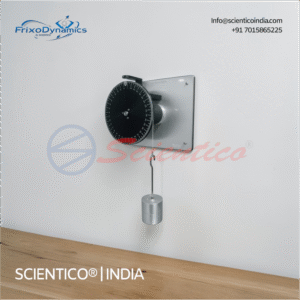
Three belt types are included: a flat belt (15 x 2.2 mm, leather/polyamide), a V-belt (ISO 4184 A-type, 12 x 10 mm, rubber/fabric), and two round belts (8 mm and 10 mm diameter, rubber). The three types represent the main belt drive profiles used in engineering practice. Each profile contacts the pulley differently — the flat belt on its surface, the V-belt on its flanks, and the round belt in its groove — resulting in different effective friction coefficients that students can measure and compare directly.
Q3: How is the angle of contact set and measured on the FX-519?
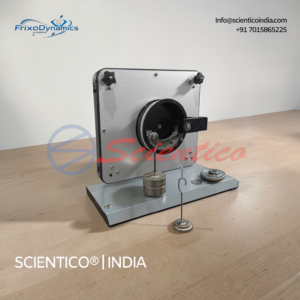
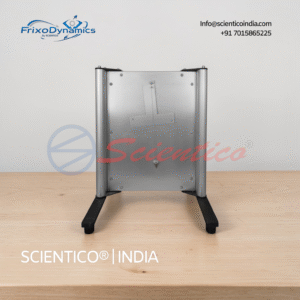
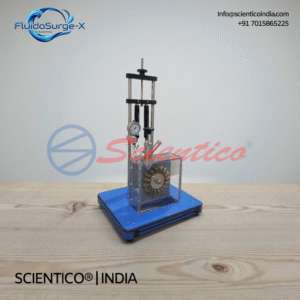
The angle of contact is set by wrapping the belt around the pulley to the required wrap angle and positioning it against the graduated scale on the metal stand frame. The scale is marked at 30° intervals from 30° to 210°, allowing the contact angle to be selected and confirmed without additional measuring instruments. Experiments are typically conducted at each marked angle increment, generating a dataset that spans the full practical range of belt contact angles.
Q4: What is the practical significance of studying belt friction in engineering?
Belt friction determines the maximum power that can be transmitted by a belt drive without slip, the rate of belt wear, and the efficiency of energy transfer between the driving and driven shafts. If friction is too low, the belt slips under load, reducing power transmission and causing rapid wear. If friction is excessive, energy losses increase and belt life is reduced. Understanding the Eytelwein relationship allows engineers to select the correct belt type, contact angle, and tension for a given drive application.
Q5: What is included in the scope of delivery for the FX-519?
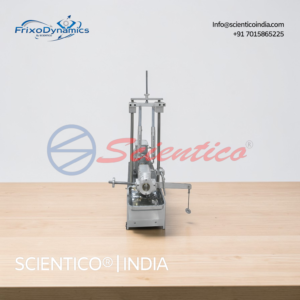
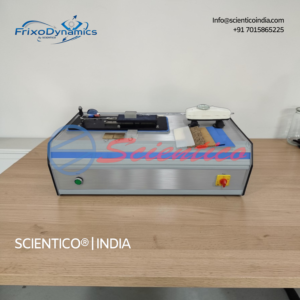
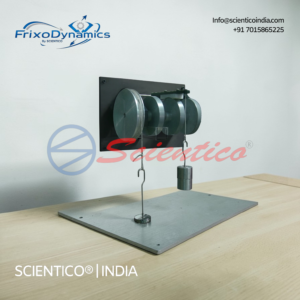
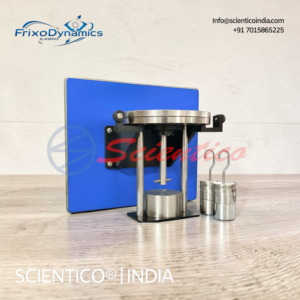
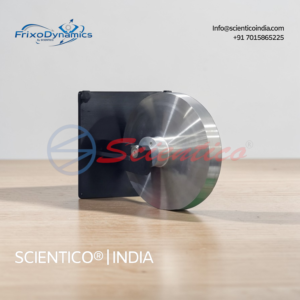
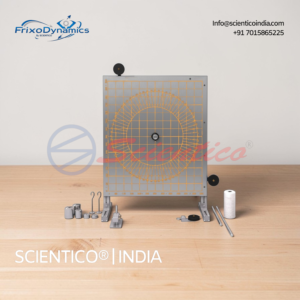
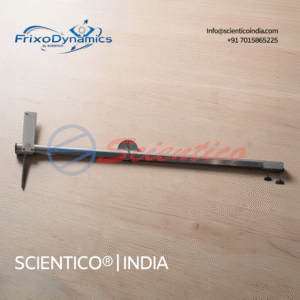
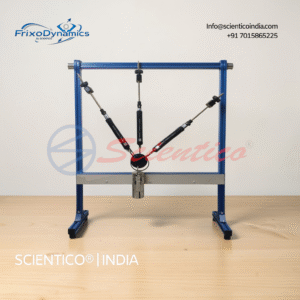
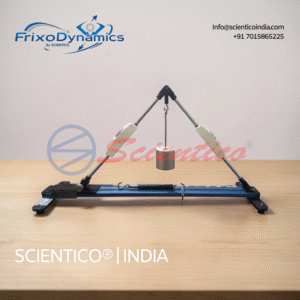
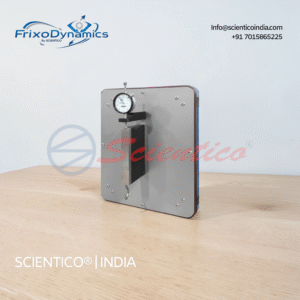
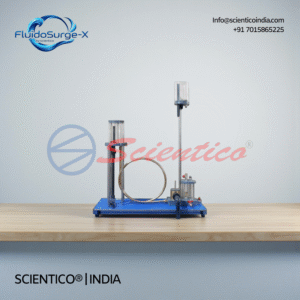
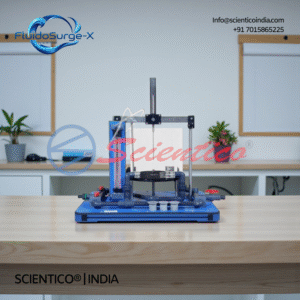
The FX-519 is supplied as a complete experimental kit including: one belt friction experimental unit with 150 mm cast iron ball bearing-mounted pulley and portable metal stand; one flat belt (leather/polyamide, 15 x 2.2 mm); one V-belt (ISO 4184 A-type, rubber/fabric); two round belts (8 mm and 10 mm, rubber); two sets of calibrated weights (1 x 1 N hanger, 1 x 0.5 N hanger, 5 x 5 N, 4 x 2 kg, 1 x 1 kg); one thread; and one instructional manual covering experimental procedures, Eytelwein formula application, and data recording guidance.